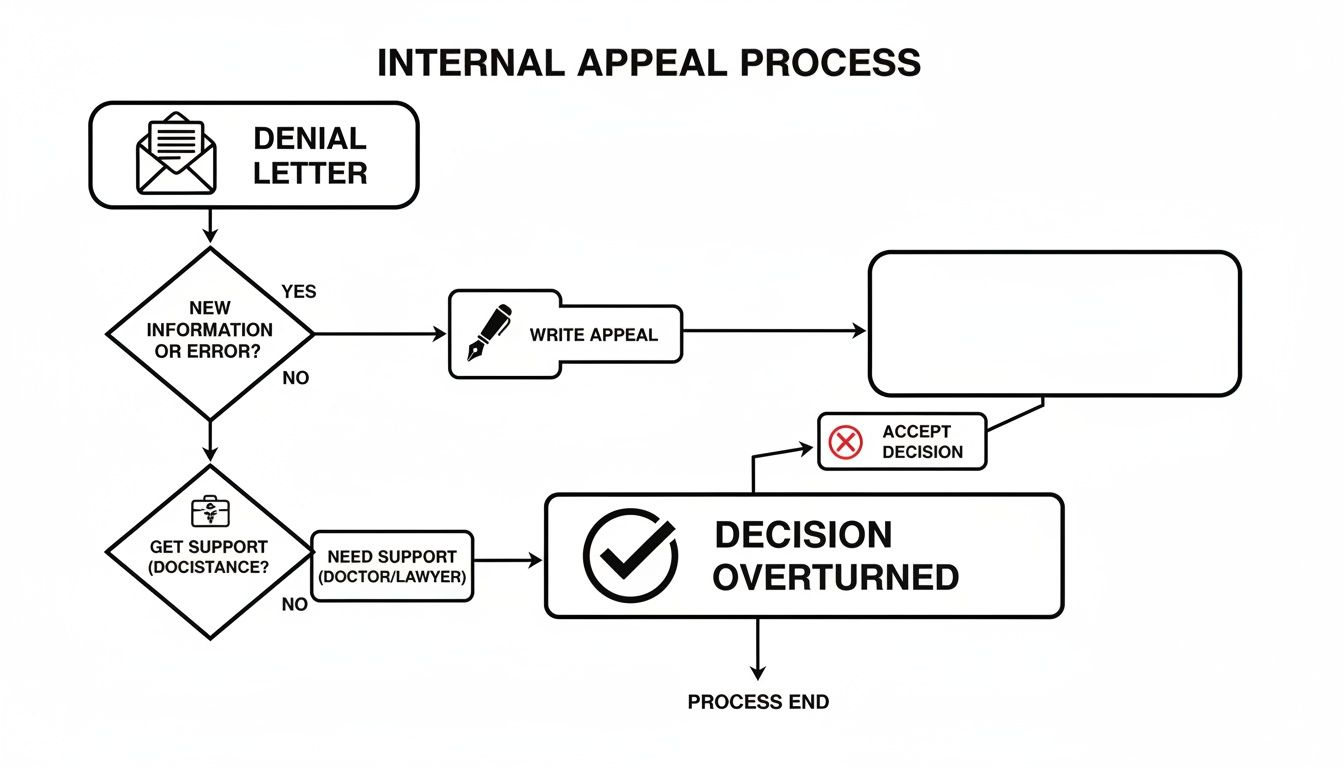
How to Appeal a Workers’ Compensation Claim in Illinois: A Step-by-Step Guide
To appeal a workers’ compensation claim in Illinois, you must file a Petition for Review with the Illinois Workers’ Compensation Commission (IWCC) within 30 days of receiving the arbitrator’s written decision. The process involves orde...
To appeal a workers’ compensation claim in Illinois, you must file a Petition for Review with the Illinois Workers’ Compensation Commission (IWCC) within 30 days of receiving the arbitrator’s written decision. The process involves ordering transcripts, submitting legal briefs (Statements of Exception), and potentially presenting oral arguments before a panel of three commissioners.
Contents
If your initial claim for benefits was denied or the award was insufficient, the Illinois legal system provides a structured multi-level appeals process. As of 2026, the Illinois Workers’ Compensation Act remains the primary statutory authority governing these procedures. Navigating this system requires strict adherence to deadlines and a deep understanding of evidentiary rules, as the window for correcting an unfavorable decision is narrow and legally demanding.
The Foundation of the Illinois Workers’ Compensation System
Before diving into the appeal steps, it is essential to understand the structure of the Illinois Workers’ Compensation Commission (IWCC). In Illinois, most disputes are first heard by an Arbitrator. The arbitrator acts as the judge of facts and law in the initial "trial" phase. If either the employee or the employer disagrees with the arbitrator's ruling, they have the right to seek a review.
Appeals are not "do-overs" where you simply retell your story. Instead, they are formal legal challenges based on the record established during the initial hearing. The IWCC operates as an administrative agency, and its decisions are subject to further review by the Illinois court system, including the Circuit Court and the Appellate Court.
Common Reasons for Denial
- Lack of Notice: Failing to inform the employer of the injury within 45 days.
- Employment Status: Disputes over whether the claimant was an employee or an independent contractor.
- Causation: Arguments that the injury did not "arise out of" or occur "in the course of" employment.
- Medical Necessity: Disagreements regarding the type or duration of medical treatment required.
Level 1: The Commission Review (First Stage of Appeal)
The first level of appeal is the "Review" stage, where a panel of three IWCC Commissioners examines the arbitrator's decision. This is the most common point of intervention for claimants seeking to overturn a denial.
Step 1: Filing the Petition for Review
Upon receiving the arbitrator’s decision via mail or the IWCC’s electronic filing system, you have exactly 30 days to file a Petition for Review (Form ICB01). This deadline is jurisdictional; if you miss it by even one day, the arbitrator’s decision becomes final and cannot be changed.
Step 2: Ordering the Transcript
To appeal, you must provide the Commission with a verbatim record of the initial hearing. You must file a Request for Hearing Transcript and pay the court reporter the required fee. In 2026, many of these transcripts are handled digitally, but the requirement to ensure the Commission receives an accurate record remains the appellant's responsibility. Failure to "perfect" the review by filing the transcript within the allotted time (usually 60 days, though extensions are possible) can result in the dismissal of your appeal.
Step 3: Preparing the Statement of Exception and Brief
Once the transcript is filed, the Commission will set a briefing schedule. You must submit a Statement of Exception and Supporting Brief. This document must specifically outline:
- Which parts of the arbitrator’s decision you believe are incorrect.
- The legal precedents or statutes that support your position.
- The specific evidence in the transcript that proves the arbitrator made a mistake.
Step 4: Oral Arguments
In most cases, you or your attorney will have the opportunity to present an oral argument before a panel of three Commissioners in Chicago or Springfield. This is a brief session (often limited to 5–10 minutes) where you highlight the most critical errors in the arbitrator’s ruling and answer questions from the panel.
Step 5: The Commission’s Decision
The Commission will issue a written decision that can affirm, reverse, or modify the arbitrator’s ruling. They may also remand the case back to the arbitrator for further evidence.
Level 2: The Circuit Court Appeal
If the Commission’s decision is still unfavorable, the next step is to take the case to the Illinois Circuit Court.
At this stage, the court does not take new evidence. The judge reviews the record to determine if the Commission's decision was "against the manifest weight of the evidence" or if the Commission made an error in interpreting the law. This is a difficult standard to meet, as courts generally defer to the Commission’s expertise on factual findings (like whether a witness was credible).
To initiate this, you must file a Summons with the Circuit Court within 20 days of receiving the Commission’s decision. You must also pay a bond if you are the employer appealing an award to ensure the funds are available if the appeal fails.
Level 3: The Appellate Court (Workers’ Compensation Commission Division)
Should the Circuit Court’s ruling be unsatisfactory, a further appeal can be made to the Illinois Appellate Court. There is a specific division of the Appellate Court comprised of five judges (one from each judicial district) who specialize in workers' compensation cases.
The process here involves extensive legal briefing and another round of oral arguments. The Appellate Court’s role is to ensure the law was applied correctly across the state. Decisions made at this level often set the precedent for future cases in Illinois.
Comparison of Illinois Appeal Levels
| Appeal Level | Decision Maker | Filing Deadline | Primary Focus |
|---|---|---|---|
| Commission Review | 3 IWCC Commissioners | 30 Days from Arbitrator Decision | De novo review of facts and law based on transcript. |
| Circuit Court | Single Circuit Judge | 20 Days from Commission Decision | Review for "Manifest Weight of Evidence" or legal error. |
| Appellate Court | 5-Judge Specialist Panel | 30 Days from Circuit Court Ruling | Final legal interpretation and consistency of law. |
| Supreme Court | IL Supreme Court Justices | Variable (by Petition) | Rare cases involving significant constitutional or public policy issues. |
Essential Requirements and Costs in 2026
Appealing a claim is not free. While there is no fee to file the initial claim with the IWCC, the costs mount quickly during the appeal phase:
- Transcript Fees: These vary based on the length of the hearing but can range from a few hundred to several thousand dollars.
- Filing Fees: Circuit and Appellate courts charge filing fees, which vary by county.
- Legal Fees: In Illinois, workers’ compensation attorney fees are strictly regulated. By statute, attorneys generally charge 20% of the recovered benefits. If you are appealing a total denial and win, the attorney takes 20% of the back-pay and settlement.
- Expert Testimony: If the case is remanded for new evidence, you may need to pay for additional medical evaluations or doctor depositions.
Common Mistakes to Avoid
- Missing the 30-Day Window: This is the most common reason appeals fail before they even start.
- Failing to Pay for the Transcript: If the transcript is not filed and paid for, the Commission has nothing to review, and the appeal will be dismissed.
- Broad Grievances: Simply saying "the decision is unfair" is not enough. You must point to specific "Exceptions"—errors in fact or law.
- Inadequate Briefing: The Commission and courts rely heavily on written briefs. If the brief is poorly researched or fails to cite the record, the appeal is unlikely to succeed.
Frequently Asked Questions
How long does the entire appeal process take in Illinois? The timeline varies significantly depending on the caseload of the IWCC. A review by the Commission typically takes 6 to 12 months from the date the Petition for Review is filed. If the case proceeds to the Circuit or Appellate courts, the entire process can extend to two years or more.
Can I introduce new medical evidence during the appeal? Generally, no. The Commission review is based on the evidence presented at the time of the arbitrator's hearing. You cannot bring in new witnesses or new medical reports unless you can prove that the evidence was unavailable at the time of the trial or if the Commission specifically orders a "remand" for further evidence.
Do I need a lawyer to appeal my workers' comp claim? While you have the right to represent yourself (pro se), it is highly discouraged during the appeal phase. The procedural rules, briefing requirements, and standards of review are complex. Employers are almost always represented by specialized insurance defense attorneys who understand how to use procedural errors to get a claimant's appeal dismissed.
What happens if I win the appeal? If the Commission or a court reverses a denial, the insurance company is typically ordered to pay all back-owed benefits (Temporary Total Disability), medical bills, and any permanent disability awards. Interest may also be applied to the award dating back to the arbitrator’s original decision.
Is the Illinois Supreme Court the final stop? Technically, yes, but the Illinois Supreme Court is not required to hear every workers' compensation case. You must file a Petition for Leave to Appeal. The Supreme Court usually only accepts cases that involve a significant conflict between different appellate districts or a major constitutional question regarding the Workers’ Compensation Act.
Next Steps: If you have received an unfavorable decision from an arbitrator, immediately calculate your 30-day deadline. Contact a licensed Illinois workers' compensation attorney to review the arbitrator's decision and the hearing transcript to determine if there are viable grounds for an appeal based on the manifest weight of the evidence.
Disclaimer: This guide provides general information regarding the Illinois workers’ compensation appeals process in 2026. It does not constitute legal advice. Jurisdictional rules and statutory interpretations are subject to change. Always consult with a qualified legal professional regarding your specific case and deadlines.
Image Gallery