Understanding Helixpile Foundation Repair and Structural Remediation Services
Helixpile foundation repair is a high-precision structural remediation method using helical steel piers screwed deep into stable soil to stabilize or lift a sinking structure. This engineered solution bypasses unstable surface soils, t...
Helixpile foundation repair is a high-precision structural remediation method using helical steel piers screwed deep into stable soil to stabilize or lift a sinking structure. This engineered solution bypasses unstable surface soils, transferring the building's load to load-bearing strata, effectively resolving issues like foundation settlement, wall cracks, and uneven floors.
Contents
Structural integrity is the bedrock of any property's value and safety. When a foundation begins to fail due to soil shrinkage, poor compaction, or fluctuating water tables, the resulting damage can jeopardize the entire building. In 2026, helical pile technology—often referred to as "helixpiles"—has become the industry standard for both residential and commercial structural remediation due to its versatility, speed of installation, and verifiable load-bearing capacities.
What is a Helixpile Foundation System?
A helixpile, or helical pier, is a deep foundation anchoring system consisting of a central steel shaft with one or more helical-shaped steel plates (helices) welded to it. These piles function similarly to a wood screw but on a massive structural scale. During remediation, they are mechanically "screwed" into the ground using hydraulic machinery.
The system typically consists of three main components:
- The Lead Section: This is the first part of the pile to enter the ground, featuring the helical plates that provide the necessary surface area for bearing capacity.
- Extensions: Plain steel shafts that are bolted to the lead section to reach the required depth where stable soil or bedrock is located.
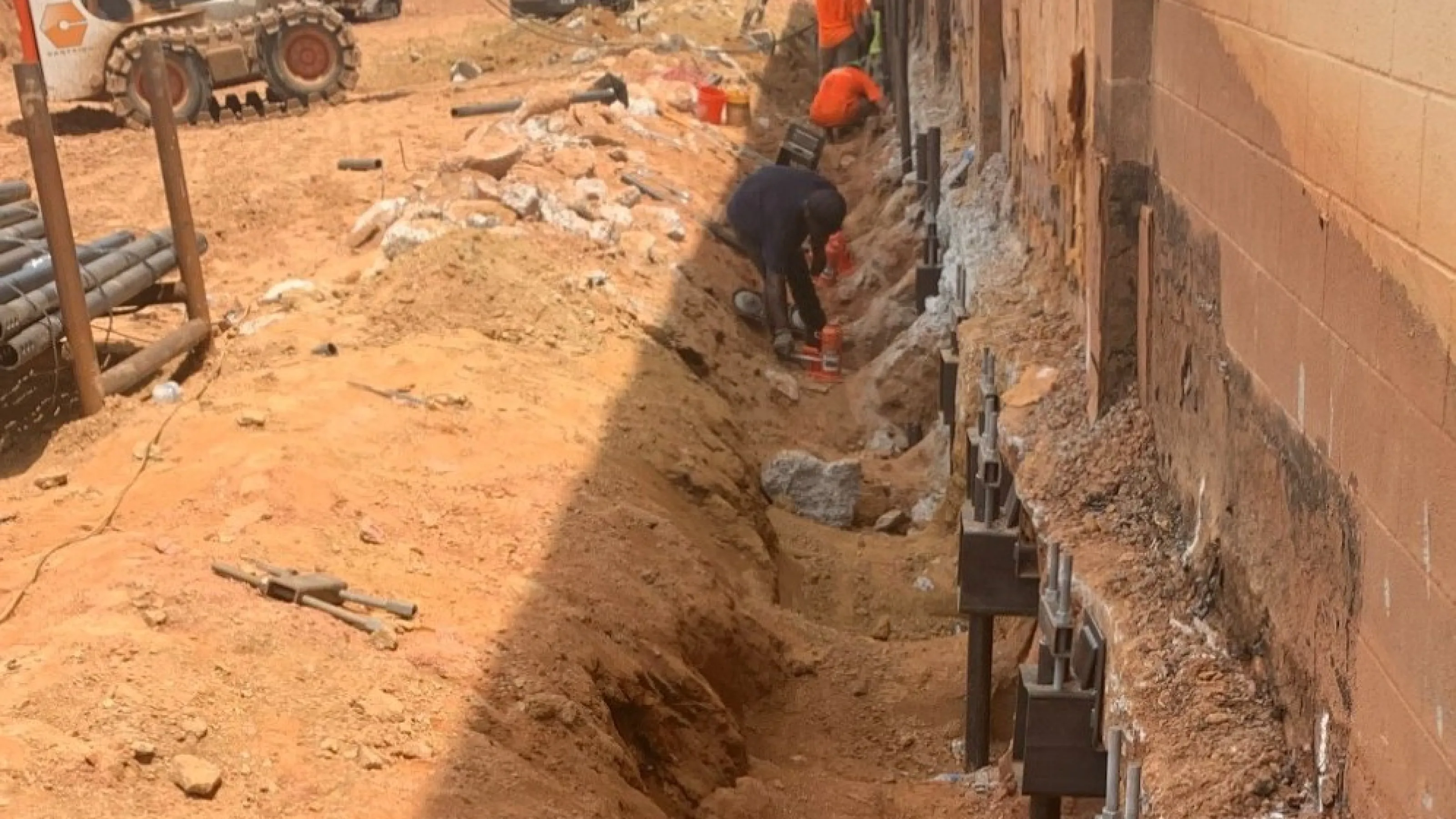
- The Bracket: Once the pile reaches the target depth and torque, a heavy-duty steel bracket is attached to the top of the pile and secured to the existing foundation footing.
Unlike traditional concrete piers, which rely on the weight of the structure or large-scale excavation, helixpiles utilize the mechanical torque-to-capacity relationship. This allows engineers to verify exactly how much weight each pile can support in real-time during the installation process.
The Role of Structural Remediation Services
Structural remediation is a specialized branch of construction focused on correcting defects in a building's load-bearing elements. When a foundation settles, it does not just affect the concrete at the base; it creates a domino effect throughout the structure. Doors stick, windows jam, drywall cracks appear, and in severe cases, the roofline may warp.
Remediation services in 2026 utilize a combination of geotechnical engineering and high-strength materials to reverse these effects. The process begins with a forensic assessment. Engineers use laser levels and manometers to map the "floor elevation profile." This data, combined with soil boring logs, determines where the foundation has failed and how many helixpiles are required to stabilize the site.
The goal of remediation is twofold: stabilization and recovery. Stabilization stops further movement, ensuring the building remains in its current position. Recovery involves carefully "jacking" or lifting the foundation back toward its original level, which can often close cracks in masonry and restore the functionality of doors and windows.
Technical Advantages of Helical Piles in 2026
The adoption of helixpiles over traditional methods like "push piles" or "concrete underpinning" is driven by several technical advantages that are particularly relevant in modern urban and suburban environments.
1. Minimal Site Disturbance
Because helixpiles are screwed into the ground, they do not require massive excavation. This is a critical factor for properties with mature landscaping, tight alleyways, or finished basements. Small, track-mounted skid steers or mini-excavators equipped with hydraulic drive heads can install piles in confined spaces where traditional drilling rigs cannot fit.
2. Immediate Load Transfer
Unlike poured-in-place concrete piers that require days or weeks to cure, helical piles can be loaded immediately after installation. As soon as the bracket is tightened against the foundation, the structural weight is transferred to the deep soil layers. This significantly shortens the project timeline.
3. All-Weather Installation
In 2026, construction schedules are tighter than ever. Helical piles can be installed in almost any weather condition, including rain or freezing temperatures. Since there is no wet concrete involved in the primary load-bearing component, the "seasonal window" for foundation repair is virtually eliminated.
4. Measurable Capacity
The most significant engineering advantage is the ability to monitor torque. Engineers use a mathematical constant (the $K_t$ factor) to convert the rotational resistance (torque) into an ultimate capacity. If a pile requires 50,000 lbs of capacity, the installer monitors the hydraulic pressure gauges to ensure the pile reaches the specific torque value that correlates to that load.
Comparison of Foundation Repair Methods
Choosing the right remediation strategy requires understanding how helixpiles stack up against older technologies. The following table outlines the key differences between the primary methods used in 2026.
| Feature | Helixpiles (Helical Piers) | Push Piles (Resistance Piers) | Concrete Underpinning |
|---|---|---|---|
| Primary Support | Torque-verified soil bearing | Building weight / Friction | Concrete mass / Surface bearing |
| Installation Tool | Hydraulic drive motor | Hydraulic ram (uses house weight) | Excavators and manual labor |
| Soil Suitability | Excellent in all soils | Poor in very soft or light soils | Best in shallow stable soils |
| Vibration/Noise | Low | Very Low | Moderate to High |
| Installation Speed | Fast (1-2 days) | Fast (1-2 days) | Slow (7-14 days) |
| Typical Cost | Moderate | Moderate to High | Low to Moderate |
| Best Use Case | Lightweight structures, decks, sinking foundations | Heavy masonry homes, high-rise footings | Shallow foundation failures |
The Step-by-Step Remediation Process
Understanding the workflow of a helixpile installation helps property owners prepare for the project and ensures they can verify the quality of the work.
Step 1: Site Preparation and Excavation
Small "access holes" (typically 3x3 feet) are excavated at each pile location. These holes expose the footing—the widened concrete base of the foundation wall. The footing must be cleaned and "notched" or prepared to receive the steel bracket.
Step 2: Driving the Helical Piles
The lead section is positioned, and the hydraulic drive head begins rotating the pile into the earth. Extensions are added and bolted together as the pile descends. The installer records the torque at every one-foot interval.
Step 3: Reaching the Bearing Stratum
The pile continues downward until it encounters a soil layer dense enough to meet the pre-calculated torque requirements. In some geographic regions, this might be 15 feet deep; in others, it could be 50 feet or more.
Step 4: Bracket Attachment and Lifting
Once the piles are verified, a heavy-duty steel foundation bracket is placed over the pile and under the footing. Using a series of hydraulic jacks connected to a central manifold, the house is slowly lifted. This synchronized lift prevents localized stress on the structure.
Step 5: Final Securing and Backfill
After the desired lift or stabilization is achieved, the brackets are bolted or welded to the piles, and the weight of the house is permanently transferred. The access holes are then backfilled and compacted, and any displaced landscaping is restored.
Cost Considerations and Value Retention
As of 2026, the cost of helixpile foundation repair generally ranges from $2,500 to $4,500 per pier, depending on the depth required and the complexity of the access. A typical residential stabilization project might involve 5 to 10 piles, placing the total investment between $12,500 and $45,000.
While these costs are significant, they must be weighed against the loss of property value associated with foundation failure. Unaddressed structural issues can decrease a home's market value by 20% to 30% and make it nearly impossible to secure traditional financing or insurance. Furthermore, structural remediation is an investment in the longevity of the asset. Most reputable contractors provide a transferable lifetime warranty, which serves as a vital document during the resale of the property.
How to Select a Remediation Contractor
Not all foundation repair companies are equal. Because helical piles are an engineered product, the quality of the installation is paramount.
- Engineering Oversight: Ensure the company works with a third-party licensed structural engineer who will sign off on the repair plan and the final installation logs.
- Product Certification: Verify that the piles used meet the ICC-ES (International Code Council Evaluation Service) standards. For more information on these standards, visit the ICC Evaluation Service.
- Soil Testing: For larger projects, a geotechnical report is essential. A contractor who refuses to consider soil composition is a red flag.
- Experience and Specialized Equipment: Helical pile installation requires specific hydraulic motors and calibrated torque-monitoring devices. Ensure the contractor specializes in helixpiles rather than generic "foundation repair."
Frequently Asked Questions
Can helixpiles be used for new construction or only for repair? Helixpiles are highly effective for both. In new construction, they are often used in "poor soil" areas to provide a stable foundation before the concrete is even poured, preventing future settlement issues.
How long do helical piles last? Standard helical piles are manufactured from high-strength steel and are hot-dip galvanized to prevent corrosion. According to the American Society of Civil Engineers (ASCE), galvanized steel piles in typical soil environments have a design life exceeding 100 years.
Will foundation repair close all the cracks in my walls? While the goal is to lift the structure back to its original position, it is not always possible or advisable to close every crack perfectly. Lifting a house too much can cause new stresses in different areas. The primary goal is structural stabilization; cosmetic repairs should only be performed after the foundation is stabilized.
Is the installation loud or disruptive? Compared to traditional pile driving, which uses heavy hammers, helixpile installation is very quiet. It produces a low hum from the hydraulic motor, similar to a small tractor. There is almost no vibration, which protects neighboring structures from secondary damage.
What happens if the piles need to go deeper than expected? During the planning phase, engineers estimate depth based on local soil data. However, if the torque is not met at the estimated depth, additional extensions must be added. This is a crucial "fail-safe" of the helical system—the pile is not finished until the soil says it is finished.
Recommendation for Next Actions
If you suspect foundation movement—evidenced by stair-step cracks in brickwork, gaps above window frames, or sloping floors—your first step should be to hire an independent structural engineer. Unlike a repair contractor, an independent engineer has no financial interest in selling you a specific number of piles. They will provide a neutral assessment of the damage and a "remediation plan" that you can then use to solicit competitive bids from specialized helixpile installers. Taking action early in 2026 can prevent minor settlement from becoming a total structural failure.
Image Gallery