The Evolution of the All-Time NBA Scoring Leaders in 2026
The historic hierarchy of the National Basketball Association scoring list represents the ultimate test of offensive longevity, elite efficiency, and durability. As the 2026 NBA season unfolds, the pursuit of points continues to redefi...
The historic hierarchy of the National Basketball Association scoring list represents the ultimate test of offensive longevity, elite efficiency, and durability. As the 2026 NBA season unfolds, the pursuit of points continues to redefine how front offices value modern scoring infrastructure, load management, and three-point volume. Tracking the all-time NBA scoring leaders requires an examination of traditional box scores alongside advanced tracking metrics that measure points per possession, true shooting percentage, and usage rate.
Contents
Decoding the Modern Scoring Landscape
Scoring in the modern NBA has experienced a structural shift driven by pace, space, and analytical optimization. Elite scorers no longer rely solely on isolation mid-range jumpers or traditional post-ups; instead, they generate high-yield efficiency through restricted-area finishes, transition opportunities, and deep pull-up three-pointers.
To understand how modern players climb the all-time scoring ladder, analysts look at several core performance indicators:
- True Shooting Percentage (TS%): Measures scoring efficiency by factoring in field goals, three-pointers, and free throws.
- Usage Rate (USG%): Estimates the percentage of team plays used by a player while they are on the court.
- Offensive Rating: Evaluates individual offensive production and efficiency per 100 possessions.
- Durability Index: Tracks missed games due to injury load management against historical baseline availability.
Maintaining a spot among the elite all-time NBA scoring leaders demands an average of 25.0 or more points per contest across a span of 15 to 20 professional seasons. This sustained output requires rigorous biomechanical maintenance, customized strength and conditioning regimens, and advanced sports science recovery protocols.
Historical Comparison of Elite Scoring Eras
Different eras of basketball fostered unique offensive systems that influenced how scoring records were built. A comparative analysis highlights the structural shifts between past decades and the modern game.
| Era | Primary Offensive Strategy | Average Pace | Dominant Scoring Archetype | Representative Scoring Leader |
|---|---|---|---|---|
| 1960s - 1970s | Fast-paced transition, high possession counts | High (120+ possessions) | High-volume post scorer and rebounder | Wilt Chamberlain |
| 1980s - 1990s | Isolation sets, physical paint penetration, mid-range volume | Moderate (95-100 possessions) | Athletic wing scorer and post technician | Michael Jordan / Kareem Abdul-Jabbar |
| 2000s - 2010s | Pick-and-roll heavy, slowed half-court execution | Low (90-93 possessions) | Three-level scorer and isolation guard | Kobe Bryant / LeBron James |
| 2020s - Present | Space-and-pace, high-volume three-point shooting, early clock attacks | High (100+ possessions) | Dynamic point-forward and stretch playmaker | LeBron James (Active Benchmark) |
The Current 2026 All-Time Scoring Hierarchy
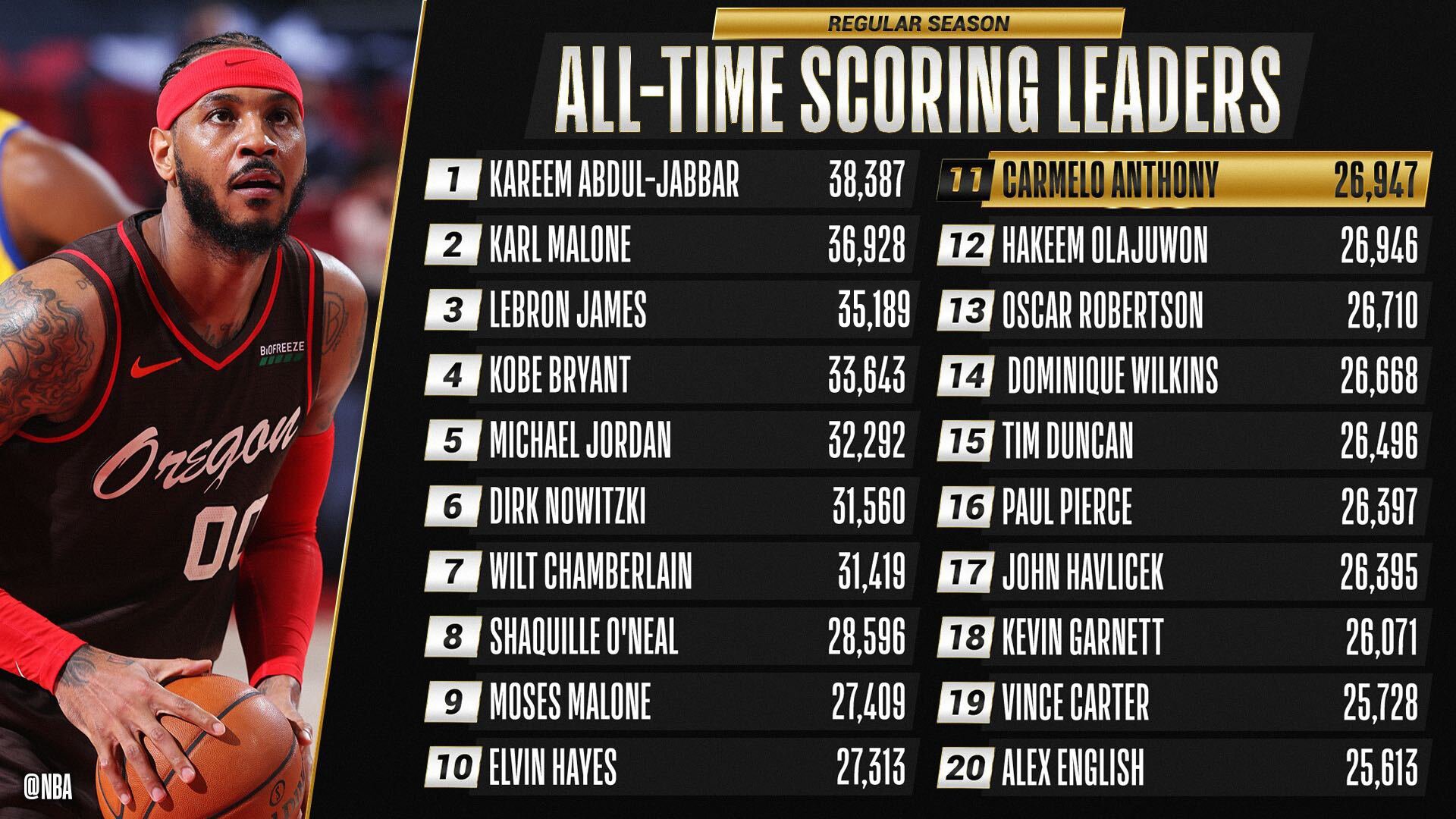
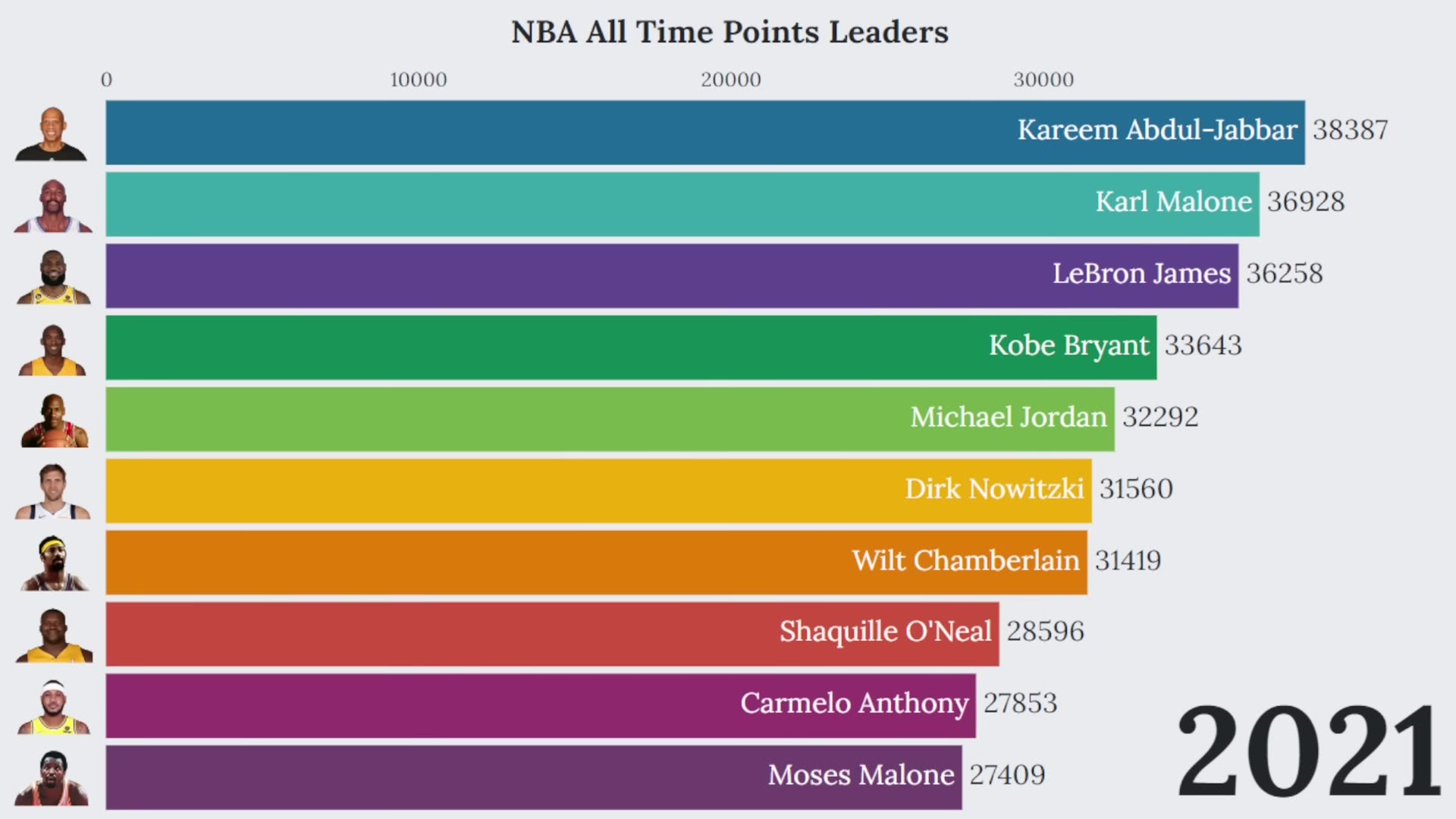
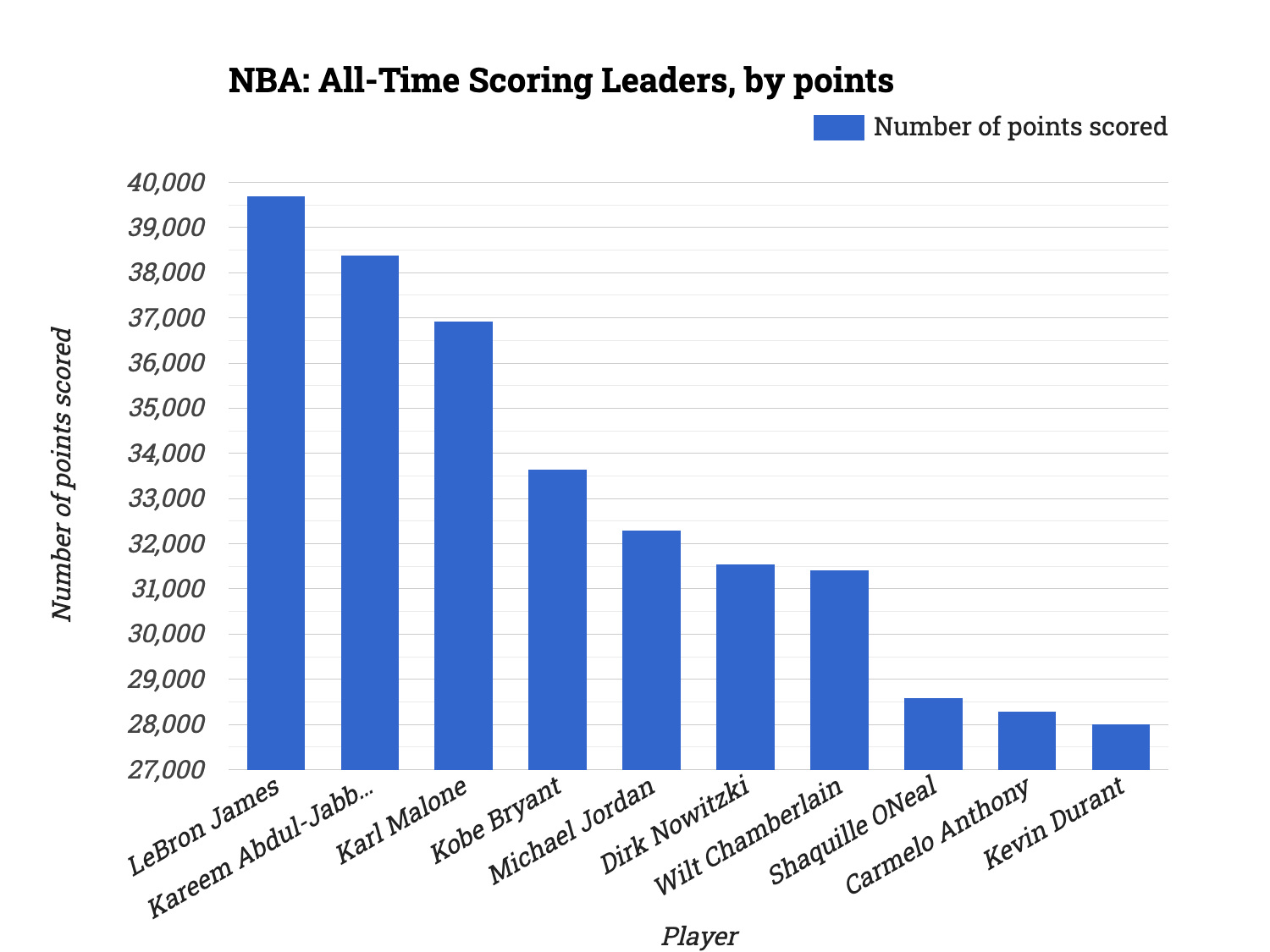
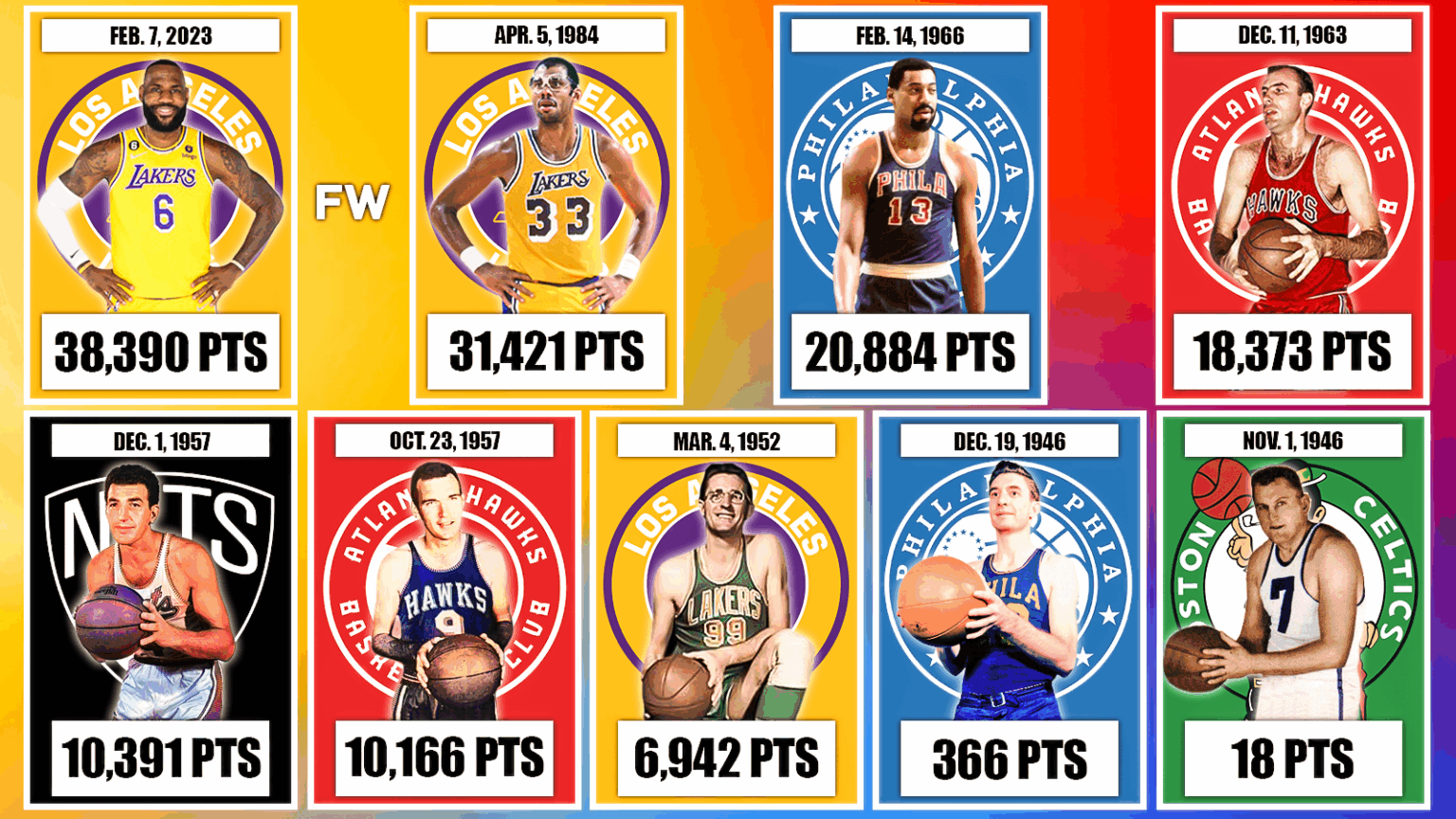
As of the 2026 NBA season, the upper echelon of the all-time scoring list features a blend of historic legends and enduring active superstars. LeBron James continues to hold the number one position, pushing the boundary of career points into uncharted territory.
Active vs. Historic Milestones The summit of the scoring list is defined by players who combined decades of elite production with minimal catastrophic injuries. While previous generations relied heavily on longevity through low-impact post play, contemporary leaders maintain their status through exceptional shooting versatility and advanced sports science.
Following James at the top, legendary names such as Kareem Abdul-Jabbar, Karl Malone, Kobe Bryant, and Michael Jordan anchor the top five. Meanwhile, active modern guards and forwards climb the ranks by capitalizing on higher three-point volume and spaced-out floor designs that yield greater scoring efficiency than previous decades afforded.
Analyzing the Mechanics of Elite Career Longevity
Reaching the upper tier of the NBA scoring leaderboard is rarely an accident of talent alone; it is the byproduct of meticulous physical preparation and strategic adaptation.
1. Skill Evolution and Age-Curve Defiance
As players enter their mid-30s, natural athletic decline forces a shift in playing style. Elite scorers compensate for a loss of initial burst by developing superior shooting gravity, mastering deceleration, and utilizing elite court vision to draw fouls.
2. Medical and Recovery Innovations
Modern athletes benefit from cryotherapy, hyperbaric chambers, biometric workload tracking, and personalized nutritional science. These interventions minimize soft-tissue injuries and allow players to sustain high productivity over 82-game schedules, directly contributing to career point totals.
3. Tactical Alignment
Coaches design offensive systems that protect primary scorers off the ball, utilizing off-screen pin-downs and staggered screens to generate easy catch-and-shoot opportunities or uncontested drives to the basket.
Strategic Checklist for Evaluating Scoring Records
For basketball analysts and fans examining historical scoring metrics, adhering to a rigorous evaluation framework ensures accurate context:
- Adjust for Pace: Compare scoring averages across eras by normalizing points per 100 possessions rather than raw points per game.
- Examine Free Throw Dependency: Assess whether a player's scoring relies on efficient shooting or high-volume free throw generation.
- Factor in Playoff vs. Regular Season: Differentiate between regular-season historical records and combined total career points (which include postseason performances).
- Track Turnover and Usage Cost: Determine the offensive efficiency cost (turnovers and missed shots) required to generate a player's high point totals.
Frequently Asked Questions
Who is the all-time leading scorer in NBA history?
LeBron James holds the record for the most regular-season points in NBA history, surpassing Kareem Abdul-Jabbar's long-standing milestone. His sustained excellence across more than two decades has established a new benchmark for career longevity.
How many total points are needed to enter the top 10 all-time?
Entering the top 10 requires clearing a threshold of approximately 27,000 to 28,000 regular-season career points. This elite group consists almost exclusively of Naismith Memorial Basketball Hall of Famers and generational talents.
Do playoff points count toward the official all-time scoring list?
Official NBA scoring leader statistics traditionally track regular-season games only. However, separate leaderboards are maintained for combined regular season and postseason scoring to evaluate total career impact.
How has the three-point line changed all-time scoring projections?
The widespread adoption of high-volume three-point shooting allows modern players to accumulate points at an accelerated rate compared to past eras. Players who combine deep-range shooting with elite free-throw drawing ability can sustain high scoring averages deep into their careers.
What is the average career length required to reach the top 50 scoring list?
Players typically need at least 12 to 15 productive seasons with high usage rates and minimal major injuries to accumulate enough total points to crack the top 50 all-time list.
Final Perspective on Scoring Excellence
The chase to remain among the all-time NBA scoring leaders reflects the pinnacle of athletic endurance and offensive mastery. As basketball strategy continues to evolve in the mid-2020s, the benchmarks set by today's legends will challenge future generations of players to redefine what is possible on the hardwood.
Image Gallery