The Legacy and Dynamics of Army Football vs Air Force
The annual clash between the Army Black Knights and the Air Force Falcons is a cornerstone of college football tradition, representing a fierce rivalry between two of the United States’ premier service academies. Beyond the conference...
The annual clash between the Army Black Knights and the Air Force Falcons is a cornerstone of college football tradition, representing a fierce rivalry between two of the United States’ premier service academies. Beyond the conference standings and bowl implications, this matchup embodies the shared values, athletic excellence, and mutual respect of the nation’s military branches, consistently drawing national attention for its disciplined tactical approach and profound institutional significance.
Contents
Historical Significance and Institutional Pride
The rivalry between the United States Military Academy (Army) at West Point and the United States Air Force Academy (Air Force) in Colorado Springs is defined by more than just final scores. While Army’s historical gridiron presence dates back to 1890, the Air Force program, which gained varsity status in 1955, quickly established itself as a formidable peer. The two teams first met on the field in 1959, ending in a 13-13 tie, setting the stage for decades of competitive tension.
For both academies, the football field serves as an extension of the rigorous training environment found at their respective installations. The game is often viewed as a showcase of leadership development, where players are simultaneously midshipmen or cadets preparing for commissions as officers. This context elevates the intensity; the players represent not only their university but also their future colleagues in the armed services.
Tactical Evolution: The Triple Option Tradition
One of the most defining technical aspects of Army football vs Air Force is the persistent reliance on the triple option offense. In an era of college football dominated by high-speed, spread-passing attacks, both academies have largely maintained a commitment to run-heavy, option-based schemes. This tactical preference is not merely stylistic but pragmatic; the option offense emphasizes precision, discipline, and superior conditioning, mirroring the organizational philosophy of the military itself.
The triple option requires the quarterback to read the defensive end or outside linebacker to determine whether to hand off to the fullback, keep the ball himself, or pitch to a trailing halfback. This scheme minimizes turnover risks and controls the clock, which is essential when facing opponents with deeper recruiting pools. In recent years, both programs have introduced nuances—such as modern pistol formations and RPOs (Run-Pass Options)—to keep pace with evolving defensive strategies, but the core identity remains rooted in the physical, ground-and-pound ethos that has defined this rivalry since the mid-20th century.
Comparison of Program Development and Resources
While both institutions share similar academic rigor and physical training requirements, their football programs face unique operational realities.
| Feature | United States Military Academy (Army) | United States Air Force Academy (Air Force) |
|---|---|---|
| Conference Status | American Athletic Conference (AAC) | Mountain West Conference |
| Primary Offensive Style | Triple Option / Flexbone Variations | Triple Option / Spread-Option |
| Recruiting Foundation | Diverse geographic reach, focus on character | Focus on high-performing student-athletes |
| Key Rivalry Context | Commander-in-Chief’s Trophy | Commander-in-Chief’s Trophy |
| Recent Strategic Shift | Increased emphasis on passing efficiency | Continued focus on ground-game dominance |
The logistical requirements for these programs are significant. Because both teams recruit from a specific talent pool that must meet strict physical, academic, and medical standards for military service, they rarely compete with traditional "Power Four" programs for the same recruits. Instead, their success is predicated on superior player development—identifying prospects who possess high intelligence and resilience rather than just raw athletic metrics.
The Commander-in-Chief’s Trophy
The ultimate prize in this series is the Commander-in-Chief’s Trophy, which is awarded to the service academy that holds the best record in head-to-head competition between Army, Air Force, and the Navy. This trophy is presented by the President of the United States, underscoring the political and symbolic importance of these matchups.
Winning this trophy is often cited by coaching staffs as the most important achievement of the season, frequently taking precedence over conference championships or bowl invitations. The trophy represents the pinnacle of inter-service sportsmanship and is a highly coveted reward that signifies supremacy among the service academies for that calendar year.
Recruiting Challenges and Service Commitments
A primary technical differentiator for Army and Air Force football is the mandatory post-graduation service commitment. Recruits must understand that their athletic career is secondary to their eventual duty as officers. This requirement often deters high-profile recruits who prioritize early entry into professional leagues like the NFL, but it attracts a specific type of athlete who values the long-term career stability and prestige of military service.
The eligibility rules and transfer portal regulations of 2026 apply to these programs just as they do to other Division I institutions. However, the waiver process for medical and physical requirements for service members adds a layer of administrative complexity. Coaches must work closely with their respective academies' admissions offices to ensure that every player is not only a high-level athlete but also capable of handling the rigorous academic curriculum and military obligations required to graduate.
Impact of 2026 Coaching Strategies
As of 2026, the coaching staffs at both academies continue to balance tradition with modernization. The challenge remains maintaining the offensive efficiency of the option game while integrating modern defensive concepts to counteract the speed of their opponents. Defensive coordinators in this series prioritize gap integrity and discipline; one missed assignment in an option scheme often results in a long touchdown.
Recent games have demonstrated that the team that controls the turnover margin and limits penalties usually secures the victory. With the increased reliance on data analytics in 2026, both coaching staffs utilize predictive modeling to determine when to go for it on fourth down and how to best manage field position, which has become even more vital given the narrowing margin of error in these matchups.
Frequently Asked Questions
Why do Army and Air Force mostly run the ball? The choice to run the ball is a strategic decision born of necessity and philosophy. By using the triple option, these teams can maintain high time-of-possession, tire out opposing defensive lines, and mitigate the physical size advantages of larger universities.
How does the military service requirement affect player recruitment? Recruits must commit to graduating and serving as officers. This filters out athletes who are focused solely on professional sports, attracting instead those who are academically capable and motivated by the prospect of a military career, which in turn influences the program's culture.
What is the Commander-in-Chief’s Trophy? It is a perpetual trophy awarded to the service academy that performs best in the round-robin series between Army, Air Force, and Navy. It is highly prestigious and represents the gold standard for success among the three programs.
How have modern conference realignments impacted these teams? Realignment has shifted the landscape for both programs. Army’s move to the AAC and Air Force’s continued tenure in the Mountain West have provided more consistent schedules and increased competitive opportunities, helping both programs stay relevant on the national stage.
Can Army or Air Force players play in the NFL? Yes. While it is rare, select players can receive waivers to pursue professional football careers after graduation, provided they fulfill their service commitments through alternative means, such as the reserves or by deferring their active-duty start dates.
Practical Recommendation for Fans and Analysts
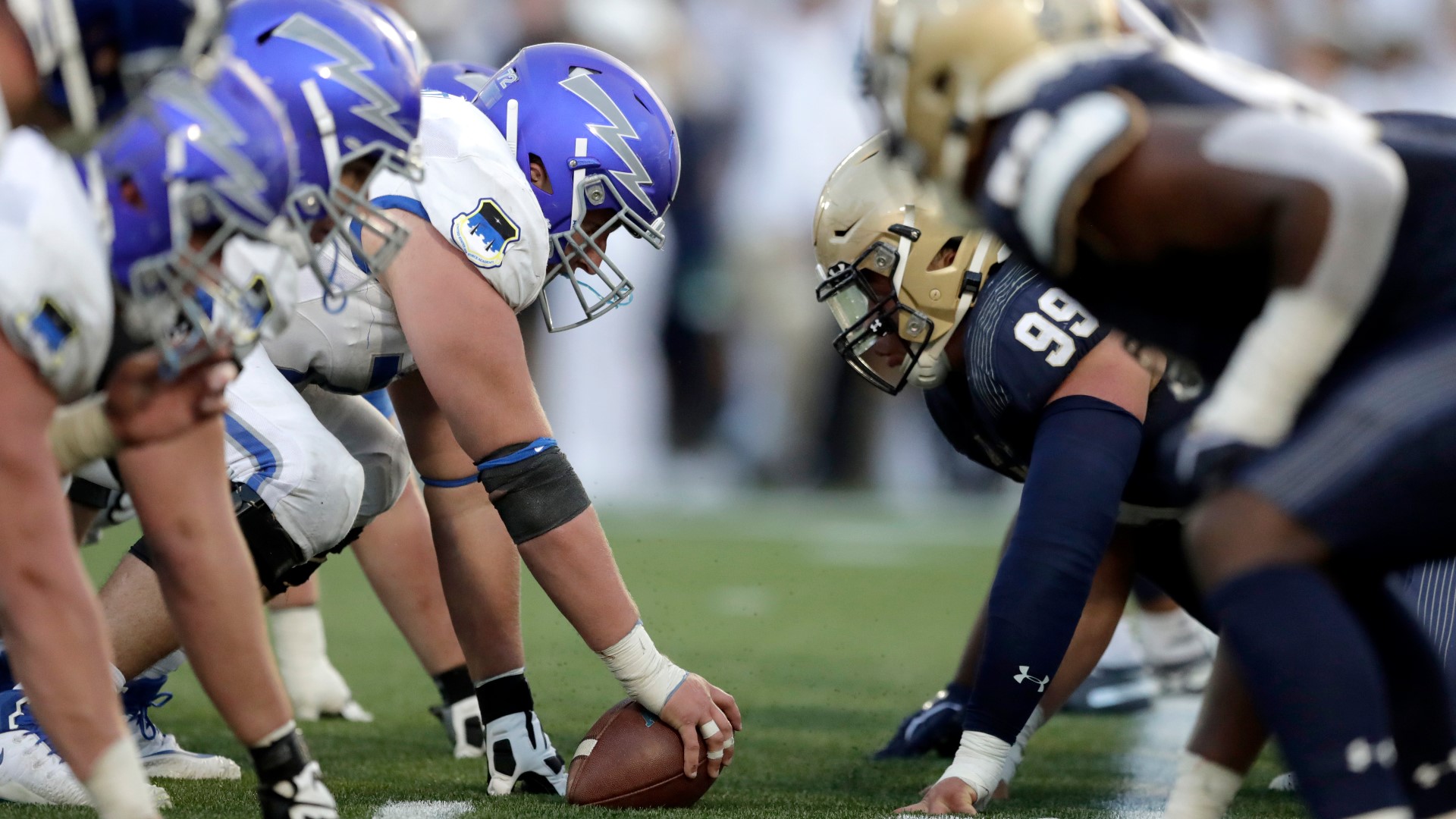
If you are looking to understand the nuances of the Army-Air Force matchup, focus on the "trenches" rather than the skill positions. The game is usually won or lost based on the offensive line's ability to execute complex blocking schemes and the defensive line's ability to maintain discipline against the option. For those tracking the season, pay close attention to the injury reports involving key fullbacks and quarterbacks, as these positions are the engines of their respective systems. Always monitor the official athletic department releases from West Point and the Air Force Academy for the most accurate updates on player status and game-day logistics, as these sources remain the definitive authorities for information regarding these historic programs.
Image Gallery