What Does a Degree in Finance Entail?
A degree in finance entails a rigorous academic exploration of how individuals, businesses, and institutions allocate, manage, and invest capital over time, balancing risk and return. Students engage in core coursework spanning account...
A degree in finance entails a rigorous academic exploration of how individuals, businesses, and institutions allocate, manage, and invest capital over time, balancing risk and return. Students engage in core coursework spanning accounting, microeconomics, corporate finance, and quantitative analysis, while building technical proficiency in financial modeling, valuation techniques, and market data systems.
Contents
Choosing a university path is a major life decision, and understanding what a degree in finance entails helps prospective students align their academic efforts with concrete career outcomes. Far beyond simply balancing checkbooks or looking at stock tickers, a finance curriculum teaches the foundational mechanics of capital markets, investment strategies, and corporate decision-making.
Whether you are weighing your undergraduate options, looking to pivot into corporate finance, or simply curious about the academic rigor behind Wall Street and global banking, a finance major provides a distinctive blend of qualitative problem-solving and hard quantitative skills. This guide breaks down everything from foundational coursework and technical specializations to career pathways and prerequisite skills.
Core Foundations: The Academic Core of a Finance Curriculum
At its core, a finance degree bridges mathematics, economics, and business management. While early semesters focus on general business administration, advanced coursework dives deeply into the quantitative realities of monetary systems. Understanding what a degree in finance entails requires looking closely at the foundational subjects that build up a student's analytical toolset.
Microeconomics and Macroeconomics
Before evaluating corporate balance sheets, students must understand the broader economic forces driving supply, demand, inflation, and interest rates.
- Microeconomics explores individual and corporate decision-making, market structures, and cost optimization.
- Macroeconomics looks at national and global aggregates, central bank policies (such as those enacted by the Federal Reserve), fiscal policy, and currency fluctuations.
Financial and Managerial Accounting
Often called the "language of business," accounting forms the bedrock of financial analysis. Finance students learn how to read, interpret, and manipulate the three primary financial statements: the balance sheet, the income statement, and the cash flow statement. While accounting focuses heavily on historical record-keeping and compliance, finance builds upon these statements to project future cash flows, assess firm health, and determine enterprise valuation.
Quantitative Methods and Statistics
Finance is fundamentally about managing risk under uncertainty. Students take rigorous courses in statistics, probability, and calculus to model financial scenarios. Key concepts include time value of money (TVM) calculations, variance, standard deviation, regression analysis, and expected return. These mathematical frameworks allow analysts to quantify risk and price complex financial instruments accurately.
Advanced Coursework and Specializations
As students progress past introductory classes, a finance degree opens up specialized tracks. Depending on the university and department, students can tailor their education toward specific sectors of the financial industry.
Corporate Finance
Corporate finance examines how businesses fund their operations, maximize firm value, and allocate resources to capital projects. Key topics include:
- Capital Budgeting: Evaluating whether a long-term project (such as building a new factory or launching a product) will generate a positive net present value (NPV).
- Capital Structure: Determining the optimal mix of debt and equity financing to minimize the company’s weighted average cost of capital (WACC).
- Working Capital Management: Ensuring the firm maintains sufficient short-term liquidity to meet current obligations.
Investments and Portfolio Management
This area shifts focus from internal corporate operations to capital markets and asset allocation. Students study modern portfolio theory, asset pricing models (such as the Capital Asset Pricing Model or CAPM), equity valuation, fixed-income securities, and derivative instruments like options and futures. Students often utilize real-world market data to construct, rebalance, and stress-test mock investment portfolios.
Financial Institutions and Markets
This track explores the architecture of the global banking system, commercial banking operations, central banking, and shadow banking. Students learn how financial intermediaries channel funds from savers to borrowers and how regulatory frameworks—such as the Dodd-Frank Act or Basel III accords—impact institutional risk management and lending practices.
Finance vs. Accounting vs. Economics
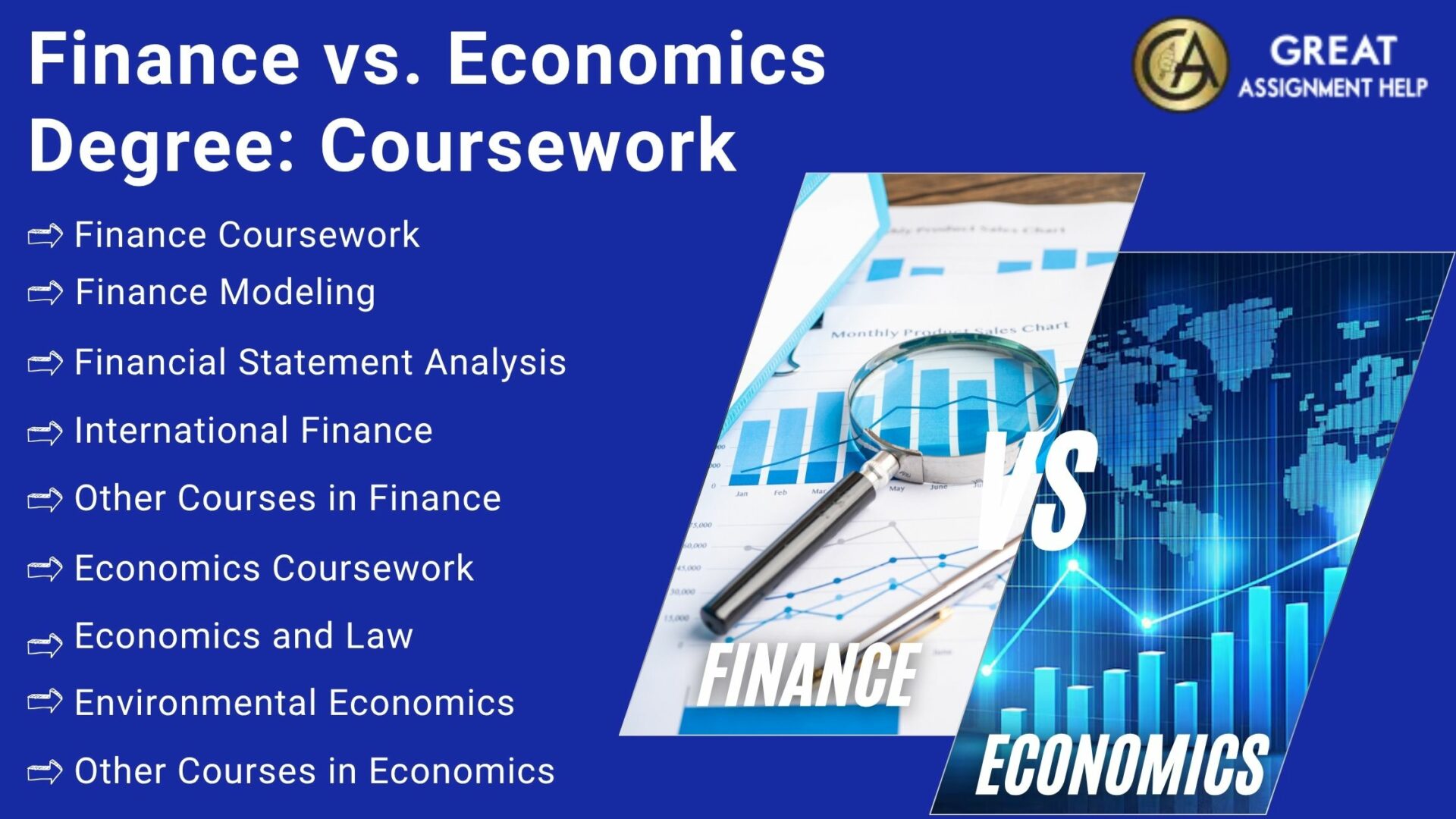
Prospective students frequently confuse finance with adjacent business majors. While they share overlapping coursework, their ultimate focus and day-to-day operations differ significantly.
| Major | Primary Focus | Key Question Answered | Typical Career Paths |
|---|---|---|---|
| Finance | Capital allocation, risk management, and valuation | How should we invest, finance, and grow our capital? | Corporate Finance, Investment Banking, Asset Management |
| Accounting | Historical record-keeping, auditing, and tax compliance | What did our financial transactions look like in the past? | Public Accounting, Auditing, Corporate Tax, Forensic Accounting |
| Economics | Theoretical analysis of resource allocation and market trends | How do societal choices and market systems function overall? | Economic Consulting, Public Policy, Research Analytics |
Technical Skills and Software Proficiency
A modern finance education goes far beyond textbook theories. To succeed in the contemporary job market, finance programs integrate practical software training and technical competencies directly into their curriculum.
Advanced Spreadsheet Modeling
Microsoft Excel is the universal tool of the finance profession. Students move far beyond basic spreadsheets, learning advanced formulas, pivot tables, data tables, scenario analysis, and Visual Basic for Applications (VBA) automation. Building integrated three-statement financial models from scratch is a standard benchmark of proficiency.
Industry Databases and Terminology
Many undergraduate and graduate business schools provide access to professional financial market terminals and research databases, such as Bloomberg, Capital IQ, or FactSet. Students learn how to pull historical pricing data, analyze industry comparables, screen for equities, and monitor macroeconomic indicators in real time.
Prerequisites, Soft Skills, and Admission Standards
Entering a finance program requires a solid academic baseline. While high school preparation varies, certain foundational skills predict success in the major.
- Mathematics Preparation: Strong high school grades in algebra, calculus, and statistics are crucial. Finance relies heavily on algebraic manipulation and quantitative reasoning.
- Written and Verbal Communication: Financial analysts must explain complex quantitative data to non-financial stakeholders, executives, and clients. Clear report-writing and presentation skills are heavily emphasized.
- Ethical Frameworks: Given the immense fiduciary responsibility inherent in handling other people's money, business ethics and regulatory compliance form a mandatory component of accredited business school curricula.
Frequently Asked Questions
Is a finance degree heavy on mathematics?
A finance degree requires a moderate to high level of quantitative skill, but it is generally less abstract than a pure mathematics or physics degree. Most programs require courses in calculus, applied statistics, and quantitative finance. The math focuses primarily on algebra, probability, and financial formulas like present and future value, rather than advanced theoretical proofs.
What career paths are available with a finance degree?
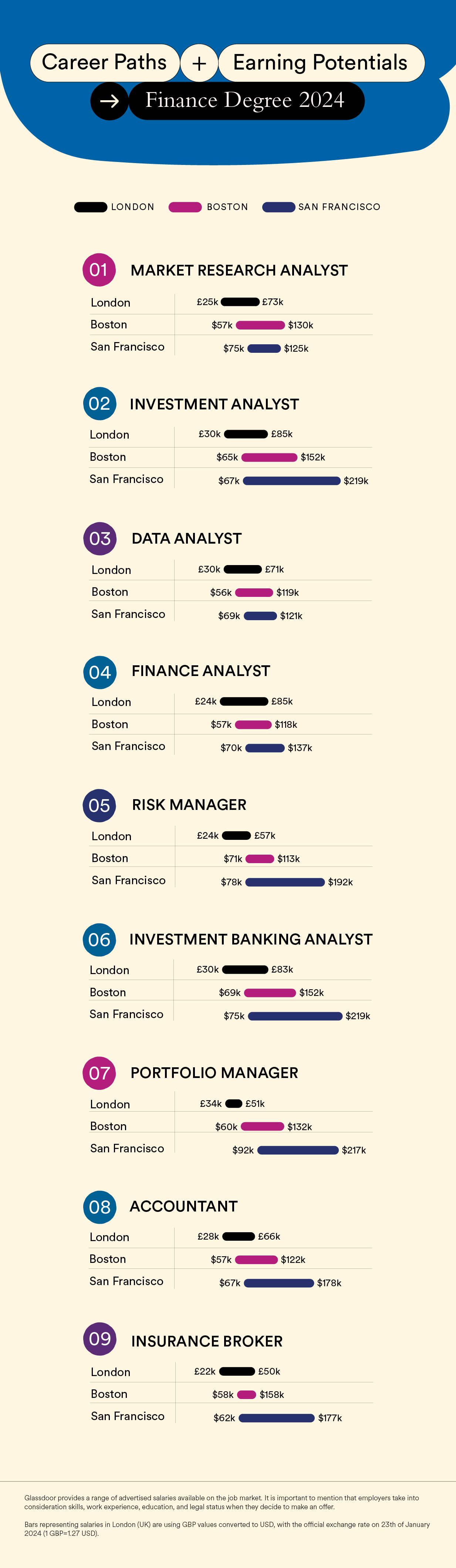
Graduates pursue diverse paths across corporate finance, investment banking, commercial banking, wealth management, financial planning, real estate analysis, and risk management. Some graduates also use the degree as a springboard into corporate leadership programs or graduate studies such as an MBA or a Master of Finance.
Do I need to know how to code to work in finance?
While traditional finance roles relied exclusively on Excel and proprietary software, modern financial analysis increasingly incorporates programming languages like Python, R, and SQL, particularly in quantitative finance, algorithmic trading, and data-heavy fintech environments. However, standard corporate finance roles still prioritize elite spreadsheet and presentation modeling skills.
How does a finance degree differ from a general business administration degree?
A general business administration degree offers a broad survey of all business disciplines, including marketing, management, operations, and introductory finance. A finance degree, by contrast, is a specialized functional major that dives deeply into capital markets, corporate valuation, and quantitative risk analysis.
Can I pursue professional certifications with a finance degree?
Yes. Many students align their undergraduate coursework with professional designations. Common certifications include the Chartered Financial Analyst (CFA) for investment professionals, the Certified Financial Planner (CFP) for personal wealth management, and the Financial Risk Manager (FRM) designation for risk specialists.
Next Steps and Strategic Planning
If you are planning to pursue a degree in finance, begin by reviewing the specific curriculum requirements of target AACSB-accredited business schools. Focus your early academic efforts on mastering foundational accounting principles and quantitative methods. Securing internships in corporate finance departments, commercial banks, or wealth management firms during your studies will provide essential practical experience, bridging the gap between classroom theory and professional execution.
Image Gallery