What Does Novena Mean? Definition, History, and Catholic Tradition
A novena is an ancient Christian practice of devotional prayer consisting of specific prayers recited continuously over nine consecutive days or nine consecutive hours. Derived from the Latin word novem, meaning "nine," a novena is typ...
A novena is an ancient Christian practice of devotional prayer consisting of specific prayers recited continuously over nine consecutive days or nine consecutive hours. Derived from the Latin word novem, meaning "nine," a novena is typically offered for a specific prayer intention—such as seeking divine grace, asking for a saint's intercession, expressing gratitude, or preparing for a major holy day.
Contents
While most widely associated with the Roman Catholic Church, novenas are also practiced by many Anglicans, Lutherans, and Eastern Rite Christians. The nine-day structure holds deep symbolic and historical significance within Christian liturgy and personal piety, serving as a structured framework for focused spiritual petition and reflection.
The Origin and Meaning of the Novena
The word novena comes directly from the Latin adjective novenus ("ninth") and the cardinal number novem ("nine"). In the ancient Roman world, the number nine held civic and cultural meaning. Romans observed a nine-day period of mourning following a death, known as the novemdiales, which concluded with a memorial feast and sacrificial offerings.
When Christianity spread throughout the Roman Empire, early believers reshaped existing cultural frameworks to reflect biblical events. Rather than relying on pagan customs, early Christian theologians grounded the nine-day prayer period in biblical narrative—specifically, the period between the Ascension of Jesus Christ and the descent of the Holy Spirit at Pentecost.
The Biblical Foundation: The First Novena
The foundational model for every Christian novena is recorded in the New Testament book of the Acts of the Apostles. Before Jesus ascended into heaven, he instructed his disciples not to leave Jerusalem, but to wait for the promise of the Father—the Holy Spirit.
According to Acts 1:12–14, the Apostles, together with Mary, the mother of Jesus, and several female followers, returned to the Upper Room in Jerusalem. For nine days, they remained united in continuous prayer until the tenth day, when the Holy Spirit descended upon them at Pentecost (Acts 2:1–4).
This nine-day period of continuous, expectant prayer between Ascension Thursday and Pentecost Sunday is recognized by liturgical historians as the prototype of all Christian novenas. It represents a period of waiting, preparation, and persistent faith before receiving God's promised grace.
- Ascension Thursday
- 9 Days of Continuous Prayer in the Upper Room
- Pentecost Sunday
The Four Major Types of Novenas
Over centuries of church history, novenas evolved into diverse forms tailored to specific devotional needs. Today, Catholic and traditional Christian practice categorizes novenas into four primary categories based on their underlying purpose.
1. Novenas of Preparation
Preparation novenas are prayed in anticipation of a major liturgical feast day, a sacrament, or a significant life event. These novenas usually begin nine days before a celebrated feast day on the church calendar.
- Example: The Christmas Novena (often referred to as the St. Andrew Christmas Novena) begins on November 30 (the Feast of St. Andrew) and runs until Christmas Eve, preparing the believer's heart for the Nativity of Christ.
- Purpose: To foster internal spiritual readiness, repentance, and joyful anticipation before a major holy day.
2. Novenas of Petition
Petitionary novenas are offered to ask God for a specific favor, miracle, healing, or spiritual gift. Believers often ask a specific saint to intercede on their behalf before God during these nine days.
- Example: The Novena to Saint Jude (the patron saint of impossible causes) or the Novena to Saint Peregrine (the patron saint of cancer patients).
- Purpose: To seek divine aid during times of hardship, illness, financial distress, or severe personal distress.
3. Novenas of Thanksgiving
Thanksgiving novenas are prayed after a specific prayer intention has been answered, or as a general act of gratitude to God, Jesus Christ, the Blessed Virgin Mary, or a saint.
- Example: A nine-day novena of praise following the recovery of a sick family member or the resolution of a major crisis.
- Purpose: To cultivate a spirit of gratitude, acknowledging divine Providence and answered prayer rather than focusing solely on requesting favors.
4. Novenas of Mourning (Novendiales)
Mourning novenas are offered for the repose of the soul of a deceased person. This practice directly echoes both early Christian burial rites and the historical Roman period of mourning.
- Example: The Novendiales observed at the Vatican upon the death of a Pope, during which nine consecutive days of Requiem Masses and public prayers are held for the deceased Pontiff.
- Purpose: To pray for the purification and eternal rest of the departed soul in God's mercy.
How to Pray a Novena: Step-by-Step
Praying a novena does not require complex theological training, but it does benefit from personal discipline and clear intent. While standard novena booklets and prayer apps provide specific text for each day, the fundamental steps remain consistent across traditions.
- Step 1: Formulate a Specific Intention
- Step 2: Select the Right Novena
- Step 3: Establish a Consistent Daily Routine
- Step 4: Recite the Daily Prayers & Meditations
- Step 5: Maintain Perseverance (Handling Missed Days Gracefully)
Step 1: Formulate a Clear Intention
Before beginning, define the specific intention for your prayer. This might be healing for a family member, wisdom in making a major career decision, peace in a difficult relationship, or spiritual growth. Writing your intention down can help maintain focus over the nine-day period.
Step 2: Choose the Novena
Select a novena whose theme aligns with your intention. For example:
- For urgent or difficult situations: Novena to Saint Jude or Novena to Saint Rita.
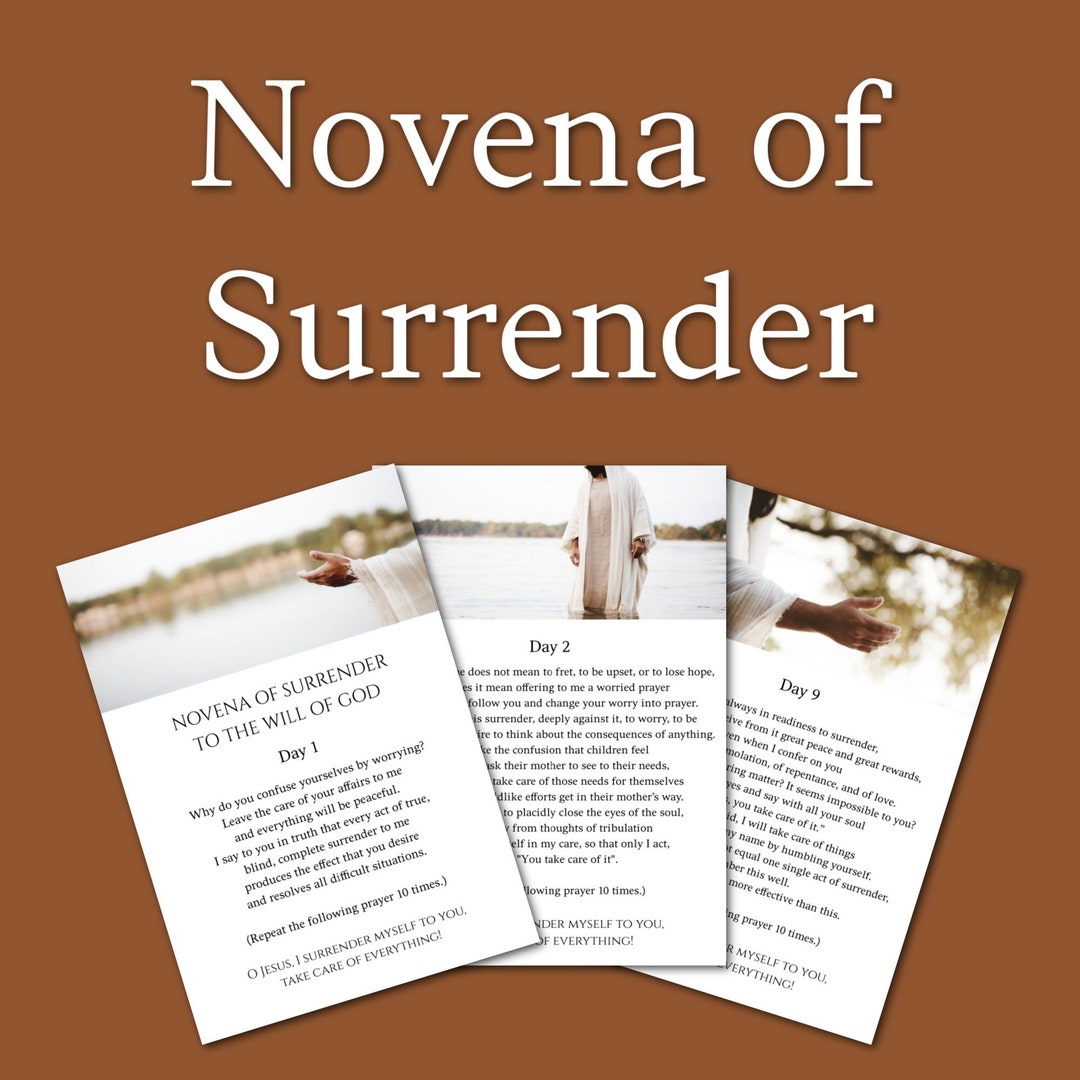
- For trust and surrendering anxiety: The Surrender Novena.
- For inner peace and family needs: Novena to the Sacred Heart of Jesus or Novena to Our Lady Undoer of Knots.
Step 3: Set a Daily Schedule
Consistency is key to completing a novena. Decide on a fixed time each day—such as early morning, during a lunch break, or right before bed—to recite the prayers. Setting a reminder on a smartphone or placing a prayer card on a nightstand helps establish the routine.
Step 4: Pray the Daily Prayers
Each day of a novena typically consists of:
- Opening Sign of the Cross and an invocation to the Holy Spirit.
- The Daily Meditation: A brief reading or reflection specific to Day 1, Day 2, etc.
- The Main Novena Prayer: The core prayer asking for the intercession of the saint or directing the petition to God.
- Traditional Supporting Prayers: Often includes one Our Father, one Hail Mary, and one Glory Be.
- Closing Intention: Re-stating the personal favor or grace requested.
Step 5: Handle Missed Days Gracefully
If you miss a day due to forgetfulness or unforeseen circumstances, Catholic spiritual guidance emphasizes that the novena is not "broken" or rendered invalid. Simply pray the missed day's prayers as soon as you remember, or combine two days into one session, and continue forward. A novena is a spiritual exercise grounded in devotion, not a legalistic transaction.
Popular Novenas and Their Intentions
Below is a comparison of some of the most widely practiced novenas within the global Catholic community, detailing their focus, associated patronages, and customary timing.
| Novena Name | Primary Focus / Intention | Associated Patron or Devotion | Traditional Timing |
|---|---|---|---|
| Divine Mercy Novena | For forgiveness, trust in God, and global divine mercy | Jesus Christ (as revealed to St. Faustina Kowalska) | Starts Good Friday; ends the Saturday before Divine Mercy Sunday |
| Novena to St. Jude | For desperate situations, impossible causes, and deep anxiety | Saint Jude Thaddeus (Apostle) | Oct 19–27 (preceding his feast day on Oct 28), or any urgent time |
| Novena to St. Joseph | For employment, housing, fatherhood, family protection, and a peaceful death | Saint Joseph, Husband of Mary | March 10–18 (preceding the Feast of St. Joseph on March 19) |
| Novena to Our Lady Undoer of Knots | For complex, unresolved life problems, broken marriages, and long-standing distress | Mary, Mother of Jesus | Any time during the year; popular in Marian months (May and October) |
| The Surrender Novena | For overcoming worry, releasing control, and trusting divine Providence | Father Dolindo Ruotolo | Any nine-day period, especially during times of high stress |
| Novena to the Holy Spirit | For spiritual gifts, wisdom, fortitude, and personal renewal | The Holy Spirit | The nine days between Ascension Thursday and Pentecost Sunday |
| St. Andrew Christmas Novena | For personal petitions while preparing spiritually for Christ's birth | Saint Andrew the Apostle | Nov 30 to Dec 24 (recited 15 times daily for 25 days) |
Global and Cultural Novena Traditions
The practice of the novena has produced rich regional customs around the world, blending liturgical practice with vibrant community cultural celebrations.
Las Posadas (Latin America and Mexico)
Beginning on December 16 and ending on Christmas Eve, Las Posadas is a nine-day devotional journey representing the nine months of Mary's pregnancy and the journey of Mary and Joseph from Nazareth to Bethlehem.
Each night, a procession of neighborhood participants visits designated homes, acting out the search for shelter ("posada"). The home's residents initially refuse entry through traditional song before welcoming the pilgrims inside for prayers, scripture readings, fellowship, and festive meals.
9-Day Journey of Las Posadas:
- Dec 16
- Dec 17
- Dec 18
- Dec 19
- Dec 20
- Dec 21
- Dec 22
- Dec 23
- Dec 24 (Nochebuena)
Simbang Gabi (The Philippines)
In the Philippines, Simbang Gabi ("Night Masses" or Misa de Gallo) is a nine-day series of early morning Masses held from December 16 to December 24. Dates trace back to the Spanish colonial period, allowing agricultural laborers to attend Mass at dawn before starting work in the fields. Completing all nine days of Masses is traditionally believed by local faithful to carry a special blessing for one's answered prayers.
Novendiales in Rome
Upon the death of a reigning Pope, the Vatican observes the Novendiales—nine consecutive days of mourning and official funeral Liturgies held in St. Peter's Basilica. Cardinal electors, clergy, and lay pilgrims gather daily to pray for the soul of the deceased Pontiff while preparing the universal Church for the upcoming papal conclave.
The Theology of the Novena: Faith vs. Superstition
A common point of confusion for beginners is the theological purpose of the nine-day length. Does God only answer prayers if they are repeated for exactly nine days?
Christian theologians and the Catechism of the Catholic Church clarify that novenas are not magical rituals or guarantees of getting one's desired outcome. According to Catholic teaching:
- No Magic Formula: The exact count of nine days carries no intrinsic supernatural power. The efficacy of prayer comes from the faith of the believer, the grace of God, and divine wisdom—not the mechanical repetition of words.
- Cultivating Persistence: The nine-day structure serves human psychology and spiritual discipline. Jesus explicitly taught his followers to pray persistently without losing heart, as shown in the Parable of the Persistent Widow (Luke 18:1–8). Repeating a prayer over nine days builds patient faith and alignment with God's will.
- Surrender to Divine Will: A true novena ends with trust in God's answer, whether that answer is "yes," "no," or "wait." The prayer helps transform the person praying, disposing their heart to accept divine guidance.
As Saint Augustine noted in his writings on prayer, continuous petition does not inform God of something He does not know; rather, it expands the human heart so that it may be capable of receiving what God is preparing to give.
Frequently Asked Questions
What happens if I forget a day during a novena?
Missing a day does not nullify your novena. You can simply make up the missed daily prayer as soon as you remember, or say both days' prayers together during your next prayer time. Novenas are spiritual exercises intended to foster love and trust in God, not rigid legalistic tests.
Can I pray a novena for multiple intentions at once?
Yes. While focusing on a single, clear intention helps maintain mental clarity and spiritual depth, you can hold multiple intentions in your heart when beginning a novena.
Why is the number nine so significant in a novena?
The number nine primarily honors the nine days that the Virgin Mary and the Apostles spent praying in the Upper Room between the Ascension of Jesus and Pentecost. Additionally, in ancient Christian symbolism, nine is three times three, representing total devotion to the Holy Trinity (Father, Son, and Holy Spirit).
Do I have to go to church to pray a novena?
No. While some novenas are conducted publicly inside a parish church or during daily Mass, most novenas are prayed individually or as a family at home, during daily commutes, or in private quiet spaces.
What is a "nine-hour novena"?
A nine-hour novena (sometimes called an urgent or express novena) compresses the nine periods of prayer into nine consecutive hours within a single day. The individual prays the designated novena prayer at the top of every hour for nine hours straight, often during moments of critical crisis or urgent need.
Are novenas practiced outside the Catholic Church?
Yes. High-Church Anglicans, Eastern Rite Christians, many Lutherans, and some ecumenical Christian communities practice novenas. While their popularity is highest within Roman Catholicism, the biblical root of praying for nine days between Ascension and Pentecost is recognized across broad Christian traditions.
Summary and Next Actions
Understanding what a novena means reveals a practice rooted in biblical history, continuous perseverance, and deep spiritual structure. Whether undertaken to prepare for Christmas, seek comfort during personal hardship, or pray for the deceased, a novena offers a structured framework for quiet contemplation and petition.
If you are interested in starting your first novena:
- Identify your current life situation: Choose whether you need help with a difficult situation (St. Jude), anxiety and surrender (The Surrender Novena), or daily family life (St. Joseph).
- Obtain the prayer text: Use verified devotional prayer books, trusted parish publications, or reputable Christian prayer applications.
- Designate a calm daily space: Set aside five to ten minutes at the same time each day for nine days to step away from daily distractions and pray intentionally.
Image Gallery