Commercial Foundation Crack Sealing: Solutions from Perma Pier Foundation Repair of Texas
Commercial foundation crack sealing halts water intrusion, prevents severe structural degradation, and stabilizes concrete slabs impacted by Texas’s notorious expansive clay soils. Perma Pier Foundation Repair of Texas addresses these...
Commercial foundation crack sealing halts water intrusion, prevents severe structural degradation, and stabilizes concrete slabs impacted by Texas’s notorious expansive clay soils. Perma Pier Foundation Repair of Texas addresses these challenges by combining detailed geological diagnostics with high-pressure epoxy resin injection, expanding polyurethane foam, and structural piering systems engineered specifically for commercial facilities.
Contents
Understanding Texas Soils and Commercial Foundation Cracking
Texas presents some of the most challenging soil conditions for commercial construction in the United States. Vast regions of the state—including the Dallas-Fort Worth Metroplex, Houston, Austin, and San Antonio—sit atop expansive clay formations such as the Eagle Ford, Blackland Prairie, and Houston Black clays. These soils possess a high Plasticity Index (PI), meaning they undergo extreme volume changes depending on moisture content.
During heavy rainfall or prolonged droughts, the clay expands and contracts significantly. This soil movement exerts intense hydrostatic pressure and differential movement against commercial slab-on-grade, post-tensioned, and deep foundation systems. Over time, the uneven support beneath the building creates shear and tensile stress within the concrete slab and perimeter stem walls, ultimately causing visible cracking.
In commercial properties, concrete cracking typically falls into two major categories:
- Non-Structural Cracks: Often caused by concrete shrinkage during curing, thermal expansion, or minor surface settlement. While these cracks (generally under 1/16 inch wide) do not compromise structural integrity immediately, they create direct pathways for moisture, chemical contaminants, and subterranean pests.
- Structural Cracks: Caused by soil heave, differential foundation settlement, heavy equipment loads, or post-tension cable distress. These cracks frequently exceed 1/8 inch in width, exhibit diagonal or vertical displacement, and often continue through load-bearing walls, tilt-up panels, or interior floor finishes.
Unaddressed foundation cracks in commercial buildings allow groundwater and volatile organic compounds (VOCs) to migrate into interior spaces. In freeze-thaw cycles or high-humidity environments, entrapped water rapidly accelerates rebar corrosion, causing internal concrete spalling and compromise of structural load capacities.
Diagnostic Protocols Used by Perma Pier Foundation Repair of Texas
Addressing commercial foundation cracks requires more than applying a surface sealant. Effective repair depends on identifying whether a crack is static (dormant) or active (moving), and whether the underlying root cause stems from soil movement, plumbing leaks, or poor drainage. Perma Pier Foundation Repair of Texas utilizes a comprehensive diagnostic process tailored to commercial infrastructure.
Geological and Soil Profile Mapping
Because soil characteristics vary across different Texas regions, field technicians analyze the underlying soil stratigraphy. Understanding local soil depth, moisture variation zones, and bedded shale layers determines whether surface crack injection alone is sufficient or if deep soil stabilization and structural piering are necessary.
Precision Elevation Mapping
Technicians perform precise elevation surveys using digital altimeters or zip levels to map the floor plane across the entire commercial footprint. This survey establishes a baseline elevation contour map, pinpointing exact areas of differential settlement or upward soil heave.
Structural and Crack Behavior Analysis
To determine the appropriate sealing formulation, engineers evaluate crack characteristics:
- Aperture and Depth: Core drilling or ultrasonic testing measures crack depth and internal void spaces.
- Load Conditions: Evaluating live and dead loads across warehouse floors, manufacturing plants, or retail spaces ensures the repair material meets or exceeds the original shear strength of the concrete.
- Moisture Levels: Testing for active water flow determines whether a hydrophobic, water-activated polyurethane or a structural moisture-tolerant epoxy resin is required.
Materials and Techniques for Commercial Crack Sealing
Sealing cracks in commercial buildings involves advanced chemistry and high-pressure injection equipment. Perma Pier Foundation Repair of Texas selects specialized materials based on structural requirements, environmental exposure, and building usage.
High-Strength Epoxy Resin Injection
For structural crack repair where concrete needs to regain its original monolithic strength, epoxy resins conforming to ASTM C881 standards are the primary industry solution. Epoxies provide high compressive and tensile strength—often exceeding the strength of the surrounding concrete itself.
- Mechanism: Surface ports are placed along the crack line at precise intervals, and the surface is sealed with a temporary epoxy gel. Low-viscosity epoxy resin is then injected under controlled pressure, forcing the liquid deep into the fissure to bond the micro-fractures together.
- Best For: Load-bearing concrete walls, structural slabs, tilt-up panels, and dry interior floor slabs experiencing static structural cracking.
Flexible Polyurethane Resin Injection
When cracks are subject to minor ongoing thermal movement or active water infiltration, rigid epoxy can re-crack under stress. Flexible polyurethane resins offer an elastomeric seal that expands upon contact with moisture.
- Mechanism: Hydrophobic polyurethane liquid reacts with water inside the crack, expanding up to 20 to 30 times its original volume. This fast-curing foam penetrates small capillary pathways and creates a tight, resilient seal against high hydrostatic pressure.
- Best For: Water-bearing cracks, retaining walls, parking structure foundations, elevator pits, and exterior foundation stem walls.
Sub-Slab Polyurethane Soil Stabilization and Lifting
When foundation cracking is accompanied by sub-slab voids or slab settlement, polyurethane foam is injected directly beneath the concrete slab.
- Mechanism: High-density closed-cell polyurethane foam is pumped through tiny 5/8-inch drill holes through the slab. The expanding polymer fills sub-grade voids, compacts loose soil strata, and accurately re-levels settled floor sections without adding excessive weight to fragile soils.
Structural Piering Integration
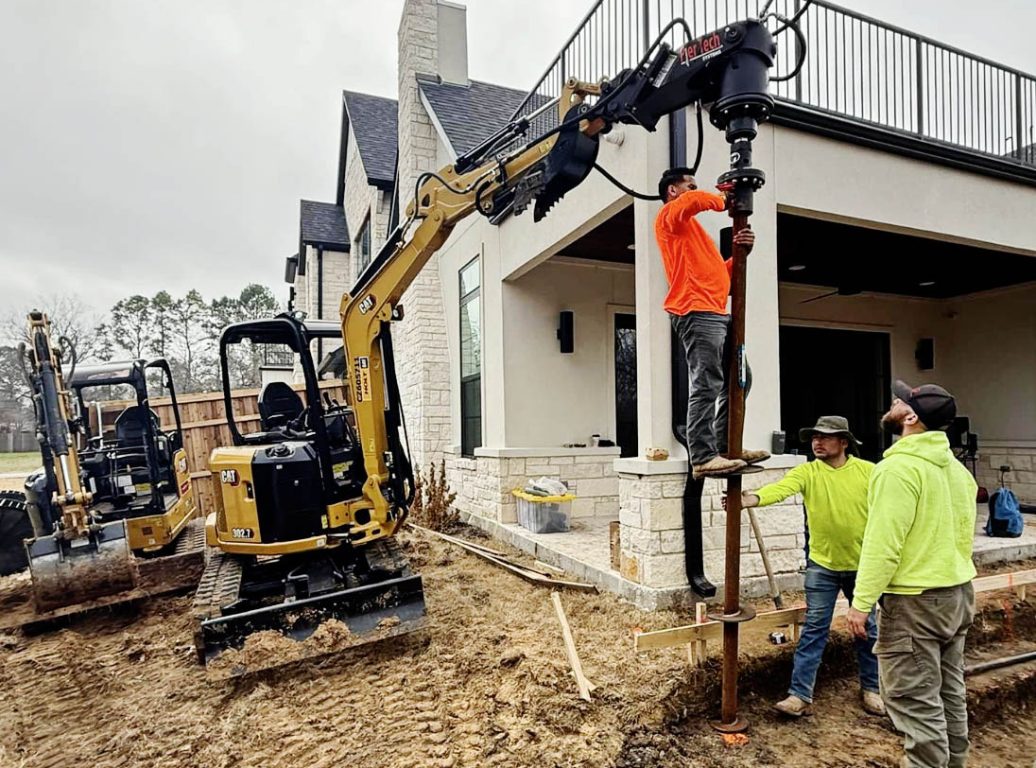
If foundation cracks stem from ongoing differential settlement, sealing the concrete alone will not stop future movement. In these cases, Perma Pier Foundation Repair of Texas combines crack sealing with deep structural piering. Steel piers or custom concrete pile systems are driven deep into stable soil layers or bedrock beneath the building foundation, permanently supporting the structure and preventing future crack recurrence.
Comparison of Commercial Foundation Crack Repair Methods
| Repair Method | Primary Material Used | Typical Commercial Application | Structural Capability | Water Resistance | Operational Impact |
|---|---|---|---|---|---|
| Epoxy Injection | Low-viscosity 100% solids epoxy resin (ASTM C881) | Load-bearing slabs, concrete beams, structural walls | High structural tensile & compressive restore | Moderate (Best on dry/cured surfaces) | Low (Dust-free, low-vibration port setup) |
| Polyurethane Injection | Hydrophobic/Hydrophilic expanding polymer | Active water leaks, foundation stem walls, basements | Non-structural (Flexible seal) | Excellent (Seals against high water pressure) | Minimal (Rapid setting times) |
| Deep Polyfoam Slab Raising | High-density structural polyurethane foam | Void filling under warehouse floors, slab re-leveling | High compressive load support | Excellent (Impervious to moisture/washout) | Very Low (Immediate foot/vehicle traffic readied) |
| Structural Piering & Sealing | Heavy-gauge steel piers / concrete piles + resin | Severe differential settlement in commercial buildings | Full structural lift & permanent support | High (Combined with resin injection) | Moderate (Phased execution near perimeter/interior) |
Step-by-Step Commercial Crack Repair and Sealing Process
Achieving a durable seal on a commercial building requires strict adherence to surface preparation, material mixing, injection pressure, and quality verification.
Step 1: Surface Preparation and Cleaning
The surface surrounding the crack must be free of oil, curing compounds, efflorescence, and loose debris. Technicians clean the crack using wire brushes, mechanical grinders, or oil-free compressed air. Clean surface profiles ensure maximum adhesion for surface capping materials and injection ports.
Step 2: Port Installation and Surface Capping
Entry ports are attached directly over the crack line at intervals roughly equal to the thickness of the concrete slab or wall (typically 4 to 12 inches apart).
- Surface Ports: Adheres directly to the surface using a fast-setting epoxy paste.
- Mechanical Packers: Inserted into drilled holes angled at 45 degrees to intersect deep cracks in thick foundations or retaining walls.
- Surface Cap: A temporary epoxy paste is applied over the exposed crack line between ports to hold high injection pressures without leaking.
Step 3: Controlled High-Pressure Injection
Injection starts at the lowest port on vertical walls or at one end of a horizontal slab crack.
- The injection material (epoxy or polyurethane) is pumped under monitored pressure using dual-component metering pumps.
- Pumping continues until the resin flows out of the adjacent port, confirming complete internal depth penetration.
- The technician caps the current port and moves to the next, repeating the process down the line.
Step 4: Curing and Surface Restoration
Once the injected material cures completely (typically 4 to 24 hours depending on ambient temperature and formulation), entry ports are removed. The temporary surface cap is ground flush with the surrounding concrete floor or wall face, leaving a smooth surface ready for paint, sealant, or floor coverings.
Step 5: Moisture and Soil Stabilization
To ensure long-term stability, exterior soil moisture controls are often integrated. This includes installing commercial French drains, root barriers, surface drainage grading, and automated drip irrigation systems to keep soil moisture levels balanced around the foundation perimeter.
Commercial Cost Factors and Asset Risk Mitigation
Neglecting structural or non-structural cracks in commercial real estate can lead to severe operational disruptions, regulatory non-compliance, and compounding repair costs.
| Operational Risks | Financial Impacts |
|---|---|
| ADA trip hazard violations | Accelerating structural decay |
| Inventory damage from water | Reduced property appraisal |
| Forklift / equipment damage | Severe tenant lease disputes |
| Interior moisture / mold risks | High emergency repair costs |
Key cost drivers for commercial foundation crack injection and repair include:
- Total Linear Footage and Crack Width: Wider, deeper cracks require significantly larger volumes of high-performance resin or expanding polyurethane foam.
- Accessibility and Facility Downtime Requirements: Work performed during off-hours, overnight shifts, or within cleanroom/food-grade facilities requires specialized staging and dust control containment.
- Depth of Void and Soil Conditions: Sub-slab void filling and lifting costs depend on the volume of density-rated polyurethane foam needed beneath the slab.
- Requirement for Piering: If structural movement requires steel or concrete piers beneath the building, total costs shift from specialized crack sealing to major structural underpinning.
Proactively sealing foundation cracks preserves real estate value, maintains Americans with Disabilities Act (ADA) compliance on commercial walkway slabs, and prevents tenant lease disputes caused by water intrusion or uneven flooring.
Frequently Asked Questions
What is the primary difference between epoxy and polyurethane crack injection?
Epoxy is designed for structural bonding. It restores the original tensile and compressive strength of cracked concrete and is used on static, dry, load-bearing slabs and walls. Polyurethane is a flexible, expanding material designed primarily to stop active water leaks and fill sub-surface voids. It accommodates light concrete movement caused by thermal changes without losing its seal.
How do I determine if a commercial floor crack is structural or cosmetic?
Cosmetic cracks are generally fine, narrow (under 1/16 inch), uniform in width, and do not show height displacement across the break. Structural cracks are usually wider (over 1/8 inch), run diagonally or vertically across structural members, exhibit uneven vertical edges (differential settlement), or continue across adjacent exterior tilt-up panels and interior drywall. A professional elevation survey and structural diagnostic evaluation can verify structural movement.
Can foundation crack sealing be completed without stopping commercial operations?
Yes. Commercial crack sealing techniques—such as low-pressure epoxy injection and high-density polyfoam injection—produce minimal dust, noise, and vibration. Repairs can often be phased by building section or executed during off-hours to prevent operational downtime for retail, warehouse, or office tenants.
Why are Texas clay soils particularly aggressive toward commercial concrete slabs?
Texas clays contain active minerals (such as montmorillonite) that expand significantly when wet and shrink severely during dry weather. This constant shrinking and swelling creates fluctuating support beneath concrete foundations, leading to uneven stress, sub-slab voids, differential settlement, and concrete cracking.
How long does high-pressure epoxy foundation crack sealing last?
When properly applied to a clean, dry, static crack, epoxy injection creates a permanent bond that is as strong as or stronger than the surrounding concrete. However, if the underlying soil movement that caused the crack is not stabilized, new cracks may form adjacent to the repaired area over time. Combining crack repair with soil stabilization or structural piering ensures long-term performance.
Recommended Next Actions
Commercial property managers, building owners, and facility directors suspecting foundation movement or visible crack formation should take the following steps:
- Conduct a Visual Asset Audit: Document crack locations, measure approximate widths, and mark whether water intrusion or surface offset (lip hazards) is present.
- Request a Structural Diagnostic Evaluation: Partner with experienced commercial foundation specialists like Perma Pier Foundation Repair of Texas to perform a digital elevation survey, inspect soil conditions, and evaluate structural load paths.
- Implement Integrated Solutions: Address both the symptom and the root cause by combining specialized injection resins with exterior drainage improvements, soil moisture management, or deep piering systems when necessary.
Image Gallery