Choosing the Right MCID for the 6 Minute Walk Test
Choosing the right minimal clinically important difference (MCID) for the 6-minute walk test (6MWT) requires evaluating patient population characteristics, baseline functional capacity, underlying pathology, and the specific interventi...
Choosing the right minimal clinically important difference (MCID) for the 6-minute walk test (6MWT) requires evaluating patient population characteristics, baseline functional capacity, underlying pathology, and the specific intervention or therapeutic modality being assessed. Because the 6MWT measures functional exercise capacity across various chronic conditions—such as chronic obstructive pulmonary disease (COPD), pulmonary arterial hypertension (PAH), heart failure, and idiopathic pulmonary fibrosis (IPF)—applying a universal threshold is clinically invalid. Researchers and clinicians must select a validated MCID specific to the diagnostic category, disease severity, and clinical context to accurately interpret whether a change in walking distance reflects a true, meaningful benefit or detriment to the patient.
Contents
Understanding the Fundamentals of the 6-Minute Walk Test
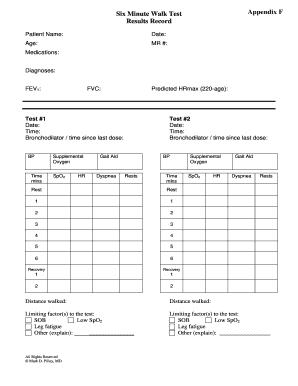
The 6-minute walk test is a standardized, self-paced submaximal exercise test that measures the distance a patient can walk on a hard, flat surface over a period of six minutes. It evaluates the integrated global response of all systems involved during exercise, including the pulmonary and cardiovascular systems, systemic circulation, peripheral circulation, blood units, neuromuscular units, and muscle metabolism.
While the test is safe, inexpensive, and reflects activities of daily living better than high-intensity treadmill or cycle ergometer tests, its interpretation depends heavily on calculating change scores over time. This is where the concept of the minimal clinically important difference becomes essential. The MCID represents the smallest difference in score in the domain of interest that patients perceive as beneficial and which would mandate, in the absence of troublesome side effects and excessive cost, a change in the patient's management.
Without a carefully selected MCID, interpreting a patient's trajectory—whether after initiating a new pharmacotherapy, completing a pulmonary rehabilitation program, or experiencing disease progression—remains subjective. Clinicians cannot rely on statistical significance alone; a statistically significant improvement in walking distance might be too small for the patient to notice in their daily life, whereas a patient-centered MCID ensures that clinical trials and routine evaluations measure true therapeutic value.
Disease-Specific MCID Thresholds
The magnitude of change required to cross the threshold of clinical importance varies significantly depending on the underlying disease state. Pathophysiological differences mean that a 30-meter improvement in a patient with advanced pulmonary arterial hypertension carries a different clinical weight than the same improvement in a patient with stable chronic obstructive pulmonary disease or post-operative recovery.
Chronic Obstructive Pulmonary Disease (COPD)
In patients with COPD, the 6MWT is a robust predictor of morbidity and mortality. Extensive literature evaluating pulmonary rehabilitation and bronchodilator efficacy has generally established an MCID ranging from 30 meters to 35 meters. However, meta-analyses and anchor-based studies demonstrate that baseline severity influences this number. Patients with severe air trapping and hyperinflation may exhibit different responsiveness compared to those with mild-to-moderate obstruction.
Pulmonary Arterial Hypertension (PAH)
PAH clinical trials historically rely on the 6MWT as a primary or secondary endpoint to secure regulatory approvals. The established MCID for PAH typically ranges from 33 meters to 38 meters, though some regulatory filings and post-marketing analyses support a threshold of approximately 30 meters. Because PAH therapies target pulmonary vascular remodeling, detecting changes that prevent clinical deterioration is just as critical as identifying marked functional improvements.
Heart Failure
Patients with chronic heart failure (CHF) experience exertional intolerance driven by hemodynamic and skeletal muscle abnormalities. The validated MCID for the 6MWT in heart failure populations generally spans 40 meters to 50 meters, reflecting higher variability in day-to-day testing performance and symptom fluctuation compared to pulmonary cohorts.
Idiopathic Pulmonary Fibrosis (IPF)
Interstitial lung diseases like IPF present rapid functional decline. The MCID for the 6MWT in IPF is typically estimated between 24 meters and 45 meters, depending on whether distribution-based or anchor-based methodologies were utilized in the specific clinical trial cohort.
| Disease State | Typical MCID Range (Meters) | Primary Methodological Approach | Clinical Significance |
|---|---|---|---|
| Chronic Obstructive Pulmonary Disease (COPD) | 30 to 35 meters | Anchor- and Distribution-Based | Evaluates pulmonary rehabilitation and long-term bronchodilator efficacy. |
| Pulmonary Arterial Hypertension (PAH) | 30 to 38 meters | Anchor-Based (Symptom/Functional Class) | Core regulatory endpoint for assessing targeted vasodilation therapies. |
| Heart Failure (HF) | 40 to 50 meters | Anchor-Based (NYHA Class / Quality of Life) | Accounts for high hemodynamic variability and fatigue profiles. |
| Idiopathic Pulmonary Fibrosis (IPF) | 24 to 45 meters | Distribution- and Anchor-Based | Tracks aggressive functional deterioration and antifibrotic drug impact. |
Methodological Approaches: Anchor-Based vs. Distribution-Based
When researchers and clinical investigators set out to choose or validate an MCID, they rely on two primary methodological frameworks: anchor-based methods and distribution-based methods. Understanding how these approaches derive their values is vital for selecting the correct threshold for a specific study design or clinical audit.
Anchor-Based Methods
Anchor-based methods link the change in 6MWT distance to an independent, external clinical indicator—known as the "anchor"—that has direct interpretive meaning to the patient or clinician. Examples of anchors include:
- Patient Global Assessment of Change (PGIC) scales.
- Transitions in New York Heart Association (NYHA) functional class or World Health Organization (WHO) functional class.
- Changes in disease-specific health-related quality of life questionnaires (e.g., St. George's Respiratory Questionnaire).
Anchor-based methods are widely preferred by regulatory agencies because they tie the numerical change directly to a patient-perceived or clinically meaningful milestone. However, their accuracy depends entirely on the quality and responsiveness of the chosen anchor.
Distribution-Based Methods
Distribution-based methods derive the MCID from the statistical characteristics of the sample population, such as the standard error of measurement (SEM), one-half of the standard deviation (0.5 SD) of baseline scores, or minimal detectable change (MDC). While these methods are mathematically objective and easy to calculate when anchor data are absent, they do not incorporate the patient's perspective. Consequently, a distribution-based threshold (like 0.5 SD) may yield a value that is statistically derived but clinically trivial or overly demanding for the patient.
Key Factors to Consider When Selecting an MCID
Selecting the most appropriate MCID for a given clinical workflow or research protocol requires careful evaluation of several confounding variables that influence walking distance performance.
Baseline Functional Capacity
A patient's baseline walking distance heavily dictates the potential for change. Floor and ceiling effects constrain test performance. Patients with extreme baseline impairment (e.g., walking less than 150 meters) may experience a true clinical benefit that does not translate into large linear distance gains, whereas moderately impaired patients have a wider dynamic range to register numeric improvements.
Age, Sex, and Anthropometric Variables
Reference equations for the 6MWT account for age, sex, height, and weight. If a patient cohort is exceptionally elderly or presents with severe comorbidities, the absolute meter threshold must be contextualized against predicted normal values rather than raw distance changes alone.
Learning Effect
Patients undergoing the 6MWT for the first time frequently display a learning effect, walking a shorter distance on their initial test due to unfamiliarity with pacing and testing protocols. Best practice guidelines recommend performing two tests separated by a recovery period during baseline evaluations. Failing to account for the learning effect can artificially inflate change scores, leading researchers to misinterpret a testing artifact as a true clinical response exceeding the MCID.
Common Mistakes in MCID Application
Misinterpreting or misapplying MCID thresholds compromises both clinical trials and individual patient management. Avoiding these common pitfalls ensures accurate data interpretation.
- Applying a Universal Threshold: Using a COPD-derived MCID (e.g., 30 meters) for a trial evaluating pulmonary arterial hypertension or interstitial lung disease introduces systematic error due to differing pathophysiology.
- Confusing Statistical Significance with Clinical Relevance: Achieving a statistically significant $p$-value in a massive cohort does not mean every individual patient crossed the threshold of a meaningful change.
- Ignoring Testing Standardization: Variations in hallway length, encouragement protocols, supplemental oxygen management, and technician supervision alter walking distance. If testing conditions change between baseline and follow-up, the observed difference may surpass the MCID purely due to protocol drift rather than true patient change.
- Overlooking Patient-Specific Context: A patient with severe orthopedic limitations or acute exacerbation recovery may fail to meet an MCID threshold not because their primary pathology worsened, but due to confounding musculoskeletal pain.
Frequently Asked Questions
What is the standard MCID for the 6-minute walk test?
There is no single universal standard MCID for the 6MWT. Thresholds vary by disease state, ranging from approximately 30 to 35 meters in chronic obstructive pulmonary disease, 30 to 38 meters in pulmonary arterial hypertension, and 40 to 50 meters in heart failure.
Can distribution-based and anchor-based MCIDs be used interchangeably?
No. Anchor-based methods link score changes to patient-perceived clinical anchors, whereas distribution-based methods rely on statistical dispersion (such as standard deviation fractions). Anchor-based values are generally preferred for clinical trials because they reflect real-world patient impact.
How does the learning effect impact MCID calculations?
The learning effect occurs when patients walk further on subsequent tests due to familiarity with pacing. If baseline testing does not account for this by utilizing dual-test protocols, the initial baseline will be artificially low, falsely inflating the perceived change score.
Why is baseline severity important when evaluating MCID?
Patients with severe baseline functional limitations operate near a physiological floor, restricting their ability to register large distance gains, whereas patients with mild disease may require larger absolute distance changes to perceive a meaningful health improvement.
Are regulatory agencies strict about MCID selection in clinical trials?
Yes. Regulatory bodies like the U.S. Food and Drug Administration (FDA) and the European Medicines Agency (EMA) require sponsors to justify the chosen MCID threshold using robust anchor-based validation methods before granting approvals based on functional exercise capacity endpoints.
Conclusion and Practical Next Actions
Selecting the right MCID for the 6-minute walk test requires matching the threshold to the specific pathological population, utilizing anchor-based validation whenever possible, and strictly standardizing testing protocols to eliminate confounding variables like the learning effect. Researchers and clinicians should review current disease-specific guidelines and validation studies before locking in a primary endpoint or interpreting individual patient trajectories.
Image Gallery