How to Set Beneficiaries on Life Insurance
Setting beneficiaries on a life insurance policy is a fundamental step that ensures your death benefit is distributed according to your exact wishes. To designate beneficiaries, you must contact your insurance provider, request a chang...
Setting beneficiaries on a life insurance policy is a fundamental step that ensures your death benefit is distributed according to your exact wishes. To designate beneficiaries, you must contact your insurance provider, request a change of beneficiary form, and clearly name your primary and contingent recipients with accurate identifying details like full legal names and Social Security numbers.
Contents
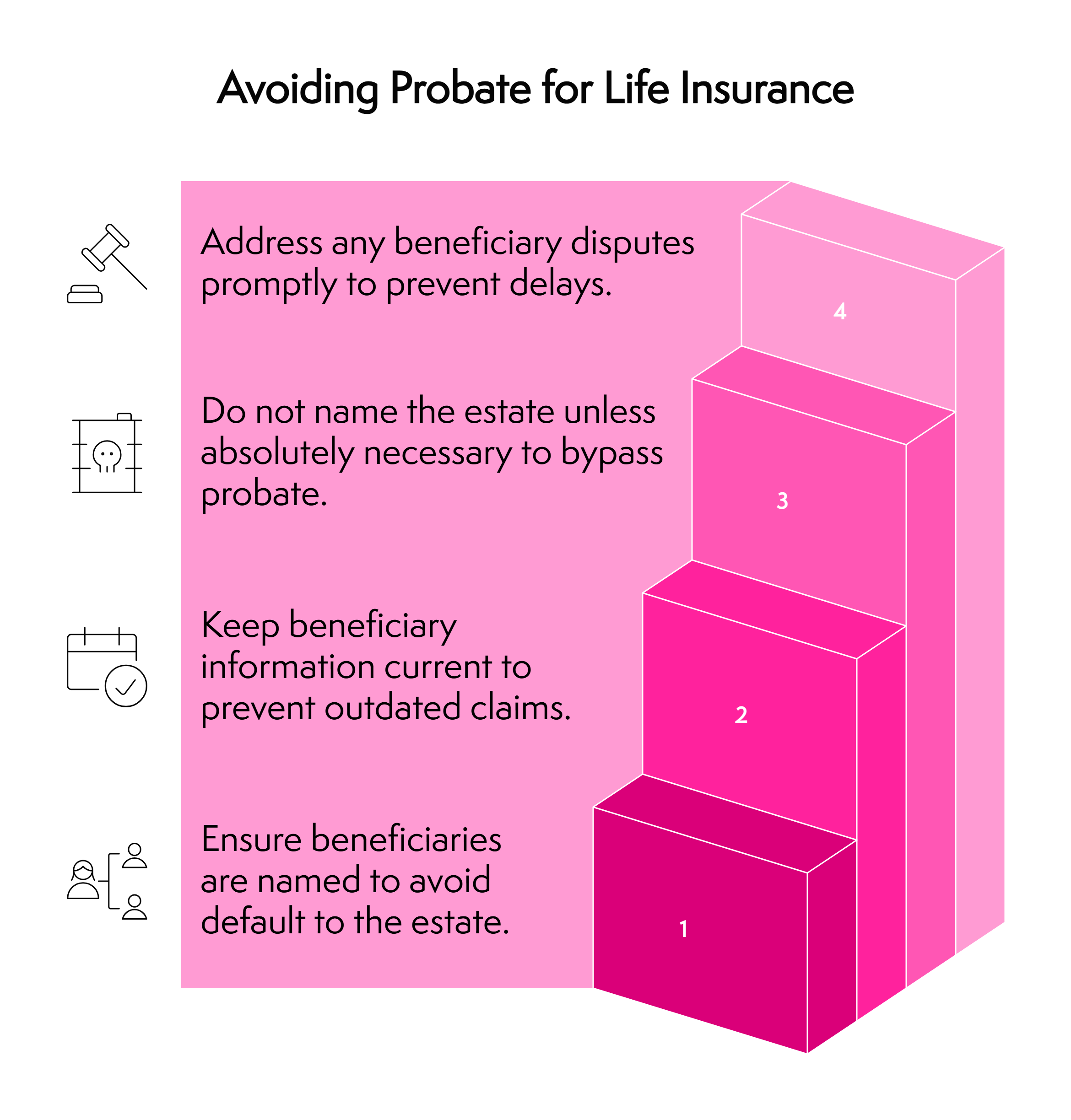
Life insurance serves as a critical financial safety net designed to protect your loved ones, settle final expenses, and replace lost income after you pass away. However, simply purchasing a policy is only half the battle. One of the most common and costly mistakes policyholders make is failing to properly designate or update their beneficiaries. When a policy lacks a valid beneficiary, the death benefit typically becomes part of your estate, subjecting the funds to probate court, potential creditors, and significant delays.
Understanding how to set beneficiaries on life insurance requires navigating legal definitions, policy structures, and specific administrative requirements. Whether you are setting up a brand-new policy or updating an existing one, taking a methodical approach guarantees that your financial legacy reaches the right hands without unnecessary legal friction.
Understanding Life Insurance Beneficiaries
Before you fill out any paperwork, it is essential to understand how beneficiary designations operate within the legal framework of insurance contracts. A beneficiary is the designated person, entity, institution, or trust that receives the policy's death benefit upon the insured person's passing.
Insurance contracts are unique financial instruments because they typically supersede instructions left in a last will and testament. If your will states one thing, but your life insurance beneficiary designation states another, the insurance company is legally obligated to pay the named beneficiary on file. This makes keeping your beneficiary forms accurate and up to date more critical than updating your will.
Primary vs. Contingent Beneficiaries
When structuring your policy, insurance companies allow you to designate two distinct tiers of beneficiaries:
- Primary Beneficiary: This is the first person or entity in line to receive the death benefit when you pass away. You can name a single primary beneficiary or split the percentage among multiple individuals or entities, provided the total equals 100%.
- Contingent (Secondary) Beneficiary: This is the backup plan. If your primary beneficiary passes away before you do—or if they cannot be located or refuse the payout—the death benefit goes to your contingent beneficiaries. Like primary designations, contingent beneficiaries can be split into specific percentages.
Failing to name a contingent beneficiary leaves a vulnerability in your estate planning. If your primary beneficiary predeceases you and you never update the policy, the payout defaults to your estate, defeating the primary purpose of securing a private, direct financial transfer.
Types of Beneficiary Designations
Life insurance providers accommodate several distinct types of beneficiaries. Choosing the right category depends on your family dynamics, financial goals, and whether you are planning for minor children or complex estates.
| Beneficiary Type | Description | Best Used For |
|---|---|---|
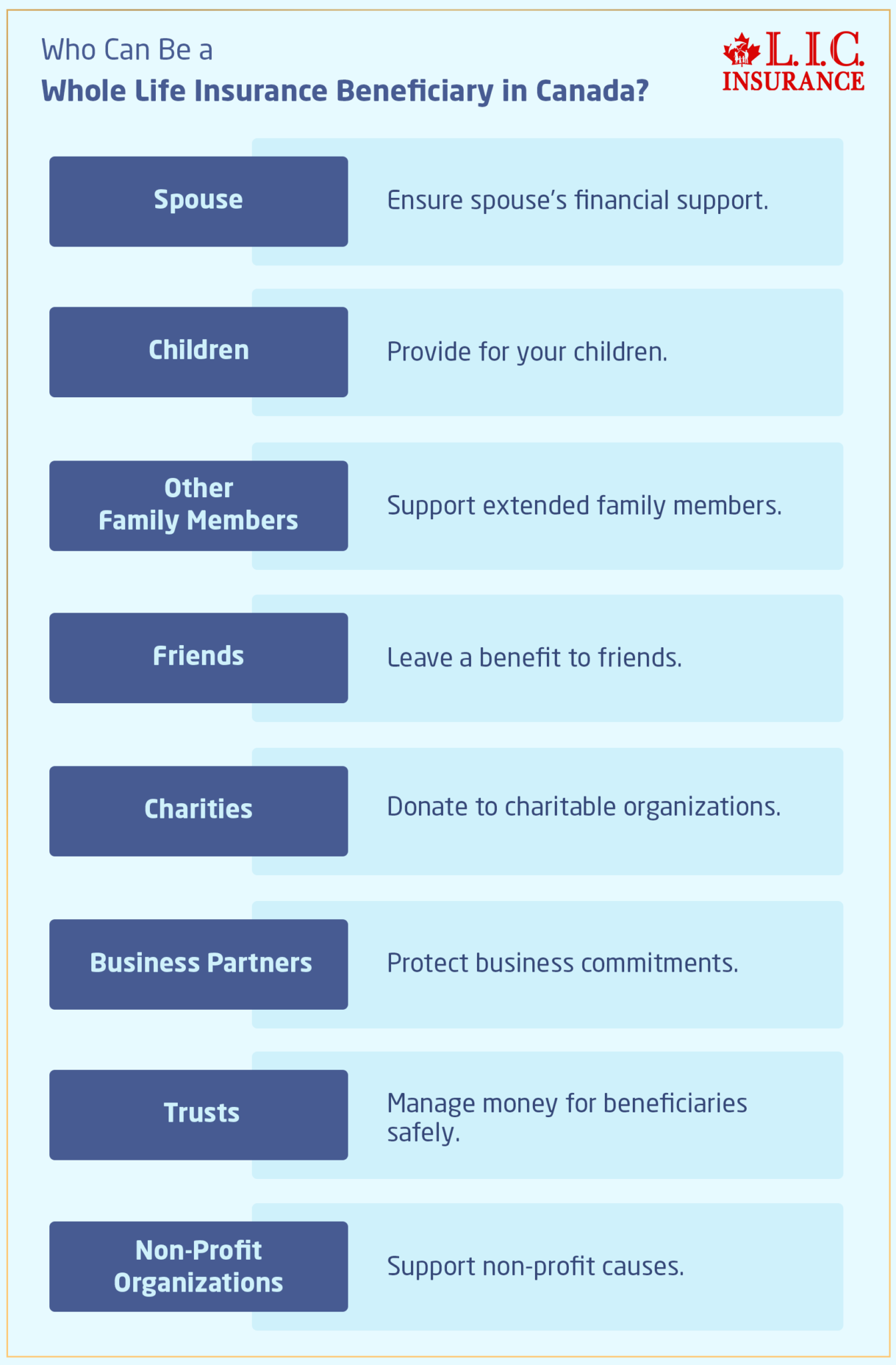
| Individual | A specific person (spouse, child, relative, or friend) named by their legal name. | Direct support for family members and dependents. |
| Contingent | A backup individual or entity who inherits if the primary beneficiary is deceased. | Preventing the death benefit from falling into probate. |
| Trust | A legal entity created to hold and manage assets for beneficiaries, managed by a trustee. | Minor children, complex estates, or specialized asset protection. |
| Estate | Your legal estate as a collective entity, overseen by an executor. | Generally discouraged due to probate exposure and taxes. |
| Charity / Organization | A registered 501(c)(3) nonprofit, religious institution, or educational body. | Philanthropic giving and legacy endowments. |
Naming Minors as Beneficiaries
Minor children cannot legally manage large sums of money. If you name a minor child directly as a life insurance beneficiary, the insurance company cannot legally disburse the funds directly to them. Instead, a court must appoint a legal guardian to manage the money until the child reaches the age of majority (typically 18 or 21 depending on the state). This process involves court fees, public records, and strict judicial oversight.
To avoid this, many parents establish a testamentary trust (a trust created within a will) or a revocable living trust and name the trust as the beneficiary. The trust document outlines exact instructions on how and when the funds should be distributed to your children—such as funding college tuition or releasing lump sums at specific ages.
Step-by-Step Guide to Setting Beneficiaries
Setting or changing your beneficiaries is an administrative process handled directly through your insurance carrier. While online portals have streamlined the process for many modern term life and permanent policies, traditional paper forms remain standard across the industry.
1. Gather Required Information
Before contacting your insurer or logging into your account, collect the precise identifying details for everyone you intend to name. Incomplete or vague information can delay claims processing significantly. You will need:
- Full legal names (first, middle, last).
- Current residential addresses.
- Phone numbers and email addresses.
- Dates of birth.
- Social Security numbers (or Tax Identification Numbers for trusts and organizations).
2. Request the Beneficiary Designation Form
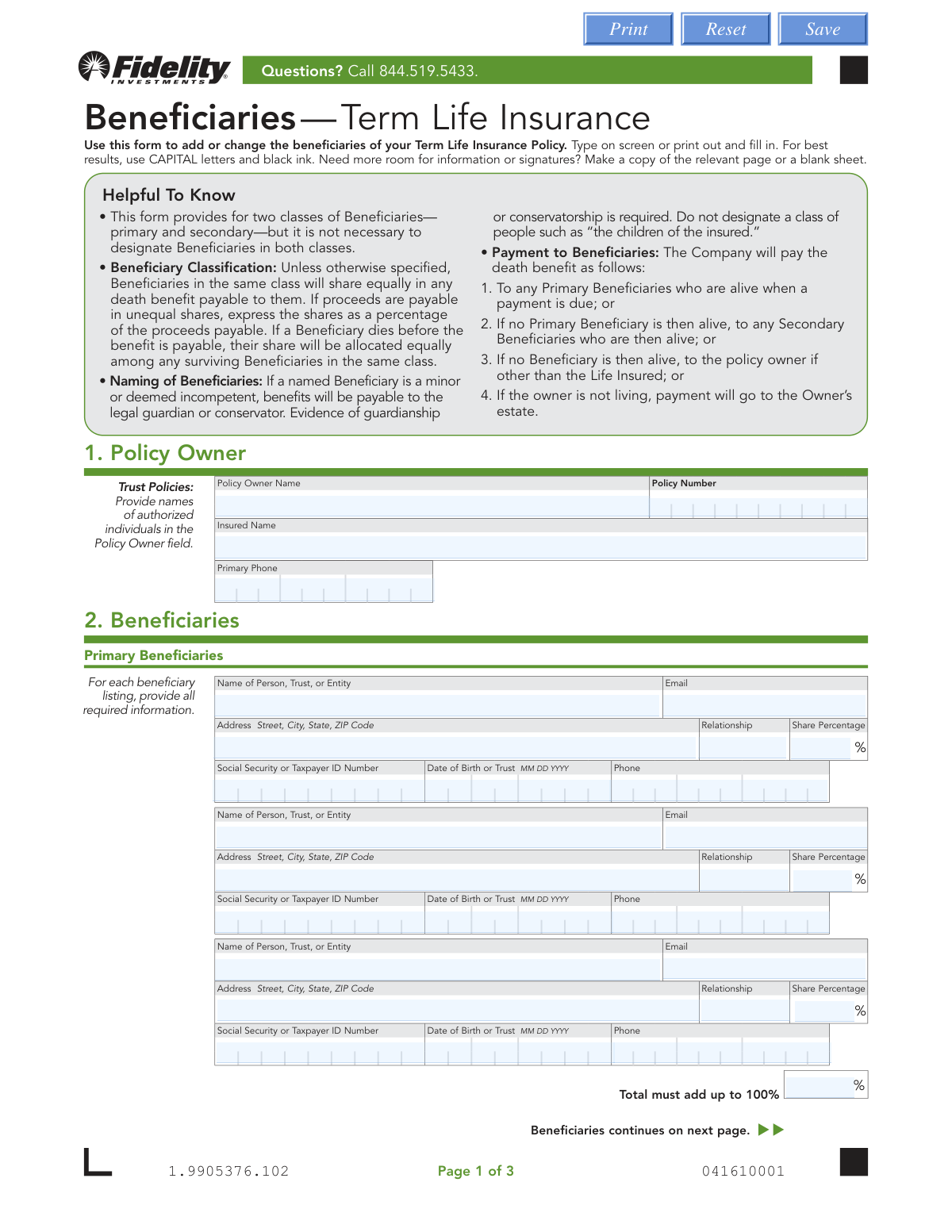
Contact your insurance agent or customer service department to request an official Change of Beneficiary form. Many carriers allow you to download this document directly from their customer portal. Avoid writing designations on informal notes or updating your policy via a phone call without written confirmation; insurers require formal documentation bearing your signature.
3. Calculate Percentages and Designate Tiers
Clearly define the distribution percentages for your primary and contingent tiers.
- If you have a spouse and two children, you might designate your spouse as the primary beneficiary to receive 100%, with your children listed as equal 50% contingent beneficiaries.
- Alternatively, you can split the primary tier equally among multiple adult children (e.g., 33.3% to Child A, 33.3% to Child B, and 33.3% to Child C). Ensure all percentages across each tier total exactly 100%.
4. Understand Revocable vs. Irrevocable Designations
Most standard beneficiary designations are revocable, meaning you maintain the legal right to change your mind, remove names, or alter percentages at any point during your life without the beneficiary's consent.
Conversely, an irrevocable beneficiary designation cannot be changed without the explicit written permission of that beneficiary. This is occasionally used in divorce settlements or complex business agreements to guarantee that a specific party remains protected, but it strips you of future control over the policy's death benefit.
5. Submit and Confirm Receipt
Sign and date the form according to the insurer's instructions. Some policies require the signature of a neutral witness or a notary public. Once completed, submit the form back to the insurance company via their secure upload portal, fax, or certified mail.
Crucially, wait for written confirmation. The insurance provider will send an endorsement or updated policy rider confirming that the beneficiary change has been officially recorded in their system. Keep this confirmation alongside your master policy documents.
Revocable vs. Irrevocable Beneficiaries
Choosing between a revocable and irrevocable beneficiary status is a permanent legal decision that warrants careful consideration, preferably in consultation with an estate planning attorney or financial advisor.
Revocable Beneficiaries (Flexibility and Control)
- Control: You retain total ownership rights over the policy. You can add, remove, or reallocate beneficiaries whenever life changes occur.
- Common Use Cases: Spouses, young children, family members, and standard estate planning setups.
- Risks: Because you can change the beneficiary at will, the current beneficiary has no guaranteed legal claim to the future payout while you are alive.
Irrevocable Beneficiaries (Protection and Restrictions)
- Control: You lose the unilateral right to alter the policy. Any change—including borrowing against cash value or surrendering the policy—requires the signature and consent of the irrevocable beneficiary.
- Common Use Cases: Court-ordered child support, alimony guarantees, or business partnership buy-sell agreements.
- Risks: If your relationship with an irrevocable beneficiary deteriorates, you remain legally bound to the designation unless they willingly sign off on a change.
Common Mistakes to Avoid
Navigating life insurance paperwork requires precision. Avoiding common administrative traps ensures your beneficiaries avoid lengthy legal battles during an already difficult time.
- Vague Designations: Writing "my children" without naming them individually creates severe ambiguity, especially if blended families or children from multiple relationships are involved. Always use full legal names and specific identifiers.
- Forgetting Contingent Beneficiaries: Naming only a primary beneficiary leaves the policy exposed if both you and the primary beneficiary pass away simultaneously in an accident.
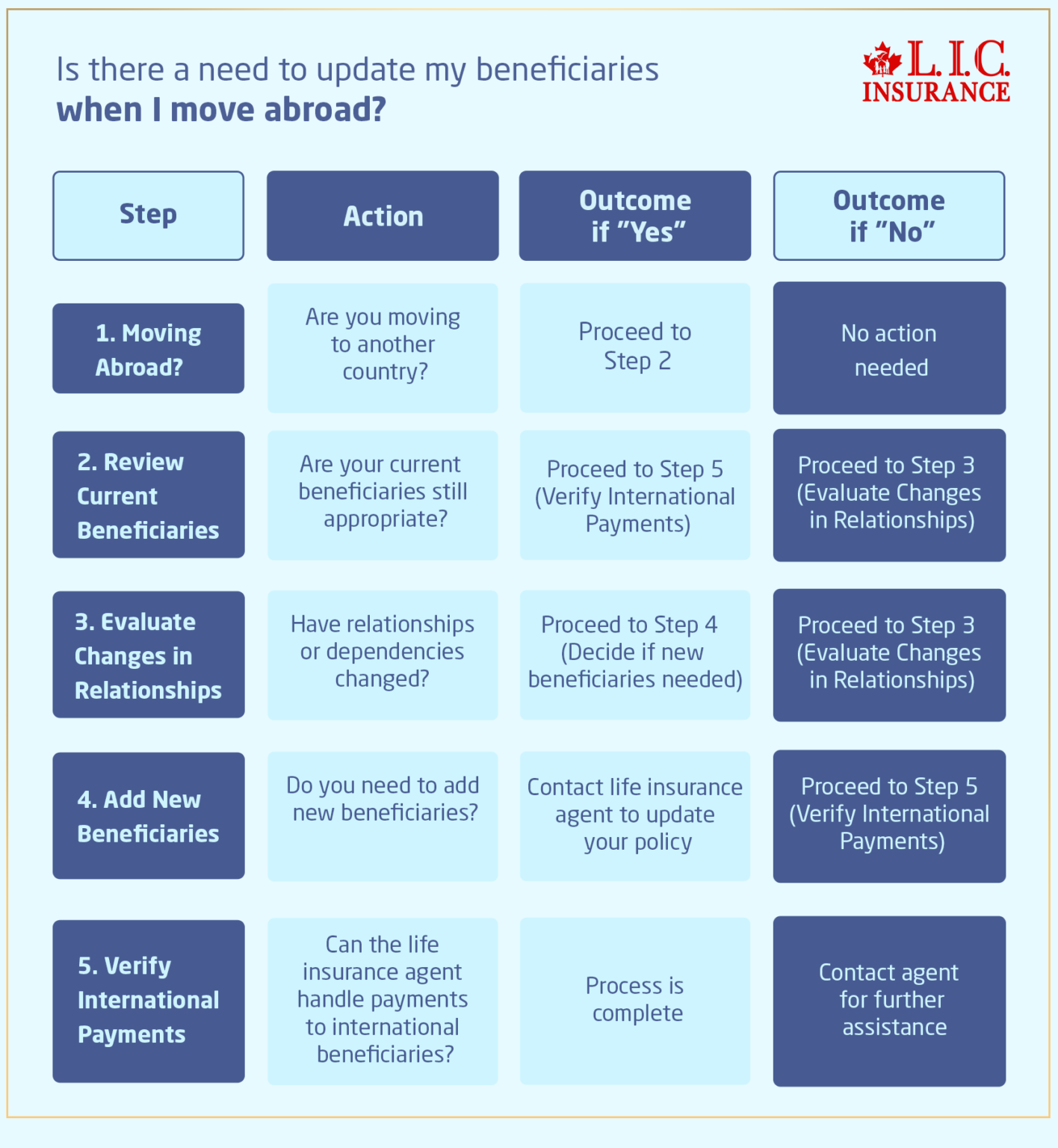
- Failing to Update After Life Events: Major milestones—such as marriage, divorce, the birth of a child, or the death of a loved one—demand an immediate review of your life insurance policies.
- Assuming a Will Overrides the Policy: As noted earlier, courts generally rule that the insurance contract's named beneficiary takes precedence over instructions written in a personal will. Always update the insurer directly.
Frequently Asked Questions
Can I name multiple primary beneficiaries on my life insurance policy?
Yes, you can name multiple primary beneficiaries and designate exact percentage splits for each (for example, splitting a death benefit equally among three siblings). The total percentages for all primary beneficiaries must equal 100%. If one primary beneficiary passes away before you, the insurance company typically redistributes their share among the surviving primary beneficiaries unless specified otherwise in the policy contract.
What happens if my beneficiary dies before I do?
If your primary beneficiary passes away before you and you never updated the policy, the death benefit generally passes to any named contingent beneficiaries. If you failed to name a contingent beneficiary as well, the payout defaults to your estate, which subjects the funds to probate court administration, potential creditor claims, and estate taxes.
Does a divorce automatically remove an ex-spouse as a beneficiary?
State laws vary significantly regarding this issue. While some states have revocation-on-divorce statutes that automatically invalidate an ex-spouse's beneficiary status upon the finalization of a divorce decree, federal laws (such as those governing employer-sponsored group life insurance under ERISA) often override state laws. To prevent costly litigation, you should proactively update your beneficiary forms immediately following a divorce.
How often should I review my life insurance beneficiaries?
Financial experts recommend reviewing your life insurance beneficiaries at least once every three to five years, or immediately following major life events. These events include getting married or divorced, having or adopting a child, purchasing a business, or experiencing the death of a currently named beneficiary.
Can I name a pet as a life insurance beneficiary?
No, animals cannot legally own property or enter into contracts, meaning you cannot name a pet directly as a beneficiary. However, you can establish a pet trust, fund it through your life insurance policy by naming the trust as the beneficiary, and appoint a trustee to care for your animals using those funds.
Summary and Next Actions
Setting your life insurance beneficiaries correctly is an essential pillar of responsible financial planning. Start by gathering the full legal names, Social Security numbers, and contact information for your intended recipients. Contact your insurance provider to request their official change of beneficiary form, establish both primary and contingent tiers, and submit the paperwork securely. Finally, request and store written confirmation from your insurer to verify that your wishes are locked into the official policy record.
Image Gallery