Comprehensive Guide to Texas A&M Transfer Credit: Policies, Tools, and Steps for 2026
Transferring credit to Texas A&M University involves a systematic evaluation where the Office of Admissions determines equivalency based on course content, rigor, and institutional accreditation. Students utilize the Transfer Course Eq...
Transferring credit to Texas A&M University involves a systematic evaluation where the Office of Admissions determines equivalency based on course content, rigor, and institutional accreditation. Students utilize the Transfer Course Equivalence Guide (TCEG) to identify how previous coursework aligns with TAMU’s curriculum, though final articulation depends on departmental approval and degree plan requirements.
Contents
Texas A&M University (TAMU) remains one of the most sought-after institutions for transfer students in the United States. As of 2026, the process for articulating credits is designed to be transparent, yet it requires diligent planning and an understanding of both university-wide policies and college-specific nuances. Whether you are moving from a Texas community college, a four-year out-of-state university, or returning from military service, knowing how your hard-earned credits transform into an Aggie degree is essential for a timely graduation.
The Foundation of Credit Transferability
The primary authority for transfer credit at Texas A&M is the Office of Admissions, which works in tandem with the Office of the Registrar. Before a course can be considered for transfer, it must meet several baseline criteria regarding the source institution and the nature of the coursework.
Institutional Accreditation
Texas A&M primarily accepts credits from institutions accredited by recognized regional accrediting agencies (such as the Southern Association of Colleges and Schools Commission on Colleges, or SACSCOC). If you are transferring from a non-regionally accredited institution, your credits may undergo a much more rigorous departmental review, and in many cases, they may not be accepted for direct equivalency.
The Texas Common Course Numbering System (TCCNS)
For students transferring from Texas public community colleges or universities, the process is streamlined by the Texas Common Course Numbering System (TCCNS). This shared numbering system ensures that a course like "ENGL 1301" at a community college is universally recognized as "ENGL 104" at Texas A&M. If your current institution uses TCCNS, you can have high confidence that courses marked with these common numbers will transfer seamlessly, provided you earn the required grade.
Course Content and Level
To be eligible for transfer, a course must be academic in nature. Vocational, technical, or remedial courses (often numbered below 100 or 1000) generally do not transfer to TAMU. Furthermore, the "level" of the course matters. Lower-division courses (freshman and sophomore levels) usually cannot be used to satisfy upper-division (junior and senior level) requirements at Texas A&M, even if the subject matter appears similar.
Navigating the Transfer Course Equivalence Guide (TCEG)
The Transfer Course Equivalence Guide (TCEG) is the most critical tool for any prospective transfer student. This searchable online database contains thousands of previously evaluated courses from institutions across the globe.
How to Use the TCEG
When you access the TCEG, you select your current or previous institution and then search for specific course prefixes. The results will show one of several outcomes:
- Direct Equivalency: The course matches a specific TAMU course (e.g., MATH 2413 transfers as MATH 151).
- Generic Credit (TRNS): The course is transferable but does not have a direct equivalent at A&M. It may be listed as "TRNS 100" or "TRNS 300." These credits often count toward general electives but might not fulfill specific major requirements.
- No Credit: The course does not meet TAMU’s standards for transfer.
The Limitation of the TCEG
It is important to remember that the TCEG is a historical record of how courses have transferred. It is not an exhaustive list of every possible course. If a course is not listed, it simply means it has not been evaluated recently. In such cases, the Office of Admissions will perform a manual evaluation once you apply and submit your official transcripts.
Grade Requirements and the "C" Rule
One of the most frequent questions regarding transfer credit is the minimum grade required. While Texas A&M may "accept" a course for credit, how it applies to your degree is a different matter.
The Standard for Acceptance
Generally, a grade of "C" or better is required for a course to be considered for transfer. In 2026, TAMU policy remains firm that "D" grades are rarely transferable for credit within a student's specific major or for prerequisite purposes. While a "D" might occasionally transfer as a general elective for certain liberal arts degrees, most competitive programs—particularly the College of Engineering and the Mays Business School—strictly require a "C" or better in all transfer coursework.
GPA Impact
It is a common misconception that your transfer GPA replaces your TAMU GPA. When you transfer to Texas A&M, you start with a "clean slate" institutional GPA. However, your Transfer GPA is still used for admission decisions and for determining eligibility for certain honors and organizations. Your final transcript will show both your TAMU GPA and your Cumulative (Combined) GPA.
Credit Evaluation Process: Step-by-Step
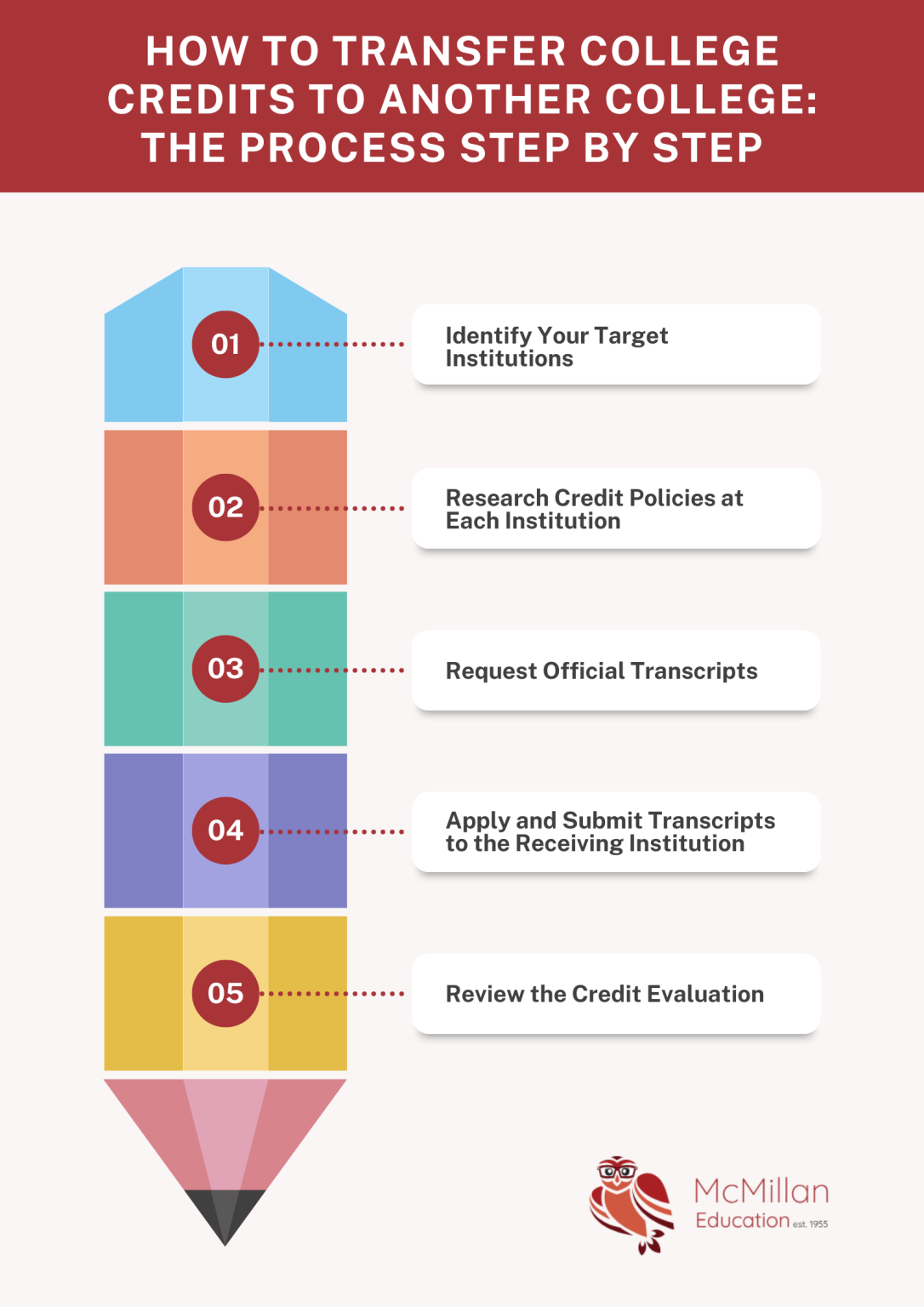
Once you have decided to apply to Texas A&M, the formal evaluation of your credits follows a specific sequence:
- Submission of Official Transcripts: You must send official transcripts from every post-secondary institution you have attended. This includes dual credit earned in high school.
- Preliminary Evaluation: The Office of Admissions reviews the transcripts to identify TCCNS matches and previously evaluated courses in the TCEG.
- Departmental Review: For courses without a clear equivalent, the Admissions office may send the course syllabus to the relevant academic department at TAMU. A math professor, for instance, will review a calculus syllabus from an out-of-state school to see if it covers the same material as TAMU’s MATH 151.
- The Transfer Audit: Once admitted, you can access your Transfer Audit through the Howdy Portal. This document is the "source of truth" showing exactly which credits were accepted and how they map to your chosen degree plan.
Residency Requirements and Credit Caps
You cannot simply transfer 120 hours and receive a Texas A&M degree. The university enforces strict "residency" requirements to ensure that the core of your education is completed at TAMU.
The 36-Hour Rule
To earn a degree from Texas A&M, a student must complete at least 36 semester hours of upper-level (300 or 400 level) coursework in residence at A&M. This ensures that the specialized, major-specific portion of your degree is overseen by Aggie faculty.
The 60-Hour Maximum from Two-Year Institutions
While there is no hard "cap" on the total number of hours you can transfer, there is a limit on how many hours from a community college can apply toward a degree. Generally, no more than 60–66 hours from a two-year institution can be applied toward a baccalaureate degree. Any hours beyond this may transfer as general credit but will not satisfy specific degree requirements.
| Credit Type | Minimum Grade | Max Hours (Approx) | Notes |
|---|---|---|---|
| Texas Community College (TCCNS) | C | 66 | Easiest to track; follows common numbering. |
| Out-of-State Public University | C | No Limit* | Requires syllabus review for specific equivalents. |
| International Institutions | C (Equivalent) | No Limit* | Requires official evaluation (e.g., WES or SpanTran). |
| Military Credit (JST) | Pass/Credit | Varies | Based on ACE recommendations; usually elective. |
| AP / IB Exams | 3+ (AP) / 4+ (IB) | Varies | Must be sent directly from College Board/IBO. |
*Subject to the 36-hour residency requirement for graduation.
Specialized Credit: Military, AP, and International
Texas A&M provides several pathways for non-traditional credit, recognizing that learning happens in various environments.
Military Service Credit
Under Texas Education Code 51.3042, veterans may be eligible for up to 12 hours of elective credit for their service. TAMU reviews the Joint Services Transcript (JST) or Community College of the Air Force (CCAF) transcripts. Credit is typically awarded for physical education and general electives, though specific technical training may be evaluated for departmental credit.
Credit by Examination (AP, IB, CLEP)
Texas A&M is generous with credit by examination. For 2026, students must ensure their scores are sent directly from the testing agency to the TAMU Testing Services office. It is important to note that you must "claim" this credit in the Howdy Portal. It does not automatically appear on your transcript. This allows students to choose whether they want the credit (to move ahead) or if they prefer to take the class at TAMU to build a stronger foundation for advanced courses.
International Transfer Credit
Students transferring from universities outside the United States must provide a professional credential evaluation. TAMU typically requires a course-by-course evaluation from a member of the National Association of Credential Evaluation Services (NACES). Because international curricula vary significantly, students should be prepared to provide English-translated syllabi for almost every course they wish to transfer.
Common Mistakes and How to Avoid Them
The transfer process is complex, and errors can lead to "lost" credits or delayed graduation.
- Waiting to Send Transcripts: Always send "in-progress" transcripts during the application phase and "final" transcripts immediately after your last semester ends.
- Assuming Electives Count: Just because a course transfers as "TRNS 100" doesn't mean it helps you graduate. If your degree plan doesn't have "General Elective" slots, that credit effectively sits on the sidelines.
- Ignoring the Core Curriculum: Texas law requires a 42-hour Core Curriculum. If you are "Core Complete" at another Texas public institution, TAMU must accept that entire block as satisfying its core requirements, even if the individual courses aren't direct matches. Always ensure your transcript is marked "Core Complete."
- Not Consulting an Advisor: Every department at Texas A&M has a transfer advisor. Reaching out to them before you transfer can save you from taking classes that won't count toward your specific major.
Frequently Asked Questions
Does Texas A&M accept "Pass/Fail" grades for transfer?
Generally, no. Texas A&M requires a letter grade of "C" or better. The only common exceptions are for credits earned during the COVID-19 pandemic (2020–2021) or for specific credit-by-exam results where "CR" (Credit) is the standard notation. For 2026, standard letter grades are required for all current transfer work.
How long does it take for my transfer credit to show up in Howdy?
Once the Office of Admissions receives your official final transcript, it typically takes 2 to 4 weeks for the preliminary evaluation to appear in your Howdy portal. During peak admission cycles (June–August), this window may extend slightly.
Can I appeal a transfer credit decision?
Yes. If you believe a course should have transferred as a direct equivalent but was marked as elective credit (TRNS), you can submit a syllabus to the relevant department head for a "re-evaluation." You will need a detailed syllabus that includes a week-by-week schedule, textbook list, and learning objectives.
Is there a limit to how many AP credits I can transfer?
There is no specific university-wide cap on the total number of AP or IB credits you can claim. However, you should consult with your academic advisor, as claiming too many credits can occasionally impact your eligibility for certain tuition rebates or "Excessive Hours" surcharges under Texas state law.
Will my dual credit from high school count?
Yes, as long as the credit was earned through a regionally accredited college and appears on an official college transcript with a grade of "C" or better. High school transcripts cannot be used to award dual credit; you must request the transcript from the college that sponsored the program.
Final Recommendation for Transfer Success
The most successful transfer students are those who treat the process as a collaborative project. Utilize the Transfer Course Equivalence Guide early and often, but supplement that data with direct communication. Before you register for your final semester at your current school, contact the Texas A&M department of your intended major. Confirm that your remaining courses align with their specific degree tracks. This proactive approach ensures that when you finally step onto the College Station campus, you are focused on your future rather than re-taking the past.
Image Gallery