How Go Auto Insurance Towing Works
Roadside assistance and towing coverage included with your auto insurance policy operates by dispatching a verified service provider to assist you when your vehicle experiences a mechanical breakdown, flat tire, dead battery, or lockou...
Roadside assistance and towing coverage included with your auto insurance policy operates by dispatching a verified service provider to assist you when your vehicle experiences a mechanical breakdown, flat tire, dead battery, or lockouts while away from home. When you contact your insurer's dedicated roadside hotline, they coordinate with local towing networks to either fix the minor issue on the spot or tow your vehicle to a nearby repair facility up to your policy's specified mileage or dollar limit.
Contents
Understanding how auto insurance towing works helps drivers avoid unexpected out-of-pocket expenses during a roadside emergency. While many motorists view towing coverage as a routine add-on, the mechanics of how policies are structured, how claims are filed, and what limits apply can vary significantly between insurance carriers. Navigating these details ensures you are never stranded without support or left confused by reimbursement paperwork.
Understanding Auto Insurance Towing and Roadside Assistance
Towing coverage is rarely a standalone product; rather, it is typically bundled as an optional endorsement or rider attached to a standard personal auto insurance policy. When you add roadside assistance and towing to your coverage profile, you pay a small incremental premium—often just a few dollars a month—in exchange for 24/7 access to emergency dispatch services.
Unlike collision or comprehensive coverage, which protect your vehicle against major physical damage from accidents or storms, towing coverage specifically targets operational failures. This includes engine stalls, electrical failures, transmission failures, and flat tires. However, it is essential to distinguish between standard insurance towing and third-party motor club memberships, such as AAA. While both provide similar physical towing services, insurance-based towing is tied directly to your policy, and utilizing it frequently can sometimes influence your overall risk profile, depending on the carrier's underwriting rules.
The Operational Workflow: What Happens When You Call
Knowing the step-by-step sequence of events during a breakdown prevents confusion and ensures a smoother roadside experience. The operational workflow generally follows a predictable path from the moment your car stops working to the completion of the tow.
1. Initial Contact and Dispatch
When your vehicle becomes disabled on a public road or highway, your first step is to secure your vehicle in a safe location if possible, turning on hazard lights. You then call your insurance company's designated roadside assistance hotline or submit a request through their mobile application. You will need to provide your policy number, exact location (or nearest landmark), and a description of the vehicle's issue.
2. Provider Assignment and Verification
The insurer’s dispatch center routes your request to a contracted local towing network. You will typically receive an automated text message or call containing the name of the towing company, an estimated time of arrival (ETA), and sometimes a tracking link. The dispatcher verifies your coverage limits to ensure the requested service falls within your policy parameters.
3. On-Site Assessment and Execution
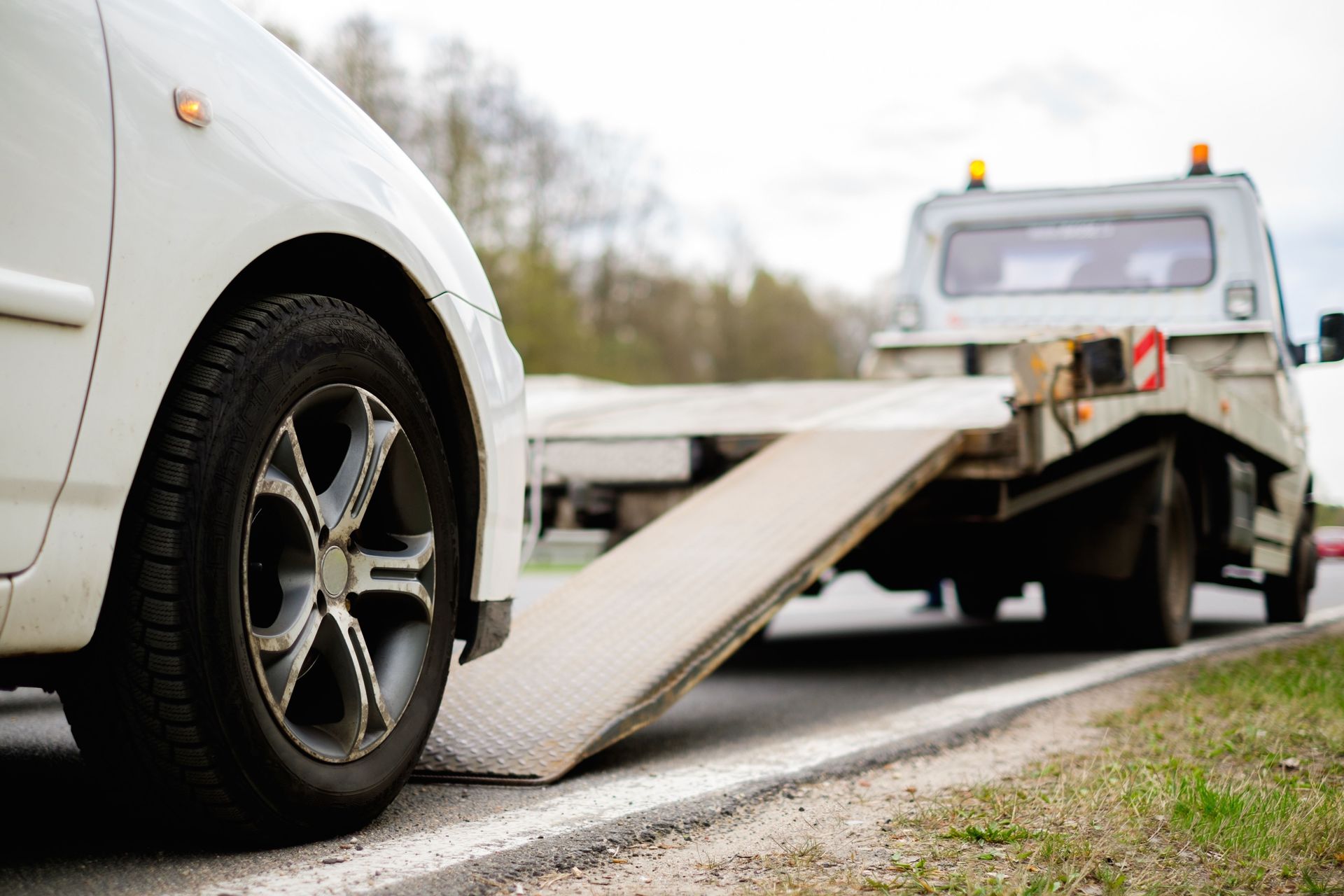
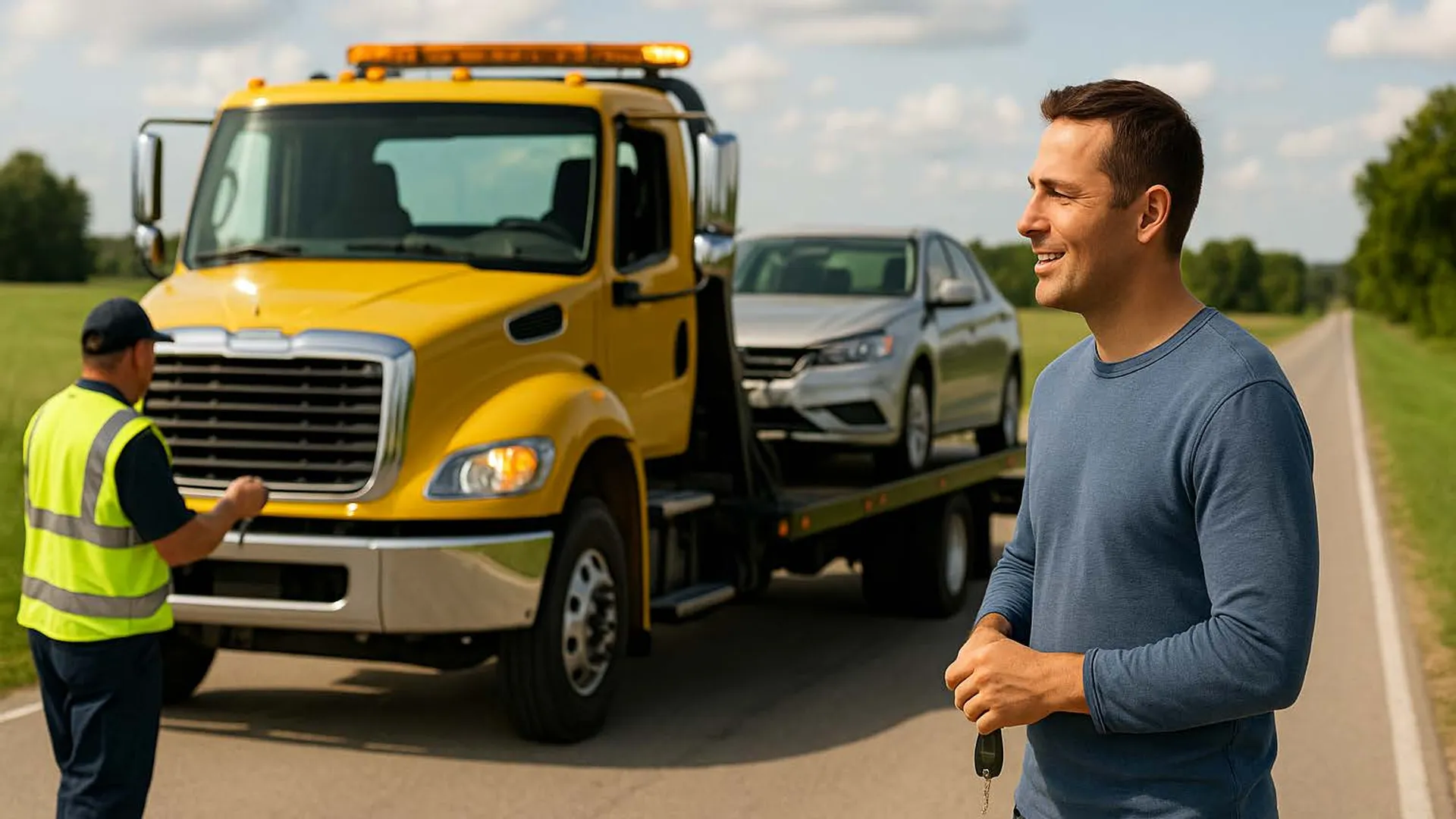
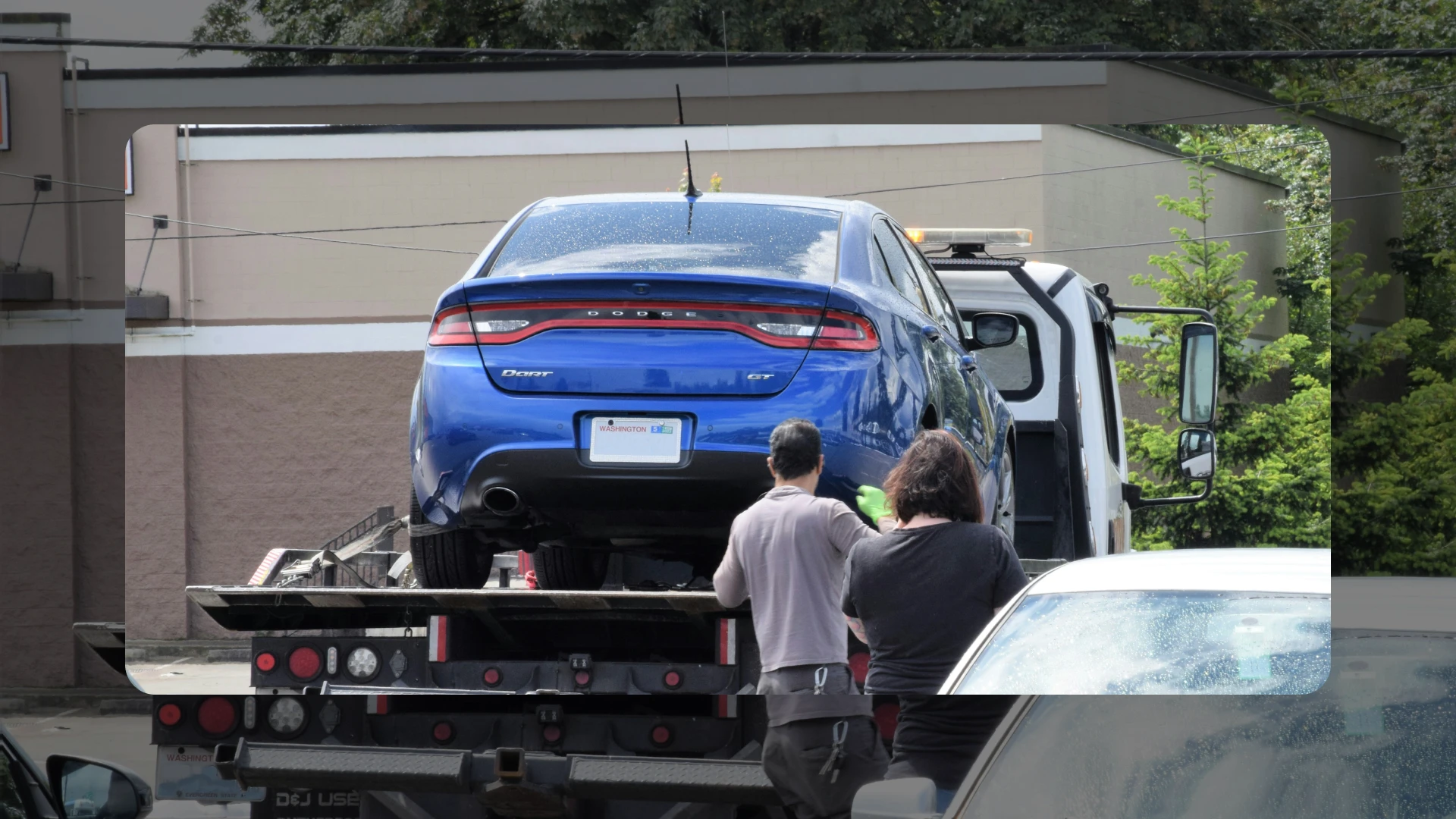
Upon arrival, the tow truck operator assesses the vehicle. If the problem can be resolved on the spot—such as jump-starting a dead battery or changing a flat tire using your spare—the technician performs the service. If the vehicle requires transport, the operator loads your car onto a flatbed or wheel-lift truck and transports it to a repair facility of your choice, subject to your policy's distance limits.
Coverage Limits, Exclusions, and Out-of-Pocket Costs
Every auto insurance policy containing towing and labor coverage comes with strict operational boundaries. Reviewing these limitations prevents unpleasant surprises when the final bill arrives.
Policies generally enforce limits in one of two ways: a maximum mileage cap (such as towing up to 15 or 25 miles to the nearest qualified repair shop) or a maximum dollar allowance per occurrence. If your preferred repair facility is 40 miles away, but your policy only covers a 25-mile radius, you will be personally billed for the excess mileage at the towing company's standard per-mile rate.
Furthermore, towing coverage typically applies only to labor and transport fees directly related to the breakdown. It does not cover the cost of replacement parts, such as a new battery, a new tire, or mechanical repair charges incurred at the shop. Additionally, vehicles abandoned on private property or off-road trails may be excluded from standard coverage terms.
| Coverage Component | Standard Policy Inclusion | Typical Exclusion |
|---|---|---|
| Mechanical Breakdown | Towing to the nearest repair facility | Cost of actual engine or transmission parts |
| Flat Tire Assistance | Labor to install your operable spare tire | Cost of purchasing a new replacement tire |
| Battery Jump-Start | On-site electrical boost to start the engine | Cost of a new battery or alternator replacement |
| Lockout Service | Assistance to unlock vehicle doors | Cost of replacing lost or broken ignition keys |
| Fuel Delivery | Delivery of emergency gas (fuel cost may vary) | The actual retail cost of the delivered fuel |
Direct Dispatch vs. Pay-and-Get-Reimbursed Models
Auto insurance companies utilize two primary methods for delivering towing services: direct dispatch models and reimbursement models. Understanding which model your insurer uses affects how you handle payments on the scene.
Direct Dispatch Models
Under a direct dispatch system, your insurance company handles the billing and payment directly with the contracted towing vendor. You do not need to pay the driver out of pocket, provided the service stays within your policy limits. This is the most common model utilized by major national auto insurers because it streamlines customer service and prevents price gouging.
Pay-and-Reimbursed Models
Some smaller insurers or specialized policy riders require you to call an independent towing company of your choice, pay the driver directly with your own credit card, and later submit an itemized receipt to your insurer for reimbursement. If you operate under this model, you must ensure you obtain a detailed, itemized invoice showing the exact breakdown of mileage, hook-up fees, and labor. Insurers will deny reimbursement if the receipt lacks essential details or if the service falls outside your contract terms.
Does Using Insurance Towing Raise Your Rates?
A common concern among drivers is whether utilizing roadside assistance or towing will cause their insurance premiums to increase at renewal time.
In most standard jurisdictions and across major insurance carriers, using roadside assistance or towing coverage is classified as a non-comprehensive, non-collision claim. Because it does not involve an at-fault accident or property damage liability payout, many insurers do not penalize policyholders for frequent towing usage. However, industry guidelines vary. Some carriers track the total frequency of roadside claims across a multi-year period. If a policyholder utilizes towing services excessively—such as half a dozen times in a single year—the insurer may choose not to renew the roadside endorsement option or, in rare cases, adjust the overall risk tier of the policy. Reviewing your specific insurer's underwriting guidelines clarifies how they handle roadside claim frequency.
Common Mistakes to Avoid During a Roadside Breakdown
Navigating a vehicle breakdown safely and efficiently requires avoiding several common missteps that can delay assistance or create unnecessary financial burdens.
- Waiting in Unsafe Locations: Never remain inside a disabled vehicle if it is parked on a busy highway shoulder or in an active traffic lane. Move yourself and any passengers behind a guardrail or a safe distance away from the roadway before calling for help.
- Failing to Verify Policy Limits Beforehand: Assuming your insurance covers an unlimited towing distance often leads to high out-of-pocket bills when a tow truck drops your car off at a shop far from home. Check your declarations page to know your exact limits.
- Accepting Unsolicited Tow Trucks: Unsolicited tow truck drivers sometimes patrol highways looking for stranded motorists. Accepting a ride from an unverified provider can result in inflated fees that your insurance company will refuse to reimburse. Always wait for the specific provider dispatched by your insurer.
- Losing Receipts in Reimbursement Models: If your policy requires you to pay upfront and seek reimbursement, failing to secure a detailed, itemized receipt from the driver makes it difficult or impossible to collect your payout from the insurer.
Frequently Asked Questions
Does auto insurance towing cover accidents?
No. Towing resulting from a collision or rollover is handled under your policy's collision coverage, not your roadside assistance or towing endorsement. Towing coverage is strictly reserved for mechanical breakdowns, flat tires, dead batteries, and similar non-accident roadside failures.
Can I use my insurance towing for a car that isn't mine?
Most personal auto insurance towing coverages are attached to the specific vehicle listed on your policy declarations page, rather than to you as an individual driver. However, some comprehensive motor club memberships or specific policy endorsements extend coverage to any vehicle the insured is driving. You must verify your specific contract wording.
What happens if my towing distance exceeds my policy limit?
If your vehicle needs to be towed 30 miles, but your policy limit is 15 miles, the towing company will complete the transport. However, you will be billed directly by the towing operator for the remaining 15 miles at their standard commercial rate upon arrival at the destination.
Will my insurance company tow my car to my house?
Insurers typically require the vehicle to be towed to the nearest qualified repair facility to get it operational again. Towing a disabled vehicle directly to your personal residence is usually only permitted if your repair shop is located at your home or if the policy explicitly allows transport to a location of your choice within the mileage limit.
How do I add towing coverage to my existing policy?
You can add roadside assistance and towing to your active auto insurance policy at any time by contacting your insurance agent or logging into your online policy management portal. The change usually takes effect immediately or at the start of the next billing cycle, accompanied by a minor adjustment to your premium.
Next Actions for Policyholders
To ensure you are fully protected before your next trip, review your current auto insurance policy declarations page today to confirm whether towing and roadside assistance is active. Take note of your specific mileage limits and save your insurer's dedicated roadside dispatch phone number directly into your mobile phone's contacts. If your policy lacks this coverage, contact your provider to evaluate the minimal cost of adding it for complete peace of mind on the road.
Image Gallery