Understanding Alabama Mandatory Liability Insurance Exemptions
In Alabama, the Mandatory Liability Insurance (MLI) Act requires most motor vehicle owners to maintain minimum liability coverage. However, exemptions exist for government-owned vehicles, common carriers regulated by the Public Service...
In Alabama, the Mandatory Liability Insurance (MLI) Act requires most motor vehicle owners to maintain minimum liability coverage. However, exemptions exist for government-owned vehicles, common carriers regulated by the Public Service Commission, vehicles registered under the International Registration Plan (IRP), self-insured entities, and specialized machinery such as implements of husbandry or trailers that do not require independent motorized propulsion.
Contents
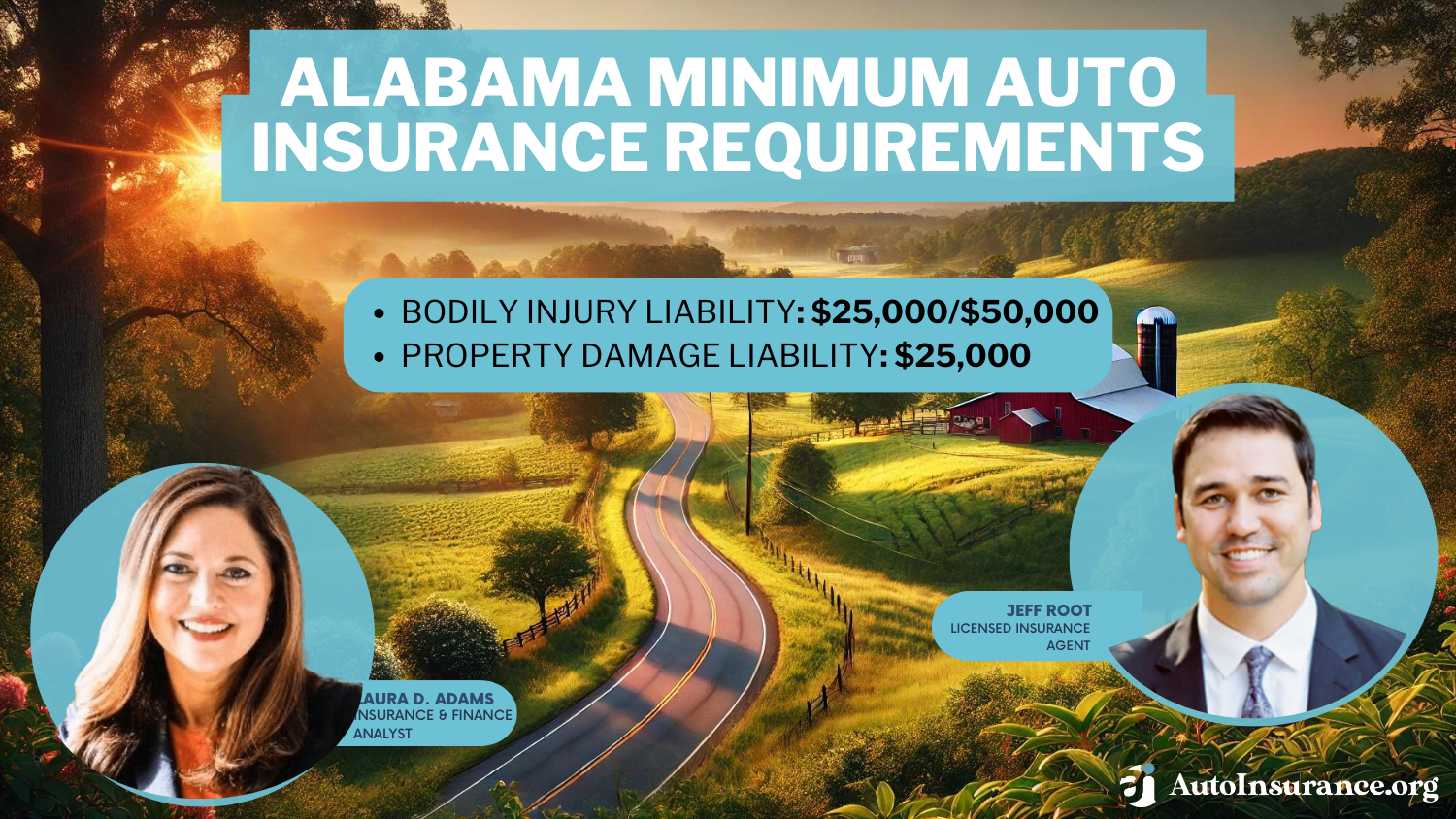
The Alabama Mandatory Liability Insurance Act (Section 32-7A-3, Code of Alabama 1975) is designed to ensure that drivers can compensate others for injuries or property damage caused by motor vehicle accidents. As of 2026, the state remains diligent in enforcing these requirements through an automated verification system. While the vast majority of personal and commercial vehicles must carry a policy with minimum limits of 25/50/25 ($25,000 for bodily injury per person, $50,000 for total bodily injury per accident, and $25,000 for property damage), the law recognizes specific scenarios where standard liability insurance is either redundant or managed through alternative regulatory frameworks.
Understanding these exemptions is critical for fleet managers, farmers, and seasonal vehicle owners to avoid the steep penalties associated with registration suspension and reinstatement fees.
The Legal Framework of Alabama’s MLI Act (2026)
The Alabama Department of Revenue (DOR) is the primary agency responsible for the administration of the MLI Act. The law mandates that no person shall operate, register, or maintain registration of a motor vehicle designed to be used on public roads unless it is covered by a liability insurance policy.
In 2026, the state continues to utilize the Online Insurance Verification System (OIVS). This system allows law enforcement and county licensing officials to verify insurance status in real-time. When a vehicle is registered or a law enforcement officer pulls a vehicle over, the OIVS queries the insurance company's database. If a "confirmed" response is not received, the owner is flagged.
Exemptions are not loopholes; they are legally defined categories where the state has determined that the standard individual liability policy is not applicable. These exemptions are codified under Section 32-7A-5. It is important to note that even if a vehicle is exempt from the MLI Act, the owner may still be held personally liable for damages in the event of an at-fault accident.
Primary Statutory Exemptions from Mandatory Liability Insurance
The following categories represent the most common exemptions recognized by the Alabama Department of Revenue. If a vehicle falls into one of these categories, the owner is not required to provide proof of a standard private passenger or commercial liability policy during registration.
1. Government-Owned Vehicles
Vehicles owned by the United States government, the State of Alabama, or any political subdivision thereof (such as counties or municipalities) are exempt from the MLI requirements. This exemption exists because government entities are generally self-insured or covered under sovereign immunity frameworks and separate risk management funds. For example, a vehicle owned by the City of Birmingham or a truck utilized by the Alabama Department of Transportation (ALDOT) does not need a standard insurance card in the glove compartment, as the entity's ownership itself constitutes proof of financial responsibility under state law.
2. Common Carriers and PSC-Regulated Vehicles
Vehicles operated as "common carriers" or "contract carriers" that are subject to the jurisdiction of the Alabama Public Service Commission (PSC) are exempt from the standard MLI Act. These vehicles are instead regulated under Title 37 of the Alabama Code. Common carriers include certain buses, commercial moving trucks, and transport vehicles that carry goods or passengers for hire.
Because the PSC imposes its own rigorous insurance and bonding requirements—which often exceed the minimum limits of the MLI Act—requiring secondary proof under the MLI Act would be redundant. Owners of these vehicles must ensure they remain in compliance with PSC filings to maintain their exempt status.
3. Self-Insured Entities
Under Section 32-7-34, an individual or company that owns more than 25 vehicles registered in Alabama may apply to the Department of Revenue for a Certificate of Self-Insurance. To qualify in 2026, the applicant must demonstrate the financial ability to pay judgments obtained against them.
Once the Department of Revenue issues this certificate, the vehicles covered under the certificate are exempt from the requirement to purchase a policy from a commercial insurance carrier. This is a common route for large corporate fleets and utility companies. The certificate serves as the legal equivalent of a liability policy during the registration process and during traffic stops.
4. International Registration Plan (IRP) Vehicles
Vehicles registered under the International Registration Plan (IRP) are exempt from Alabama’s specific MLI proof requirements at the local county level. The IRP is a reciprocity agreement among states in the US and provinces in Canada which recognizes the registration of commercial motor vehicles based on the distance operated in each jurisdiction.
Since these vehicles are typically heavy commercial trucks (over 26,000 lbs.) involved in interstate commerce, they are subject to federal Department of Transportation (DOT) insurance requirements (FMCSA regulations). Alabama law recognizes that these federal requirements satisfy the state’s safety and financial responsibility interests.
Vehicle-Specific Exceptions: When Insurance is Not Required
Beyond the status of the owner, the nature of the vehicle itself can dictate whether liability insurance is mandatory. Alabama law distinguishes between "motor vehicles" intended for highway use and specialized equipment.
Implements of Husbandry and Farm Equipment
Standard farm tractors and "implements of husbandry" (tools or equipment used exclusively for agricultural operations) are exempt from the MLI Act. This includes combines, seeders, and other heavy farm machinery that may occasionally travel on public roads to move from one field to another but are not "designed" for general highway transportation.
However, it is a common mistake to assume that all "farm trucks" are exempt. A pickup truck used on a farm must still be insured if it is registered for use on public highways, even if it has a "Farm" license plate. The exemption applies strictly to specialized agricultural machinery.
Trailers and Non-Motorized Units
In Alabama, the MLI Act applies to motor vehicles. Since trailers, semi-trailers, and pole trailers do not have their own motors and are instead pulled by a motorized unit, they do not require a separate liability insurance policy. The liability coverage of the towing vehicle typically extends to the trailer. This includes:
- Utility trailers
- Boat trailers
- Travel trailers (RV trailers)
- Commercial semi-trailers
It is important to verify with your insurance provider that your specific policy does indeed extend liability to anything you are towing, as the legal exemption from the MLI Act does not protect you from financial loss if a trailer causes an accident.
Operational Exemptions: Stored and Inoperable Vehicles
One of the most frequent points of confusion for Alabama residents involves vehicles that are not currently being driven. If a vehicle is registered with a valid license plate, the OIVS will expect to find a matching insurance policy.
The Stored Vehicle Affidavit
If you own a vehicle that is inoperable, stored in a garage, or otherwise not being driven on public roads, you are not legally required to maintain liability insurance on it. However, you cannot simply let the insurance lapse while keeping the registration active.
To properly claim an operational exemption:
- Surrender the License Plate: The most definitive way to stop insurance requirements is to surrender the tag to the County Licensing Official.
- Affidavit of Stored/Inoperable Status: If the state sends a notice of intent to suspend your registration because the OIVS could not find insurance, you may file an affidavit stating the vehicle was not used on public highways during the period in question.
In 2026, the Alabama Department of Revenue provides an online portal for responding to these notices. If you can prove the vehicle was stored, the suspension may be lifted or avoided, but you will still be required to provide proof of insurance before you can legally drive the vehicle again or renew the registration.
Insurance Verification and the OIVS System
The Alabama Online Insurance Verification System (OIVS) is the technological backbone of MLI enforcement. It is important to understand how this system handles exemptions to avoid unnecessary fines.
- Real-Time Monitoring: OIVS does not rely on a static database. It sends a "web services" request to insurance companies.
- Manual Overrides: For exempt categories like government vehicles or self-insured entities, the Department of Revenue maintains a "Manual Verification" list. This prevents the system from automatically flagging these vehicles as uninsured.
- Commercial Policies: Vehicles covered under a commercial automobile liability policy are technically subject to the law but are often verified differently than personal policies. If the OIVS cannot verify a commercial policy, the owner may need to provide the physical policy or a certificate of insurance to the county official.
| Category | Type of Exemption | Verification Method |
|---|---|---|
| Government Vehicles | Statutory | Exempt via ownership records |
| PSC Regulated | Regulatory | Public Service Commission filings |
| Self-Insured | Financial | Certificate of Self-Insurance (DOR) |
| IRP Vehicles | Reciprocity | Federal/IRP Registration status |
| Farm Tractors | Vehicle Type | Definition as Implement of Husbandry |
| Stored Vehicles | Operational | Affidavit of Stored/Inoperable Status |
Penalties for Non-Compliance in 2026
Failure to maintain insurance on a non-exempt vehicle, or failing to properly document an exemption, leads to significant penalties. Alabama law is strict regarding the "Mandatory" aspect of the MLI Act.
- Registration Suspension: If insurance cannot be verified, the state will suspend the vehicle's registration. It is illegal to drive a vehicle with a suspended registration.
- Reinstatement Fees: To reinstate a suspended registration, the owner must pay a fee. As of 2026, the first reinstatement fee is $200. For second and subsequent offenses, the fee increases to $400.
- Mandatory Insurance Period: After a second or subsequent suspension, the owner may be required to provide proof of insurance and maintain it for a minimum of four months before the suspension is fully resolved.
- Traffic Citations: If a law enforcement officer finds a driver operating a vehicle without insurance, the fines are typically $500 for the first offense and up to $1,000 for subsequent offenses. The judge also has the discretion to suspend the driver's license for a period of time.
Frequently Asked Questions
Do classic or antique cars have an insurance exemption?
No. Even if a vehicle has "Antique" or "Vintage" plates, it must have liability insurance if it is operated on Alabama highways. Many owners use specialized "collector car" insurance, which is often cheaper and satisfies the MLI requirements, but the vehicle is not exempt from the law simply because of its age.
I am a college student from out-of-state; am I exempt?
You are not exempt from the requirement to have insurance, but you may be exempt from Alabama’s specific MLI registration requirement if your vehicle is properly registered and insured in your home state. Alabama recognizes valid out-of-state insurance for non-residents, such as students or active-duty military members, provided the coverage meets Alabama's minimum limits.
If I buy a vehicle today, is there a "grace period" exemption?
There is no "exemption" for new purchases, but there is a transition period. Under Alabama law, a new owner has 20 calendar days from the date of purchase to register the vehicle and provide proof of insurance. During these 20 days, the bill of sale acts as a temporary permit, but you must still be covered by a binder or an existing policy that extends to new purchases.
Are electric bikes or scooters exempt?
Electric bicycles (e-bikes) that meet specific speed and power requirements (typically Class 1, 2, and 3) are generally not classified as "motor vehicles" under the MLI Act and do not require registration or liability insurance. However, mopeds and motorcycles do require insurance. If the device requires a license plate to operate on the road, it almost certainly requires insurance.
Does a "Self-Insurance" certificate work for my personal car?
Only if you own 25 or more vehicles and have been approved by the Department of Revenue. An individual with one or two cars cannot "self-insure" by simply having a large savings account; they must purchase a standard liability policy.
Practical Recommendations for Alabama Vehicle Owners
To ensure you remain in compliance with Alabama’s 2026 insurance standards, consider the following actions:
- Audit Your Fleet: If you operate a business with multiple vehicles, check if you meet the 25-vehicle threshold for self-insurance, as this could save significant administrative costs.
- Manage Seasonal Vehicles: For motorcycles or convertibles only driven in summer, do not simply cancel the insurance. Contact your insurance agent about a "lay-up" policy or surrender the plate to avoid an OIVS flag and the $200 reinstatement fee.
- Keep Documentation Present: Even for exempt vehicles, like government or PSC-regulated trucks, keep documents explaining the status (such as a PSC permit copy or a Self-Insurance Certificate) in the vehicle to assist law enforcement during a stop.
- Verify Your OIVS Status: If you change insurance companies, ensure your new provider has your correct Vehicle Identification Number (VIN). A single digit error in the VIN can cause a "not confirmed" response in the OIVS, leading to an undeserved registration suspension.
For specific legal questions or to apply for self-insurance, contact the Alabama Department of Revenue, Motor Vehicle Division, which serves as the final authority on MLI exemptions and enforcement.
Image Gallery