Can You Pay More Premium in Life Insurance Than the Final Benefit?
Yes, it is entirely possible to pay more in total cumulative premiums than the final death benefit payout of a life insurance policy. This situation typically occurs with guaranteed issue policies held over long lifespans, term insuran...
Yes, it is entirely possible to pay more in total cumulative premiums than the final death benefit payout of a life insurance policy. This situation typically occurs with guaranteed issue policies held over long lifespans, term insurance renewed repeatedly at advanced ages, or permanent policies with high administrative charges and escalating mortality costs.
Contents
When purchasing life insurance, most policyholders assume that the death benefit will significantly exceed the total dollars paid into the policy. While this is true for most term policies that pay out during their initial fixed term, long-term ownership of certain policy types can reverse this financial dynamic. Understanding how contract structures, administrative fees, and age-based mortality charges interact allows policyholders to evaluate whether their policy remains a cost-effective financial asset.
Understanding the Math: How Total Premiums Can Surpass the Death Benefit
The basic financial equation of a life insurance policy balances cumulative premium payments against the ultimate face value delivered to beneficiaries. In the early years of a policy, the insurer bears the primary risk: if the insured dies early, the company pays out a large benefit relative to the minor amount of premium collected. Over time, however, this balance shifts.
Cumulative Premiums Paid = Monthly/Annual Premium × Total Years Paid Net Financial Benefit = Final Death Benefit Payout - Cumulative Premiums Paid
If the Net Financial Benefit becomes negative, the policyholder has paid more into the policy than the insurance company will ever pay out to the beneficiaries.
This crossover point occurs when the annual cost required to keep the policy in force—multiplied by the number of years the policyholder survives—exceeds the static or slow-growing face value. While whole life insurance with strong dividend performance or intentionally overfunded cash-value policies can grow the death benefit over time, non-participating policies, fixed final expense plans, and poorly structured universal life products lack this growth mechanism, leaving total premiums vulnerable to exceeding the death benefit.
Common Life Insurance Scenarios Where Premiums Exceed Payouts
Several specific insurance policy structures and management decisions create a high probability that cumulative premiums will outpace the final payout.
1. Guaranteed Issue and Final Expense Policies
Guaranteed issue life insurance policies require no medical exams or health questions. Because insurers accept high-risk applicants without underwriting, they offset this risk by charging disproportionately high monthly premiums for relatively small death benefits—typically ranging between $5,000 and $25,000.
For instance, an 80-year-old individual might pay $150 per month for a $10,000 guaranteed issue policy. If that individual lives for 10 years (120 months), total premiums paid equal $18,000—representing an $8,000 net loss relative to the $10,000 death benefit.
2. Renewable Term Life Insurance at Advanced Ages
Term life insurance provides level premiums for a specified duration, such as 10, 20, or 30 years. However, many term policies contain a "Guaranteed Renewability" clause allowing policyholders to extend coverage annually after the initial term expires without undergoing a medical exam.
The cost of insurance (COI) for renewable term policies recalculates annually based on the policyholder's attained age. By age 75 or 80, annual renewable term (ART) premiums skyrocket. Paying these exorbitant annual premiums for just a few post-term years can quickly push total historical premiums above the fixed policy face value.
3. Universal Life Policies with Escalating Cost of Insurance
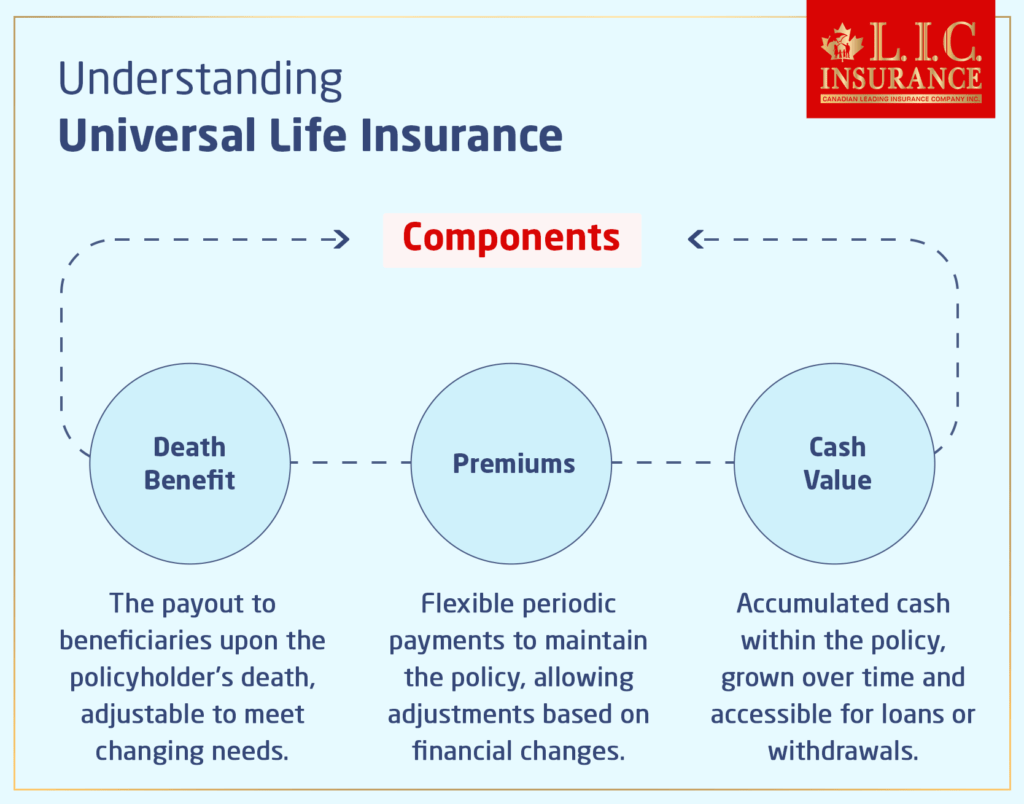
Universal Life (UL) and Variable Universal Life (VUL) policies separate the insurance cost from the policy's cash value component. The internal Cost of Insurance (COI) increases automatically each year as the insured grows older.
If the underlying cash value generates poor interest or market returns, it may fail to cover the rising internal COI deductions. When cash reserves drain to zero, the policyholder must pay substantial out-of-pocket premium increases to prevent policy lapse. Over several decades, these required premium spikes can easily sum to more than the policy's static death benefit.
4. Long-Term Whole Life Policies Paid Over Decades
Standard whole life insurance policies require regular premium payments up to a specific age, traditionally age 100 or 121. If a policy is non-participating (meaning it does not receive company dividends) and has a fixed death benefit, a policyholder who purchases coverage early in life and lives to an advanced age may eventually cross the threshold where total paid premiums exceed the benefit amount.
IRS Limits, Modified Endowment Contracts, and Overfunding
To understand life insurance premium boundaries, it is necessary to distinguish between paying too much premium due to high costs versus intentionally overfunding a policy for tax-advantaged growth.
Under United States tax law, IRS Section 7702 defines what qualifies as a legitimate life insurance contract versus an investment vehicle. To maintain tax-free death benefits and tax-deferred cash value growth, policies must pass strict testing criteria, including the "7-Pay Test."
- Modified Endowment Contract (MEC): If a policyholder deposits too much premium into a policy during its first seven years, the contract converts into a MEC. While a MEC still pays a tax-free death benefit, lifetime cash withdrawals and loans lose their favorable tax treatment and become subject to income taxes and early withdrawal penalties.
- Maximum Premium vs. Minimum Death Benefit: IRS rules cap the maximum amount of money you can deposit into a life insurance contract relative to its death benefit. However, these rules are designed to prevent tax avoidance—they do not protect policyholders from slowly overpaying cumulative premiums over 40 or 50 years through standard policy fees.
Comparing Life Insurance Types: Cumulative Cost vs. Benefit Risk
The following table outlines how different policy types perform regarding the risk of paying cumulative premiums that exceed the final benefit:
| Policy Type | Risk Level of Overpaying | Primary Cause of High Relative Cost | Recommended Mitigating Strategy |
|---|---|---|---|
| Guaranteed Issue / Final Expense | Very High | High mortality risk pricing for un-underwritten applicants | Switch to simplified issue policies or establish a dedicated savings account. |
| Annual Renewable Term (Post-Level) | High | Exponential age-based Cost of Insurance (COI) increases | Convert to permanent coverage before level period expires or drop coverage. |
| Non-Guaranteed Universal Life | Moderate to High | Low crediting rates combined with rising internal charges | Request annual in-force illustrations and adjust premium payments early. |
| Participating Whole Life | Low | Premium payments spread across long horizons without dividend tracking | Apply dividends toward paid-up additions to increase total death benefit. |
| Level-Term (Within Initial Term) | Extremely Low | Fixed low pricing over 10–30 years | Maintain policy through initial level period; re-evaluate needs at expiration. |
Key Factors That Accelerate the Risk of Overpaying
Several internal and external economic factors accelerate how quickly cumulative premiums approach or exceed policy benefits.
Underperforming Crediting Rates and Market Returns
Flexible-premium permanent policies rely on internal interest rates or market index returns to build cash value. When macroeconomic interest rates remain low for extended periods, or when investment markets underperform expectations, cash value growth stalls. Because internal monthly mortality deductions continue to rise, the policyholder must compensate by contributing extra cash premiums out of pocket.
High Administrative Fees and Mortality Charges
In addition to pure insurance costs, life insurance products carry administrative fees, premium taxes, policy issue charges, and expense surcharges. These fees directly reduce the portion of your premium that goes toward cash value accumulation, expanding the gap between premiums paid and net policy value.
Extending Term Coverage Past Financial Dependency
Term life insurance is meant to replace income during primary working and child-rearing years. Retaining term insurance into retirement—when financial dependents are no longer relying on that income—often leads to paying steep renewal rates simply to preserve a benefit that may no longer be financially necessary.
Disclaimer: Life insurance policy mechanics and tax implications depend on individual contract terms and state regulations. Consult a licensed insurance professional or certified financial planner for guidance specific to your financial situation.
Practical Strategies to Avoid Paying More Than Your Policy’s Worth
If an evaluation of your current policy reveals that total historical and future premiums will exceed the death benefit payout, several strategic adjustments can help protect your financial interests.
- Evaluate Current Policy
- Permanent Policy Needs
- Reinvest Dividends for Paid-Up Additions
- Request In-Force Illustration
- Term Coverage Expiring
- Convert Before Term Expiration Date
- Drop Unnecessary Coverage
- Permanent Policy Needs
1. Request an Annual In-Force Illustration
For permanent life insurance policies, request an in-force illustration from the insurance carrier every year. This detailed projection models the policy’s performance based on current cash values, projected interest rates, and internal cost charges. It clearly shows whether your current premium rate is sufficient to sustain the death benefit or if future price hikes will cause total costs to outstrip coverage value.
2. Utilize Dividends for Paid-Up Additions
If you own a participating whole life policy from a mutual insurance company, elect to receive your policy dividends as Paid-Up Additions (PUAs). Paid-up additions are mini-policies that automatically increase both your total death benefit and your cash value without requiring additional medical underwriting. Over time, this compounding growth ensures that the death benefit stays well ahead of total premiums paid.
3. Consider Reduced Paid-Up Insurance
If you hold a whole life policy with accumulated cash value but wish to stop paying ongoing monthly premiums, ask your insurer about a Reduced Paid-Up (RPU) option. This choice locks in a reduced, fully paid death benefit based on your existing cash value. You will never have to pay another premium out of pocket, eliminating the risk of paying more in total premiums than the policy will pay out.
4. Perform a 1035 Tax-Free Exchange
Under Section 1035 of the U.S. Internal Revenue Code, policyholders can transfer the cash surrender value of an underperforming or overpriced life insurance policy into a modern, lower-cost policy or an annuity without triggering immediate tax obligations. Policyholders can learn more about official tax-free exchange rules directly from the Internal Revenue Service.
5. Transition to Simplified Issue or Underwritten Options
If you hold an expensive guaranteed issue policy but your health has stabilized or improved, apply for a simplified issue or fully underwritten policy. Insurers use general health questionnaires to price simplified issue policies much lower than guaranteed acceptance contracts, significantly lowering your long-term cumulative outlay. Industry guidelines and educational materials regarding underwriting standards are maintained by the National Association of Insurance Commissioners.
Frequently Asked Questions
What happens if my total premiums exceed my life insurance coverage amount?
If your cumulative premiums exceed the death benefit, the insurance company does not pay out the difference upon your passing. The policy pays only the face value stated in the contract (plus any cash value or paid-up additions if structured as such). Any excess premiums paid over the life of the contract remain with the insurance carrier as part of the cost of risk management.
Does whole life insurance guarantee I won't pay more than the death benefit?
No. Standard non-participating whole life insurance policies require continuous premium payments until contract maturity (often age 100 or 121). If you purchase a policy at a young age and live a long life without receiving compounding dividend growth, your fixed premium payments over 70+ years can theoretically exceed the guaranteed fixed death benefit.
Can I get a refund if I pay more in premiums than the payout amount?
Generally, no. Insurance carriers do not offer automatic refunds simply because total premiums surpass the death benefit. The only way to receive money back during your lifetime is by surrendering a policy with cash value or utilizing a specific "Return of Premium" (ROP) rider attached to a term policy prior to its expiration.
How do dividends impact the total premium cost in whole life insurance?
Dividends reduce net costs when used to offset monthly premium payments directly. Alternatively, using dividends to purchase Paid-Up Additions increases the death benefit face value, helping ensure that the final payout grows over time to comfortably exceed the cumulative premiums you deposit.
How does IRS Section 7702 affect life insurance premium limits?
IRS Section 7702 sets statutory limits on the amount of premium you can deposit into a policy relative to its death benefit face value to keep its tax-advantaged status. If you exceed these funding thresholds, the policy becomes a Modified Endowment Contract (MEC), changing how cash withdrawals are taxed but not preventing long-term structural overpayment of premiums.
Strategic Next Steps for Policyholders
If you suspect you are paying more for a life insurance policy than it will ultimately yield, take the following concrete actions to evaluate and optimize your coverage:
- Calculate Your Cumulative Premium Paid to Date: Add up your historical premium payments using past annual statements or bank records to determine your exact baseline investment.
- Obtain an Updated Policy Statement: Contact your insurance agent or carrier to request a current policy summary showing the exact death benefit, guaranteed cash value, non-guaranteed cash value, and current dividend election.
- Run an In-Force Projections Scenario: Request a projection illustrating what total lifetime premiums will equal if you live to age 85, 90, or 95 under your current payment plan.
- Evaluate Financial Need: Determine whether your beneficiaries still require life insurance proceeds. If financial obligations like mortgages or child-rearing costs are complete, dropping renewable term coverage or taking a reduced paid-up policy may be the most prudent choice.
- Consult an Independent Financial Advisor: Before surrendering or modifying a long-held insurance contract, review your plan with an independent, fiduciary financial professional to avoid unintended tax liabilities or loss of necessary coverage.
Image Gallery