How to Choose a Bike Wreck Lawyer
Choosing a bike wreck lawyer requires evaluating their specific experience with cycling-related litigation, their track record in securing high-value settlements or trial verdicts, and their familiarity with local traffic statutes. Pri...
Choosing a bike wreck lawyer requires evaluating their specific experience with cycling-related litigation, their track record in securing high-value settlements or trial verdicts, and their familiarity with local traffic statutes. Prioritize attorneys who understand the unique physics of bicycle accidents and can effectively counter common insurance biases against cyclists to ensure full compensation.
Contents
Bicycle accidents, often referred to in legal contexts as "wrecks" or "collisions," present a unique set of challenges that differ significantly from standard motor vehicle accidents. As of 2026, the complexity of personal injury law regarding non-motorized transport has increased due to evolving urban infrastructure and new "vulnerable road user" protections. When you are injured while riding, your choice of legal representation can be the deciding factor between a settlement that barely covers medical bills and one that provides for long-term recovery and lost earning capacity.
The Importance of Cycling-Specific Legal Expertise
A general personal injury lawyer may handle hundreds of car-on-car collisions a year, but bicycle wrecks involve distinct legal nuances and physical dynamics. When selecting an attorney, the primary focus must be on their specific "bike law" expertise. Cyclists are often subject to different right-of-way rules, and the prejudice they face from law enforcement and insurance adjusters is a well-documented hurdle in these cases.
Understanding Local Cycling Ordinances
Traffic laws vary significantly by municipality. A competent bike wreck lawyer must be intimately familiar with local "Safe Passing" laws, "Dooring" statutes, and sidewalk riding prohibitions. For instance, if your accident occurred in a jurisdiction with a "Three-Foot Law," your lawyer needs to know how to prove a motorist’s proximity using electronic data or witness testimony. They should also understand how "Contributory Negligence" or "Comparative Fault" rules in your specific state might affect your recovery if the defense claims you were not wearing high-visibility gear or failed to use a designated bike lane.
Technical Knowledge of Bicycle Mechanics and Physics
In a bike wreck, the physics of the impact are vastly different than in a car crash. A specialized lawyer understands the "bio-mechanics" of how a cyclist is thrown from a frame and the types of "road rash," fractures, or traumatic brain injuries (TBI) that are unique to these incidents. Furthermore, they should have a working knowledge of bicycle components. If a mechanical failure contributed to the wreck, such as a cracked carbon fiber fork or a faulty braking system, a specialized lawyer will know to preserve the bike as evidence for a potential product liability claim against the manufacturer.
Key Criteria for Evaluating a Potential Attorney
Selecting the right advocate requires more than a cursory search of online ratings. You must dig into the firm's history and its approach to litigation. In 2026, the legal landscape is increasingly dominated by large "settlement mills" that prioritize high volume over individual case value. For a bike wreck, which often involves catastrophic injury, you need a firm that offers personalized attention and aggressive representation.
Verified Track Record in Bicycle Litigation
Ask for specific examples of bicycle accident cases the firm has handled. It is not enough to have a high overall success rate; you want to see success in cases involving "left-hook" collisions, "right-hook" turns, and opening door accidents. Request data on their highest settlements and trial verdicts specifically for cyclists. A lawyer who has successfully litigated a case against a municipality for poor road maintenance or a trucking company for a blind-spot collision is better equipped to handle the complexities of your claim.
Resources for Expert Testimony
Personal injury cases are often won or lost based on the quality of expert witnesses. A top-tier bike wreck lawyer will have established relationships with:
- Accident Reconstructionists: Professionals who can use skid marks, GPS data from your bike computer (like Garmin or Wahoo), and vehicle "black box" data to recreate the scene.
- Medical Experts: Specialists who can testify about the long-term impact of your specific injuries, including neurological experts for TBIs.
- Life Care Planners: Experts who calculate the lifetime costs of your medical care, adaptive equipment, and lost wages.
| Feature | Solo Practitioner/Boutique Firm | Large Personal Injury Firm |
|---|---|---|
| Attention Level | High; often work directly with the partner. | Variable; may be handled by associates or paralegals. |
| Resources | May be limited; check their "war chest" for experts. | Significant; usually have deep pockets for litigation costs. |
| Bicycle Niche | More likely to have specialized "Bike Law" focus. | Usually generalists handling all types of accidents. |
| Trial Frequency | Often higher per case; focuses on maximizing value. | May prefer quick settlements to maintain high volume. |
Questions to Ask During the Initial Consultation
The initial consultation is your opportunity to interview the lawyer as much as they are evaluating your case. Most reputable personal injury attorneys offer this meeting for free. You should walk away from this meeting with a clear understanding of the firm's strategy and your legal standing.
Strategic and Operational Questions
- Who will be the primary point of contact? Ensure you are not handed off to a junior assistant immediately after signing the retainer agreement.
- How do you handle insurance company biases? Many adjusters start with the assumption that the cyclist was at fault or "unpredictable." Your lawyer should have a ready strategy to dismantle these biases with evidence.
- What is your experience with "Uninsured/Underinsured Motorist" (UM/UIM) claims? In many bike wrecks, the driver may flee (hit and run) or have insufficient insurance. Your lawyer needs to know how to navigate your own auto or umbrella insurance policies to find coverage.
- What are the potential weaknesses in my case? An honest lawyer will provide a realistic assessment of challenges, such as a lack of witnesses or a police report that is unfavorable to the cyclist.
Fee Structures and Litigation Costs
Almost all bike wreck lawyers work on a contingency fee basis, meaning they only get paid if you win. However, you must clarify how litigation expenses (filing fees, expert witness fees, medical record costs) are handled.
- Gross vs. Net Settlement: Does the lawyer take their 33-40% fee from the total settlement before or after expenses are deducted?
- Upfront Costs: Will you be responsible for paying expert fees if the case is lost? Most reputable firms "advance" these costs and waive them if there is no recovery.
Navigating the 2026 Insurance Landscape
In 2026, insurance companies are increasingly utilizing AI-driven algorithms to minimize payouts. These systems often undervalue "pain and suffering" and the unique lifestyle impacts of a bicycle injury, such as the inability to participate in a high-level hobby or the loss of a primary mode of green transportation.
A skilled lawyer will know how to "humanize" your claim to bypass these algorithmic bottlenecks. They will document your recovery through "Day in the Life" videos and detailed testimony from family and fellow cyclists. Furthermore, with the rise of autonomous and semi-autonomous vehicle features, your lawyer may need to investigate whether a vehicle’s software failed to detect you—a growing area of litigation that requires tech-savvy legal counsel.
Common Mistakes to Avoid When Choosing a Lawyer
The aftermath of a wreck is a time of high stress and physical pain, making it easy to fall into traps that can jeopardize your claim.
1. Choosing Based on Proximity Alone
Just because a lawyer has an office down the street does not mean they are the best fit. In 2026, digital communication makes it easy to work with the best bike lawyer in your state, even if they are several hours away. Prioritize expertise over geography.
2. Falling for "Fast Settlement" Promises
If a lawyer promises a check within 30 days, be wary. Comprehensive medical treatment and a thorough investigation take time. Rushing a settlement often means leaving significant money on the table, especially if your injuries have delayed complications like chronic pain or PTSD.
3. Ignoring the "Cyclist Connection"
While not strictly necessary, a lawyer who is a cyclist themselves often has a deeper passion for these cases. They understand the "right to the road" and the visceral danger of aggressive driving. This shared perspective can lead to more empathetic representation and a more persuasive narrative when presenting your case to a jury.
Frequently Asked Questions
How much does a bike wreck lawyer cost? Most bike wreck lawyers operate on a contingency fee, typically ranging from 33.3% to 40% of the final settlement or award. You should not have to pay any money upfront. If the lawyer does not win your case, you generally owe nothing in attorney fees, though you should verify if you are responsible for court costs.
What if the police report says the accident was my fault? Do not assume a police report is the final word. Officers often lack training in bicycle-specific physics or may have only interviewed the driver if you were being transported to the hospital. A specialized lawyer can hire experts to dispute the police findings and use physical evidence to prove the driver’s liability.
Should I talk to the driver’s insurance company before hiring a lawyer? No. Insurance adjusters are trained to elicit statements that can be used to reduce your claim’s value. They may ask "trick" questions about your speed, your lane position, or whether you saw the car. It is best to have your lawyer handle all communications with insurance companies from the start.
Can I still sue if I wasn’t wearing a helmet? In most jurisdictions, not wearing a helmet does not prevent you from filing a lawsuit, nor does it automatically make you at fault. While the defense may try to use "helmet defense" to argue that your injuries would have been less severe with head protection, a skilled lawyer can often prevent this from affecting your liability or damages, depending on state laws.
What is the statute of limitations for a bike wreck in 2026? Statutes of limitations vary by state, typically ranging from one to four years from the date of the accident. However, if the wreck involved a government vehicle (like a city bus), the deadline to file a "Notice of Claim" can be as short as 60 or 90 days. It is critical to consult a lawyer immediately to ensure no deadlines are missed.
Recommendation for Next Actions
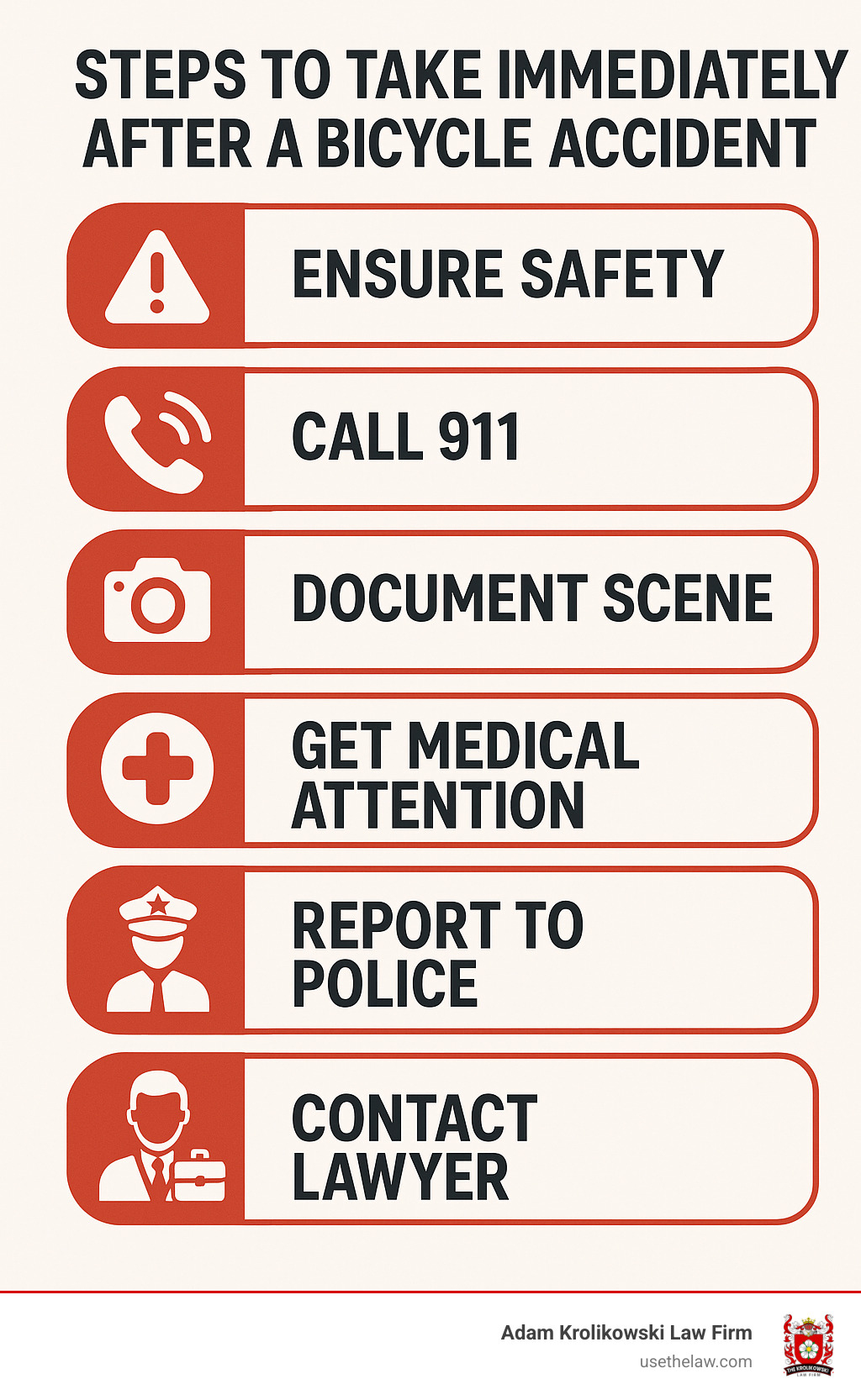
If you have been involved in a bike wreck, your first priority is medical stabilization. Once your health is addressed, your immediate next step should be to preserve all evidence. Do not repair your bike, do not wash your clothing, and do not delete any data from your cycling computer or smartwatch. Take photos of your injuries and the accident scene if possible.
Once evidence is secured, schedule consultations with at least two specialized bicycle accident attorneys. Compare their experience, their communication style, and their fee structures. Choosing a lawyer who views you as a fellow rider and a victim of negligence—rather than just another case file—is the most effective way to protect your future and ensure the roads become safer for all cyclists.
Disclaimer: This article is for informational purposes only and does not constitute legal advice or the formation of an attorney-client relationship. Laws regarding bicycle accidents vary by jurisdiction and are subject to change.
Image Gallery