How to Choose the Right Medical Coder Colleges
Selecting the right medical coder college in 2026 requires balancing institutional accreditation, specific certification alignment with organizations like AAPC or AHIMA, and the depth of the curriculum. Prospective students should prio...
Selecting the right medical coder college in 2026 requires balancing institutional accreditation, specific certification alignment with organizations like AAPC or AHIMA, and the depth of the curriculum. Prospective students should prioritize programs that offer hands-on practice with current encoders and provide clear pathways to national credentialing exams.
Contents
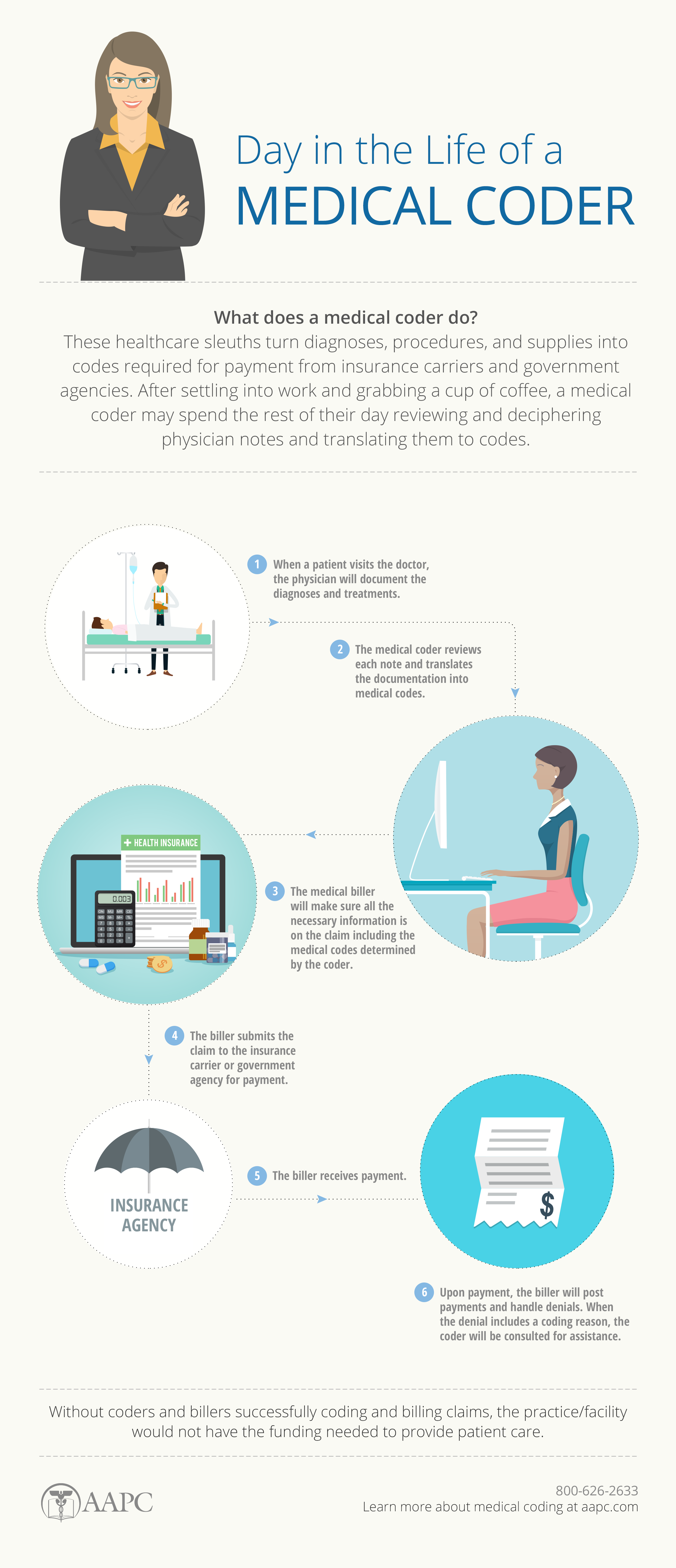
The healthcare landscape of 2026 remains heavily dependent on accurate data. As hospitals and clinics transition toward more complex reimbursement models, the role of a medical coder has evolved from simple data entry to a sophisticated analytical position. Choosing an educational institution is the most significant hurdle in entering this field. A mistake here can lead to thousands of dollars in debt without the necessary skills to pass professional certification exams.
Understanding the Role of Accreditation
The first and most non-negotiable step in choosing a medical coder college is verifying its accreditation. Accreditation is a process of external quality review used by higher education to scrutinize colleges, universities, and educational programs for quality assurance and quality improvement.
Institutional vs. Programmatic Accreditation
There are two layers of accreditation to consider. Institutional accreditation (formerly known as regional or national accreditation) applies to the entire school. It ensures that the credits you earn might be transferable to other institutions and that the school is eligible to participate in federal financial aid programs.
Programmatic accreditation is specific to the medical coding or health information management (HIM) department. The gold standard for programmatic accreditation in this field is the Commission on Accreditation for Health Informatics and Information Management Education (CAHIIM). Attending a CAHIIM-accredited program is often a prerequisite for sitting for certain advanced certifications, such as the Registered Health Information Technician (RHIT) credential offered by AHIMA.
Why Accreditation Matters in 2026
Employers in 2026 are increasingly selective. With the integration of Artificial Intelligence (AI) in preliminary coding processes, the human coder's role has shifted toward auditing and complex clinical documentation improvement (CDI). Programs that lack accreditation often fail to update their curricula to include these advanced analytical skills, leaving graduates unprepared for the modern workforce.
Aligning with Professional Organizations (AAPC vs. AHIMA)
In the United States, two primary organizations set the standards for medical coding: the American Academy of Professional Coders (AAPC) and the American Health Information Management Association (AHIMA). Most colleges design their programs to align with one of these two bodies.
The AAPC Pathway
AAPC is widely recognized for its focus on outpatient and physician-based coding. Their flagship credential is the Certified Professional Coder (CPC). If your goal is to work in a doctor’s office, a multi-specialty clinic, or a surgical center, look for a college that explicitly states its curriculum prepares students for the CPC exam. These programs often include AAPC-licensed instructional materials.
The AHIMA Pathway
AHIMA is traditionally more focused on inpatient or hospital-based coding. Their primary credentials include the Certified Coding Associate (CCA) and the Certified Coding Specialist (CCS). If you envision yourself working in a large hospital system, managing Diagnosis-Related Groups (DRGs), a college aligned with AHIMA standards is likely the better choice.
Evaluating the Curriculum Depth
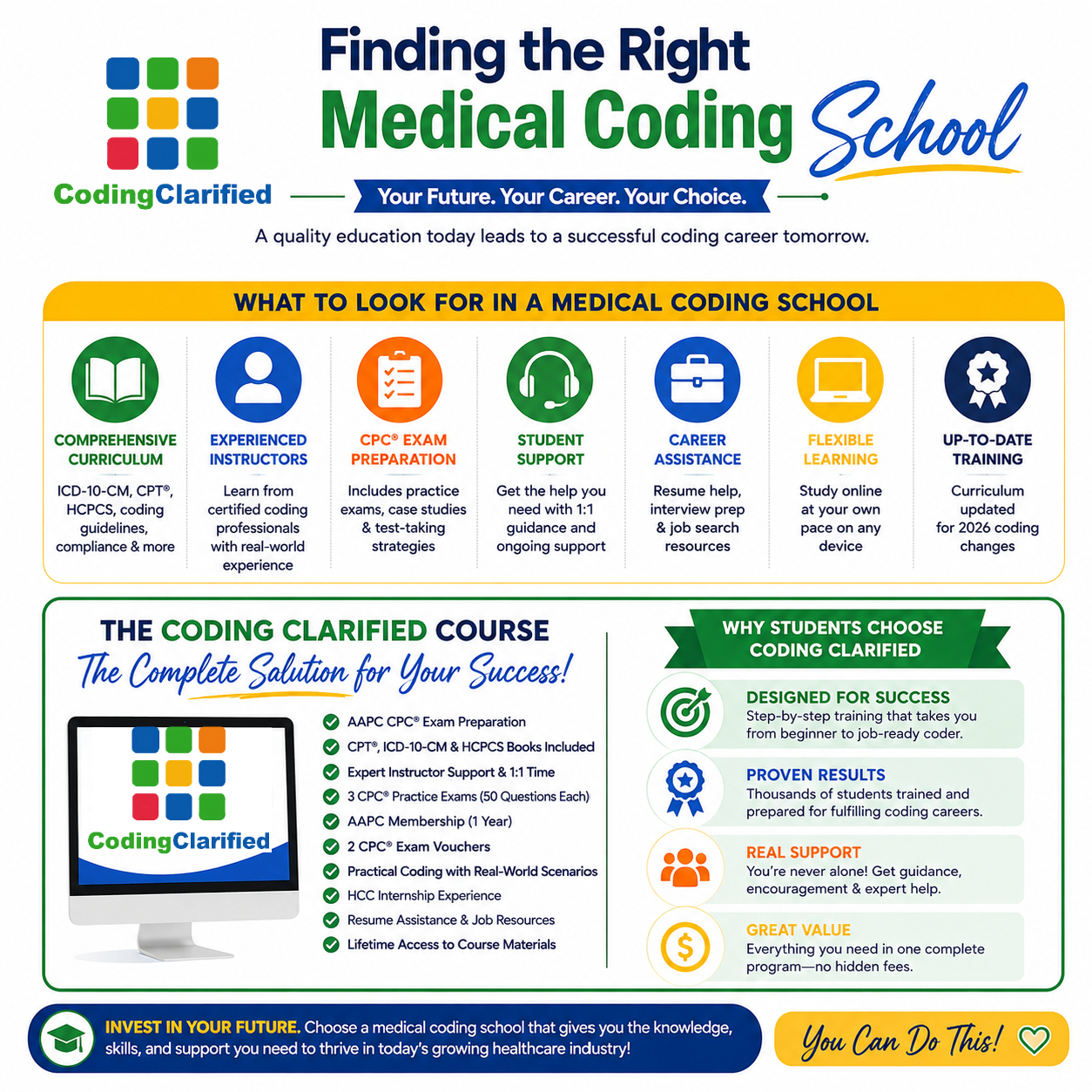
A robust medical coding program must go beyond teaching you how to look up codes in a book. To thrive in the 2026 job market, the curriculum should cover several core domains in depth.
- Medical Terminology, Anatomy, and Physiology: You cannot code what you do not understand. These courses are the foundation. Without a deep understanding of how the body functions and the terminology used by physicians, you will struggle with "unbundling" errors and incorrect code selection.
- Pathophysiology: This involves the study of disease processes. As coding becomes more clinical, understanding how diseases progress is essential for accurate ICD-10-CM (International Classification of Diseases, 10th Revision, Clinical Modification) and ICD-11 transition planning.
- The Coding Systems: The program must provide intensive training in:
- CPT (Current Procedural Terminology): Used for outpatient services.
- HCPCS Level II: Used for supplies, equipment, and drugs.
- ICD-10-PCS: Used exclusively for inpatient hospital procedures.
- Reimbursement Methodologies: Students need to understand how insurance works, including Medicare, Medicaid, and private payers. This includes learning about Value-Based Care and Hierarchical Condition Categories (HCC), which are critical for risk adjustment coding.
Format and Flexibility: Online vs. In-Person
By 2026, the majority of medical coding education has shifted to online or hybrid models. However, the quality of the online delivery varies significantly between colleges.
Synchronous vs. Asynchronous Learning
- Asynchronous Learning: You log in and complete work on your own schedule. This offers maximum flexibility but requires high self-discipline.
- Synchronous Learning: You attend live virtual lectures at specific times. This format is often better for complex subjects like coding, where real-time Q&A with an instructor can clarify difficult concepts.
When evaluating a college, ask about the "student-to-faculty ratio" in their online portals. Even in a digital environment, having access to an instructor who can explain why a specific modifier was used over another is invaluable.
Career Services and Externship Opportunities
A common challenge for new medical coders is the "experience gap"—employers often want 1–2 years of experience, even for entry-level roles. The right college will help you bridge this gap through externships or practical simulations.
Check if the college has partnerships with local healthcare facilities. An externship allows you to practice coding on de-identified, real-world charts under the supervision of a professional. Some colleges also offer "Vitals" or "Practicode" modules that count toward the experience requirements needed to remove the "Apprentice" (CPC-A) designation from an AAPC certification.
Comparing College Types
| Feature | Community Colleges | Private Technical Schools | Professional Org Training (AAPC/AHIMA) |
|---|---|---|---|
| Duration | 1–2 Years | 6–12 Months | 4–8 Months |
| Cost Range | $3,000 – $7,000 | $10,000 – $20,000 | $2,000 – $4,500 |
| Credential | Certificate or Associate Degree | Certificate or Diploma | Professional Certificate |
| Financial Aid | Federal (FAFSA) Eligible | Varies (often private loans) | Usually No Federal Aid |
| Best For | Students wanting a degree | Rapid career changers | Highly disciplined self-starters |
| Accreditation | Institutional & Programmatic | Institutional (usually) | Specialized/Professional |
Cost and Financial Considerations
The cost of medical coding education in 2026 can range from a few thousand dollars at a community college to over $15,000 at a private technical institute. It is vital to calculate the Return on Investment (ROI).
According to the Bureau of Labor Statistics (BLS), the median pay for medical records and health information specialists is competitive, but your starting salary may be on the lower end of the spectrum. Taking on $20,000 in debt for a job that may start at $45,000 a year requires careful financial planning.
Always look for "all-in" pricing. Does the tuition include the cost of your coding books (which can cost $300–$500 annually) and your first certification exam fee? Some colleges bundle these costs, while others leave them as surprise expenses.
Common Mistakes to Avoid
- Ignoring Exam Pass Rates: Ask the admissions office for the school's "first-time pass rate" for the CPC or CCS exams. If they cannot or will not provide this data, it is a significant red flag.
- Choosing "Medical Billing" Only: Ensure the program is for Medical Coding. While billing and coding are related, they are distinct skill sets. A billing-only program will not qualify you for high-level coding positions.
- Overlooking Software Training: In 2026, coders use Electronic Health Records (EHR) and Computer-Assisted Coding (CAC) software. Ensure the college provides hands-on access to these tools rather than just teaching from a textbook.
Frequently Asked Questions
Can I become a medical coder in 6 months?
Yes, it is possible through intensive certificate programs or direct training from AAPC or AHIMA. However, these programs are extremely fast-paced. They focus strictly on coding and often skip the broader healthcare administration context found in two-year degree programs.
Do I need a college degree to work in medical coding?
While not strictly required for entry-level coding, many employers prefer an Associate degree, especially for roles in hospital systems or for management tracks. Professional certification (CPC or CCS) is generally more important than the degree itself, but the degree often facilitates long-term career growth.
Is the ICD-11 system covered in 2026 programs?
Most reputable colleges in 2026 have integrated ICD-11 concepts into their curriculum. While ICD-10-CM remains the primary system for billing in the US, understanding the structure of ICD-11 is essential for future-proofing your career as global standards evolve.
Can I work from home immediately after graduating?
Remote work is common in medical coding, but many employers require 6–12 months of in-office experience or a "clean" accuracy audit before allowing new coders to work from home. Choosing a college with a strong reputation can sometimes help you secure a remote role faster.
What is the difference between a certificate and a certification?
A certificate is awarded by an educational institution (like a college) for completing a course of study. A certification is a professional credential awarded by a national body (like AAPC or AHIMA) after passing a standardized exam. You need the certificate (or the knowledge it provides) to successfully earn the certification.
Final Recommendation
To choose the right medical coder college, start by identifying your career goal: do you want to work in a local clinic (AAPC/CPC) or a major hospital (AHIMA/CCS)? Once identified, filter your list by CAHIIM accreditation and verify that their curriculum includes recent updates in medical technology and AI-assisted coding. Finally, compare the total cost—including books and exam fees—against the school’s proven track record of student exam success. Before enrolling, attend a virtual open house to ensure the teaching style aligns with your learning preferences.
Image Gallery