Ted Bundy’s Adult Life: A Comprehensive Chronicle of Deception and Violence
Ted Bundy’s adult life was defined by a chilling duality: he maintained the facade of a promising law student and ambitious political operative while covertly committing a minimum of 30 murders across seven states. Between 1969 and his...
Ted Bundy’s adult life was defined by a chilling duality: he maintained the facade of a promising law student and ambitious political operative while covertly committing a minimum of 30 murders across seven states. Between 1969 and his 1989 execution, his life shifted from academic pursuits to a predatory existence that fundamentally changed American criminal profiling.
Contents
The trajectory of Theodore Robert Bundy’s adulthood is often studied as a primary example of "the mask of sanity." To his peers in the late 1960s and early 1970s, he appeared to be an upwardly mobile, charismatic Republican with a bright future in law or public service. However, beneath this social veneer lay a violent compulsion that manifested in some of the most notorious crimes in United States history. Understanding his adult life requires examining his academic failures and successes, his strategic involvement in state politics, his intricate "ruse" methodology, and the eventual legal collapse that led to the electric chair.
Early Adulthood and Educational Transitions (1965–1972)
Ted Bundy’s transition into adulthood was marked by academic inconsistency and a deep-seated desire for social validation. After graduating from Woodrow Wilson High School in 1965, he spent a year at the University of Puget Sound before transferring to the University of Washington (UW) to study Chinese. This period was characterized by social awkwardness and a sense of inadequacy compared to his more affluent classmates.
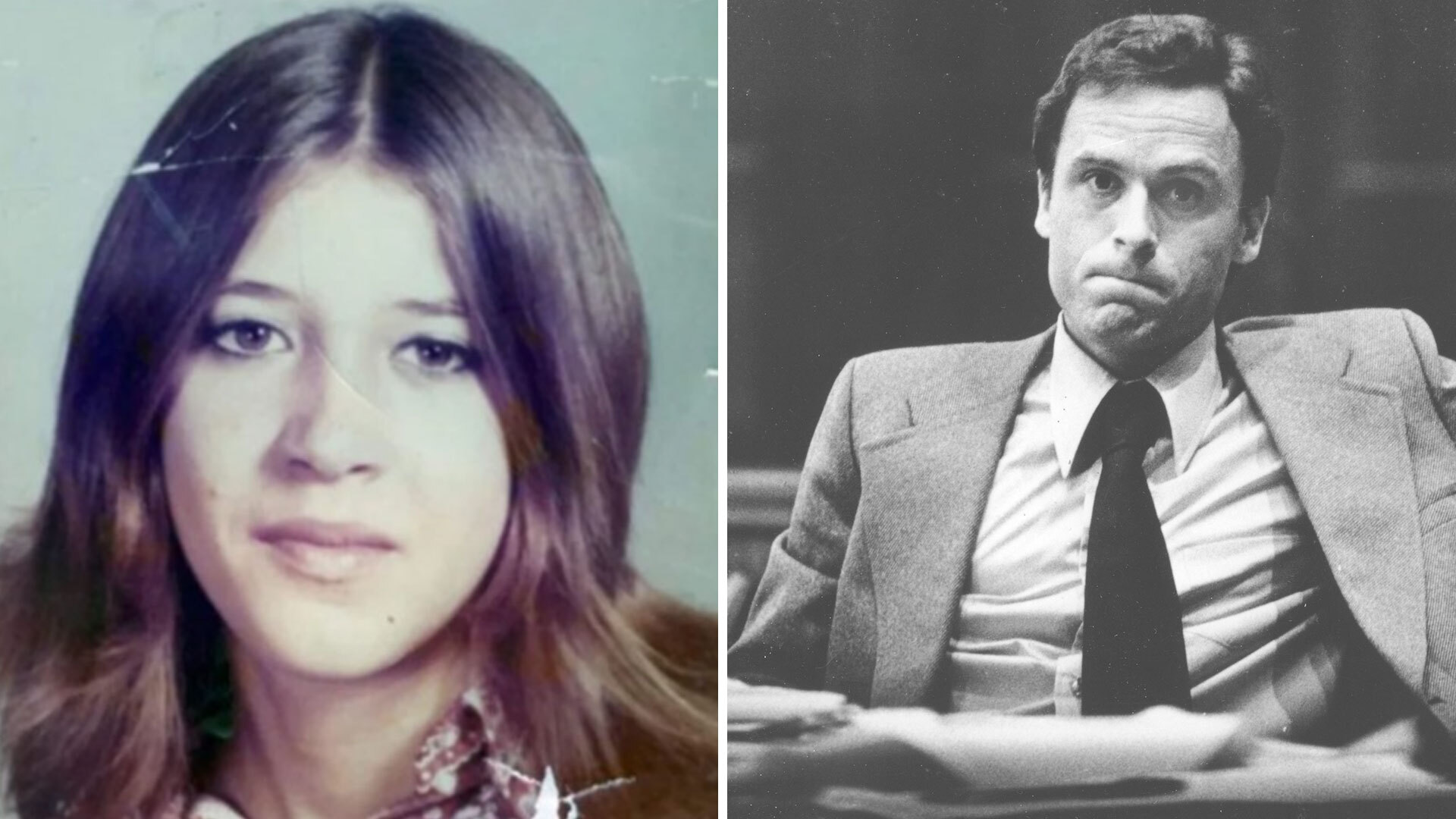
In 1967, Bundy met a woman frequently identified in literature by the pseudonym Stephanie Brooks (later revealed to be Diane Edwards). Edwards was from a wealthy family in California, representing everything Bundy aspired to be. Their relationship was a pivotal turning point; when she ended the relationship in 1968 due to his perceived lack of ambition and emotional maturity, Bundy was devastated. Many biographers and psychologists argue that this rejection served as a primary catalyst for his later violence, as many of his victims bore a striking physical resemblance to her.
Following the breakup, Bundy dropped out of school and traveled to Philadelphia, where he briefly attended Temple University and visited family members. He eventually returned to the University of Washington, where he re-enrolled as a psychology major. This second academic stint was far more successful; he graduated with honors in 1972. His professors remembered him as a brilliant, dedicated student, seemingly unaware that he was already exhibiting the manipulative traits that would define his criminal career. During this time, he began a long-term relationship with Elizabeth Kloepfer, a divorced mother who would remain his primary partner for much of his adult life while remaining oblivious to his mounting body count.
Political Ambitions and the "Mask of Sanity"
By the early 1970s, Bundy had successfully embedded himself in the Washington State Republican Party. His involvement was not merely superficial; he was an active participant in high-level political campaigns. In 1972, he worked on the re-election campaign of Governor Daniel J. Evans. Following Evans's victory, Bundy was appointed as an assistant to Ross Davis, the Chairman of the Washington State Republican Party.
This political involvement provided Bundy with a sophisticated social cover. He traveled in influential circles, attended black-tie events, and developed a polished, authoritative persona. This period is the clearest example of the "Mask of Sanity," a term popularized by psychiatrist Harvey Cleckley to describe individuals who appear intellectually normal and socially well-adjusted while harboring profound psychopathic tendencies.
Bundy’s political associates viewed him as a "rising star." He utilized these connections to secure letters of recommendation for law school, despite his mediocre Law School Admission Test (LSAT) scores. In 1973, he was accepted into the University of Puget Sound School of Law (now Seattle University School of Law), though he would later transfer to the University of Utah College of Law. His ability to navigate these professional environments while simultaneously scouting for victims demonstrates the high-functioning nature of his psychopathy.
The Initiation of the Murder Spree (1974)
The year 1974 marked the formal beginning of Bundy's documented violence. While living in Seattle and attending law school, a series of young women began disappearing from the University of Washington campus and surrounding areas. The disappearances of Lynda Ann Healy, Donna Gail Manson, and Susan Elaine Rancourt shocked the Pacific Northwest.
Bundy’s methodology, often referred to as the "ruse," became a hallmark of his adult life. He would frequently approach women in public places—such as libraries or parks—while wearing a fake plaster cast on his arm or using crutches. He would politely ask for assistance in loading an object, such as a sailboat or books, into his tan Volkswagen Beetle. This appeal to his victims' altruism allowed him to bypass their natural defenses.
By mid-1974, the pressure from local law enforcement in Washington increased. Descriptions of a "Ted" driving a Volkswagen began to circulate. In a calculated move, Bundy relocated to Salt Lake City to attend the University of Utah College of Law. This move was not just for education; it served as a tactical retreat to a new "hunting ground" where he was unknown.
Life in Utah and the First Arrest (1974–1975)
In Utah, Bundy attempted to maintain his double life as a law student. However, his academic performance suffered as his violent compulsions intensified. The disappearances began almost immediately after his arrival, including the high-profile kidnapping and murder of Melissa Smith, the daughter of a local police chief.
His adult life took a permanent turn toward the legal system on August 16, 1975. A Utah Highway Patrol officer, Bob Hayward, attempted to pull Bundy over for a traffic violation in Granger. Bundy attempted to flee, leading to a short pursuit. When his car was eventually searched, police found a "murder kit" consisting of a ski mask, handcuffs, a crowbar, and torn sheets used as bindings.
While this arrest did not immediately link him to the murders, it brought him to the attention of investigators across multiple states who were sharing information on a "Ted" suspect. In February 1976, he was convicted of the kidnapping of Carol DaRonch, one of the few women to escape his attacks. He was sentenced to one to 15 years in the Utah State Prison, effectively ending his career as a law student and political hopeful.
Escapes and the Florida Rampage (1977–1978)
One of the most remarkable and terrifying aspects of Bundy's adult life was his refusal to remain incarcerated. In 1977, while being transported to Colorado to face murder charges for the death of Caryn Campbell, Bundy escaped twice.
- The Aspen Escape: During a recess at the Pitkin County Courthouse, Bundy, who was acting as his own attorney and therefore was not wearing shackles, jumped from a second-story window. He spent six days in the wilderness before being recaptured.
- The Glenwood Springs Escape: In December 1977, Bundy shed weight and climbed through a light fixture hole in the ceiling of his jail cell. He successfully navigated the crawlspace and walked out of the jail while the jailer was away from his desk.
Bundy traveled to Tallahassee, Florida, using the pseudonym "Chris Hagen." He rented a room near the Florida State University campus. On the night of January 15, 1978, in a final, frenzied burst of violence, he entered the Chi Omega sorority house. He attacked four women, killing two (Lisa Levy and Margaret Bowman). Weeks later, he kidnapped and murdered 12-year-old Kimberly Leach in Lake City. This would be his final crime.
The Final Trials and the Media Circus
Bundy’s adult life concluded with a series of high-profile trials in Florida that were among the first to be nationally televised. His behavior during these trials was a spectacle; he frequently argued with judges, fired his legal counsel, and acted as his own lead defense attorney. He used the courtroom as a stage to perform the persona he had cultivated during his political years.
Despite his attempts to manipulate the jury, the evidence was overwhelming. In the Chi Omega trial, physical evidence in the form of forensic odontology (bite mark analysis) proved crucial. Experts matched Bundy’s unique dental alignment to marks left on one of the victims. In 1979 and 1980, he received three separate death sentences.
Timeline of Key Events in Ted Bundy's Adult Life
| Year | Location | Major Life Event | Legal/Criminal Status |
|---|---|---|---|
| 1965 | Tacoma, WA | Enters University of Puget Sound | No criminal record |
| 1967 | Seattle, WA | Meets Diane Edwards (Catalyst) | Begins "Mask of Sanity" |
| 1972 | Seattle, WA | Graduates UW with honors; joins GOP | Active political operative |
| 1973 | Seattle, WA | Enters Law School | Likely began early assaults |
| 1974 | WA/OR/UT | Relocates to Utah for Law School | Intensive murder spree begins |
| 1975 | Utah | First arrest by Highway Patrol | Convicted of kidnapping (1976) |
| 1977 | Colorado | Escapes from custody (twice) | Becomes FBI Most Wanted |
| 1978 | Florida | Chi Omega & Kimberly Leach murders | Final arrest in Pensacola |
| 1979 | Florida | Miami Trial (Chi Omega) | Sentenced to Death |
| 1989 | Florida | Final Confessions and Execution | Executed Jan 24, 1989 |
Life on Death Row and Confessions
Bundy spent nine years on Florida’s death row. During this time, he married Carole Ann Boone, a former coworker, in a bizarre legal maneuver where he proposed to her while she was on the witness stand during his trial. They eventually had a daughter, though the marriage ended in divorce as his execution date neared.
In 2026, historians and criminologists continue to analyze the transcripts of Bundy’s final days. As his appeals were exhausted, he began a series of confessions to Special Agent Bill Hagmaier of the FBI’s Behavioral Science Unit and various state investigators. In these interviews, he dropped the "innocent man" act and provided graphic details of his crimes, though many believe he took the locations of several victims to his grave.
He was executed via the electric chair at the Florida State Prison on January 24, 1989. His adult life, which began with the promise of intellectual and political success, ended as a cautionary tale of the hidden nature of psychopathic violence.
Frequently Asked Questions
What was Ted Bundy’s education and did he finish law school?
Bundy graduated with a degree in psychology from the University of Washington in 1972. While he attended law school at the University of Puget Sound and later the University of Utah, he never completed his Juris Doctor (JD) degree. His legal studies were interrupted by his first arrest in 1975 and his subsequent escapes.
Was Ted Bundy actually a successful politician?
He was never an elected official, but he was a successful political staffer. He worked on the campaign of Governor Daniel J. Evans and held a position within the Washington State Republican Party. Many of his contemporaries believed he had the charisma and intellect to eventually run for office himself.
How many people did Ted Bundy kill during his adult life?
Bundy confessed to 30 murders shortly before his execution. However, estimates from law enforcement and biographers suggest the true number could be higher, potentially exceeding 100. He targeted young women almost exclusively, typically between the ages of 15 and 25.
How did Bundy’s adult life influence modern criminal profiling?
The FBI's Behavioral Science Unit used Bundy as a primary case study to develop profiles of "organized" serial killers. His ability to blend into society, maintain a job, and participate in politics while committing crimes led to a better understanding of how high-functioning psychopaths operate. Detailed records of his confessions are maintained by the FBI Vault.
Did Ted Bundy have children during his adult life?
Yes, he had one daughter, Rose Bundy, born in 1982 while he was on death row. The child was conceived with Carole Ann Boone during an unauthorized encounter or a "conjugal visit" that was allegedly overlooked by prison guards. Rose and her mother have since changed their names and live in anonymity.
Recommendation for Further Research
For those seeking to understand the intersection of criminal law and psychopathology as exemplified by Bundy’s adult life, the primary source materials are invaluable. Scholars should review the official court records available through the Florida Supreme Court regarding his appeals and the bite mark evidence that set a precedent for forensic testimony. Additionally, the "Bundy Tapes"—recorded interviews by Stephen Michaud and Hugh Aynesworth—offer a rare, firsthand look at the killer's attempt to analyze his own "entity" in the third person.
Image Gallery