Azure Landing Zone Baseline: Translating Cloud Adoption Principles into Architecture
An Azure Landing Zone baseline is the technical implementation of Microsoft’s Cloud Adoption Framework (CAF) design principles, providing a pre-configured environment that balances developer agility with enterprise governance. By trans...
An Azure Landing Zone baseline is the technical implementation of Microsoft’s Cloud Adoption Framework (CAF) design principles, providing a pre-configured environment that balances developer agility with enterprise governance. By translating abstract principles like policy-driven governance and subscription democratization into specific Azure resources and configurations, organizations ensure that their cloud environment is secure, scalable, and compliant from day one.
Contents
Understanding the Relationship Between CAF Principles and ALZ Baselines
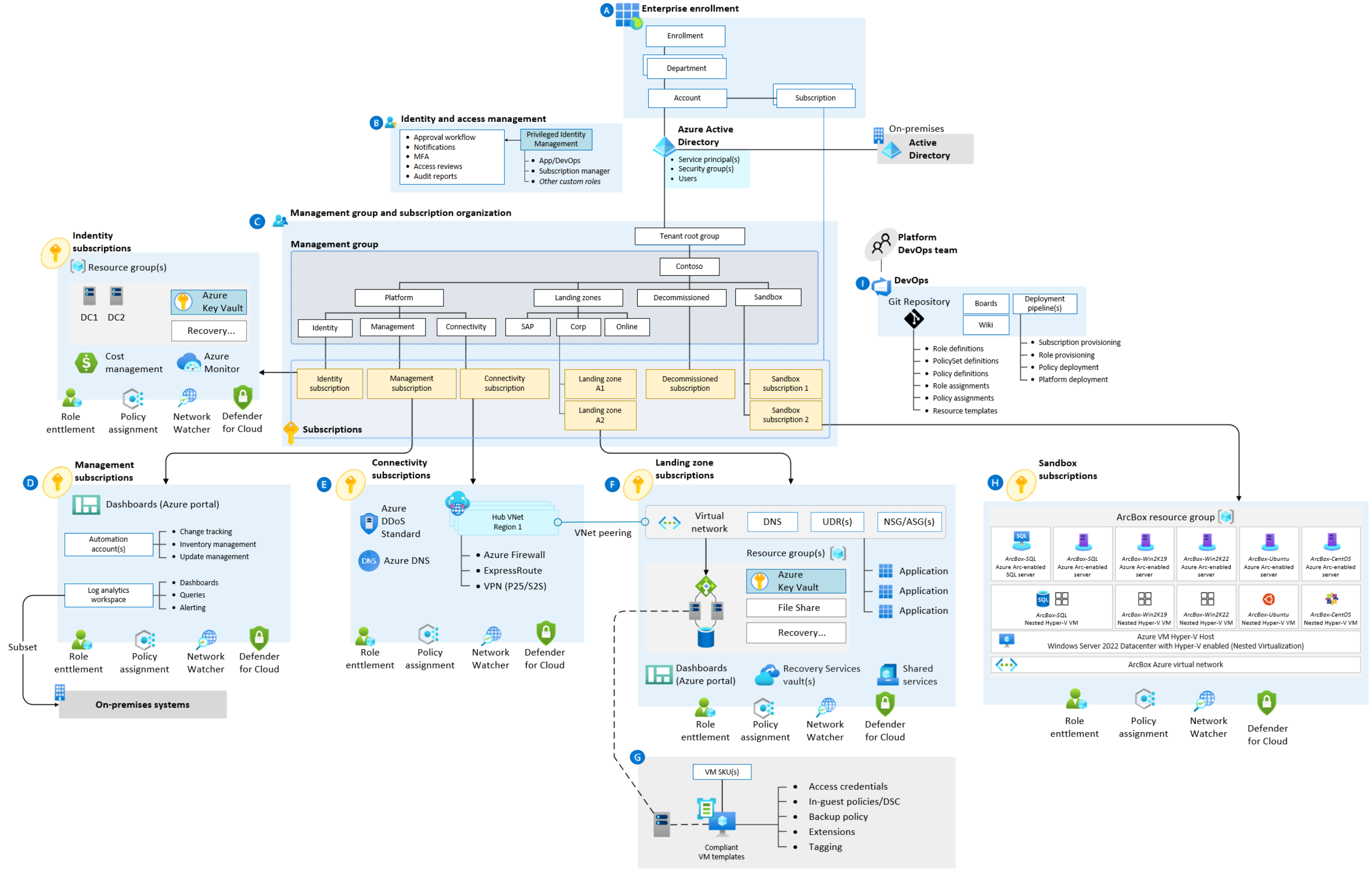
In the landscape of 2026, cloud maturity is no longer defined by simply having a presence in the cloud, but by how effectively an organization can scale without increasing operational friction. The Azure Landing Zone (ALZ) serves as the "plumbing" of the cloud environment. However, this plumbing is not arbitrary; it is the direct physical manifestation of the Cloud Adoption Framework (CAF) design principles.
Translating these principles into a baseline requires moving beyond high-level strategy into technical specifications. A "baseline" represents the minimum set of guardrails, networking configurations, and identity controls that must exist before a single production workload is deployed. Without this translation, organizations often face "cloud sprawl," where fragmented environments lead to security vulnerabilities and unmanageable costs.
The Evolution of the Baseline in 2026
By 2026, the concept of a baseline has evolved. It is no longer a static document but a living set of Infrastructure as Code (IaC) templates—typically written in Bicep or Terraform—that are integrated into continuous integration and continuous deployment (CI/CD) pipelines. This ensures that as the CAF principles evolve to meet new security threats or regulatory requirements, the physical landing zone can be updated programmatically across the entire enterprise.
Core Design Principles and Their Technical Translations
The success of an Azure Landing Zone depends on how faithfully it adheres to the five core design principles of the Cloud Adoption Framework. Each principle requires a specific technical translation to become part of the functional baseline.
1. Subscription Democratization
The Principle: Subscriptions should be used as a unit of management and scale, rather than forcing multiple disparate workloads into a single subscription.
The Translation: In the baseline, this is realized through the automated vending of subscriptions. Instead of a manual request process that takes weeks, the baseline includes a Subscription Vending Machine pattern. This pattern uses Azure Blueprints or Deployment Stacks to automatically apply tags, link the subscription to a specific Management Group, and deploy mandatory resource providers. This allows application teams to own their "sandbox" while remaining within the organizational boundary.
2. Policy-Driven Governance
The Principle: Governance should not be a manual gatekeeping process but a set of automated guardrails that prevent non-compliant actions before they occur.
The Translation: This translates directly to Azure Policy. A robust 2026 baseline includes custom Policy Initiatives applied at the Management Group root level. These policies might enforce data residency by restricting resource deployment to specific regions (e.g., East US or North Europe), mandate that all storage accounts use private endpoints, or ensure that every virtual machine is backed up to a Recovery Services Vault.
3. Single Control and Management Plane
The Principle: Use a consistent set of tools and interfaces to manage all resources, regardless of the workload type.
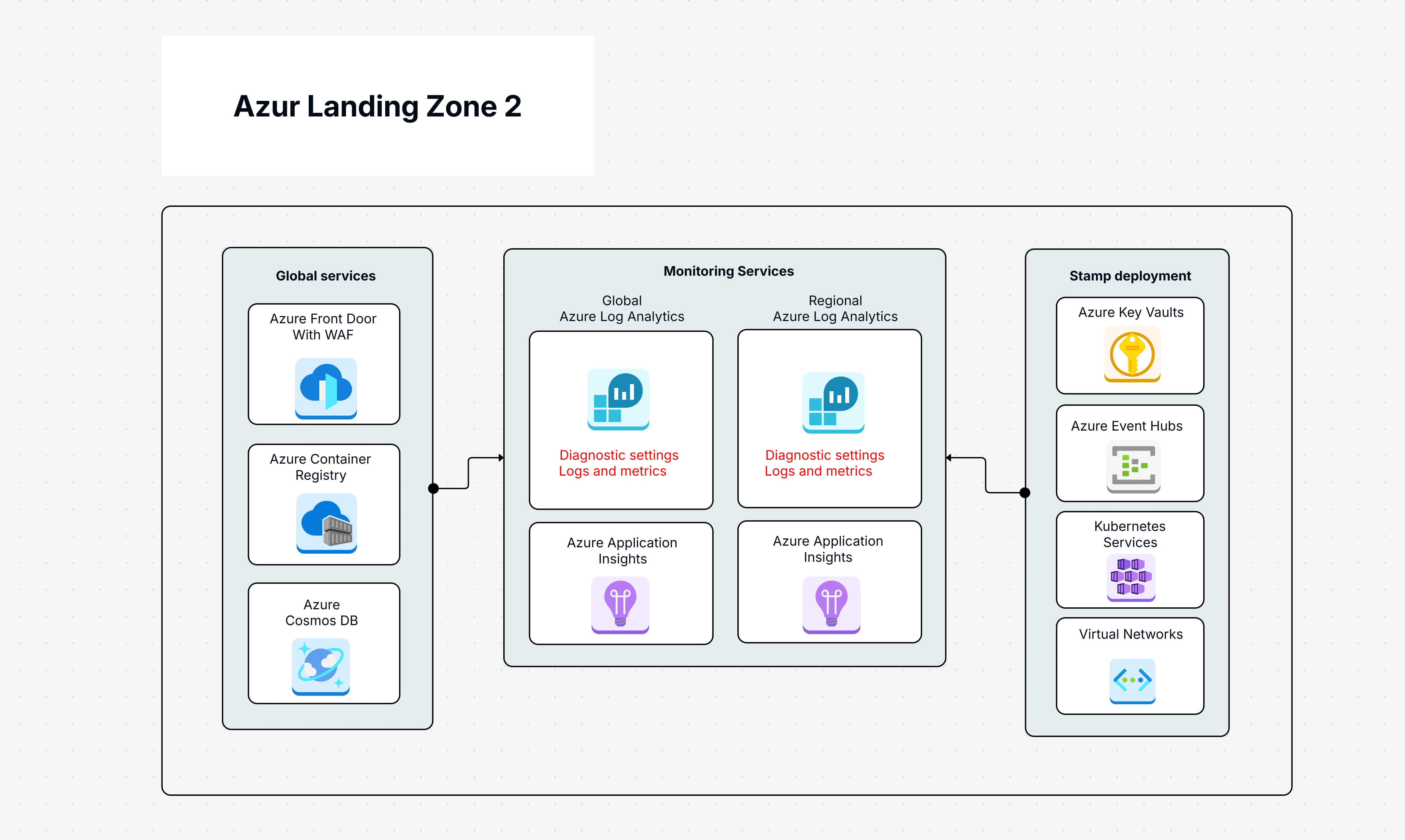
The Translation: This is achieved by centralizing identity via Microsoft Entra ID (formerly Azure Active Directory) and centralizing logging via Azure Monitor and Log Analytics. The baseline ensures that every subscription automatically forwards its activity logs to a central "Security" or "Operations" subscription. This provides a "single pane of glass" for the Cloud Center of Excellence (CCoE) to monitor the entire estate.
4. Application-Centric Service Architecture
The Principle: The platform should focus on providing services to applications rather than just providing infrastructure components.
The Translation: The baseline prioritizes Platform as a Service (PaaS) and Serverless options. Technically, this means the networking baseline includes pre-configured Private Link DNS zones and integration with Azure Front Door or Application Gateway. This allows application developers to consume complex networking services without needing to understand the underlying routing tables or firewall rules.
The Technical Pillars of an Azure Landing Zone Baseline
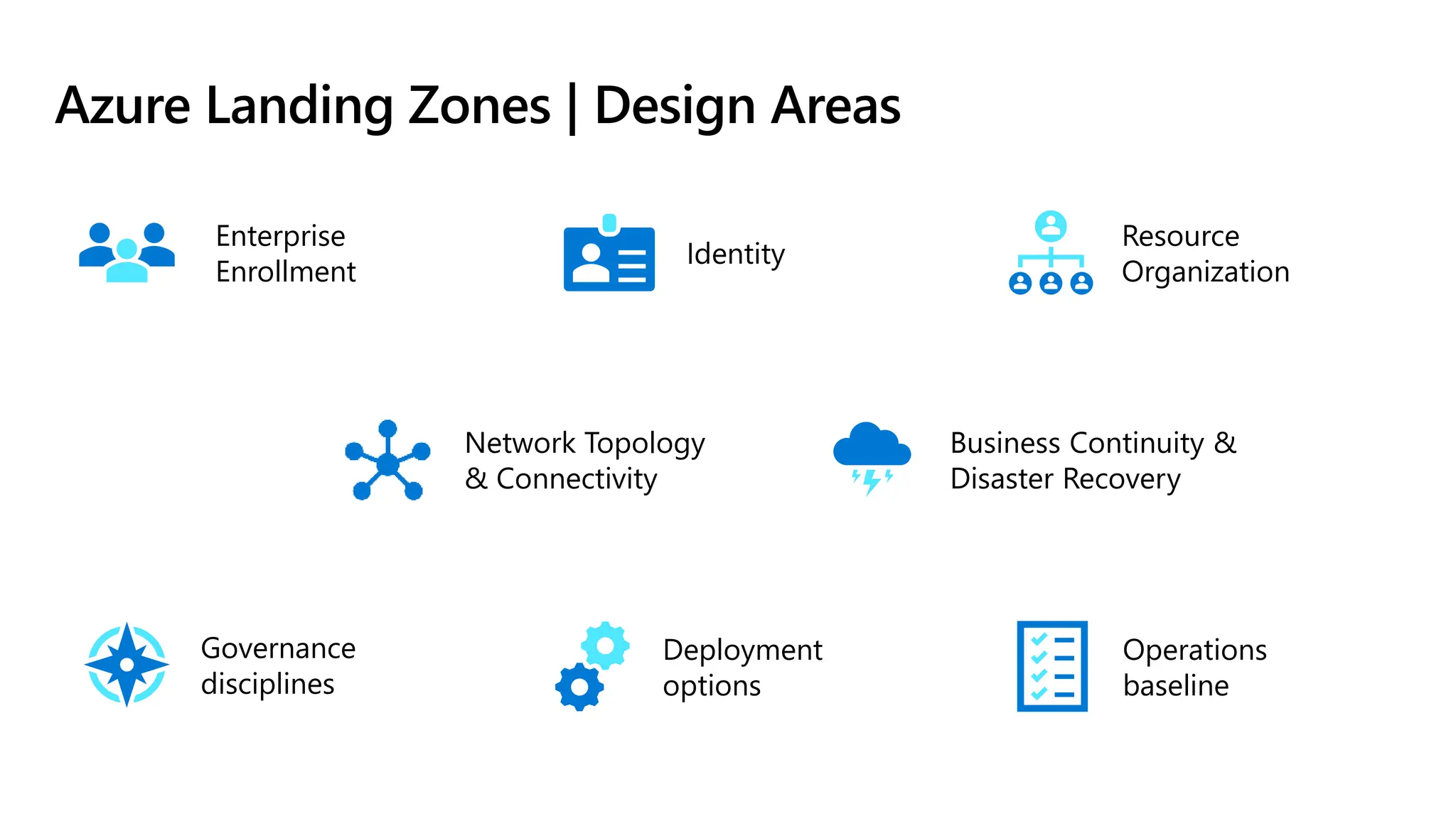
To move from theory to a deployable baseline, architects must address four critical design areas. These areas act as the pillars supporting the translated CAF principles.
Identity and Access Management (IAM)
A 2026 baseline assumes a Zero Trust architecture. This involves:
- Privileged Identity Management (PIM): Ensuring that administrative rights are not "always on" but requested on an as-needed basis.
- Conditional Access Policies: Translating the principle of security into rules that require Multi-Factor Authentication (MFA) and compliant devices for any access to the management plane.
- Managed Identities: Moving away from service principals and secrets toward system-assigned identities for resource-to-resource communication.
Network Topology and Connectivity
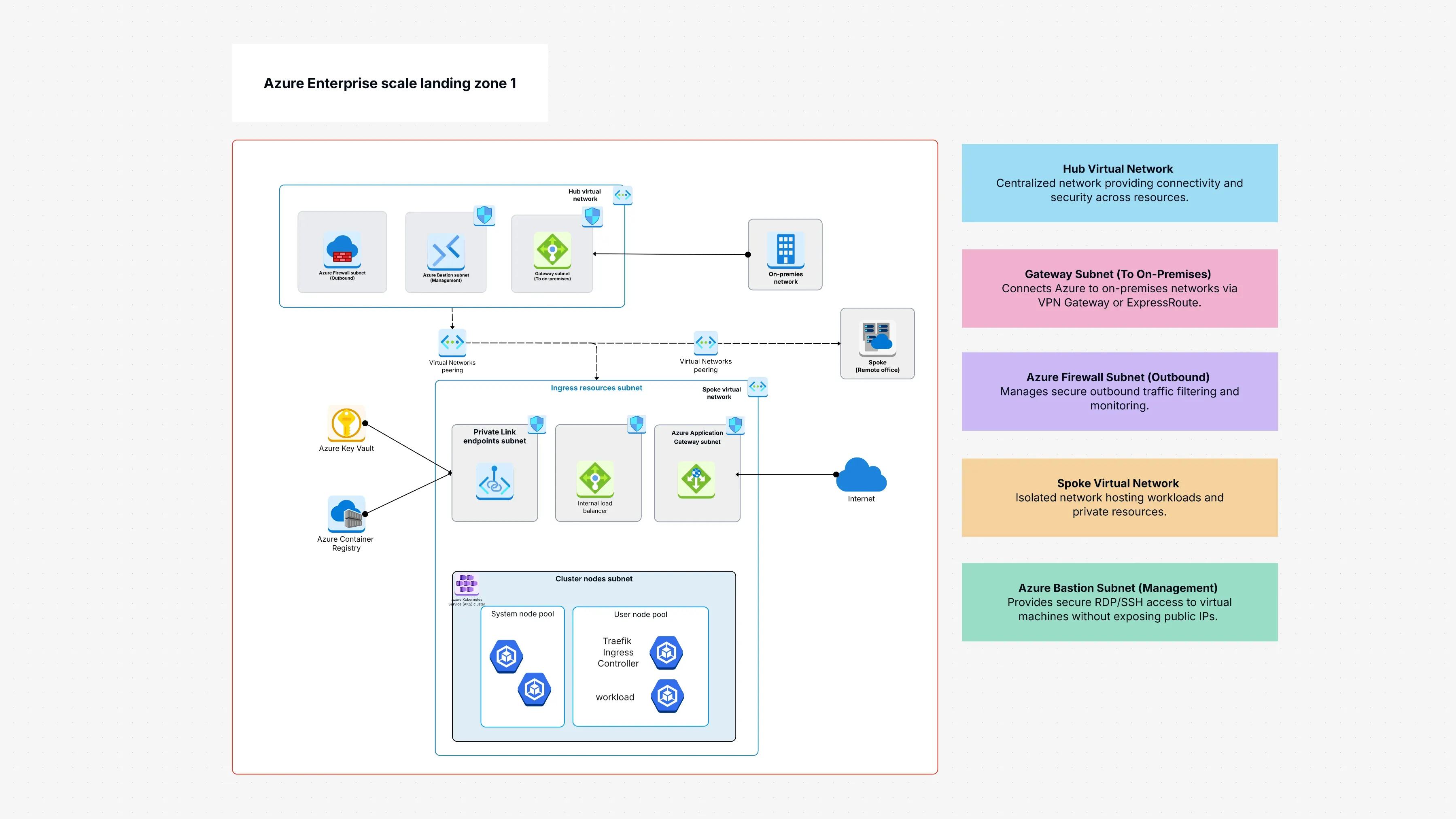
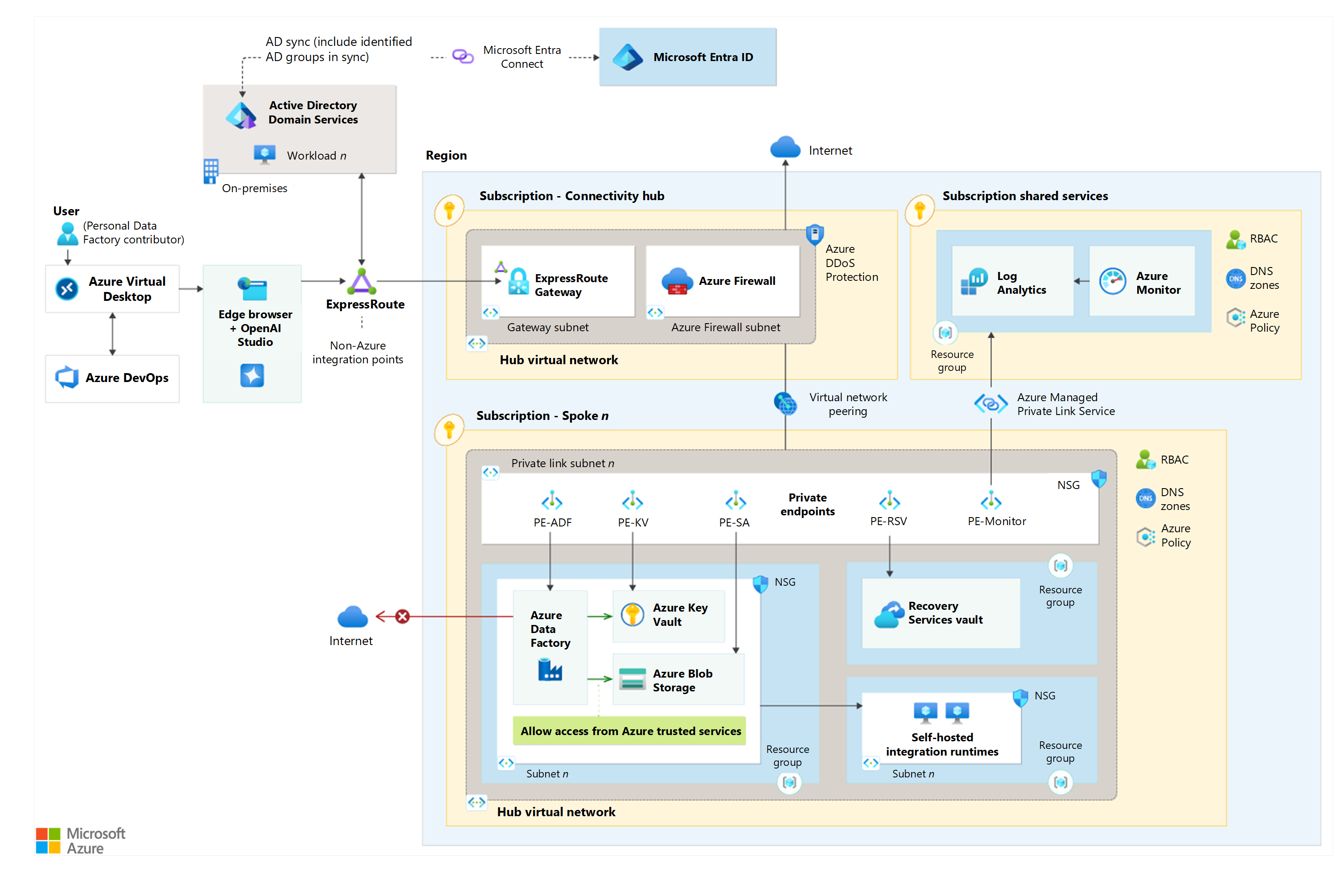
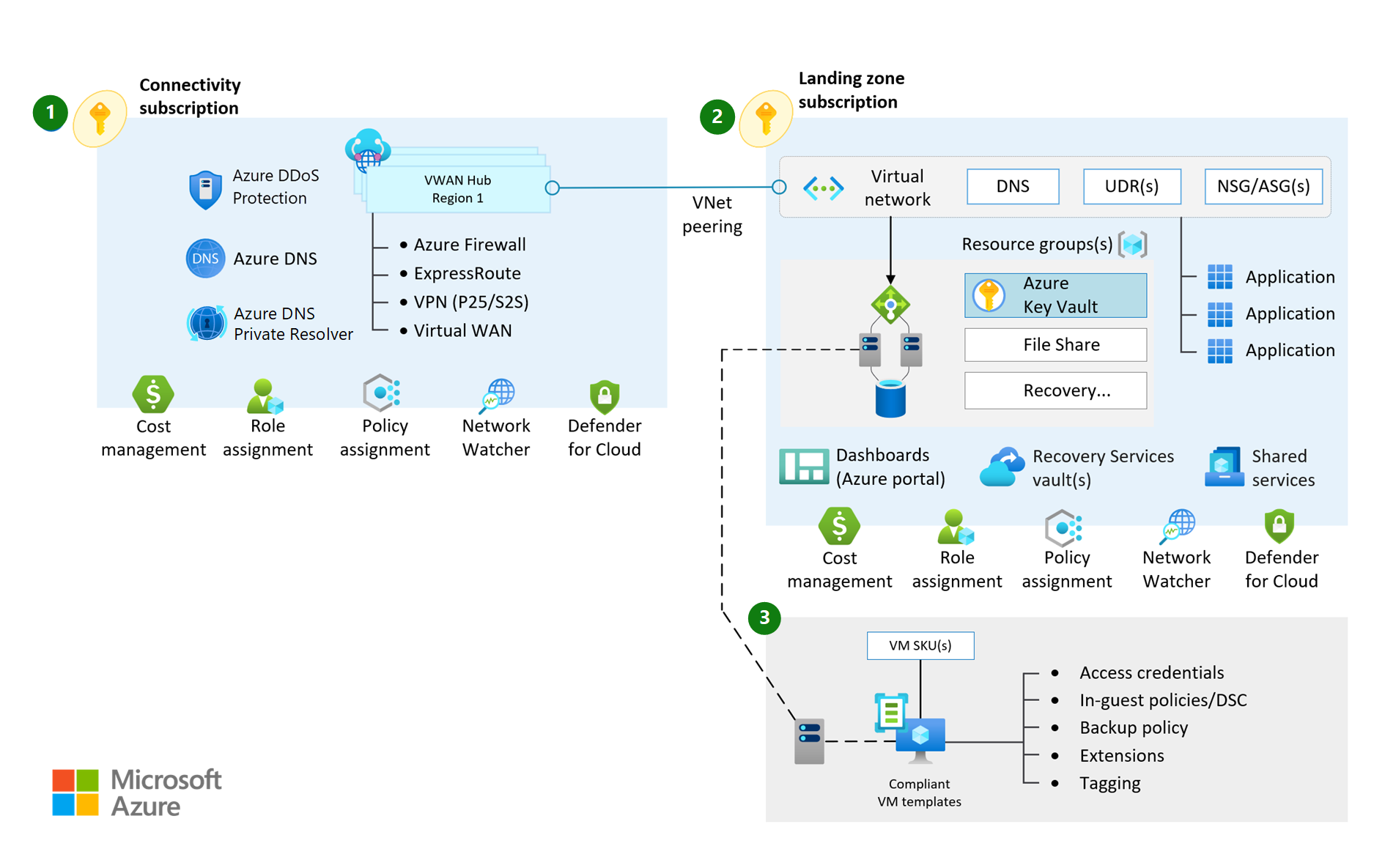
The baseline typically adopts a Hub-and-Spoke or Azure Virtual WAN topology.
- The Hub: Contains shared services like Azure Firewall, VPN Gateways, and centralized DNS.
- The Spokes: Isolated environments for workloads that peer back to the Hub. The translation here ensures that "East-West" traffic (between spokes) is inspected by the central firewall by default, fulfilling the principle of centralized security control.
Resource Organization
This is the physical hierarchy of the environment.
- Management Groups: A hierarchy that allows for policy inheritance.
- Naming Conventions: A standardized schema (e.g.,
org-env-region-app-resourcetype-001) that is enforced via policy to ensure clarity in billing and operations.
Security and Compliance
The baseline integrates Microsoft Defender for Cloud. It pre-configures the "Enhanced Security" features and sets up automated alerts for common threats. By 2026 standards, this also includes the integration of Azure OpenAI-driven security analytics to predict potential misconfigurations based on historical data.
Comparative Analysis: Baseline Implementation Models
Choosing the right implementation model depends on the organization's size and technical maturity. The following table compares the two primary approaches used in 2026 for translating CAF principles into a baseline.
| Feature | Microsoft-Managed (ALZ Accelerator) | Custom-Built (Sovereign/Specialized) |
|---|---|---|
| Speed to Deploy | Very High (Days) | Low to Medium (Months) |
| CAF Fidelity | 100% Alignment with standard principles | Tailored alignment for specific industries |
| Maintenance | Microsoft updates the modules | Internal team manages lifecycle and updates |
| Complexity | Abstracted via portal or simple scripts | High; requires deep Terraform/Bicep expertise |
| Best For | Standard enterprises and startups | Government, Highly Regulated Finance, Defense |
| Control | Standardized guardrails | Granular control over every resource setting |
Step-by-Step Guidance: Establishing Your 2026 Baseline
Transitioning from cloud adoption principles to a functional landing zone follows a specific sequence.
- Define the Hierarchy: Start by mapping your organizational structure to Azure Management Groups. In 2026, most organizations use a "Platform" vs. "Workload" split at the root level.
- Establish Identity Governance: Before deploying networks, ensure your Entra ID tenant is secured. Implement Administrative Units to delegate control without granting global permissions.
- Deploy the Connectivity Hub: Use the ALZ Bicep modules to deploy your central networking. Ensure that your Hybrid Cloud links (ExpressRoute or VPN) are established as part of the baseline to allow for seamless migration.
- Assign Policy Initiatives: Do not assign policies one by one. Use Policy Initiatives (sets of policies) that correspond to specific compliance standards like ISO 27001 or SOC2.
- Automate Subscription Vending: Create a standardized workflow (using GitHub Actions or Azure DevOps) that allows teams to request a new subscription that comes pre-peered to the hub and pre-governed by the root policies.
Common Pitfalls in Baseline Translation
Even with clear principles, many organizations struggle during implementation.
- Over-Engineering the Hub: A common mistake is putting too much complexity into the central hub, creating a bottleneck. The 2026 principle is "Decentralize the Workload, Centralize the Governance."
- Ignoring the "Brownfield" Reality: Most organizations are not starting from scratch. The baseline must include a strategy for bringing existing, non-compliant subscriptions into the new management group hierarchy without breaking production applications.
- Policy "Audit Only" Syndrome: Organizations often set policies to "Audit" because they fear breaking things. While useful for the first 30 days, a true baseline must move to "Deny" or "DeployIfNotExists" to be effective.
Frequently Asked Questions
What is the difference between a Landing Zone and a Baseline?
A Landing Zone is the entire environment (the subscriptions, networks, and resources), while the Baseline refers to the specific set of configurations and guardrails (policies, IAM roles, and security settings) that define the "minimum viable product" for any subscription within that environment.
Can I apply a 2026 ALZ baseline to an existing Azure environment?
Yes, this is known as a "Brownfield" implementation. It involves moving existing subscriptions into a newly defined Management Group hierarchy and slowly applying policy initiatives. This often requires a "remediation phase" where existing resources are updated to meet the new baseline standards.
How does the baseline handle multi-region deployments?
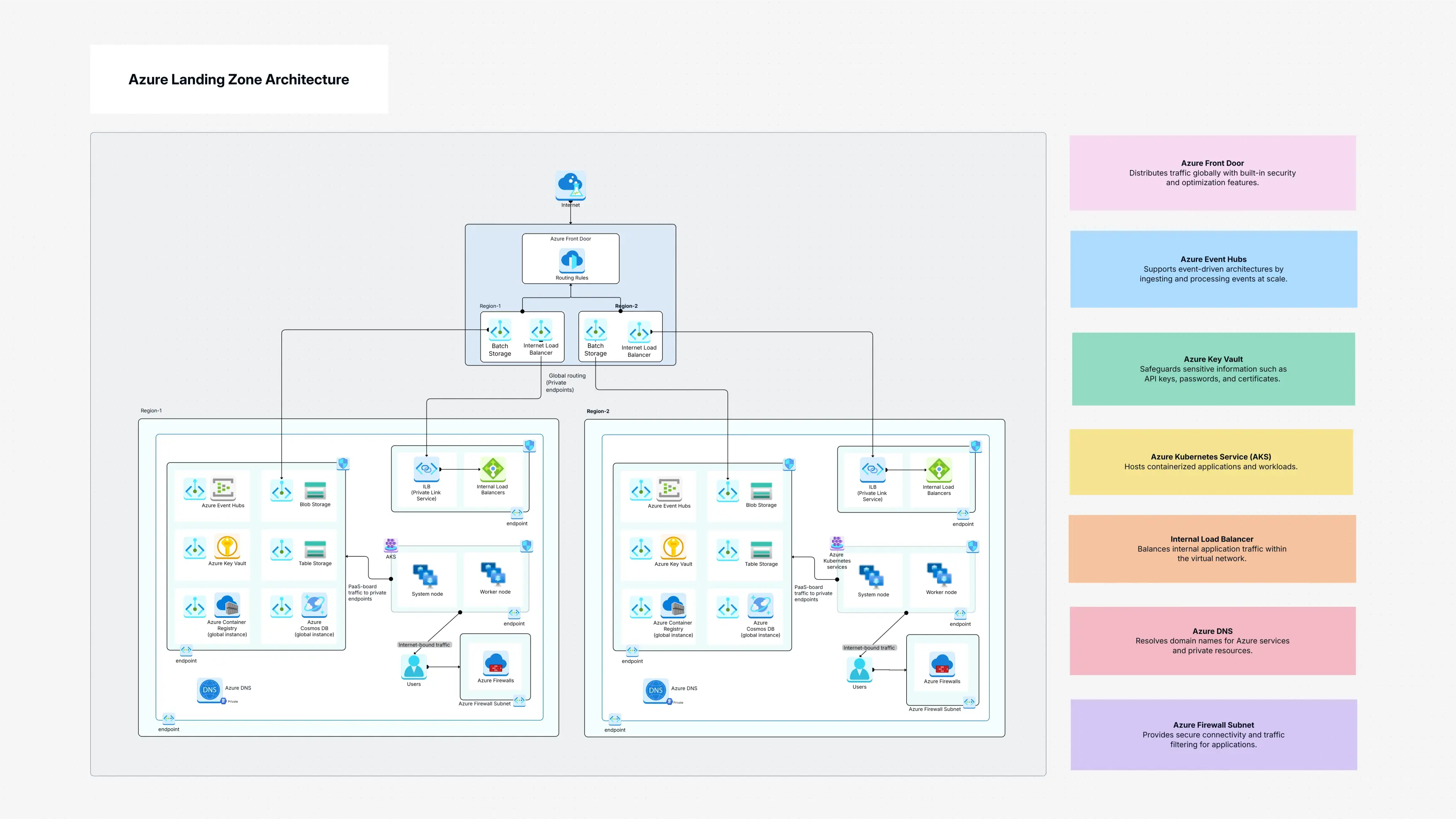
The baseline architecture typically uses a "Global" management layer and "Regional" network spokes. CAF principles dictate that governance (policies) should be global, while resources should be distributed across regions to meet latency and disaster recovery (DR) requirements.
Is the Azure Landing Zone baseline compatible with multi-cloud strategies?
While the ALZ baseline is specific to Azure, the principles from the Cloud Adoption Framework are often cross-compatible. Most enterprises in 2026 use Azure Arc as part of their baseline to extend Azure governance and policies to resources running on-premises or in other clouds.
Who is responsible for maintaining the ALZ baseline?
This usually falls under the Cloud Center of Excellence (CCoE) or a dedicated Platform Engineering team. Their job is to ensure the IaC templates are updated as Microsoft releases new services and as organizational security requirements change.
Final Recommendation for Cloud Architects
To successfully translate cloud adoption principles into an Azure Landing Zone baseline in 2026, you must treat Policy as Code. Do not rely on manual checklists or documentation. Instead, invest your effort into building a robust Subscription Vending Machine that automates the deployment of the baseline for every new business unit. By focusing on automated guardrails rather than manual approvals, you empower your developers to innovate while ensuring the organization remains secure and compliant. Start by deploying the standard ALZ Accelerator and customize it incrementally as your specific business requirements dictate.
Image Gallery