Complete List of Lindsey Vonn Injuries: A Career-Spanning Medical Timeline
Lindsey Vonn is widely regarded as one of the greatest alpine ski racers in history, but her legendary career was defined as much by her physical resilience as her World Cup victories. Over nearly two decades of elite competition, Vonn...
Lindsey Vonn is widely regarded as one of the greatest alpine ski racers in history, but her legendary career was defined as much by her physical resilience as her World Cup victories. Over nearly two decades of elite competition, Vonn suffered complex ligament tears, bone fractures, severe concussions, nerve damage, and progressive joint degeneration.
Contents
| Year | Injury / Event |
|---|---|
| 2006 | Torino Olympics crash: Hip/back contusions, missed major trauma |
| 2007 | Right ACL tear: Ended season early prior to 2007 World Cup finals |
| 2009 | Flexor tendon laceration: Right thumb cut on champagne bottle |
| 2010 | Severe shin contusion: Sustained prior to Vancouver Olympic gold |
| 2011 | Severe concussion: Soldeu training crash; forced end-of-season rest |
| 2013 | Schladming crash: Right ACL/MCL tears, lateral tibial plateau fracture |
| 2013 | Re-ruptured right ACL: Copper Mountain training crash, missed 2014 Olympics |
| 2015 | Left ankle fracture: Pre-season training crash in New Zealand |
| 2016 | Left tibial plateau hairline fracture: Soldeu Super-G crash |
| 2016 | Broken right humerus & radial nerve palsy: Severe Copper Mountain crash |
| 2018 | LCL/meniscus tear: Training crash prior to final full World Cup season |
| 2019 | Åre crash & retirement: Severe knee degeneration, bone-on-bone arthrosis |
| 2024 | Partial right knee replacement: Successful arthroplasty, setting up return |
Physical Demands and Injury Risk in Elite Downhill Skiing
Downhill alpine skiing subjects the human body to extreme biomechanical stress. Racers frequently reach speeds exceeding 80 miles per hour while navigating icy, unpredictable terrain. The combination of high velocities, tight rotational torque across the knee joint, and rigid carbon-fiber ski boots creates a high-risk environment for traumatic acute injuries and chronic wear.
For Lindsey Vonn, downhill and Super-G events presented constant physical punishment. The rigid leverage of modern alpine skis amplifies rotational forces during a crash, often driving the lower leg outward relative to the femur—a primary mechanism for anterior cruciate ligament (ACL) and medial collateral ligament (MCL) tears. Additionally, high-energy impact crashes frequently result in complex bone fractures and closed head injuries.
Disclaimer: This overview is provided for historical, educational, and sports-medicine reporting purposes and does not constitute formal medical diagnosis or professional healthcare advice.
Early Career Trauma: 2006 to 2011
Before her major knee reconstructions in the mid-2010s, Vonn experienced several acute injuries that showcased her remarkable capacity for rapid rehabilitation and pain management.
2006 Torino Winter Olympics Crash
During a high-speed training run at the 2006 Winter Olympics in San Sicario, Italy, Vonn lost control on a sweep turn and tumbled violently down the course. She was airlifted to a local hospital with severe hip, back, and pelvic bruising. Despite initial fears of spinal structural damage, imaging revealed no fractures. Remarkably, Vonn returned to compete in the downhill event just 48 hours later, earning the U.S. Olympic Spirit Award for her grit.
2007 Right ACL Tear
In early 2007, during a training session prior to the World Cup Finals in Lenzerheide, Switzerland, Vonn suffered a low-speed crash that resulted in a partial tear of her right anterior cruciate ligament (ACL). The injury forced her to end her 2006–2007 season early. She opted for conservative physical therapy and rehabilitation rather than immediate full reconstruction, successfully returning to form for the 2007–2008 season to capture her first overall World Cup title.
2009 Flexor Tendon Laceration
At the 2009 World Championships in Val d'Isère, France, Vonn celebrated a victory in the downhill event. While opening a champagne bottle during a post-race media event, the glass shattered, severely cutting her right hand. She suffered a lacerated flexor tendon in her right thumb, requiring emergency surgical repair. To continue racing the remainder of the season, orthopedic technicians crafted a custom plastic splint that allowed her to grip her ski pole securely.
2010 Severe Shin Contusion
Just weeks prior to the 2010 Winter Olympics in Vancouver, Vonn sustained a debilitating shin injury during pre-Olympic training in Austria. The deep contusion to her right tibia created intense soft-tissue swelling and inflammation, making it almost unbearable to fasten her rigid ski boot. Using intensive physical therapy and topical remedies (including a widely publicized traditional Austrian cheese poultice), she managed the acute inflammation long enough to win Olympic Gold in the Downhill and Bronze in the Super-G.
2011 Severe Concussion
In February 2011, Vonn crashed during a giant slalom training run in Soldeu, Andorra, suffering a severe concussion. The head trauma caused persistent dizziness and cognitive fatigue, forcing her to withdraw from several events at the 2011 World Championships in Garmisch-Partenkirchen. This injury highlighted the growing awareness of traumatic brain injuries in winter sports, prompting her medical team to enforce strict return-to-play protocols.
Catastrophic Knee Reconstructions: 2013 to 2014
The period between 2013 and 2014 was the most grueling phase of Vonn's career, marked by back-to-back major knee injuries that threatened her athletic future and forced her to miss the 2014 Sochi Winter Olympics.
- High-Speed Val d'Isère / Schladming Crash Impact
- Tibial Plateau Lateral Compression
- ACL Avulsion / Full Rupture
- MCL Complete Tear / Sprain
- Surgical Reconstruction & Long-Term Joint Friction
February 2013: The Schladming Crash
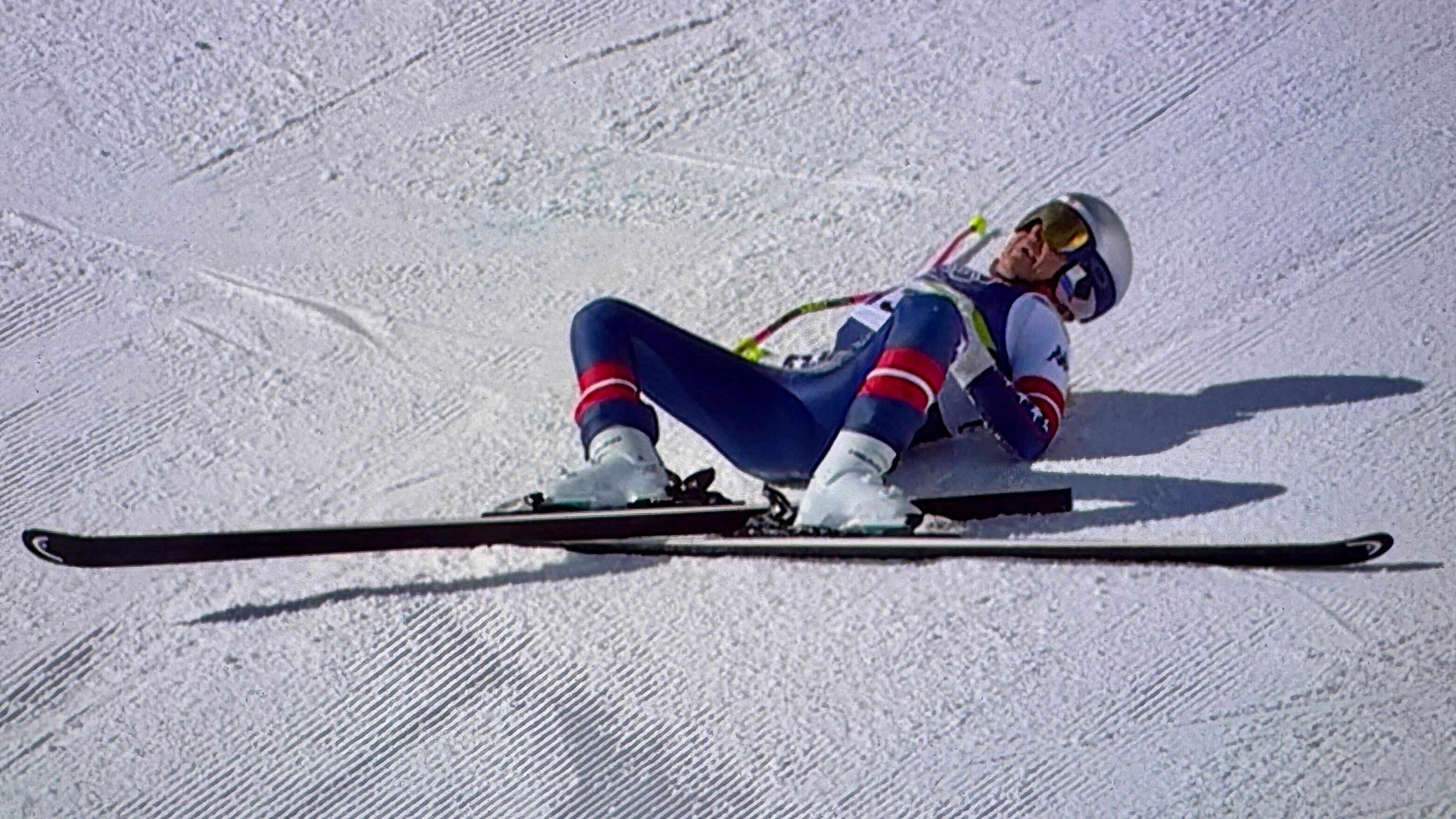
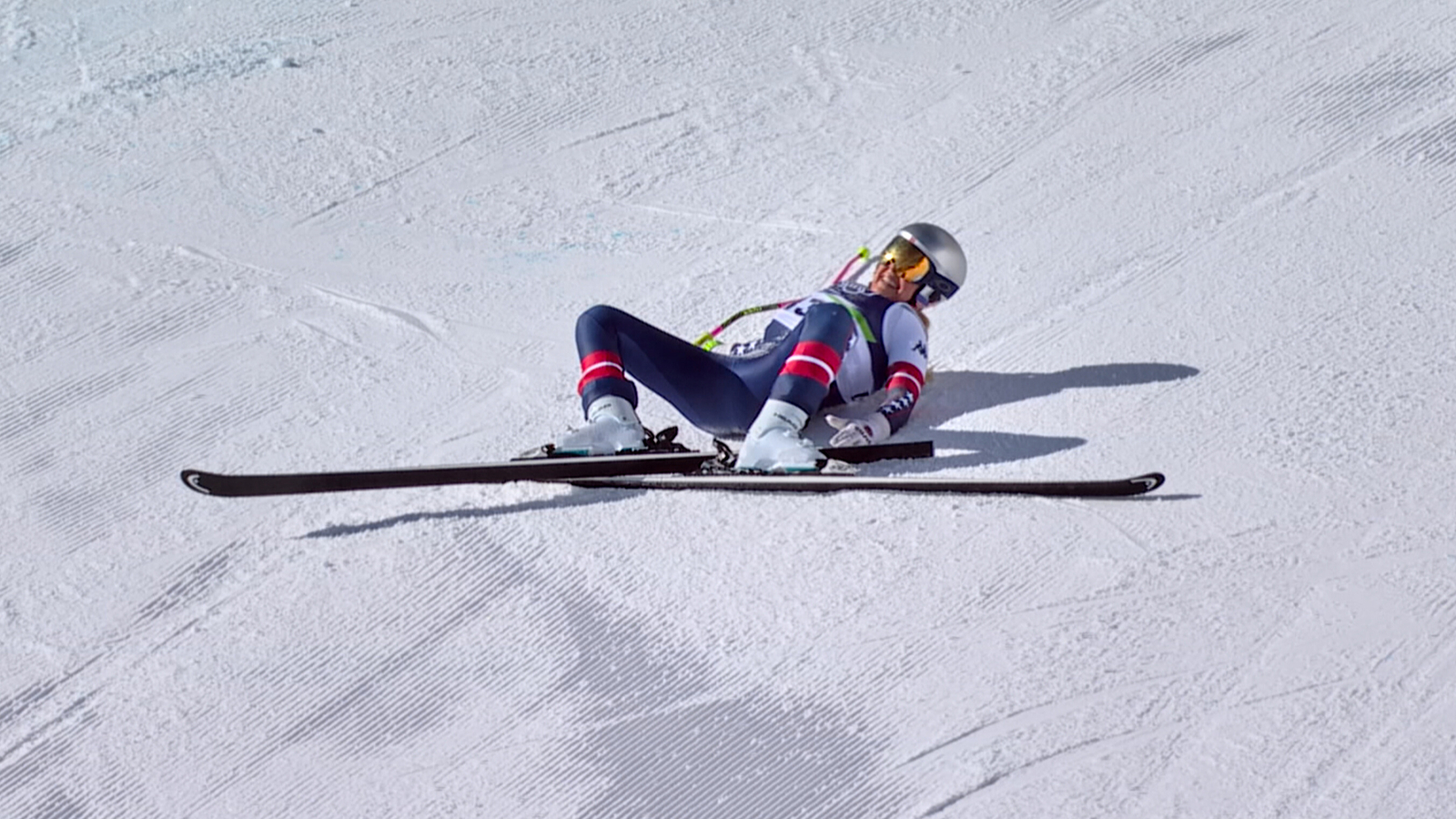
On February 5, 2013, during the Super-G event at the FIS World Alpine Ski Championships in Schladming, Austria, Vonn landed heavily off a jump into soft, wet snow. Her right ski caught an edge, sending her into a violent spin through the safety nets.
The structural damage to her right knee was catastrophic:
- Complete tear of the Anterior Cruciate Ligament (ACL)
- Complete tear of the Medial Collateral Ligament (MCL)
- Fracture of the lateral tibial plateau (the weight-bearing articular surface of the shin bone)
Vonn underwent complex reconstructive surgery led by orthopedic surgeon Dr. James Andrews. The procedure involved reconstructing the ACL using a tissue graft, repairing the MCL, and stabilization of the tibial plateau fracture to protect the articular cartilage.
November–December 2013: Re-injury and Sochi Withdrawal
Following nine months of aggressive physical rehabilitation, Vonn returned to snow in late 2013 with the goal of defending her Olympic title in Sochi. However, during a high-speed training run at Copper Mountain, Colorado, in November 2013, she suffered a high-speed fall, re-tearing her reconstructed right ACL and sustaining additional meniscus damage.
Despite attempting to race through the instability using a supportive knee brace at Val d'Isère in December 2013, her right knee buckled on a compression turn. In January 2014, Vonn officially announced her withdrawal from the 2014 Sochi Olympics and underwent a second full right knee ACL reconstruction, along with extensive meniscal repair.
Fractures, Nerve Damage, and Upper-Body Trauma: 2015 to 2017
Upon returning from dual knee reconstructions, Vonn suffered a succession of acute bone fractures and nerve damage across her upper and lower extremities.
August 2015: Left Ankle Fracture
During a summer training camp in Coronet Peak, New Zealand, Vonn crashed during a training run and sustained a fractured left ankle. The injury interrupted her preparation for the 2015–2016 World Cup campaign, but she avoided open surgery, relying on cast immobilization and non-weight-bearing physical therapy before returning to competition late that autumn.
February 2016: Left Tibial Plateau Hairline Fracture
In February 2016, Vonn crashed during a Super-G race in Soldeu, Andorra, after striking a patch of loose powder. Initial X-rays at the venue revealed no displaced fractures, allowing her to race in a combined event two days later. However, subsequent detailed MRI scans revealed three hairline micro-fractures (stress fractures) within her left tibial plateau. To avoid catastrophic joint failure or permanent articular cartilage collapse, her medical team advised an immediate suspension of her season.
November 2016: Broken Humerus and Severe Radial Nerve Palsy
On November 10, 2016, Vonn suffered one of the most painful injuries of her career during a training run at Copper Mountain, Colorado. A high-speed crash resulted in a severely displaced fracture of her right humerus (upper arm bone).
| Feature | Details |
|---|---|
| Anatomical Site | Right proximal-to-mid humerus shaft |
| Surgical Repair | Open Reduction Internal Fixation (ORIF) with plate & 12 screws |
| Nerve Complication | Radial Nerve Palsy (causing severe functional "drop wrist") |
| Recovery Focus | Neuromuscular electrical stimulation, physical rehab |
During the impact, the fractured bone fragments compressed and bruised the neighboring radial nerve, resulting in complete radial nerve palsy. This condition rendered her unable to lift her right hand or extend her fingers (commonly referred to as "drop wrist").
Vonn underwent immediate Open Reduction Internal Fixation (ORIF) surgery, where orthopedic surgeons secured a large metal plate held by 12 titanium screws along her humerus. Neurological recovery was slow, requiring months of physical therapy, electrical nerve stimulation, and functional splinting before full motor control returned to her right hand.
Late-Career Joint Degeneration and Initial Retirement: 2018 to 2019
By 2018, the cumulative impact of multiple joint reconstructions, bone fractures, and years of high-velocity impacts had led to severe post-traumatic osteoarthritis.
November 2018: LCL and Meniscus Tears
Prior to what was planned as her final full competitive season, Vonn crashed during a training run in Copper Mountain in November 2018. The fall resulted in a torn lateral collateral ligament (LCL) and a complex lateral meniscus tear in her right knee. Choosing to forgo immediate reconstructive surgery, she delayed her season opener and managed the mechanical instability with specialized bracing and fluid drainage (arthrocentesis).
February 2019: Åre Crash and Announcement of Retirement
At the 2019 FIS Alpine World Ski Championships in Åre, Sweden, Vonn crashed heavily during the Super-G event, clipping a gate mid-air and landing hard on the icy slope. While she recovered to compete in the Downhill several days later—securing a historic Bronze medal in her final career race—the physical toll on her body had reached a critical threshold.
In her retirement statement in February 2019, Vonn explained that her decision was dictated entirely by her physical limits rather than a loss of competitive desire. Her right knee was functionally operating without intact cruciate ligaments and had lost virtually all healthy articular cartilage, resulting in agonizing bone-on-bone joint friction.
Post-Retirement Operations and Partial Knee Replacement: 2024 to Present
Following her initial retirement in 2019, Vonn continued to suffer from chronic pain, limited range of motion, and persistent joint effusion in her right knee. Daily activities such as walking, climbing stairs, and recreational exercising caused significant discomfort due to the advanced post-traumatic arthrosis.
April 2024: Lateral Partial Knee Replacement (Arthroplasty)
In April 2024, after exhausting conservative medical management options, Vonn underwent a lateral partial knee replacement (unicondylar knee arthroplasty) on her right knee.
- Osteoarthritic Right Knee (Bone-on-Bone Friction)
- Resection of Damaged Compartment (Lateral Side)
- Insertion of Titanium & Polyethylene Implants
- Functional Joint Alignment & Pain-Free Load Bearing
Unlike total knee arthroplasty, which replaces all three compartments of the knee joint, a partial knee replacement preserves healthy bone, intact medial cartilage, and natural cruciate ligaments where present. Surgeons removed the damaged articular surface in the lateral compartment of her right knee and installed artificial metal and high-density plastic components.
Surgical Outcomes and Historic Comeback
The partial knee replacement was remarkably successful, restoring alignment to her lower leg, removing painful bone-on-bone friction, and eliminating chronic joint swelling. Relieved of long-standing structural pain, Vonn resumed intense athletic training and conditioning.
Finding her artificial joint fully capable of handling high physical loads, Vonn officially announced her return to elite competitive ski racing late in 2024, joining the U.S. Ski Team to compete inselect international events into the 2025 and 2026 World Cup seasons.
Comprehensive Summary Table of Lindsey Vonn’s Major Injuries
| Year | Body Part / Anatomical Structure | Specific Diagnosis / Injury Type | Primary Treatment / Surgical Procedure | Approximate Recovery Time |
|---|---|---|---|---|
| 2006 | Hip / Lower Back | Severe contusions and soft-tissue trauma | Hospitalization, soft-tissue therapy, ice protocols | 48 hours (returned for race) |
| 2007 | Right Knee | Partial ACL tear | Non-operative conservative rehabilitation | 6 months |
| 2009 | Right Thumb | Flexor tendon laceration | Surgical tendon repair & custom pole splint | 8 weeks |
| 2010 | Right Shin | Deep tibial contusion & periosteal hematoma | Intensive physical therapy, topical anti-inflammatories | Active management during Games |
| 2011 | Head (Brain) | Severe post-traumatic concussion | Mandatory cognitive rest, quiet-room protocols | 1–2 months |
| 2013 | Right Knee | Full ACL tear, full MCL tear, tibial plateau fracture | Open reconstruction (ACL graft, MCL repair, plate stabilization) | 9 months |
| 2013 | Right Knee | Re-torn ACL graft & lateral meniscus tear | Re-reconstruction of ACL, meniscectomy/repair | 10 months (missed Sochi) |
| 2015 | Left Ankle | Non-displaced ankle fracture | Cast immobilization and non-weight-bearing rehab | 10–12 weeks |
| 2016 | Left Knee | Hairline fracture of lateral tibial plateau | Immobilization, premature end to World Cup season | 3–4 months |
| 2016 | Right Upper Arm | Displaced humerus fracture & radial nerve palsy | Open Reduction Internal Fixation (ORIF plate/12 screws), nerve rehab | 6 months |
| 2018 | Right Knee | LCL tear, complex lateral meniscus tear | Supportive bracing, joint aspiration, physical therapy | Managed through season |
| 2019 | Right Knee / Body | Advanced bone-on-bone arthrosis, poly-trauma | Forced initial career retirement, long-term rehab | Permanent management |
| 2024 | Right Knee | Advanced post-traumatic lateral compartment osteoarthritis | Unicondylar (Partial) Knee Arthroplasty (Replacement) | 4–6 months |
Biomechanical and Surgical Analysis of Vonn's Comeback
To understand how an athlete can return to competitive skiing after numerous reconstructions and a joint replacement, it is necessary to examine the evolution of orthopedic technology and rehabilitation protocols.
Historic Recovery Roadmap
- 2013-2014 ACL Reconstruction:
- Tendon Graft
- Bone Tunnel Anchoring
- 9–12 Mo. Biological Integration
- 2016 Humerus ORIF Repair:
- Titanium Plate
- 12 Anchoring Screws
- Radial Nerve Regeneration
- 2024 Partial Knee Arthroplasty:
- Resected Cartilage
- Metal/Poly Resurfacing
- Immediate Mechanical Stability
Complex Ligament and Cartilage Reconstruction
The anterior cruciate ligament (ACL) acts as the primary stabilizer against anterior translation of the tibia relative to the femur. In alpine skiing, when a ski edge catches abruptly, the knee undergoes combined valgus (knock-knee) dynamic force and internal rotation.
When Vonn ruptured her ACL in 2013 and again later that year, the mechanical integrity of her right knee was profoundly compromised. Multiple reconstructive procedures can deplete native autograft tissue options (such as the patellar tendon or hamstring tendon), often requiring allografts (donor tissue) or secondary autografts.
Managing Post-Traumatic Osteoarthritis
Every intra-articular fracture—such as Vonn's lateral tibial plateau fractures—disrupts the smooth, glass-like articular cartilage covering the ends of bones. Once articular cartilage is damaged, it does not regenerate naturally. Over time, the uneven mechanical wear accelerates breakdown, leading to post-traumatic osteoarthritis characterized by:
- Subchondral bone sclerosis (thickening of bone under damaged cartilage)
- Osteophyte formation (painful bone spurs around the joint margins)
- Joint space narrowing causing agonizing bone-on-bone contact during high-load movements
The Role of Unicondylar Arthroplasty
Vonn's decision to undergo a lateral partial knee replacement in April 2024 addressed her isolated compartment degradation. Unlike total joint replacements, which cut away healthy ligaments to install artificial hinges, a partial knee replacement preserves the anterior and posterior cruciate ligaments (if intact/functional) and the healthy medial compartment.
This procedure provides three key benefits for elite physical function:
- Preservation of Proprioception: Maintaining natural ligaments allows the patient to retain critical sensory feedback regarding joint positioning.
- Normal Joint Kinematics: The knee flexes and rotates naturally, unlike rigid total knee designs.
- Immediate Structural Support: Metal-on-polyethylene bearing surfaces instantly eliminate bone-on-bone pain caused by friction.
Frequently Asked Questions
What was Lindsey Vonn's most severe career injury?
While Vonn suffered many severe injuries, her February 2013 crash at Schladming, Austria, was the most complex. She suffered a complete tear of her right ACL, a complete tear of her MCL, and a fracture of the lateral tibial plateau. The injury required extensive reconstructive surgery and eventually led to a secondary ACL tear later that year, forcing her to miss the 2014 Sochi Winter Olympics.
How many times did Lindsey Vonn break her ACL?
Lindsey Vonn tore or severely damaged her anterior cruciate ligament (ACL) multiple times. She sustained a partial tear of her right ACL in 2007, a full rupture of her right ACL in February 2013, and a re-rupture of the reconstructed right ACL graft in November 2013.
What is radial nerve palsy, and how did it affect Lindsey Vonn's arm?
Radial nerve palsy is a neurological condition caused by compression or trauma to the radial nerve, which runs down the arm and controls the muscles that extend the wrist and fingers. When Vonn fractured her right humerus bone in November 2016, the jagged bone fragments bruised her radial nerve, causing temporary nerve paralysis. This resulted in "drop wrist," leaving her unable to lift her hand or hold a ski pole until the nerve regenerated following surgical fixation.
Why did Lindsey Vonn initially retire in 2019?
Vonn initially retired in February 2019 because her right knee had suffered irreparable joint degradation. Years of severe crashes, tibial fractures, and ACL tears had destroyed the protective cartilage in her right knee, leaving her with severe bone-on-bone arthritis, chronic swelling, and persistent pain that prevented her from competing safely.
Did Lindsey Vonn get a knee replacement?
Yes. In April 2024, Lindsey Vonn underwent a lateral partial knee replacement (unicondylar knee arthroplasty) on her right knee to treat severe post-traumatic osteoarthritis. The successful surgery relieved her bone-on-bone pain, restored structural alignment, and allowed her to resume high-level training, setting up her return to elite ski racing.
Practical Takeaways and Legacy
Lindsey Vonn's extensive medical history offers valuable insights for competitive athletes, sports medicine practitioners, and individuals navigating orthopedic recovery:
- Multi-Disciplinary Rehabilitation is Critical: Managing complex injuries requires a coordinated team of orthopedic surgeons, physical therapists, neurological specialists, and strength coaches to rebuild dynamic stability safely.
- Surgical Innovations Can Restore Function: Advances in partial joint arthroplasty (replacement) now allow individuals with severe localized joint wear to restore normal alignment and active lifestyles without full joint removal.
- Patience in Neurological Recovery: Nerve injuries, such as radial nerve palsy, require extensive time and target stimulation to recover; muscle activation returns gradually as nerve axons regenerate.
- Long-Term Joint Protection: High-impact rotational sports demand constant muscular conditioning around major joints to compensate for underlying structural or ligamentous damage.
Vonn's ability to overcome more than a dozen major injuries, multiple full joint reconstructions, nerve damage, and surgical joint resurfacing solidifies her position as one of the most resilient figures in modern sports history.
Image Gallery