How to Calculate Take-Home Pay in Missouri: A Complete Guide
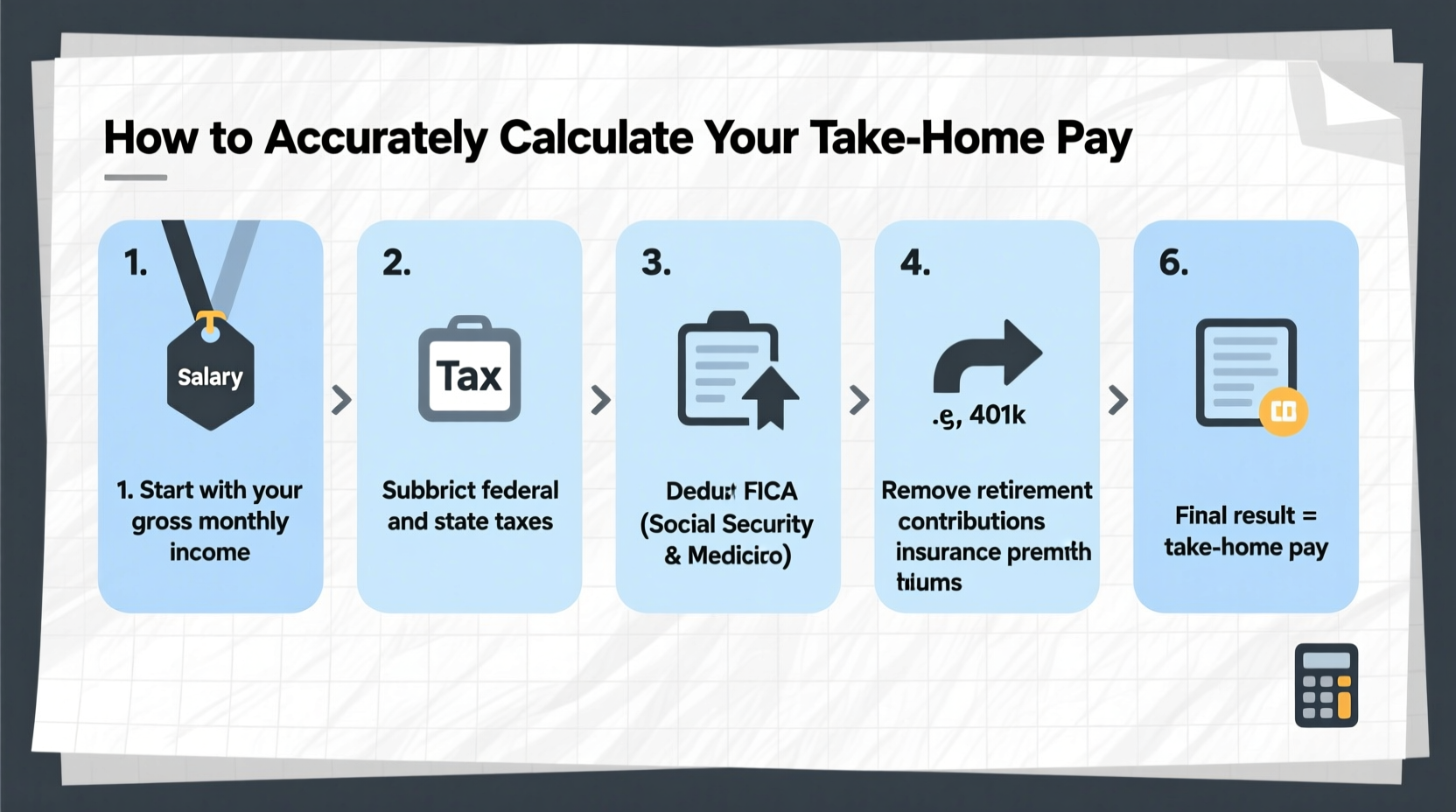
To calculate your take-home pay in Missouri, start with your gross wages and subtract federal income tax, FICA taxes (Social Security and Medicare), and Missouri state income tax. If you live or work in Kansas City or St. Louis, you mu...
To calculate your take-home pay in Missouri, start with your gross wages and subtract federal income tax, FICA taxes (Social Security and Medicare), and Missouri state income tax. If you live or work in Kansas City or St. Louis, you must also deduct a 1% local earnings tax to reach your final net pay.
Contents
Understanding your paycheck in the state of Missouri requires a clear grasp of how various jurisdictions claim a portion of your earnings. While Missouri has been actively reducing its state income tax rates over recent years, the calculation remains a multi-step process involving federal, state, and sometimes local variables. Whether you are a salaried employee or an hourly worker, knowing exactly how much will land in your bank account on payday is essential for budgeting and financial planning in 2026.
The Foundation: Understanding Gross vs. Net Pay
Before diving into specific Missouri tax brackets, it is vital to distinguish between gross pay and net pay. Gross pay is the total amount of money you earn before any taxes or deductions are removed. For salaried employees, this is typically your annual salary divided by the number of pay periods in a year. For hourly employees, it is your hourly rate multiplied by the hours worked, including any overtime premiums.
Net pay, commonly referred to as take-home pay, is the amount remaining after all mandatory and voluntary deductions have been subtracted. In Missouri, these deductions fall into three primary categories: federal taxes, state and local taxes, and benefit-related deductions. To calculate this accurately, you must account for the specific sequence in which these deductions are applied, as some are "pre-tax," meaning they reduce the amount of your income that is subject to taxation.
Federal Tax Obligations for Missouri Employees
Regardless of which state you live in, federal taxes represent the largest share of deductions for most workers. As of 2026, the federal tax system continues to operate on a progressive scale, where higher layers of income are taxed at higher percentages.
Federal Income Tax Withholding
Your federal withholding is determined by the information you provided on Form W-4. This form tells your employer your filing status (Single, Married Filing Jointly, or Head of Household) and whether you have dependents or other adjustments. The IRS provides specific withholding tables that employers use to calculate how much to send to the federal government each pay period. Because 2026 follows several years of inflationary adjustments to tax brackets, it is important to ensure your W-4 is updated to reflect your current life situation.
FICA Taxes (Social Security and Medicare)
The Federal Insurance Contributions Act (FICA) mandates two specific deductions that are consistent across the United States:
- Social Security: This is taxed at a rate of 6.2% on your gross earnings. However, there is a "Social Security Wage Base," which is a cap on the amount of income subject to this tax. In 2026, any earnings above this annually adjusted limit are not subject to the 6.2% deduction.
- Medicare: This is taxed at a rate of 1.45% on all earnings. Unlike Social Security, there is no cap on Medicare taxes. Furthermore, high-income earners (typically those earning over $200,000) are subject to an Additional Medicare Tax of 0.9%.
Missouri State Income Tax in 2026
Missouri’s tax landscape has undergone significant changes leading into 2026. The state legislature passed measures (such as Senate Bill 3) designed to trigger automatic reductions in the top individual income tax rate based on state revenue growth.
Progressive State Brackets
Missouri utilizes a progressive tax system, but the brackets are relatively narrow, meaning many full-time workers quickly reach the top tax bracket. For the 2026 tax year, the top individual income tax rate in Missouri has been reduced toward the 4.0% to 4.5% range, depending on whether specific revenue triggers were met in preceding fiscal years. This is a notable decrease from the 5.4% rate seen in previous decades.
Missouri Standard Deduction
One of the most important aspects of the Missouri tax calculation is that the state's standard deduction is generally coupled with the federal standard deduction. This means that a significant portion of your initial earnings is not taxed by the state at all. When calculating take-home pay, you must subtract this deduction (pro-rated for your pay frequency) from your gross income before applying the Missouri tax percentages.
Local Earnings Taxes: St. Louis and Kansas City
One unique factor for Missouri workers is the presence of local earnings taxes in the state's two largest metropolitan areas. If you live or work within the city limits of St. Louis or Kansas City, you are subject to a local tax that most other Missourians do not pay.
- Tax Rate: Both cities impose a 1% earnings tax.
- Who Pays: This tax applies to residents of the city (regardless of where they work) and non-residents who work within the city limits.
- Calculation: This is typically 1% of your gross compensation. It is a flat tax, meaning there are no brackets or standard deductions applied at the city level.
If you live in a suburb like Chesterfield or Lee’s Summit and work outside the city limits of St. Louis or Kansas City, you do not owe this 1% tax. However, if you live in the suburbs but commute into the city for work, your employer is required to withhold this amount from your paycheck.
Pre-Tax and Post-Tax Deductions
Beyond government mandates, your take-home pay is heavily influenced by your voluntary choices regarding benefits. These are categorized based on their tax treatment.
Pre-Tax Deductions
These are deducted from your gross pay before taxes are calculated. They are highly beneficial because they lower your taxable income, effectively reducing the amount of federal and state tax you owe. Common examples include:
- Traditional 401(k) or 403(b) contributions: Retirement savings.
- Health Insurance Premiums: Your portion of the monthly cost for medical, dental, or vision insurance.
- Health Savings Accounts (HSA) or Flexible Spending Accounts (FSA): Funds set aside for medical or childcare expenses.
Post-Tax Deductions
These are taken out after all taxes have been calculated. They do not reduce your tax liability. Common examples include:
- Roth 401(k) contributions: Retirement savings that allow for tax-free withdrawals later.
- Life Insurance: Supplemental policies beyond what the employer provides.
- Wage Garnishments: Court-ordered deductions for child support or unpaid debts.
Step-by-Step Calculation Example
To visualize how this works, let’s look at a hypothetical example for an employee in 2026.
Scenario: An individual earning $60,000 annually in Kansas City, Missouri, filing as Single, with no dependents, and contributing 5% to a traditional 401(k).
| Category | Calculation Step | Amount (Annualized) |
|---|---|---|
| Gross Pay | Starting Salary | $60,000.00 |
| Pre-Tax Deduction | 5% 401(k) Contribution | ($3,000.00) |
| Taxable Gross | Gross minus Pre-Tax | $57,000.00 |
| FICA: Social Security | 6.2% of $60,000 | ($3,720.00) |
| FICA: Medicare | 1.45% of $60,000 | ($870.00) |
| Federal Income Tax | Based on 2026 Brackets (est.) | ($5,400.00) |
| Missouri State Tax | Based on 2026 Rates (est.) | ($1,950.00) |
| Local Earnings Tax | 1% of $60,000 (KC) | ($600.00) |
| Total Deductions | Sum of all taxes and 401(k) | ($15,540.00) |
| Annual Take-Home | Gross minus Total Deductions | $44,460.00 |
| Monthly Take-Home | Annual Take-Home / 12 | $3,705.00 |
Note: The federal and state tax figures in this table are estimates for illustrative purposes. Actual withholding depends on specific W-4 and MO-W4 settings.
Frequently Asked Questions
Does Missouri tax overtime pay differently?
No, Missouri does not have a separate tax rate for overtime. Overtime pay is added to your regular gross wages and taxed according to the same progressive brackets as your standard income. However, because overtime increases your total income for the pay period, it may push a portion of your earnings into a higher federal tax bracket, which can result in a higher percentage of withholding for that specific check.
What is the MO-W4 form?
The MO-W4 is the Employee’s Withholding Allowance Certificate for the state of Missouri. While many states have moved away from "allowances," Missouri still uses this form to determine how much state tax should be withheld. It is separate from the federal W-4. If you do not fill this out, your employer will default to a standard rate, which might result in over-withholding or under-withholding.
Are there any cities in Missouri with an income tax besides KC and St. Louis?
As of 2026, Kansas City and St. Louis are the only two municipalities in Missouri authorized to levy an earnings tax on individuals. Other cities may have high property taxes or sales taxes, but they do not deduct a percentage of your paycheck for local income tax purposes.
How do I stop paying the 1% earnings tax if I work remotely?
If you are a non-resident of St. Louis or Kansas City and you work remotely from a location outside the city limits, you are generally not liable for the 1% earnings tax for the days you worked outside the city. You may need to file a refund request with the city's respective revenue department (Form E-1R in St. Louis or Form RD-109NR in Kansas City) and provide documentation from your employer verifying your remote work status.
Does Missouri have a "Marriage Penalty" in its tax brackets?
Missouri's tax brackets for married couples filing jointly are essentially double the width of the brackets for single filers. This structure is designed to prevent a "marriage penalty," ensuring that two individuals do not pay significantly more in state taxes simply because they combined their incomes on a joint return.
Summary and Next Actions
Calculating your take-home pay in Missouri requires balancing federal requirements with specific state-level reductions and potential local earnings taxes. Because Missouri has been consistently lowering its state income tax rates, it is wise to review your withholding at the start of each year to ensure you are not overpaying the state throughout the year.
Next Steps:
- Review your pay stub: Identify if you are currently paying the 1% local earnings tax and verify that your pre-tax deductions (like 401k) are being applied correctly.
- Update your MO-W4: If you have had a major life change, such as marriage or a new child, update your state withholding to reflect these changes.
- Check Local Ordinances: If you work for a company based in Kansas City or St. Louis but work primarily from home, contact your payroll department to ensure you aren't being taxed for city services you aren't utilizing.
Image Gallery