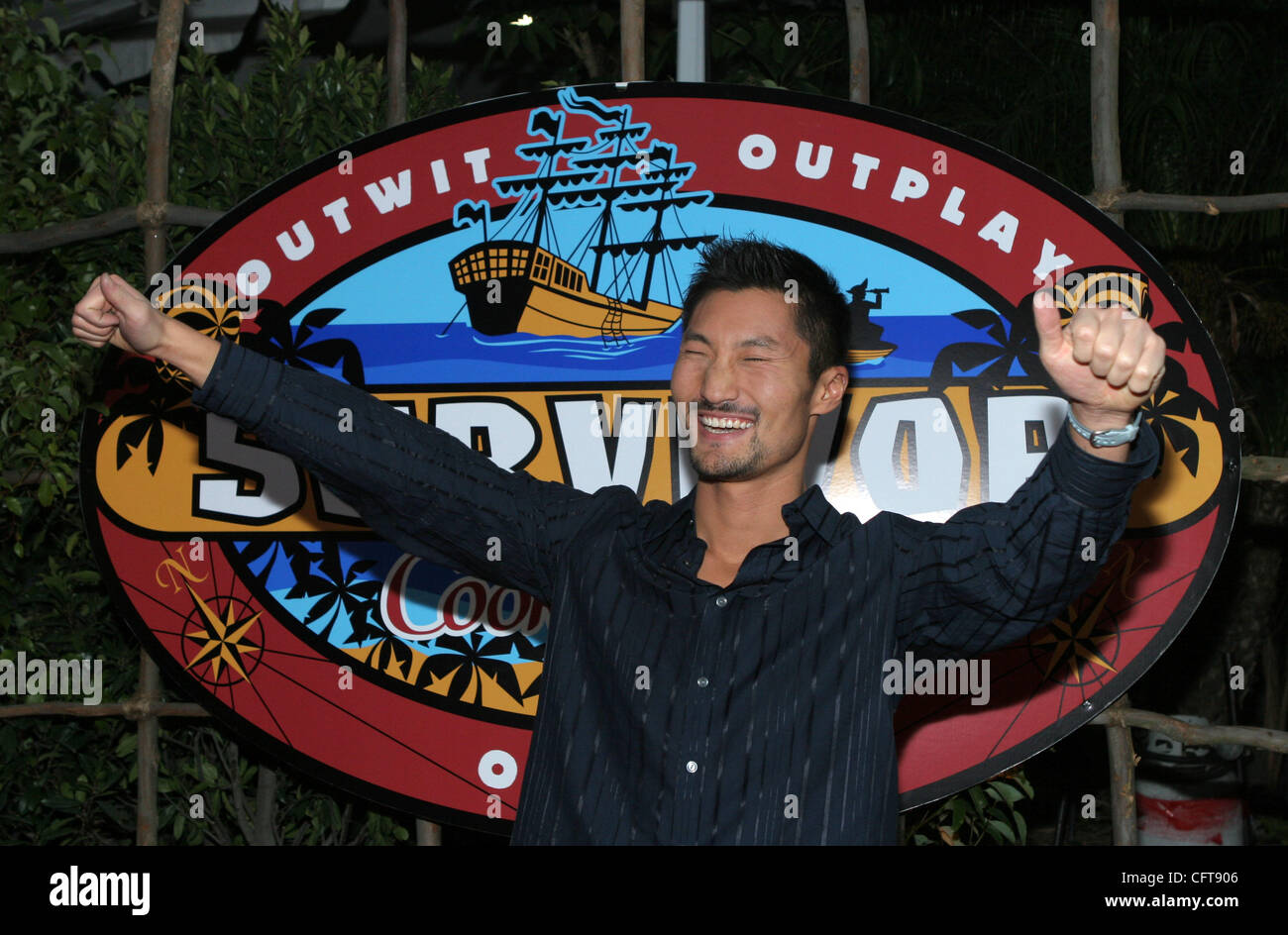
Yul Kwon: From Survivor Winner to Public Figure, Civic Leader, and Tech Executive
Yul Kwon transitioned from winning Survivor: Cook Islands in 2006 to building a multifaceted career as a government policy leader, broadcast host, technology executive, and public advocate. Leveraging degrees from Stanford University a...
Yul Kwon transitioned from winning Survivor: Cook Islands in 2006 to building a multifaceted career as a government policy leader, broadcast host, technology executive, and public advocate. Leveraging degrees from Stanford University and Yale Law School, Kwon translated reality television visibility into influential roles at the Federal Communications Commission, PBS, Google, Meta, and national health initiatives.
Contents
The Survivor Legacy: Strategic Genius and Cultural Impact
When Yul Kwon competed on CBS's Survivor: Cook Islands (Season 13, 2006), the season initially drew controversy for dividing tribes along racial and ethnic lines. Kwon was placed on the Asian American "Aito" tribe. Rather than allowing the format to dictate public perception, Kwon recognized a broader responsibility: to dismantle persistent media stereotypes regarding Asian Americans through calm, strategic, and principled leadership.
- Initial Tribe Division (Ethnicity-Based)
- Tribal Mutiny / Aitu Four (Yul, Ozzy, Becky, Sundra)
- Strategic Leverage of Hidden Idol (Flipped Jonathan Penner / Controlled Votes)
- Strategic & Ethical Final 3
- Victory: 5-4 Jury Vote over Ozzy
Kwon's victory remains one of the most intellectually masterclass performances in reality television history. His strategic dominance relied on several core tactics:
- Optimal Idol Utilization: Kwon discovered the season's "Hidden Immunity Idol"—which at the time could be used after votes were cast—and leveraged it as a diplomatic bargaining chip rather than a secret defense mechanism.
- Coalition Management: By convincing contestant Jonathan Penner to switch allegiances at the merge, Kwon secured a voting majority for his underdog alliance, the "Aitu Four" (Kwon, Ozzy Lusth, Becky Lee, and Sundra Oakley).
- Analytical Alliance Building: Kwon maintained an unflappable demeanor, managing emotional dynamics through logic, transparency, and clear risk assessments.
Kwon defeated runner-up Ozzy Lusth in a 5–4 jury vote. Beyond the $1 million prize, Kwon’s victory marked the first time an Asian American won Survivor. His articulate, composure-driven strategy provided positive prime-time representation at a time when Asian American men were rarely cast in multidimensional, authoritative television roles.
Academic Foundation and Early Legal and Consulting Career
Before becoming a public figure, Kwon compiled an elite academic and professional background. He earned a Bachelor of Science degree in Symbolic Systems from Stanford University, graduating Phi Beta Kappa. Symbolic Systems is an interdisciplinary program combining computer science, linguistics, philosophy, and cognitive science—a foundation that later informed his work in emerging technology and communications policy.
Kwon earned his Juris Doctor from Yale Law School, where he served as an editor of the Yale Law Journal. His legal and corporate preparation prior to television included high-level policy, judicial, and strategic roles:
- Judicial Clerkship: Kwon served as a law clerk for Judge R. Guy Cole Jr. on the U.S. Court of Appeals for the Sixth Circuit, gaining deep exposure to federal statutory interpretation and constitutional law.
- Management Consulting: As a consultant for McKinsey & Company, he advised Fortune 500 executives on corporate strategy, operational efficiency, and organizational structuring.
- Technology Law: Working as an associate at major law firms (including Venable LLP), Kwon focused on regulatory issues, intellectual property, and venture capital financing for technology startups.
This background established Kwon's ability to navigate complex administrative systems, an asset he drew upon as he shifted into government service and executive tech roles.
Public Policy and Government Leadership: The FCC Appointment
Following his Survivor win, Kwon leveraged his visibility to re-enter public policy. In 2009, Federal Communications Commission (FCC) Chairman Julius Genachowski appointed Kwon as Deputy Chief of the Consumer and Governmental Affairs Bureau at the Federal Communications Commission.
- FCC Consumer & Governmental Affairs Deputy Chief
- Emergency Comm. (Next-Gen 911)
- Broadband Access & Equity Policy
- Public Advocacy & Consumer Rights
During his tenure at the FCC from 2009 to 2011, Kwon managed critical regulatory portfolios focused on public safety, consumer protection, and technology infrastructure:
- Next Generation 911 (NG911): Kwon helped spearhead initiatives to modernize legacy emergency response networks, enabling citizens to send text, photos, and video data to emergency call centers.
- Broadband Adoption and Accessibility: He worked on policy frameworks designed to expand high-speed internet access to underserved rural and low-income communities, as well as enhancing digital accessibility standardizations for individuals with disabilities under the Twenty-First Century Communications and Video Accessibility Act.
- Consumer Education and Protection: Kwon led outreach campaigns aimed at protecting consumers from predatory telecommunications practices, unexpected wireless billing surges ("bill shock"), and deceptive marketing.
His work at the FCC demonstrated how public figures can translate media capital into substantive administrative policy execution.
Media Broadcasting and Science Communication
Kwon’s transition into media extended beyond competitive television into educational broadcasting and science journalism. He recognized television's utility as a medium for public education on science, technology, and engineering.
In 2012, Kwon hosted the premier four-part documentary series America Revealed on PBS. The series analyzed the complex physical, industrial, and digital infrastructure networks that keep the United States functioning.
- AMERICA REVEALED
- Food Machines (Agriculture)
- Nation on the Move
- Electric Grid (Energy Net)
- Made in America (Manufacturing)
Across four episodes, Kwon explained complex system dynamics to non-technical audiences:
- Food Machines: Investigating the industrial supply chains, agricultural technology, and logistics driving American food production.
- Nation on the Move: Exploring transportation systems, traffic management algorithms, freight logistics, and air traffic control infrastructure.
- Electric Grid: Examining the national energy infrastructure, grid reliability, renewable energy integration, and vulnerability management.
- Made in America: Documenting the evolution of high-tech manufacturing, robotics, and global supply chain networks.
In addition to America Revealed, Kwon worked as a special correspondent for CNN Link Asia and hosted programs on the Discovery Channel, using his media presence to promote STEM education and public understanding of infrastructure networks.
Corporate Leadership in Silicon Valley
After concluding his government service and media projects, Kwon returned to the private sector, taking senior management roles at leading Silicon Valley technology organizations.
Google: Special Projects and Business Development
At Google, Kwon managed business development and strategic partnerships. He worked on projects aimed at integrating emerging technical capabilities into scalable commercial offerings, leveraging his expertise in regulatory landscapes, government compliance, and public-private sector engagement.
Meta (Facebook): Privacy, Safety, and Product Management
Kwon later joined Meta (then Facebook) as a Director of Product Management. His work focused on critical, high-scrutiny operational domains:
- Privacy and Data Stewardship: Managing product initiatives designed to strengthen user data protections, enforce regulatory compliance frameworks (such as GDPR), and build user trust transparently.
- Integrity and Civic Engagement: Leading multi-disciplinary teams of engineers, data scientists, and policy researchers tasked with mitigating platform abuse, combating misinformation, and safeguarding democratic processes across digital applications.
- Cross-Sector Product Strategy: Synthesizing complex legal constraints, technical capabilities, and public expectations into functional software product architectures.
Philanthropy, Public Health Advocacy, and Return to Survivor
Throughout his public career, Kwon has dedicated substantial energy to health advocacy and civic philanthropy, particularly addressing healthcare disparities affecting racial minorities.
Bone Marrow Registration Advocacy
Spurred by the tragic loss of his Stanford roommate, Evan Chen, to leukemia due to a lack of matching bone marrow donors, Kwon became an active national advocate for minority donor registration.
Because bone marrow matches are linked to ethnic heritage, Asian Americans, African Americans, Hispanic Americans, and mixed-race individuals face significantly lower odds of finding a matching donor. Kwon organized national drives with organizations such as Be The Match (operated by the National Marrow Donor Program), successfully registering tens of thousands of new minority marrow donors.
Survivor: Winners at War (2020) and ALS Awareness
Fourteen years after his initial victory, Kwon returned to compete on Survivor: Winners at War (Season 40) in 2020. Facing a cast composed exclusively of former champions, Kwon demonstrated the same analytical, group-focused approach that characterized his first appearance.
- Return for Survivor: Season 40 (2020)
- Platform for ALS Research Awareness (Honoring Stacy Title & Jonathan Penner)
- Strategic Advocacy & Public Health Funding
Kwon used his return as a platform to raise awareness and funds for Amyotrophic Lateral Sclerosis (ALS). He pledged his appearance earnings and led fundraising drives supporting the ALS Association in honor of Stacy Title, the late wife of his Season 13 castmate Jonathan Penner.
Career Milestones and Leadership Timeline
The following matrix outlines Yul Kwon’s leadership trajectory across law, public governance, media, technology, and public health advocacy:
| Era / Years | Role / Title | Entity / Platform | Key Accomplishments & Focus Areas |
|---|---|---|---|
| 1997–2000 | Student / Editor | Stanford University / Yale Law School | Earned B.S. in Symbolic Systems (Phi Beta Kappa) and J.D.; served as Editor of Yale Law Journal. |
| 2000–2005 | Judicial Clerk / Consultant | U.S. Court of Appeals (6th Cir.) / McKinsey & Co. | Clerked for Judge R. Guy Cole Jr.; advised Fortune 500 clients on business strategy and operations. |
| 2006 | Winner / Champion | CBS Survivor: Cook Islands | Won Season 13; pioneered idol-based alliance strategies; broke media stereotypes for Asian Americans. |
| 2007–2009 | National Advocate / Speaker | National Marrow Donor Program / Various | Organized nationwide recruitment campaigns to expand bone marrow registries for ethnic minorities. |
| 2009–2011 | Deputy Bureau Chief | Federal Communications Commission (FCC) | Led consumer policy, broadband expansion initiatives, and Next Generation 911 emergency communications. |
| 2012 | Television Host | PBS (America Revealed) | Hosted national documentary series analyzing American energy, supply chain, and transit infrastructure. |
| 2013–2018 | Business & Product Leader | Managed strategic business development and technical partnerships across specialized internal projects. | |
| 2018–Present | Director of Product Management | Meta (Facebook) | Directed product teams focused on user privacy, algorithmic integrity, data stewardship, and security. |
| 2020 | Contestant / Fundraiser | Survivor: Winners at War (Season 40) | Returned to compete; raised public awareness and research funds for ALS patient advocacy. |
Frequently Asked Questions
What did Yul Kwon do immediately after winning Survivor: Cook Islands?
After winning Survivor: Cook Islands in 2006, Kwon used his public platform to advocate for health equity, specifically expanding minority participation in national bone marrow registries. He later transitioned back into law, business, and policy, leading to his federal government appointment in 2009.
What was Yul Kwon's policy role at the Federal Communications Commission (FCC)?
Kwon served as Deputy Chief of the Consumer and Governmental Affairs Bureau at the FCC from 2009 to 2011 under Chairman Julius Genachowski. In this capacity, he worked on policy projects including broadband equity, consumer protection standards, digital accessibility for persons with disabilities, and modernizing emergency communications via Next Generation 911.
What TV shows has Yul Kwon hosted besides Survivor?
Kwon hosted the four-part PBS infrastructure documentary series America Revealed in 2012. He has also hosted science, tech, and cultural programming for PBS, CNN Link Asia, and the Discovery Channel.
Why did Yul Kwon return for Survivor: Winners at War in 2020?
Kwon returned for Season 40 to compete alongside 19 other former champions, but primarily used the opportunity to raise awareness and funds for ALS research. He dedicated his gameplay to supporting his friend and former castmate Jonathan Penner, whose wife, filmmaker Stacy Title, was battling ALS.
What tech executive positions has Yul Kwon held in Silicon Valley?
Kwon has held senior product leadership roles across major technology companies, including business development roles at Google and Director of Product Management roles at Meta (Facebook), where he led initiatives centered around user privacy, data security, and platform integrity.
Practical Takeaways: Lessons in Career Transition and Public Impact
Yul Kwon’s career trajectory offers a blueprint for leveraging non-traditional visibility to achieve meaningful public and professional impact:
- Transform Media Visibility into Institutional Access: Rather than pursuing entertainment fame, Kwon treated his television platform as political and institutional leverage, transitioning directly into administrative governance and public advocacy.
- Maintain Interdisciplinary Flexibility: Combining law (Yale J.D.), technical science (Stanford B.S. in Symbolic Systems), and strategic management (McKinsey) enabled Kwon to pivot between government regulation, broadcast communication, and tech product management.
- Align Personal Purpose with Public Advocacy: By grounding his public profile in concrete causes—such as expanding minority bone marrow registries and funding ALS research—Kwon established long-term credibility that outlasted reality television fame.
Image Gallery