Understanding NC Workers' Compensation Exemption Certificate Basics
In North Carolina, the workers' compensation system is designed to protect both employers and employees from the financial fallout of workplace injuries. However, many small business owners, sole proprietors, and independent contractor...
In North Carolina, the workers' compensation system is designed to protect both employers and employees from the financial fallout of workplace injuries. However, many small business owners, sole proprietors, and independent contractors find themselves navigating a complex web of requirements regarding whether they must carry insurance or if they qualify for an exemption. In 2026, understanding the NC workers compensation exemption certificate basics is essential for maintaining legal compliance and securing contracts with larger entities that demand proof of coverage or valid exclusion.
Contents
The Legal Framework of Workers' Compensation in North Carolina
The North Carolina Workers' Compensation Act, found in Chapter 97 of the General Statutes, mandates that any business that employs three or more employees must carry workers' compensation insurance. This rule applies to corporations, sole proprietorships, partnerships, and LLCs. The definition of "employee" is broad and includes part-time workers, minors, and seasonal help.
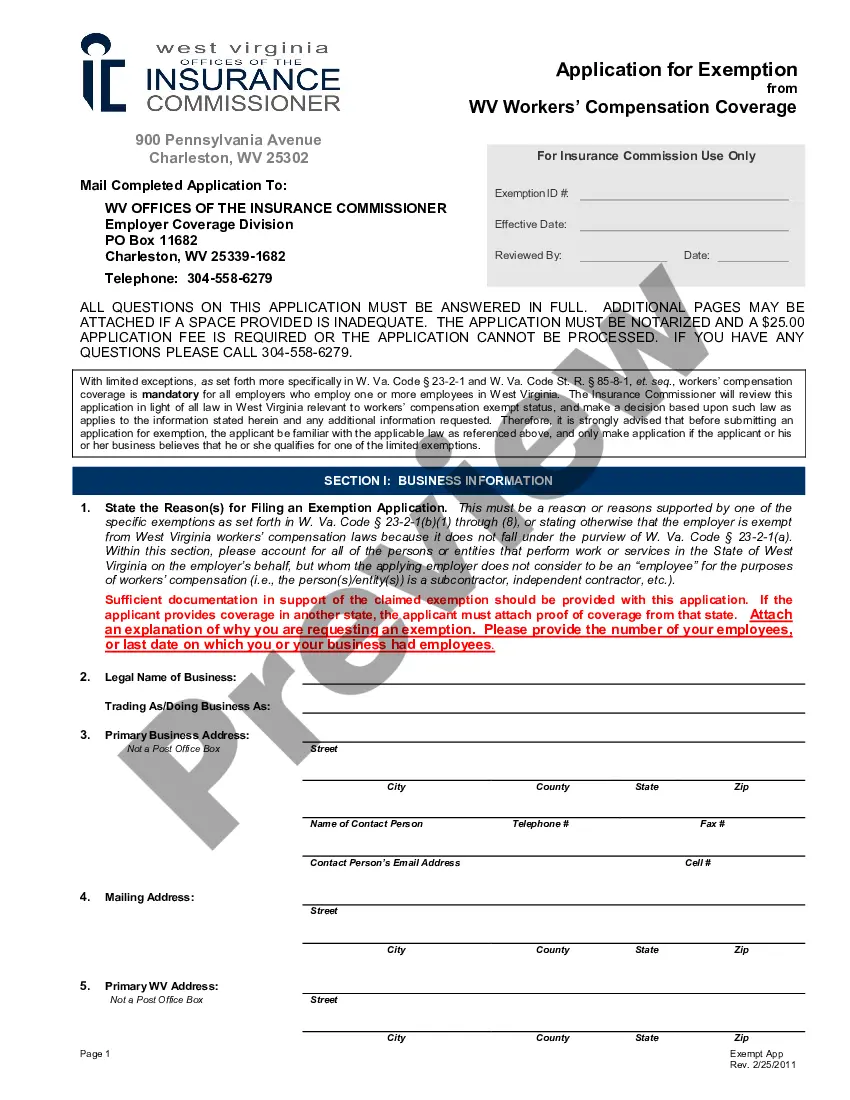
However, the question of an "exemption certificate" is where many business owners face confusion. Unlike some states that issue a formal, state-stamped "Certificate of Non-Coverage" or a specific "Exemption Card," North Carolina does not have a central registry that issues a physical exemption certificate for all business types. Instead, exemption is typically established through legal status or specific affidavits provided to general contractors and insurance auditors.
Who Counts as an Employee?
To determine if you need insurance or if you are exempt based on the "three-employee rule," you must correctly identify who counts toward that threshold under North Carolina law:
- Corporate Officers: Officers of a corporation are counted as employees, though they may elect to be excluded from coverage for themselves in their policy. Even if excluded from benefits, they still count toward the three-person threshold.
- LLC Members: Members of an LLC are treated similarly to partners; they are not automatically counted as employees unless they choose to be covered, but this can vary based on how the business is structured for tax purposes.
- Sole Proprietors and Partners: These individuals are not counted as employees toward the three-person requirement. A sole proprietor with two employees (totaling three people including themselves) is technically exempt from the mandate because they themselves do not count as an "employee" under the default statutory definition.
The Reality of the "Exemption Certificate"
In the North Carolina marketplace, particularly in construction and transportation, a "certificate of insurance" (COI) is the standard proof of coverage. When a business is exempt, they cannot produce a COI showing active workers' comp. This leads many to seek an NC Workers' Compensation Exemption Certificate.
As of 2026, the North Carolina Industrial Commission (NCIC) maintains that if a business is not legally required to carry insurance, they simply do not have it. There is no official "Gold Seal" document issued by the state to prove you don't need insurance. Instead, the "basics" of proving exemption involve two primary methods:
- The Affidavit of Exemption: This is a notarized statement where the business owner swears under penalty of perjury that they meet the statutory requirements for exemption (e.g., they have fewer than three employees and do not engage in high-risk activities with specific lower thresholds).
- Form 25R: In specific cases involving certain types of subcontractors or specialized filings, documentation may be submitted to the NCIC, but this is less common for general "proof of exemption" requests from clients.
Why General Contractors Demand Proof
Even if North Carolina law says you are exempt because you have only one employee, a General Contractor (GC) may still require you to have workers' comp insurance to step onto a job site. This is a contractual requirement, not a statutory one. If a subcontractor is injured and doesn't have insurance, the GC’s insurance policy may be forced to cover the claim, leading to higher premiums for the GC. Therefore, many GCs refuse to accept an "exemption" and demand a policy even for sole proprietors.
Construction Industry Special Rules
The "three-employee rule" has a critical nuance when it comes to the construction industry. Under N.C.G.S. § 97-19, a general contractor is liable for the workers' compensation claims of any subcontractor who does not have their own insurance policy, regardless of how many employees that subcontractor has.
If you are a subcontractor in the construction trade:
- The 1-Employee Reality: While the law says the mandate starts at three, the financial risk to the GC means that for all practical purposes, any subcontractor with even one employee (or even just themselves) is often forced to carry coverage.
- The "Ghost Policy": Many sole proprietors in North Carolina purchase what is colloquially known as a "Ghost Policy." This is a minimum premium workers' comp policy that excludes the owner from coverage. It provides a Certificate of Insurance that satisfies the GC's requirements while costing significantly less than a full-benefit policy.
Documentation Requirements for Exemption
If you are operating as an exempt entity and your client accepts an affidavit instead of a policy, your NC workers compensation exemption certificate basics must include specific information to be legally robust. A standard affidavit should include:
| Requirement | Description |
|---|---|
| Legal Business Name | The full name as registered with the NC Secretary of State. |
| Entity Type | Identification as a Sole Proprietorship, LLC, or Partnership. |
| Employee Count | A statement confirming the business has fewer than three employees. |
| Statutory Reference | Mention of N.C.G.S. Chapter 97 and the specific exemption criteria met. |
| Notarization | A signature in the presence of a North Carolina Notary Public. |
| Indemnification | A clause stating the subcontractor will hold the GC harmless for any injury claims. |
How to Obtain a Workers' Compensation Policy if Not Exempt
If you discover that you do not qualify for an exemption—or if your customers refuse to work with you without a policy—you must secure coverage through the voluntary market or the assigned risk pool.
The Voluntary Market
Most businesses obtain coverage through private insurance carriers. In 2026, the North Carolina Department of Insurance continues to oversee rate filings to ensure they are fair. It is advisable to contact an independent agent who specializes in commercial lines. They will evaluate your "class codes" (the type of work you do) and your payroll to determine your premium.
The North Carolina Rate Bureau (NCRB)
If you are in a high-risk industry or have a history of claims and cannot find a private carrier willing to write a policy, you may be placed in the "Assigned Risk" pool. This is managed by the North Carolina Rate Bureau. While premiums are often higher in this pool, it ensures that every business can obtain the legally required coverage.
Risks of Falsely Claiming Exemption
Falsely claiming an exemption or failing to carry insurance when required by law carries severe consequences in North Carolina. The NC Industrial Commission’s Criminal Investigation Division is tasked with identifying and prosecuting non-compliant employers.
- Financial Penalties: Fines can range from $50 to $100 per day for every day the business was non-compliant. For a small business, a year of non-compliance could result in a fine exceeding $30,000.
- Criminal Charges: Failure to carry workers' compensation is a misdemeanor in North Carolina, and willful failure can be elevated to a felony.
- Personal Liability: If an employee is injured and the business is uninsured, the employer is responsible for all medical bills and lost wages out-of-pocket. In these cases, the employer also loses the "exclusive remedy" protection, meaning the employee can sue the employer in civil court for negligence.
Frequently Asked Questions
Does an LLC member count as an employee in NC?
In North Carolina, members of an LLC are generally treated like partners. They are not automatically counted as employees for the purpose of the three-employee threshold unless they specifically elect to be covered under a policy. However, if the LLC has three or more people (including the members), it is often safer to carry a policy to avoid disputes during an audit.
Can I use a federal EIN to prove I'm exempt?
No. An Employer Identification Number (EIN) is a tax identifier issued by the IRS. It has no bearing on your workers' compensation status in North Carolina. Proving exemption requires an affidavit or a policy exclusion form, not a tax ID.
How much does a "Ghost Policy" cost in NC in 2026?
While prices vary based on the industry class code, a minimum premium policy (Ghost Policy) for an exempt sole proprietor typically ranges from $700 to $1,500 per year. This cost is primarily for the "certificate" itself, as the policy provides zero dollars in benefits to the owner.
What is Form 25R used for?
Form 25R is the "Physician’s Report and Attending Physician’s Supplemental Report." It is not an exemption certificate. Many people confuse it with exemption forms because of the numerical naming convention. If you are looking for an exemption form, you are likely looking for a customized Affidavit of Exemption used in the private sector.
Do I need insurance for independent contractors I hire?
This is a high-risk area. If the North Carolina Industrial Commission determines that your "independent contractor" is actually an employee based on the level of control you exercise over their work, you are responsible for their coverage. Simply having them sign a 1099 form does not legally exempt you from providing workers' compensation if they meet the legal definition of an employee.
Next Steps for Business Owners
If you are operating a business in North Carolina and are unsure of your status regarding workers' compensation, the first step is to perform a detailed audit of your staff count. If you have three or more people performing work—even if they are family members—you must secure a policy immediately.
For those who are legitimately exempt (sole proprietors or small teams under three), you should draft a standard Affidavit of Exemption and have it notarized. Keep this document on file to provide to any General Contractors or clients who request proof of coverage. If you find that the lack of a formal certificate is preventing you from winning contracts, consult with an insurance agent about a "Minimum Premium" or "Excluded Member" policy to obtain a valid Certificate of Insurance.
For more detailed information or to report a change in business status, you can visit the North Carolina Industrial Commission website, which provides the most current regulatory updates and contact information for compliance officers.
Image Gallery