Understanding Newborn TSH Levels: A Comprehensive Guide to Thyroid Screening
Newborn TSH (Thyroid Stimulating Hormone) levels are measured shortly after birth to screen for congenital hypothyroidism, a condition that can lead to severe developmental delays if untreated. A normal newborn TSH level typically fall...
Newborn TSH (Thyroid Stimulating Hormone) levels are measured shortly after birth to screen for congenital hypothyroidism, a condition that can lead to severe developmental delays if untreated. A normal newborn TSH level typically falls below 15–20 mIU/L after the first 24 hours of life, though thresholds vary by laboratory and the specific timing of the test.
Contents
The screening of thyroid function in neonates is one of the most successful public health initiatives in modern medicine. By identifying infants with thyroid deficiencies in the first days of life, healthcare providers can initiate treatment that prevents irreversible intellectual disabilities and growth failure. As of 2026, newborn screening protocols have become highly refined, utilizing advanced dried blood spot (DBS) analysis to ensure rapid and accurate results for every infant born in clinical settings.
The Physiological Context of Newborn TSH
To understand newborn TSH levels, one must first understand the "TSH surge" that occurs immediately after delivery. The transition from the womb to the external environment triggers a massive release of TSH from the infant's pituitary gland. This surge typically peaks within 30 minutes of birth, with TSH levels often soaring as high as 60–80 mIU/L.
Over the subsequent 48 hours, these levels rapidly decline. Because of this natural physiological spike, screening tests performed too early (within the first 12–24 hours) frequently return false-positive results. This is why most clinical guidelines recommend waiting at least 24 to 48 hours after birth to perform the "heel prick" blood test. By the end of the first week of life, TSH levels in healthy infants generally stabilize into a range that more closely resembles pediatric or adult levels, though they remain slightly higher during the first month.
Interpreting Newborn TSH Results
When a laboratory processes a newborn screening card, they are primarily looking for an elevated TSH. A high TSH indicates that the pituitary gland is working overtime to stimulate a thyroid gland that is failing to produce enough thyroid hormone (thyroxine or T4).
Normal vs. Abnormal Ranges
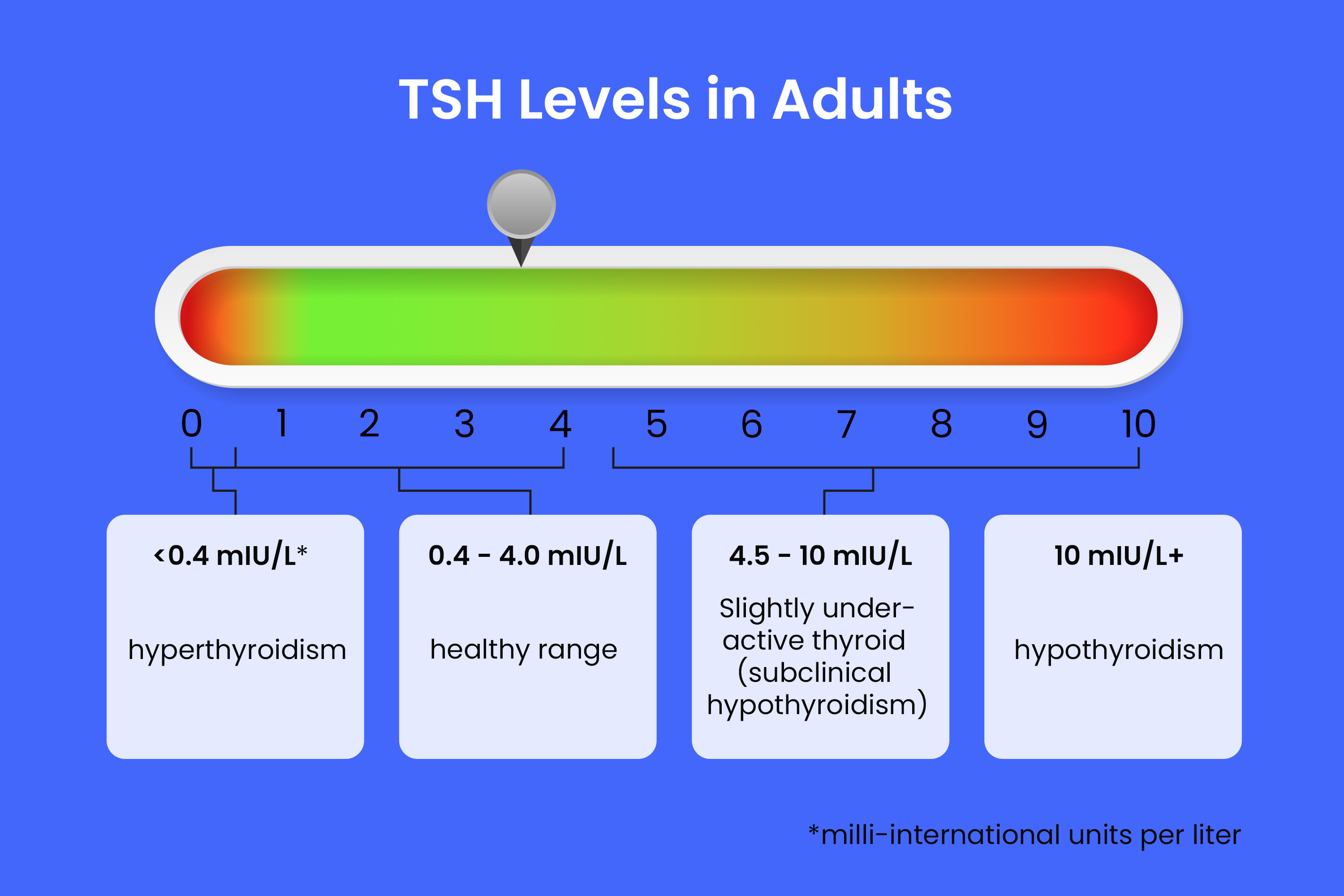
While specific "cutoff" points are determined by individual state or regional screening programs, the following table provides a general framework for interpreting TSH levels obtained via dried blood spot screening after the first 24 hours of life.
| TSH Level (mIU/L) | Interpretation | Clinical Action Required |
|---|---|---|
| Below 10 | Normal / Negative | No further action; routine care. |
| 10 to 19 | Borderline / Uncertain | Repeat screening or monitor serum levels. |
| 20 to 39 | Elevated | Immediate follow-up with serum (venous) testing. |
| 40 or Higher | Critically Elevated | Urgent pediatric endocrinology consultation and T4 testing. |
Note: These values are representative of 2026 screening standards. Always defer to the specific reference ranges provided by the testing laboratory.
What Causes Elevated TSH in Newborns?
An elevated TSH result is a signal, not a final diagnosis. Several conditions, some permanent and some temporary, can cause a newborn's TSH levels to rise above the normal threshold.
Congenital Hypothyroidism (CH)
This is the primary condition the test is designed to find. It occurs in approximately 1 in 2,000 to 4,000 live births. There are two main types:
- Thyroid Dysgenesis: The thyroid gland is missing, severely underdeveloped, or located in the wrong place (ectopic). This accounts for about 80–85% of permanent CH cases.
- Dyshormonogenesis: The thyroid gland is present but has a genetic defect that prevents it from producing thyroid hormone correctly.
Transient Hypothyroidism
In some cases, the TSH elevation is temporary. This can be caused by:
- Maternal Factors: If a mother has thyroid disease and is taking anti-thyroid medications (like propylthiouracil), these can cross the placenta and temporarily suppress the baby's thyroid function.
- Iodine Exposure or Deficiency: Excessive exposure to iodine (such as through certain skin disinfectants used during delivery) or a severe lack of iodine in the mother’s diet can disrupt the infant's thyroid balance.
- Maternal Antibodies: In rare cases, a mother’s antibodies can block the TSH receptors in the infant, leading to a temporary rise in TSH.
Prematurity and Illness
Preterm infants often have immature "hypothalamic-pituitary-thyroid" axes. They may show delayed TSH elevations or low T4 levels without a corresponding TSH rise. Similarly, infants in the Neonatal Intensive Care Unit (NICU) with severe non-thyroidal illnesses may show fluctuating TSH levels.
The Screening and Diagnosis Process
The journey from a "positive" screen to a confirmed diagnosis involves several distinct steps designed to ensure no infant is left untreated while avoiding unnecessary long-term medication for those with transient issues.
1. The Initial Screening (Heel Prick)
The healthcare provider pricks the infant's heel and collects several drops of blood onto a special filter paper card. This card is sent to a centralized state or regional laboratory. In 2026, most programs use tandem mass spectrometry or advanced fluorometric immunoassays to measure TSH directly from these dried spots.
2. Notification of Abnormal Results
If the TSH is above the cutoff, the laboratory notifies the infant's pediatrician or the hospital of birth immediately. Parents are then contacted to bring the baby in for "confirmatory testing."
3. Confirmatory Serum Testing
Because the heel prick is a screening tool, a diagnosis cannot be made based on the card alone. A venous blood draw is performed to measure:
- Serum TSH: To confirm if the elevation persists.
- Free T4 (Thyroxine): To see if the actual circulating hormone levels are low.
- Total T4: Used in some protocols as a secondary check.
4. Imaging (Optional)
In some cases, a pediatric endocrinologist may order a thyroid ultrasound or a technetium-99m thyroid scan to determine if the gland is present and in the correct location. This helps differentiate between thyroid dysgenesis and dyshormonogenesis.
Treatment and Long-term Management
If congenital hypothyroidism is confirmed, treatment must begin as soon as possible—ideally within the first two weeks of life. Thyroid hormone is essential for myelination (the "insulation" of nerve fibers) in the developing brain. Without it, the damage to the central nervous system is irreversible.
Levothyroxine Therapy
The standard treatment is daily oral levothyroxine, a synthetic version of the T4 hormone the body naturally produces. For newborns, the tablet is typically crushed and mixed with a small amount of water, breast milk, or formula (though soy-based formulas should be avoided near the time of dosing as they can interfere with absorption).
Monitoring and Outlook
Infants on levothyroxine require frequent blood tests during the first few years of life to ensure their TSH and T4 levels remain within the optimal range for growth.
- Frequency: Usually every 1–2 months during the first year, then every 3 months until age three.
- Dosage Adjustments: As the baby grows, the dosage must be increased to match their increasing body weight and metabolic demands.
With early detection and consistent treatment, the prognosis for children with congenital hypothyroidism is excellent. Most achieve normal physical growth and reach intellectual milestones at the same rate as their peers.
Common Parental Concerns and FAQs
Why was my baby's TSH high if they look healthy?
Most newborns with congenital hypothyroidism appear perfectly healthy at birth. This is because they have been receiving thyroid hormone from their mother via the placenta throughout the pregnancy. Symptoms like jaundice, poor feeding, sluggishness, or a large tongue (macroglossia) often don't appear until weeks or months later, by which time brain development may already be affected. This is why the screening test is so vital.
Is a "borderline" TSH result common?
Yes. Many infants have a slightly elevated TSH on their first screen that returns to normal on the second test. This is often due to the timing of the first test or the infant's system taking a little longer to stabilize after birth. While a borderline result requires follow-up, it often does not result in a diagnosis of permanent hypothyroidism.
Can breastfeeding affect the TSH result?
Breastfeeding is highly recommended and does not interfere with the accuracy of the TSH screening test. While small amounts of thyroid hormone are present in breast milk, they are not sufficient to mask a diagnosis of hypothyroidism in an affected infant.
Does my baby have to take medicine forever?
In cases of thyroid dysgenesis (missing or malformed gland), the child will need thyroid hormone replacement for life. If the cause is suspected to be transient or related to dyshormonogenesis, doctors may perform a "trial off medication" around age three to see if the thyroid can maintain normal levels on its own.
Summary of Next Actions for Parents
If you have been notified that your newborn's TSH levels are elevated:
- Do not panic. Many abnormal screens are false positives or represent transient conditions.
- Act quickly. Ensure the confirmatory venous blood draw is performed within 24 hours of notification.
- See a specialist. If the serum tests confirm hypothyroidism, seek a referral to a pediatric endocrinologist immediately.
- Adhere to medication. If levothyroxine is prescribed, administer it exactly as directed every single day. Consistent hormone levels are the key to your child's healthy brain development.
Professional Advice Limitation: This information is for educational purposes only and does not constitute medical advice. Thyroid screening protocols and reference ranges may vary by jurisdiction and clinical laboratory. Always consult with a qualified pediatrician or endocrinologist regarding specific medical results and treatment plans for a neonate.
Image Gallery