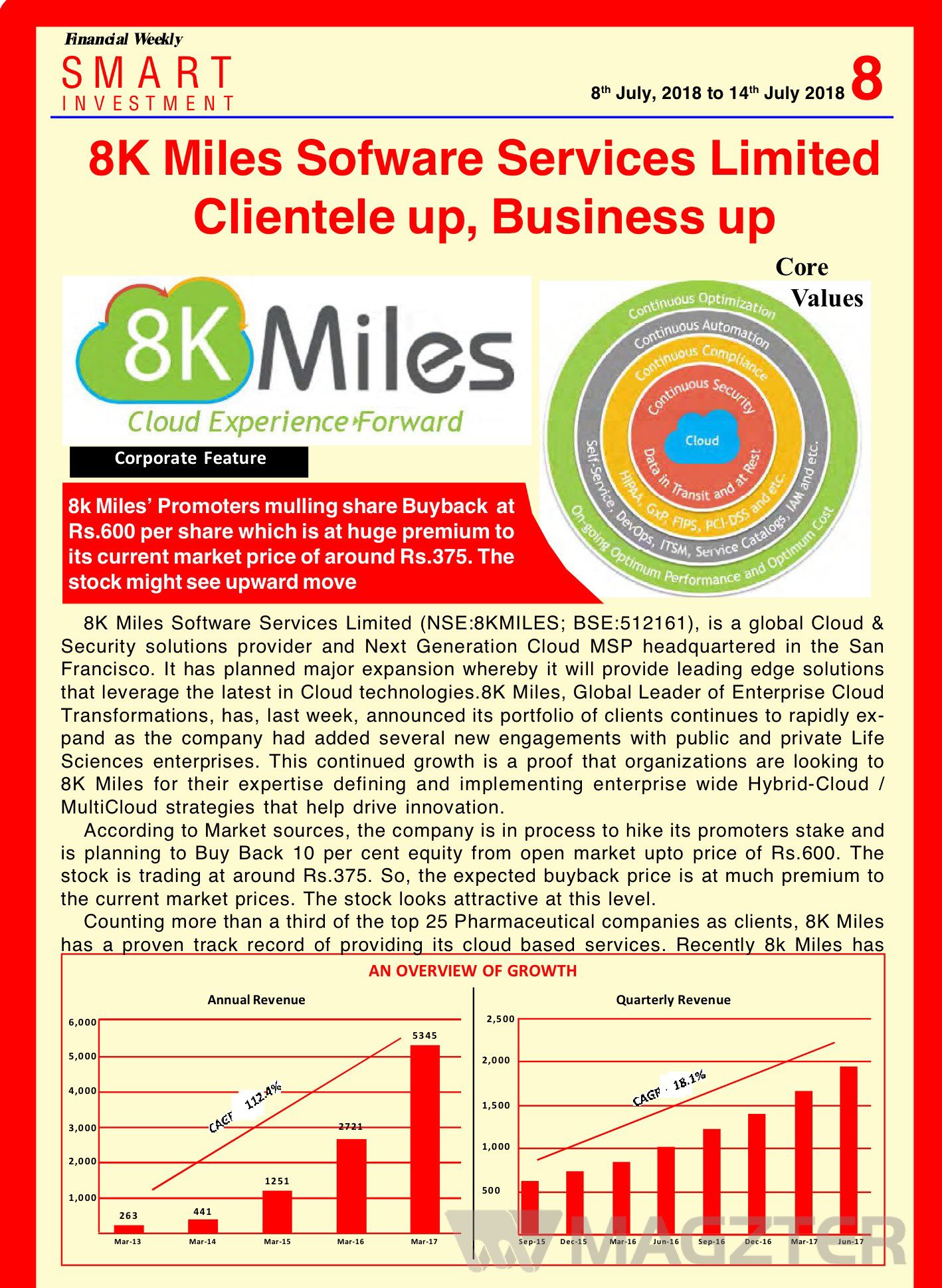
Understanding the 8K Miles Software Services Model and Market Position
8K Miles Software Services is a global technology provider that specializes in cloud computing, identity management, and digital transformation solutions. Originally established as a public company in India, the organization underwent...
8K Miles Software Services is a global technology provider that specializes in cloud computing, identity management, and digital transformation solutions. Originally established as a public company in India, the organization underwent significant corporate restructuring, including rebranding to SecureKloud Technologies, to better align its service offerings with the evolving demands of enterprise-level cloud security and complex IT infrastructure management.
Contents
The Evolution of 8K Miles Software Services
To understand 8K Miles, one must first recognize its identity as a legacy brand that served as the foundational pillar for what is now known as SecureKloud Technologies. Founded with a mission to bridge the gap between traditional IT infrastructure and the agility of the cloud, the firm focused heavily on the Microsoft Azure, Amazon Web Services (AWS), and Google Cloud ecosystems.
The transition from the "8K Miles" brand to SecureKloud represented more than a simple name change; it signified a shift in service focus. While the early operations of 8K Miles were heavily centered on cloud migration, the subsequent evolution emphasized managed services, cybersecurity, and regulatory compliance. For organizations still referencing legacy documentation, understanding the relationship between these two entities is essential for mapping current technical support and service-level agreements (SLAs) to the active corporate entity.
Core Service Pillars and Technical Scope
The service portfolio historically associated with 8K Miles revolves around three primary technical domains. These areas remain the bedrock of the firm’s operational expertise in 2026.
1. Cloud Infrastructure and Migration
The company specializes in "Cloud-First" strategies. This involves assessing on-premises legacy environments and executing controlled migrations to hyperscale cloud providers. Key activities include:
- Infrastructure-as-Code (IaC): Implementing automated provisioning to ensure consistent environments.
- Migration Planning: Utilizing proprietary frameworks to minimize downtime during the lift-and-shift or refactoring processes.
- Optimization: Ongoing performance tuning to ensure cost-efficiency within cloud billing models.
2. Identity and Access Management (IAM)
A significant portion of the organization's reputation was built on identity governance. This involves ensuring that only authorized users have access to sensitive corporate data. The firm provides architectural guidance for integrating single sign-on (SSO) solutions, multi-factor authentication (MFA), and role-based access control (RBAC) across complex, hybrid-cloud environments.
3. Managed Services and Compliance
For organizations in regulated industries, such as healthcare and finance, the firm provides continuous monitoring. This ensures that infrastructure remains compliant with standards like HIPAA, GDPR, and PCI-DSS. By utilizing automation, the service ensures that security patches and configuration audits are performed in real-time, reducing the risk of human error.
Operational Framework: How Services Are Delivered
Understanding how these services are delivered is crucial for stakeholders evaluating the provider. The company generally follows a model of consultative engagement followed by managed operational support.
The Consultative Phase
Before technical implementation, a diagnostic assessment is conducted. This involves mapping the existing technical debt, identifying security vulnerabilities, and determining the performance requirements of the client’s applications. This phase is critical because it sets the baseline for the SLA.
Implementation and Deployment
During this phase, the firm deploys its engineering teams to integrate cloud solutions. Whether the client is adopting a multi-cloud strategy or a private cloud environment, the goal is to establish a foundation that allows for automated scaling.
Ongoing Managed Operations
Post-deployment, the service transitions to a "Managed Services" model. In this capacity, the firm acts as an extension of the client’s internal IT department. They monitor the environment 24/7, manage incident responses, and provide monthly reporting on cloud consumption and security posture.
Comparative Overview of Service Offerings
When evaluating cloud and managed service providers, it is important to distinguish the specific focus of 8K Miles (now SecureKloud) compared to broader, infrastructure-only providers.
| Service Category | 8K Miles / SecureKloud Focus | Typical Market Alternative |
|---|---|---|
| Cloud Migration | Security-centric refactoring | Standard lift-and-shift |
| IAM Strategy | Deep integration with cloud native tools | Generic third-party software installation |
| Compliance | Automated, continuous monitoring | Periodic manual auditing |
| Support Model | Managed services with cloud optimization | Break-fix reactive support |
Prerequisites for Engagement
Engaging with a service provider of this scale requires specific internal readiness. Before initiating a project, organizations should verify the following:
- Technical Documentation: A clear inventory of current servers, applications, and network architecture is required for an accurate feasibility study.
- Cloud Governance Policies: The client must have, or be ready to define, clear internal policies regarding data sovereignty and user access.
- Governance Alignment: If the organization is in a highly regulated sector, the internal legal and compliance teams must be prepared to integrate their requirements into the technical service roadmap.
- Stakeholder Buy-in: Because migration and managed security often change day-to-day operational workflows, securing alignment across IT, finance, and operations teams is a common prerequisite for project success.
Challenges and Considerations
While the firm provides robust services, clients should be aware of potential challenges. Integrating a third-party managed service provider requires a high level of transparency. "Lock-in" concerns are common in the cloud space; therefore, companies should ensure that their contracts include clauses regarding data portability and the ability to reclaim management control of the cloud environment should the service relationship terminate.
Furthermore, because these services often involve privileged access to customer data for the purpose of monitoring and security, the "Shared Responsibility Model" of cloud security must be clearly defined. The client must understand which security functions are the responsibility of the vendor versus their own internal teams.
Frequently Asked Questions
Is 8K Miles still the company name? No. The company transitioned its identity to SecureKloud Technologies. While the name 8K Miles may appear in legacy contracts or technical documentation, all current operations are conducted under the SecureKloud brand.
What specific cloud providers are supported? The firm maintains deep expertise in the "Big Three" cloud providers: Amazon Web Services (AWS), Microsoft Azure, and Google Cloud Platform (GCP). They also assist with hybrid-cloud configurations that incorporate on-premises data centers.
Does this service include hardware procurement? Generally, no. As a software and cloud services firm, the primary focus is on virtualized environments and managed software platforms. They provide the architectural expertise to optimize infrastructure, rather than selling physical server hardware.
How is pricing determined for managed services? Pricing is typically based on a combination of the complexity of the environment, the number of managed nodes or instances, and the specific level of security monitoring required. Organizations usually engage on a monthly recurring fee model tailored to their specific consumption levels.
How does the company handle regulatory compliance? Compliance is handled through an automated, policy-as-code approach. They map internal IT controls to specific regulatory frameworks, then use software to ensure that infrastructure configurations never deviate from these established baselines.
Next Actions and Recommendations
If your organization is exploring a partnership or needs to understand its current service contract, follow these steps:
- Audit Current Contracts: Review existing documentation to determine if you are operating under a legacy 8K Miles agreement or if you have transitioned to a SecureKloud service level agreement.
- Define Your Scope: Clearly identify whether you need assistance with a one-time cloud migration, a digital transformation project, or ongoing managed security services.
- Request a Security Baseline: If you are currently a client, request a status report on your current compliance posture to see where your infrastructure stands against the latest security standards.
- Engage Technical Leads: Schedule a discovery call with the firm's architecture team to discuss how their current capabilities align with your specific multi-cloud or security infrastructure goals for the 2026 fiscal year.
Image Gallery