Peter Hook Net Worth: Royalty Earnings, Lawsuits, and Financial Legacy
As of 2026, music industry financial evaluations estimate Peter Hook's net worth at approximately $20 million (roughly £15 million to £16 million). This wealth stems from a multi-decade career as the defining bassist and co-founder of...
As of 2026, music industry financial evaluations estimate Peter Hook's net worth at approximately $20 million (roughly £15 million to £16 million). This wealth stems from a multi-decade career as the defining bassist and co-founder of Joy Division and New Order, substantial back-catalog streaming revenues, a major 2017 legal settlement over band assets, extensive global touring with Peter Hook & The Light, and successful publishing projects.
Contents
Overview of Peter Hook's Financial Empire
Peter Hook’s career represents one of the most commercially significant trajectories in post-punk and synth-pop history. As a founding member of both Joy Division and New Order, Hook contributed directly to some of the most influential compositions in modern popular music. Beyond his instantly recognizable high-register basslines, his financial profile is defined by long-term songwriting credits, international master recording royalties, lucrative sync licensing deals, and strategic brand management.
While many musicians of the late 1970s and early 1980s suffered from unfavorable recording contracts under independent labels like Factory Records, Hook’s modern financial standing reflects decades of catalog appreciation, corporate restructurings, and court-enforced royalty adjustments.
- PETER HOOK NET WORTH (Est. $20M / £15M-£16M)
- Joy Division Catalog Rights & Songwriting
- New Order Royalty Streams & Streaming
- 2017 Legal Restructuring Settlement
- Live Tours & Book Publishing (The Light)
The table below outlines the primary components that constitute Peter Hook's overall financial portfolio:
| Asset / Income Stream | Financial Source & Description | Impact on Overall Net Worth |
|---|---|---|
| New Order Songwriting & Masters | Royalties from hits including "Blue Monday", "Bizarre Love Triangle", and "True Faith" | Major / Core Asset |
| Joy Division Catalog | Publishing and performance royalties for "Love Will Tear Us Apart", "Atmosphere", etc. | Steady High-Margin Revenue |
| 2017 High Court Settlement | Out-of-court payout resolving New Order trademark and asset buyout dispute | Multi-Million Capital Injection |
| Peter Hook & The Light | Global touring income performing Joy Division and New Order album catalogs | Primary Active Cash Flow |
| Literary Publications | Advances and royalties from three best-selling music memoirs | Moderate / Supplemental |
| FAC 51 / Haçienda Brand | Merchandise licensing, Haçienda Classical events, and DJ engagements | Consistent Niche Income |
The Songwriting Engines: Joy Division and New Order Catalogs
The core foundation of Peter Hook’s net worth rests in the permanent publishing rights attached to his songwriting contributions. In both Joy Division and New Order, song credits were traditionally split equally among all band members, guaranteeing Hook a direct equal share of mechanical royalties, performance rights payout, and sync licensing fees for every track created during his tenure.
The Financial Power of Joy Division
Despite Joy Division’s brief active recording life between 1976 and 1980, the band's catalog remains exceptionally profitable. Tracks such as "Love Will Tear Us Apart", "Disorder", and "Transmission" generate substantial annual revenues through streaming services, physical record sales, and high-value placement in films, television shows, and global advertising campaigns.
Unlike conventional rock bands where a single lyricist or guitarist captures the majority of publishing revenues, Joy Division split songwriting credits four ways among Ian Curtis, Bernard Sumner, Peter Hook, and Stephen Morris. This structure guarantees that Hook receives 25% of the publishing writer's share across the entirety of Joy Division’s recording catalog.
New Order and the Economics of "Blue Monday"
Following the death of Ian Curtis in 1980, the surviving members formed New Order, adding keyboardist Gillian Gilbert. New Order transitioned from post-punk into electronic dance music, creating some of the highest-selling physical singles in history.
- "Blue Monday" (1983): Recognized as the best-selling 12-inch single of all time. While early physical sales yielded low net margins due to the expensive die-cut sleeve design created by Peter Saville, subsequent re-releases, digital streams, sampling rights, and radio airplay transformed the track into an extraordinarily profitable asset.
- Global Sync Licensing: Songs like "Bizarre Love Triangle", "True Faith", and "Temptation" are frequently licensed for commercial use worldwide, generating recurring five-and-six-figure sync fees split among the songwriters.
- Streaming Performance: New Order commands millions of monthly listeners across Spotify, Apple Music, and Amazon Music, generating continuous mechanical and performance royalty payouts distributed via collection societies such as PRS for Music and PPL in the UK.
The 2015–2017 Legal Dispute and Multi-Million Pound Settlement
The most significant financial turning point in Peter Hook’s post-2000 career involved a bitter legal dispute against his former bandmates Bernard Sumner, Stephen Morris, and Gillian Gilbert over royalty cuts and the management of New Order's intellectual property.
Background of the Dispute
After New Order announced an indefinite hiatus in 2007, Hook departed the group under contentious circumstances. In 2011, Sumner, Morris, and Gilbert reformed New Order and resumed touring without Hook, replacing him with bassist Tom Chapman.
To manage the financial operations of the reformed entity, the remaining members established a private holding company, Vitalturn Company Limited. They subsequently transferred the trademark rights to the New Order band name and income streams to Vitalturn.
Under this setup, the remaining members allocated Peter Hook a reduced royalty cut of 1.25% from the band's active performance and merchandise profits, down from his historical equal share of band operating assets (traditionally 25%).
The High Court Lawsuit
In 2015, Peter Hook filed a lawsuit in the High Court of Justice in London, asserting that his former bandmates had intentionally set up Vitalturn to siphon profits away from him and strip him of his rightful share of the band’s commercial rights. Hook sought damages estimated by his legal team at up to £2.3 million ($3 million+) in back payments and lost ongoing revenues.
Hook's legal position centered on several key arguments:
- Control of Goodwill and Trademark: The name "New Order" carried massive commercial goodwill built collectively over three decades, which could not be unilaterally transferred to a new corporate vehicle without full compensation to a founding member.
- Royalty Underpayment: Reducing his share of band-related income to 1.25% was oppressive and breached existing shareholder obligations and underlying partnership agreements.
- Exploitation of Jointly Held IP: Continuing to tour under the New Order banner heavily leveraged the original catalog and brand identity without equitable financial participation.
Resolution and Financial Outcome
In September 2017, just days before the full court trial was set to begin in London, the parties reached a full and final out-of-court settlement. Although the precise financial terms remain protected by a non-disclosure agreement (NDA), official statements confirmed that all outstanding disputes regarding royalty payouts, rights to the New Order name, and back revenues had been fully settled.
Industry experts estimate that the settlement involved a multi-million-pound lump sum payment to Hook alongside a restored, ongoing royalty structure for historic master recordings, catalog distribution, and merchandise usage, placing his long-term financial security on firm footing.
Post-New Order Revenue: Touring, Publishing, and DJing
Since leaving New Order, Peter Hook has constructed an independent live and commercial ecosystem that generates high annual operational revenues.
- PETER HOOK ACTIVE REVENUE MODEL
- Touring & Live Performances
- Global album tours
- Festival headlining
- Ticket & merch sales
- Literary Works & Book Royalties
- 3 Published Memoirs
- Audiobook royalties
- Translation rights
- Brand Rights & DJ Engagements
- FAC 51 Haçienda events
- International DJ sets
- Brand licensing deals
- Touring & Live Performances
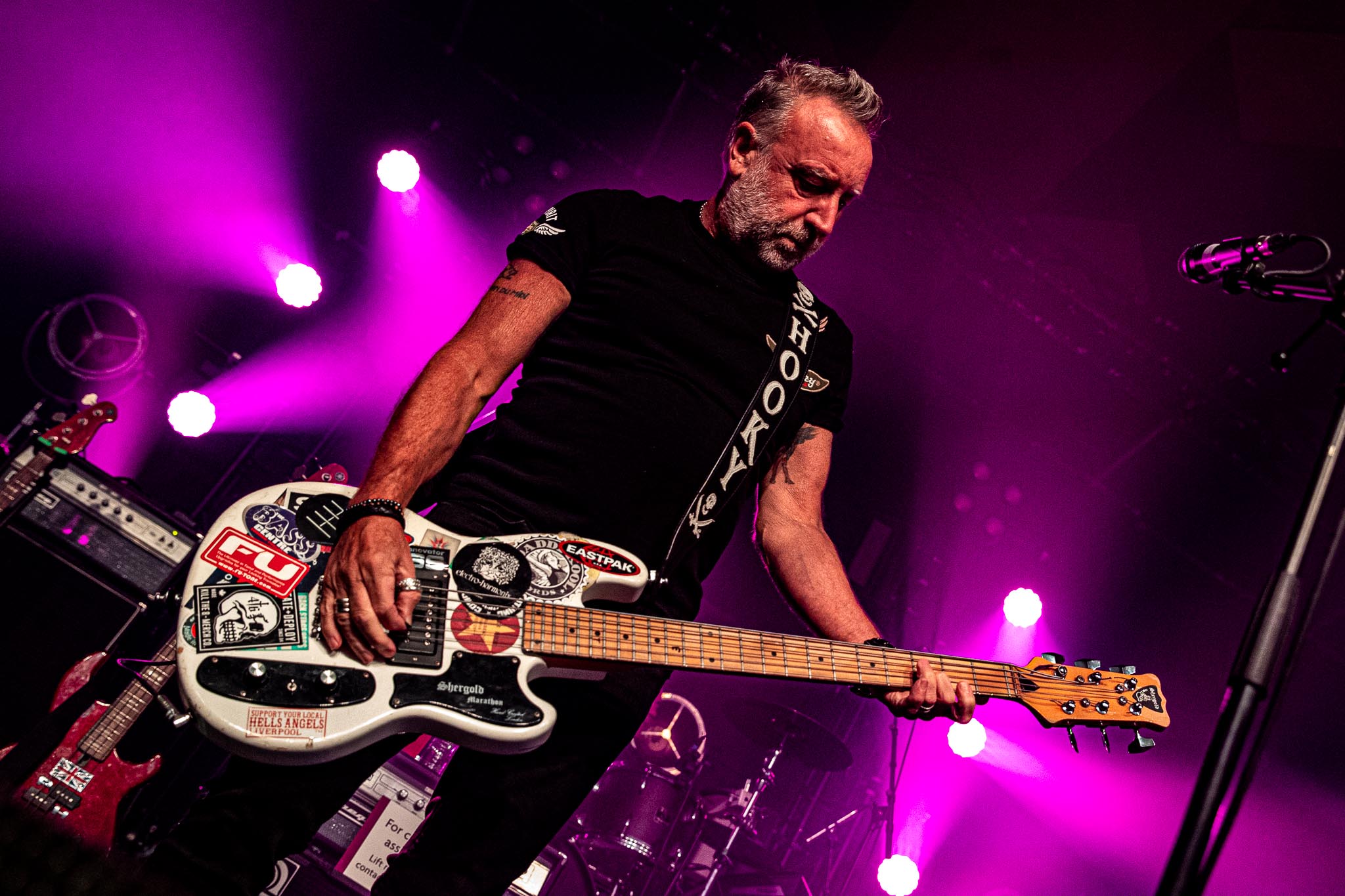
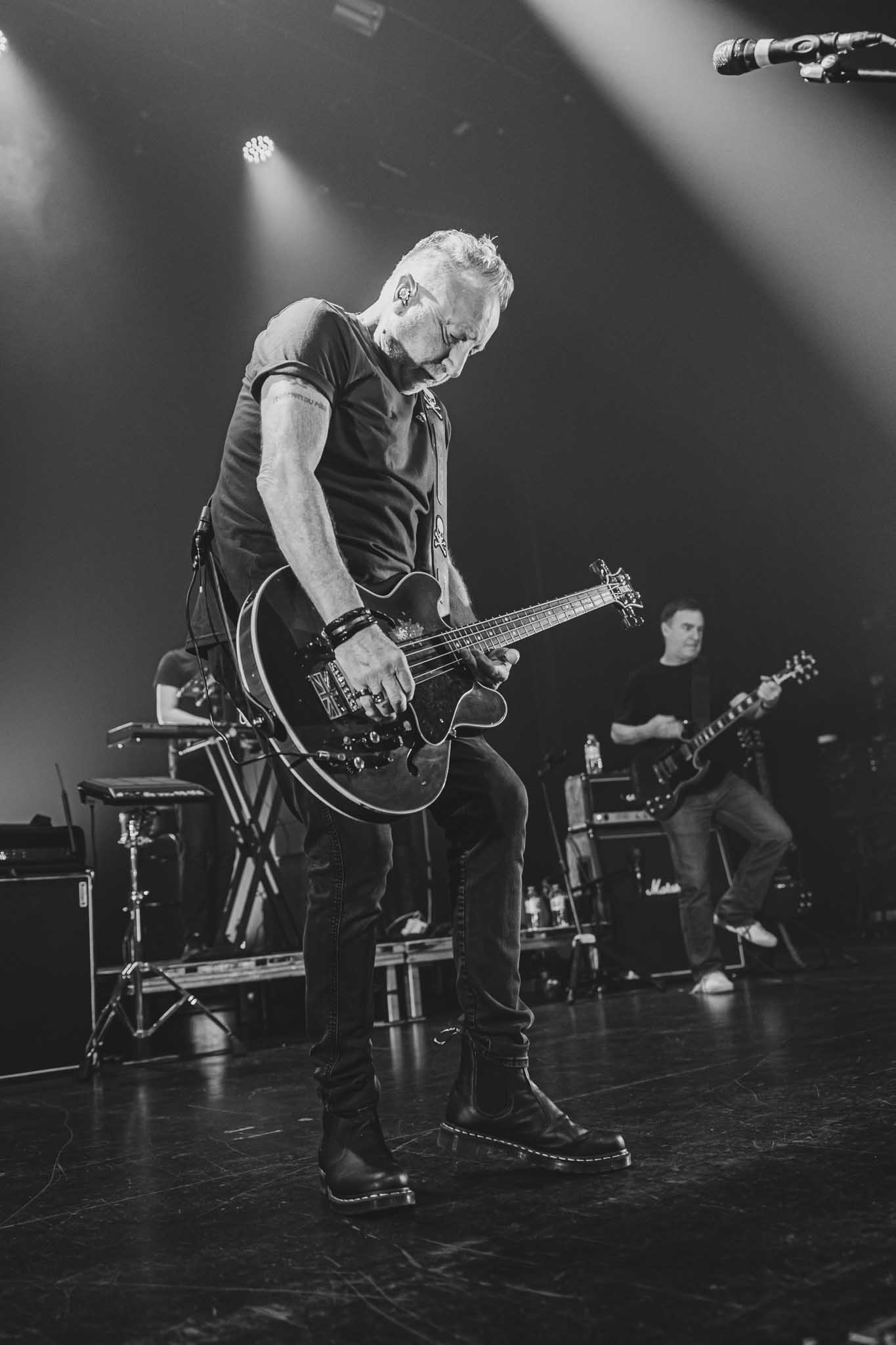
Peter Hook & The Light
Formed in 2010, the band Peter Hook & The Light features Hook on lead vocals and bass, accompanied by a full touring backing group (including his son, Jack Bates, on bass). The band tours extensively across North America, Europe, Australia, and South America, performing full-album sets of Joy Division and New Order releases (such as Unknown Pleasures, Closer, Movement, and Power, Corruption & Lies).
This touring model offers distinct financial advantages:
- High Ticket Margins: By touring as an established legacy act playing iconic albums, the group fills mid-sized theaters, concert halls, and festival slots worldwide without requiring expensive multi-truck production setups.
- Direct Performance Income: Hook retains full control of touring profits as the sole principal bandleader, unlike complex historical four-way band splits.
- Merchandise Revenue: Touring generates continuous sales of custom merchandise, apparel, and live recording bootlegs.
Literary Earnings & Memoirs
Peter Hook has written three popular memoirs detailing the UK music scene, post-punk history, and the nightlife culture of Manchester:
- The Haçienda: How Not to Run a Club (2009): A detailed financial and cultural history of FAC 51 The Haçienda, detailing the notorious cash-flow mismanagements of the venue.
- Unknown Pleasures: Inside Joy Division (2012): A firsthand account of the rise and tragic end of Joy Division, translated into multiple languages globally.
- Substance: Inside New Order (2016): An extensive 750-page chronicle of New Order’s career, gear setups, studio economics, and internal conflicts.
These publications generated significant advance payments from major publishing houses (such as Simon & Schuster and Orion Publishing), alongside ongoing domestic and international book royalties, audiobook sales, and optioning rights for documentaries.
The Haçienda Brand and DJing
Despite the original Haçienda nightclub closing in 1997 due to financial insolvency, the FAC 51 Haçienda brand remains a viable commercial asset. Hook, along with the estate of former manager Rob Gretton and bandmates, retains equity in the trademark.
- Haçienda Classical: A live event series featuring orchestral renditions of classic house music tracks alongside guest vocalists, performing at major venues such as the Royal Albert Hall and Castlefield Bowl.
- International DJ Sets: Hook frequently performs sets worldwide at festivals and club venues, commanding substantial appearance fees.
Music Industry Royalty Structures: How Hook Earns Income
To understand the mechanics behind Peter Hook's net worth, it is useful to evaluate the specific revenue streams available to legacy recording artists under UK and international copyright law.
- MUSIC REVENUE STREAM STRUCTURE
- PUBLISHING RIGHTS (Composition/Lyrics)
- Mechanicals
- Performance (PRS)
- Sync Licensing
- MASTER RIGHTS (Sound Recording)
- Streaming sales
- Physical copies
- Broadcast (PPL)
- PUBLISHING RIGHTS (Composition/Lyrics)
- Publishing Writer's Share: When a song written by Hook plays on radio, television, or digital streaming platforms, collecting societies (such as PRS in the UK, ASCAP or BMI in the US) collect performance royalties directly for the songwriters, bypassing record labels entirely.
- Master Recording Royalties: Income generated from the actual audio recordings owned or licensed by record labels (historically Factory Records, later London Records and Warner Music Group). Master royalties are distributed based on contractually agreed splits per physical unit sold or digital stream served.
- Sync Licensing Payouts: When a track like "Blue Monday" or "Age of Consent" is used in a feature film, video game (such as the Grand Theft Auto series), or global television advertisement, the licensee must pay upfront sync fees for both the composition (publishing) and the sound recording (master). These fees can range from $20,000 to over $250,000 per placement.
FAQs About Peter Hook's Net Worth and Financial Status
What is Peter Hook's current estimated net worth?
Peter Hook's net worth is estimated to be approximately $20 million (around £15 million to £16 million). This wealth comes from his shared rights in the Joy Division and New Order back-catalogs, out-of-court legal settlements, ongoing global live performances, DJ engagements, and published books.
How much did Peter Hook win in his lawsuit against New Order?
The exact monetary amount of the September 2017 settlement remains confidential due to a non-disclosure agreement (NDA). However, court filings showed Hook originally claimed up to £2.3 million ($3 million+) in lost income and royalty cuts after his bandmates reduced his share of band profits to 1.25% through Vitalturn Company Ltd. Industry analysts confirm the final settlement was a multi-million-pound payout.
Does Peter Hook still get royalties from New Order and Joy Division?
Yes. Peter Hook remains a legally recognized co-writer and master recording artist on all Joy Division and New Order tracks recorded during his tenure. He receives ongoing publishing royalties, performance rights distribution, streaming mechanicals, and sync licensing payouts worldwide.
Who owns the rights to "Blue Monday"?
The publishing (composition) rights to "Blue Monday" are owned collectively by the four original songwriting members of New Order: Bernard Sumner, Peter Hook, Stephen Morris, and Gillian Gilbert. The master recording rights are owned and administered by Warner Music Group, which acquired the London Records catalog containing New Order’s original recordings.
How does Peter Hook make money today?
Hook’s active cash flow comes primarily from international tours with his band, Peter Hook & The Light, high-profile DJ sets, brand licensing associated with FAC 51 The Haçienda events, book royalties from his memoirs, and ongoing catalog royalties from global music streaming and sync licensing.
Strategic Summary and Next Steps
Peter Hook’s financial standing demonstrates the long-term enterprise value of owning songwriting copyrights in classic music catalogs. By securing a comprehensive settlement over the New Order brand assets and establishing an independent live performance strategy, Hook has maintained financial independence while preserving his musical heritage.
For artists, legal professionals, and music industry managers, Hook’s financial history underscores key practical actions:
- Maintain Equity in Intellectual Property: Always establish clear, documented songwriting and corporate structures during the early phases of a creative partnership.
- Protect Brand Goodwill: Ensure that band trademarks and operating companies cannot be transferred without fair market valuation and full shareholder consent.
- Diversify Revenue Channels: Balance passive royalty streams with active cash-flow drivers such as live performance tours, publishing projects, and strategic brand management.
Image Gallery