Comprehensive Guide to Power Quality Testing: Standards, Procedures, and Mitigation
Power quality testing is a specialized diagnostic process used to identify, measure, and analyze disturbances within an electrical system that interfere with the reliable operation of equipment. By evaluating parameters like harmonics,...
Power quality testing is a specialized diagnostic process used to identify, measure, and analyze disturbances within an electrical system that interfere with the reliable operation of equipment. By evaluating parameters like harmonics, voltage stability, and transients, technicians can prevent hardware failure, reduce energy costs, and ensure compliance with international safety and performance standards.
Contents
Understanding the Fundamentals of Power Quality
Power quality refers to the degree to which the voltage, frequency, and waveform of a power supply system conform to established specifications. In a perfect world, the electrical waveform would be a smooth, continuous sine wave. However, in modern industrial and commercial environments, "dirty power" is common. As of 2026, the proliferation of non-linear loads—such as variable frequency drives (VFDs), LED lighting, and massive data center power supplies—has made power quality testing a mandatory part of facility maintenance rather than an optional luxury.
The goal of testing is to ensure that "clean" power is delivered to sensitive electronics. Poor power quality does not just cause immediate blackouts; it often manifests as "silent killers" like overheating motors, premature insulation failure in transformers, and mysterious software resets in PLC (Programmable Logic Controller) systems.
Why Power Quality Testing is Critical in 2026
The electrical landscape has shifted significantly. With the 2026 push toward integrated microgrids, local renewable energy sources, and high-speed electric vehicle (EV) charging infrastructure, the grid is more complex than ever. These systems introduce bi-directional power flows and sophisticated switching electronics that can degrade power quality if not monitored.
- Equipment Longevity: High harmonic distortion increases the operating temperature of electrical components. For every 10°C increase in operating temperature, the life of motor insulation is effectively halved.
- Operational Uptime: Unexpected resets or "glitches" in automated production lines can cost thousands of dollars per minute. Testing identifies the root cause of these transients.
- Energy Efficiency: Poor power quality often leads to high reactive power and harmonic currents, which do no useful work but increase utility bills through "power factor" penalties.
- Compliance and Insurance: Many industrial insurance policies now require documented power quality audits to validate claims related to equipment failure.
Key Parameters Measured During Power Quality Testing
To conduct a thorough assessment, engineers look at several distinct phenomena. Each has different causes and requires specific mitigation strategies.
Voltage Sags and Swells
Sags are brief decreases in voltage, often caused by starting large motors or faults on the utility grid. Swells are the opposite—brief increases—usually caused by shutting down large loads or capacitor switching. Even a sag lasting only a few cycles (milliseconds) can cause a high-end server or a sensitive medical imaging device to crash.
Total Harmonic Distortion (THD)
Harmonics are voltages or currents at frequencies that are integer multiples of the fundamental power frequency (60Hz in the US, 50Hz in Europe). Non-linear loads "pull" current in pulses rather than a smooth wave, creating these distortions. High THD leads to the overheating of neutral conductors and transformers.
Transients and Surges
Transients are sub-cycle disturbances involving very high voltages. They can be "impulsive" (like a lightning strike) or "oscillatory" (often caused by switching capacitive or inductive loads). These events can physically degrade the silicon layers in microchips over time.
Frequency Variations
While the grid frequency is usually very stable, localized systems like standby generators or isolated microgrids can experience frequency shifts. If the frequency drifts too far from the nominal value, electric motors will run at incorrect speeds, and timing circuits in electronics may fail.
Industry Standards and Compliance Frameworks
Power quality testing is governed by several international standards that define what constitutes "acceptable" power. Reference these standards to ensure your testing methodology is legally and technically sound.
- IEEE 519: This is the standard for harmonic control in electric power systems. It sets limits on the amount of distortion a consumer can inject back into the utility grid.
- IEEE 1159: This "Recommended Practice for Monitoring Electric Power Quality" provides the definitions of power quality phenomena and offers guidance on how to use monitoring equipment.
- IEC 61000-4-30: This is the "Gold Standard" for measurement methods. It ensures that two different Class A analyzers will produce the same results when measuring the same signal.
- EN 50160: Widely used in Europe, this standard defines the voltage characteristics of electricity supplied by public distribution networks.
Step-by-Step Power Quality Testing Procedure
Executing a power quality audit requires a systematic approach to move from raw data to actionable insights.
1. Initial Assessment and Planning
Before connecting any equipment, define the scope. Are you troubleshooting a specific failed machine, or performing a facility-wide audit? Review the "one-line" electrical diagrams of the building to identify critical points for measurement, typically the main service entrance and the distribution panels serving sensitive loads.
2. Equipment Selection and Safety
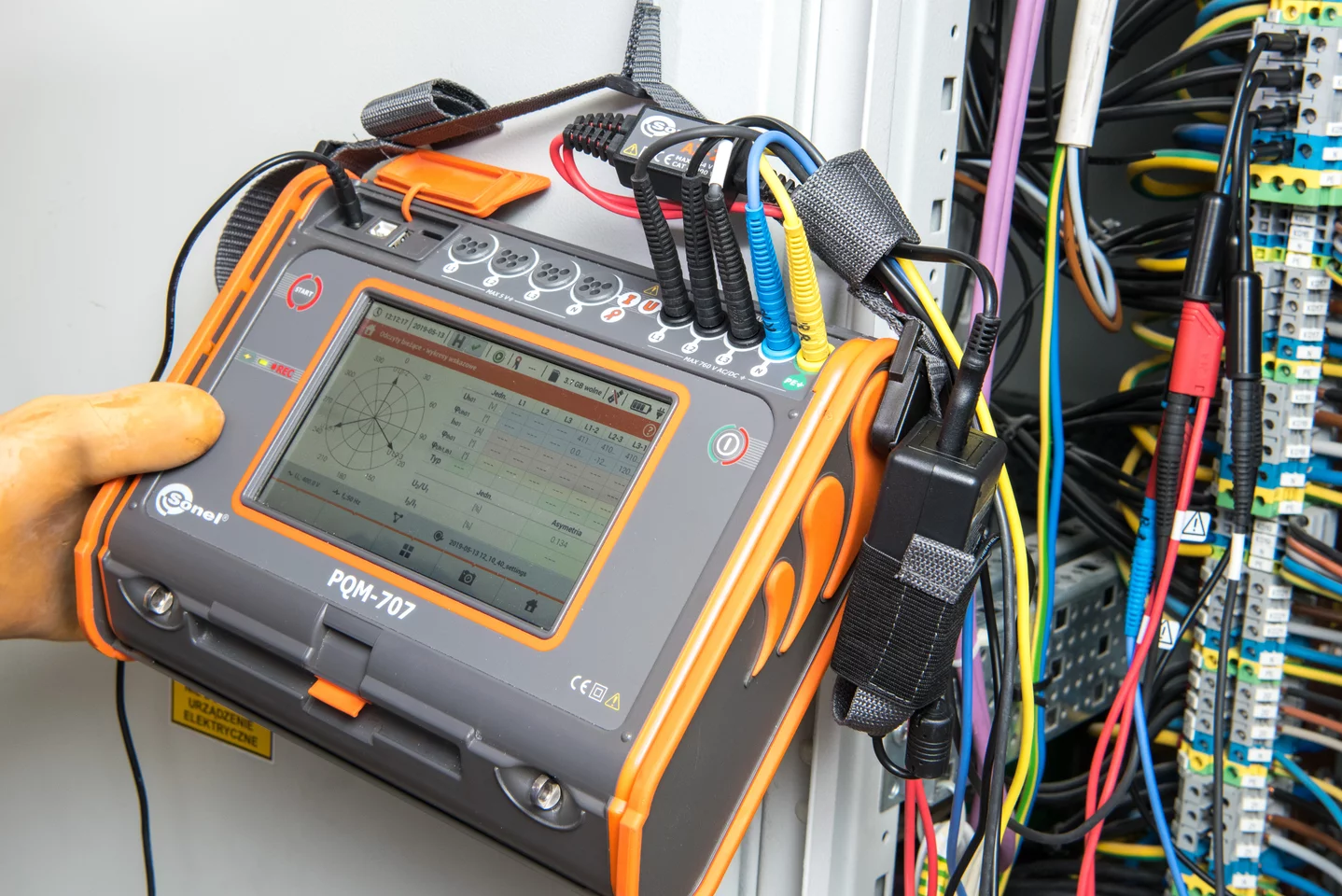
Safety is paramount. Ensure all technicians are trained in NFPA 70E standards for electrical safety in the workplace. Use Category III or Category IV rated Power Quality Analyzers (PQA) to prevent instrument explosion during transients.
- Class A Analyzers: Required for legal disputes or verifying compliance with standards.
- Class S Analyzers: Suitable for general troubleshooting and statistical surveys.
3. Installation and Data Collection
Connect current transformers (CTs) and voltage leads to the identified test points. In most cases, a "snapshot" isn't enough. A typical power quality study lasts seven days to capture a full business cycle, including peak production hours and low-load periods (nights/weekends).
4. Data Analysis
Modern PQAs generate massive amounts of data. Use specialized software to look for "events"—instances where the power fell outside of the pre-defined IEEE or IEC envelopes. Correlate these events with facility logs. For example, if a voltage sag occurred at exactly 8:00 AM every day, it might correlate with the startup of a large HVAC chiller.
5. Reporting and Mitigation
The final report should not just list errors; it must provide solutions. This might include installing active harmonic filters, upgrading to a double-conversion Uninterruptible Power Supply (UPS), or simply rebalancing the loads across the three phases.
Common Power Quality Issues and Solutions
| Disturbance Type | Primary Cause | Potential Impact | Recommended Mitigation |
|---|---|---|---|
| Harmonics | VFDs, LED drivers, PC power supplies | Overheating, neutral failure | Active or Passive Harmonic Filters |
| Voltage Sags | Large motor starts, grid faults | Equipment resets, PLC errors | UPS or Voltage Regulators |
| Transients | Lightning, capacitor switching | Component burnout, data loss | Surge Protective Devices (SPD) |
| Unbalance | Uneven single-phase load distribution | Motor vibration, heating | Load rebalancing across phases |
| Flicker | Rapidly changing loads (arc welders) | Visible light pulsing, eye strain | Static Var Compensators (SVC) |
Essential Equipment for Power Quality Analysis
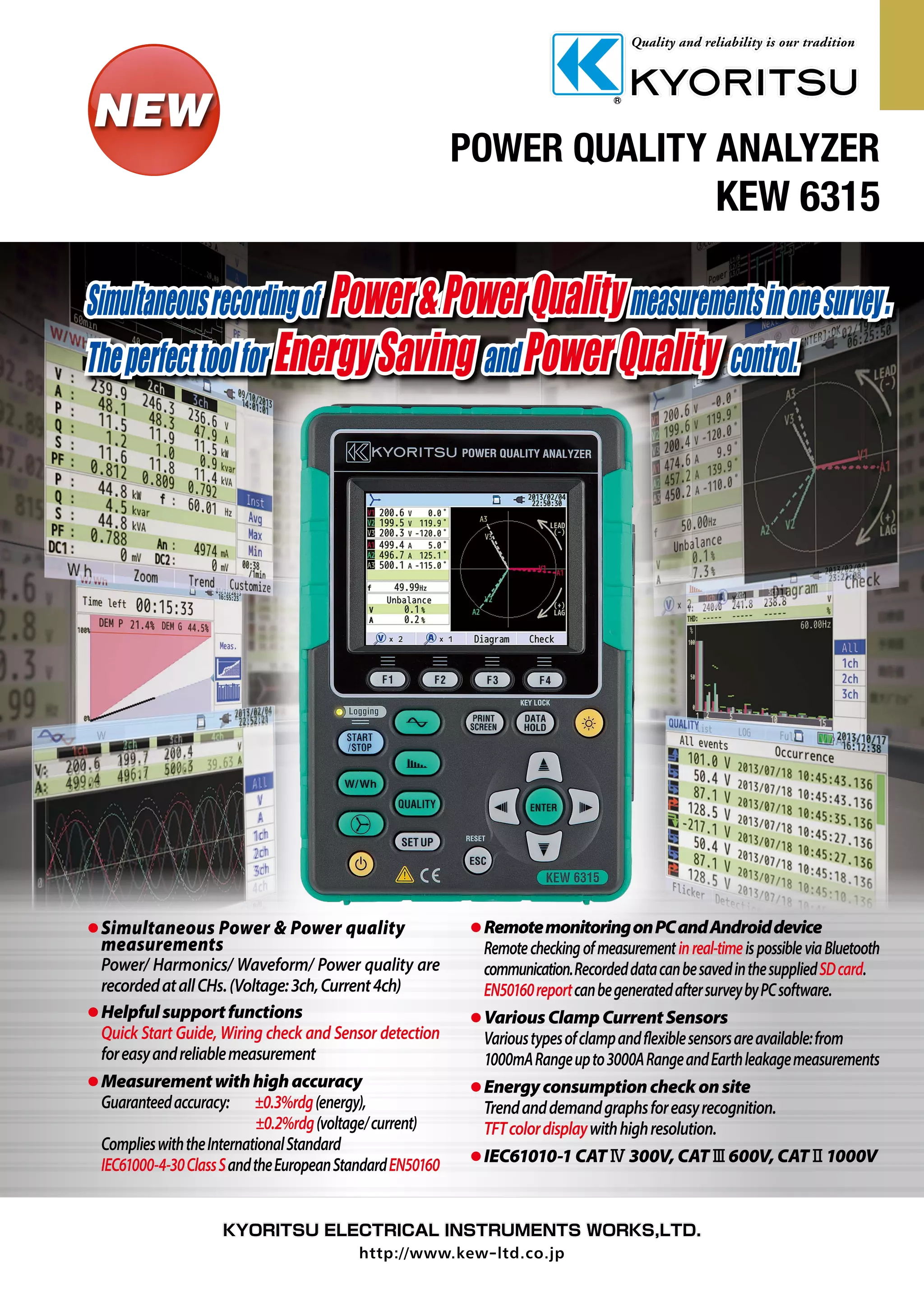
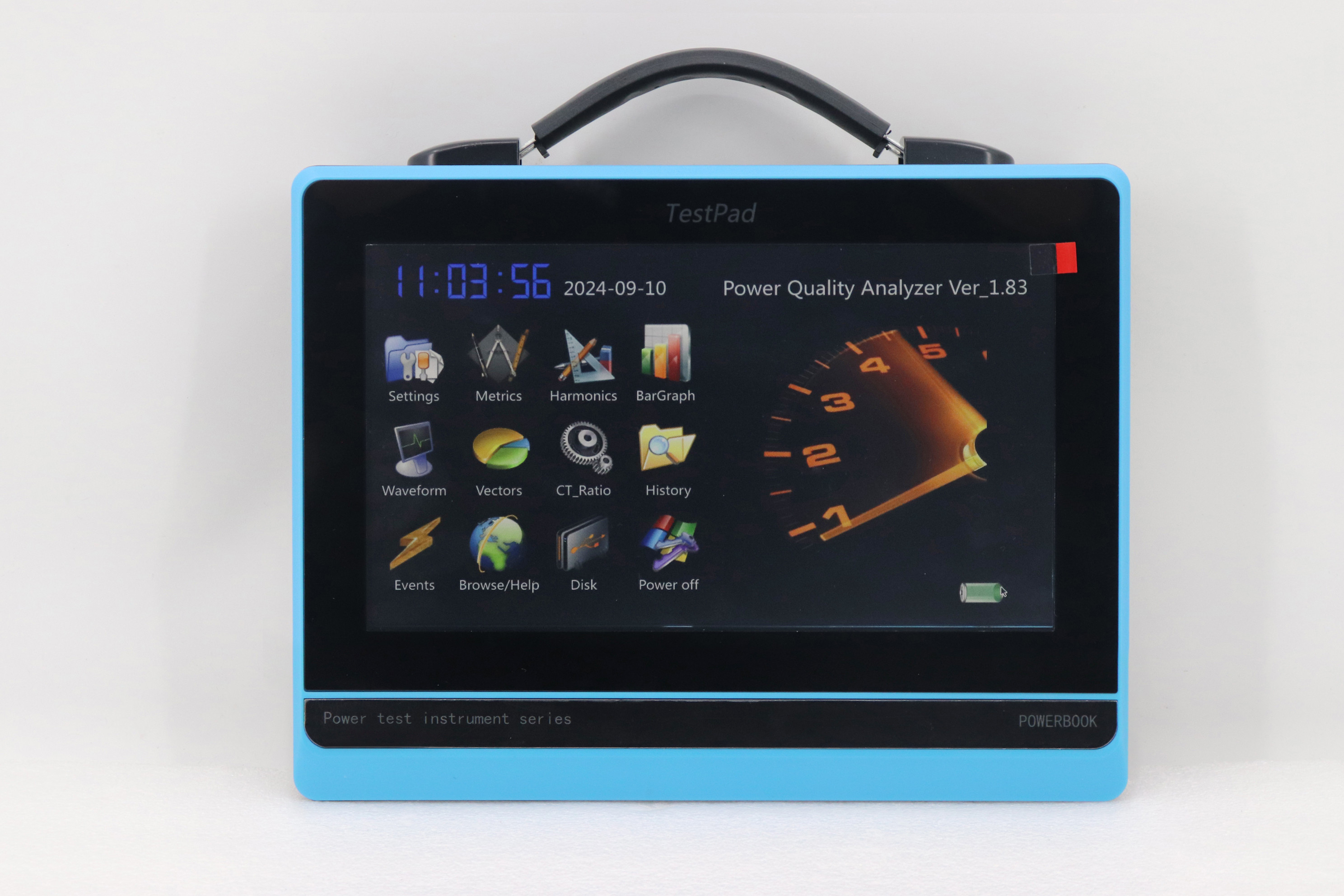
Selecting the right tool depends on the complexity of the electrical system. In 2026, the market is divided into three primary categories:
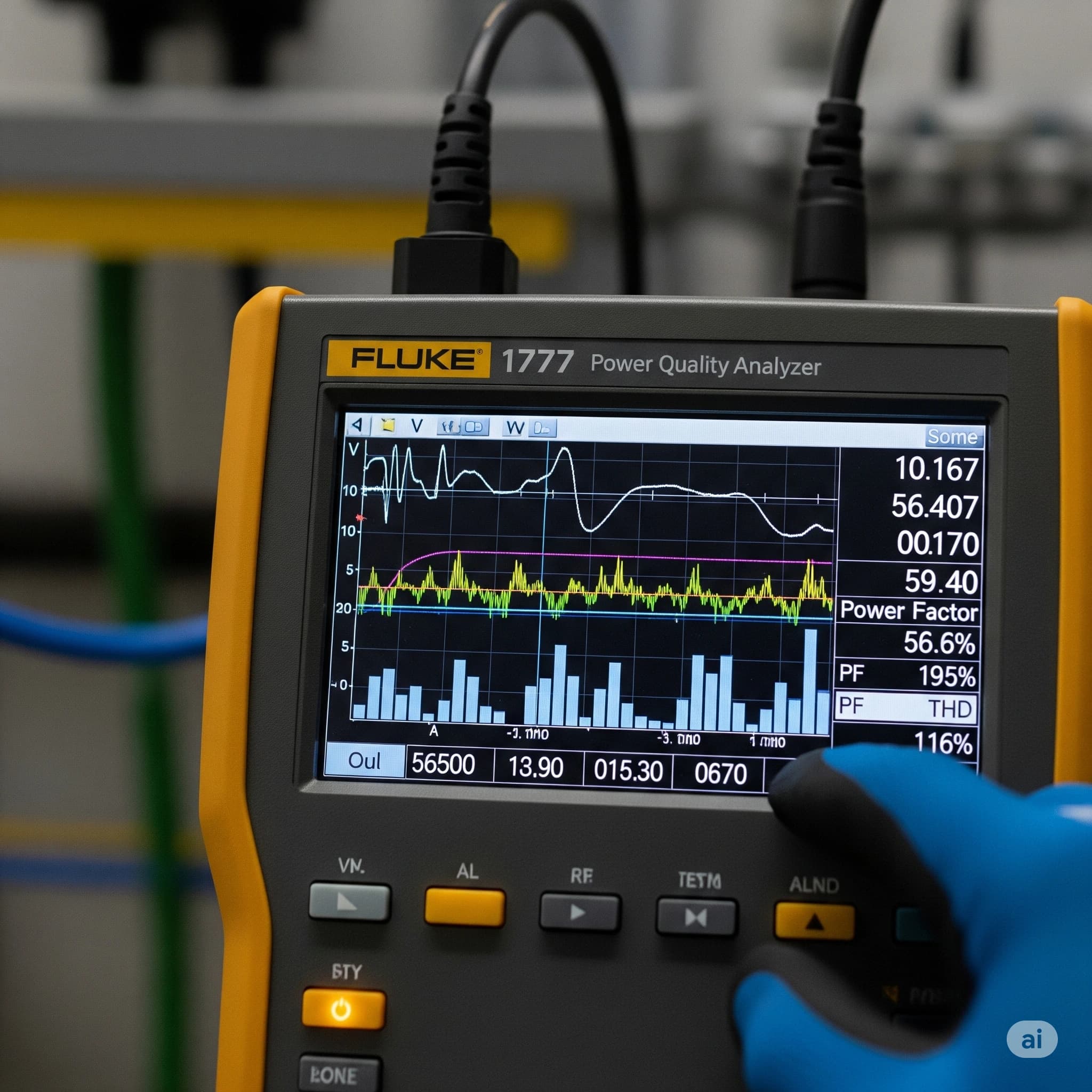
- Handheld Analyzers: These are ideal for quick "spot checks" and frontline troubleshooting. They offer high portability but limited long-term logging memory.
- Portable Power Quality Loggers: Designed to be left inside a panel for a week or more. They are rugged and often feature remote cellular or Wi-Fi connectivity so engineers can monitor data in real-time from a central office.
- Fixed Power Meters: Installed permanently at the service entrance. These devices provide continuous monitoring and can trigger alarms the moment a power quality event occurs, allowing for immediate corrective action.
Interpreting Test Results: The "Root Cause" Challenge
The most difficult part of power quality testing is distinguishing between "source" and "load" problems.
- Source Problems: These originate from the utility provider (e.g., a transformer failure down the street).
- Load Problems: These originate from within your own facility (e.g., a faulty motor drive on the factory floor).
A key trick used by senior engineers is to look at the relationship between voltage and current during an event. If the voltage drops while the current increases significantly, the fault is likely downstream (within the facility). If both voltage and current drop simultaneously, the problem is likely upstream (from the utility).
Frequently Asked Questions
How often should I perform power quality testing?
For most industrial facilities, a comprehensive audit should be performed every two to three years, or whenever significant new equipment is added to the system. Critical facilities, such as hospitals and data centers, often utilize permanent 24/7 monitoring to ensure constant compliance.
Can I perform power quality testing myself?
While basic handheld tools exist, interpreting the complex data requires an understanding of electrical engineering principles. For compliance reporting or complex troubleshooting, it is recommended to hire a certified electrical engineer or a specialized NETA-accredited testing agency.
What is the difference between a power survey and a power quality test?
A power survey typically focuses on energy consumption and demand (kW and kWh) for the purpose of reducing utility bills. A power quality test is more forensic, looking at the "purity" of the waveform (harmonics, transients, and sags) to ensure equipment reliability.
Will power quality testing interrupt my business operations?
Most modern testing is "non-intrusive." Current transformers are clamped around existing wires, and voltage leads are clipped onto terminals while the system is live. However, strict safety protocols must be followed, and in some high-voltage environments, a brief scheduled shutdown may be required to safely install the monitoring equipment.
Are harmonics always bad?
Not necessarily. All electrical systems have some level of harmonics. The goal of testing is to ensure that the Total Harmonic Distortion (THD) stays below the limits defined by IEEE 519 (usually 5% for general systems). Problems only arise when harmonics reach levels that interfere with equipment or cause excessive heat.
Practical Recommendations
If your facility is experiencing unexplained equipment failures or high energy costs, begin by installing a temporary power quality logger at the main distribution panel for one week. Use the data to establish a baseline. If THD levels exceed 5% or if you see frequent voltage sags below 90% of nominal voltage, consult with a power quality specialist to design a mitigation strategy involving surge protection, filtering, or power conditioning. Proactive testing is significantly cheaper than the emergency repairs and lost production time resulting from a major power quality failure.
Image Gallery