How a Life Insurance Interest Rate Calculator Works
A life insurance interest rate calculator works by applying a specific crediting rate to the cash value component of a permanent policy while simultaneously deducting administrative fees and the cost of insurance. It uses compounding f...
A life insurance interest rate calculator works by applying a specific crediting rate to the cash value component of a permanent policy while simultaneously deducting administrative fees and the cost of insurance. It uses compounding formulas to project how much wealth accumulates over time based on premium inputs, policy expenses, and market-linked or fixed interest benchmarks.
Contents
Life insurance is often perceived as a simple death benefit, but for those holding permanent policies—such as Whole Life, Universal Life (UL), or Indexed Universal Life (IUL)—the policy functions as a sophisticated financial vehicle. Central to managing these policies is the life insurance interest rate calculator. These tools are not merely "savings calculators"; they are complex engines designed to account for the unique "drag" of insurance costs against the "push" of interest-bearing growth.
Understanding the internal mechanics of these calculators is essential for any policyholder in 2026 looking to maximize their internal rate of return (IRR) or ensure their policy remains sufficiently funded to avoid a lapse.
The Mathematical Foundation of Cash Value Growth
To understand how the calculator works, one must first look at the basic formula for cash value accumulation. Unlike a standard bank account where your entire balance earns interest, a life insurance policy splits your premium into several directions.
The fundamental equation used by most calculators is: Ending Cash Value = (Starting Cash Value + Net Premium - Policy Expenses) x (1 + Interest Rate)
The "Net Premium" is what remains after the insurance company takes its initial cut for state premium taxes and load fees. The "Policy Expenses" include the monthly Cost of Insurance (COI), which is the actual price of the death benefit protection, and administrative fees. Only after these deductions is the interest rate applied.
Because the COI usually increases as the insured individual gets older, the calculator must adjust the "drag" on the account every year. This is why a life insurance interest rate calculator often shows slower growth in the early years and accelerated growth in the middle years—provided the interest rate stays ahead of the rising insurance costs.
Different Calculation Methods for Different Policies
Not all life insurance interest rate calculators use the same logic. The "interest" being calculated depends entirely on the type of policy being modeled.
Whole Life: Fixed Interest and Dividends
In a Whole Life policy, the calculator typically uses a guaranteed minimum interest rate. However, for "participating" policies, the calculator also factors in dividends. While dividends are not technically interest—they are considered a return of "unearned" premium by the IRS—they function similarly in a calculator. The tool projects these dividends based on the company’s current scale, adding them to the cash value to show a total "Dividend Interest Rate."
Universal Life: Current Crediting Rates
Universal Life (UL) calculators are more sensitive to the current economic environment. In 2026, these calculators use the insurer’s declared "current crediting rate," which is often tied to the company’s general account performance (largely corporate bonds and mortgages). The calculator allows users to toggle between the guaranteed rate (the worst-case scenario) and the current rate (the projected scenario).
Indexed Universal Life (IUL): Caps, Floors, and Participation Rates
IUL calculators are the most complex. They do not credit a flat interest rate. Instead, they calculate interest based on the performance of a market index, such as the S&P 500. The calculator must account for:
- The Cap: The maximum interest the policy can earn in a year (e.g., 9%).
- The Floor: The minimum interest, usually 0%, protecting against market losses.
- Participation Rate: The percentage of the index’s gain that is credited to the policy (e.g., 80% of the S&P 500's return).
A sophisticated IUL calculator will run "Monte Carlo simulations," which model thousands of possible market sequences to provide a probability-based outlook rather than a straight-line interest projection.
Key Inputs and Their Impact on the Output
To generate an accurate projection, a life insurance interest rate calculator requires several specific data points. Accuracy depends entirely on the validity of these inputs.
- Premium Timing: Calculating interest monthly versus annually changes the compounding frequency. A calculator that assumes an annual lump sum at the start of the year will show higher growth than one assuming monthly payments, due to "time in the market."
- Cost of Insurance (COI) Scales: As you age, the risk to the insurer increases. The calculator must subtract a larger COI each year. If the interest rate is too low and the COI is too high, the calculator will eventually show the cash value dropping to zero—a phenomenon known as a policy lapse.
- Surrender Charges: Many calculators provide two sets of numbers: the Accumulation Value and the Surrender Value. The interest rate is applied to the Accumulation Value, but the Surrender Value subtracts a penalty if the policy is cancelled early. Most calculators show these charges disappearing after 10 to 15 years.
- Loan Interest Offset: If a policyholder takes a loan against their cash value, the calculator must manage two different rates: the interest charged on the loan and the interest still being credited to the collateralized cash value.
Comparing Calculation Mechanics by Policy Type
The following table illustrates how different policy types treat the "interest" component within a calculator's logic.
| Policy Type | Primary Interest Source | Risk Level | Calculator Complexity | Key Variable |
|---|---|---|---|---|
| Whole Life | Guaranteed Rate + Dividends | Low | Medium | Dividend Scale |
| Universal Life | Declared Crediting Rate | Moderate | Low | General Account Performance |
| Indexed UL | Market Index Performance | Moderate/High | High | Caps and Participation Rates |
| Variable Life | Direct Sub-account Investing | High | Very High | Individual Fund Performance |
The Role of Net vs. Gross Interest Rates
One of the most common mistakes users make when using a life insurance interest rate calculator is confusing the Gross Crediting Rate with the Net Internal Rate of Return (IRR).
The Gross Rate is the percentage the insurance company announces (e.g., "We are paying 5.5% this year"). However, because of the mortality charges and fees mentioned earlier, your actual account growth is always lower than the Gross Rate. In the early years of a policy, the Net IRR might even be negative, even if the interest rate is high, because the initial commissions and setup costs outweigh the interest earned.
By the time a policy has been active for 20 years, a high-performing policy might show a Net IRR that closely approaches the Gross Rate, as the cash value grows large enough that the interest earned significantly dwarfs the fixed administrative costs.
Guaranteed vs. Non-Guaranteed Projections
In 2026, regulatory standards (such as those evolved from the NAIC Life Insurance Illustrations Model Regulation) require calculators to show a side-by-side comparison.
- The Guaranteed Column: This uses the absolute minimum interest rate (often 0% to 2%) and the maximum allowable contract charges. It shows the "safety net" of the policy.
- The Non-Guaranteed Column: This uses the current interest rates and current expense scales. While more attractive, it is purely hypothetical.
When using a calculator, if the "Non-Guaranteed" interest rate is set at an aggressive 7% or 8%, the tool might show the policyholder becoming a multi-millionaire. However, a senior technical SEO editor and financial analyst would warn that even a 1% drop in the sustained interest rate over 30 years can result in a six-figure difference in the final cash value.
Common Pitfalls in Life Insurance Interest Calculations
Users often encounter discrepancies when using third-party calculators versus official company illustrations. These discrepancies usually stem from three areas:
- Rider Costs: Many policies include "riders" (e.g., Long-Term Care, Waiver of Premium). These riders have monthly costs that many basic online calculators ignore. If these costs aren't subtracted before the interest is applied, the projection will be over-optimistic.
- Tax Treatment: Interest within a life insurance policy grows tax-deferred. A calculator that compares life insurance growth to a taxable brokerage account must "gross up" the brokerage return to create a fair comparison.
- Target Premiums vs. Excess Premiums: In Universal Life policies, interest is often credited differently to "target" premiums versus "excess" premiums (dump-ins). A basic calculator might treat all cash the same, leading to inaccurate results.
Frequently Asked Questions
Does a life insurance interest rate calculator account for inflation?
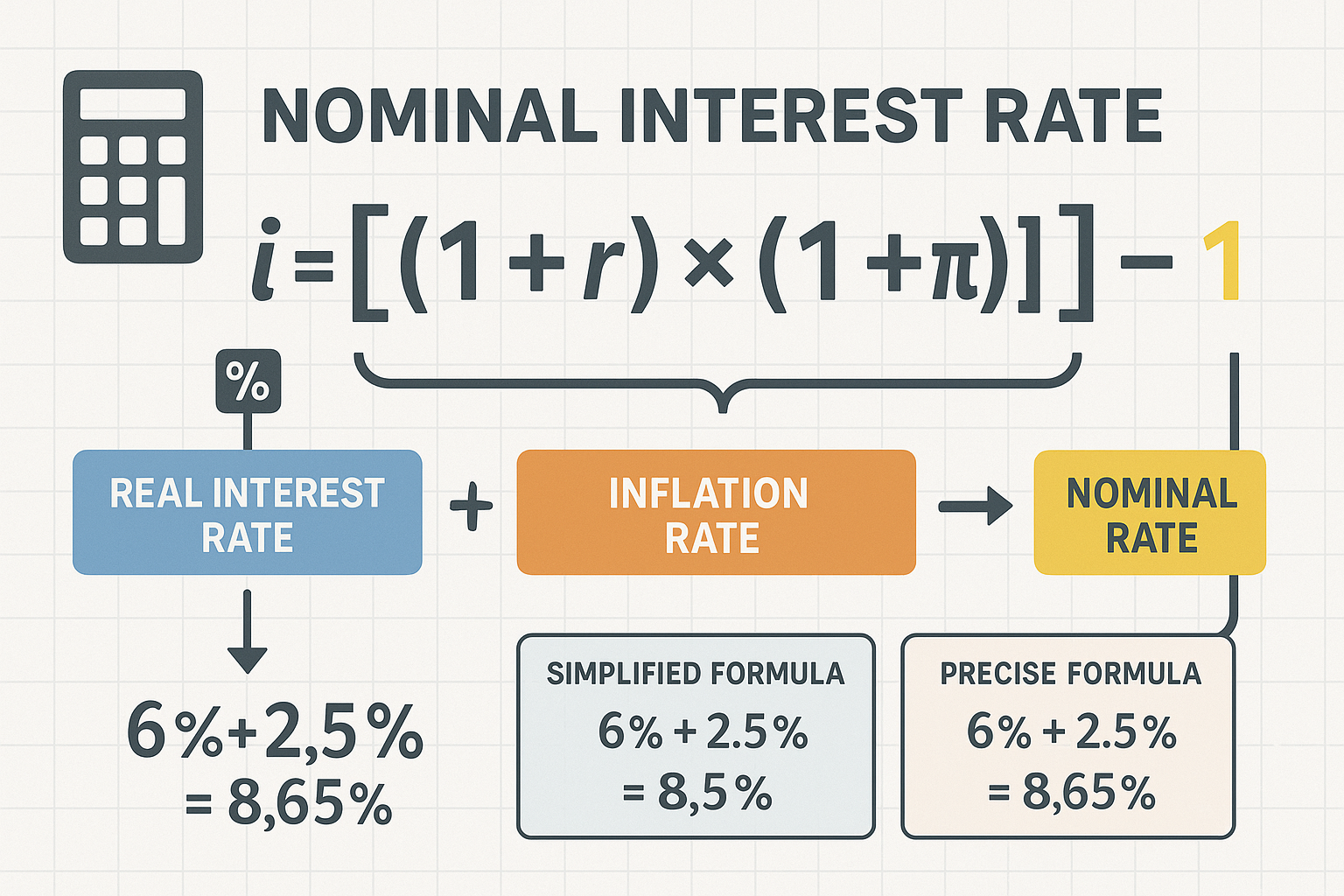
Most standard calculators do not automatically adjust for inflation. They show "nominal" dollars. To understand the "real" value of the projected cash value in 2026 and beyond, you would need to manually apply a discount rate (usually 2-3%) to the final results to see what that money would buy in today’s purchasing power.
Why does my calculator show the cash value decreasing even with a positive interest rate?
This happens when the Cost of Insurance (COI) exceeds the interest being earned. This is common in older age brackets or in "underfunded" policies where the premium is too low to build a large enough cushion. The interest rate is applied to the balance, but if the balance is small and the insurance fee is large, the fee "eats" the interest and a portion of the principal.
What is a "Participation Rate" in an interest calculator?
Found primarily in Indexed Universal Life (IUL) calculators, the participation rate determines how much of the index's gain you actually receive. If the S&P 500 grows by 10% and your participation rate is 80%, the calculator will only apply an 8% interest credit to your cash value (before fees).
Can I use a regular compound interest calculator for life insurance?
It is not recommended. A standard compound interest calculator assumes your entire principal stays in the account. A life insurance policy is a "leaky bucket" where money is constantly being pulled out to pay for the death benefit. Using a standard calculator will significantly overestimate your returns.
What is the difference between "Annual Point-to-Point" and other interest methods?
This refers to how the calculator determines the interest timing. Annual Point-to-Point looks at the index value on day 1 and day 365. Other methods might use a "Monthly Averaging" system. The calculator logic must match the specific "crediting method" outlined in your policy contract to be accurate.
Practical Recommendation for Policyholders
When using a life insurance interest rate calculator, always run a "Sensitivity Analysis." Do not just look at the projection based on the current interest rate. Ask the calculator (or your agent) to show you what happens if the interest rate is 1% or 2% lower than currently projected.
For policies in 2026, ensuring that your policy can withstand a period of lower-than-expected interest rates is the best way to guarantee that your coverage remains in force when your family needs it most. If the calculator shows your policy "failing" or requiring massive premium jumps at age 75 or 80 under a lower interest scenario, consider increasing your premiums now to bolster the cash value.
Image Gallery