Average Cost of Commercial Auto Insurance for Uber
The average cost of insurance for driving with Uber depends on whether you purchase a rideshare endorsement for your personal auto policy or a full commercial auto policy. A rideshare endorsement typically costs $15 to $50 per month ($...
The average cost of insurance for driving with Uber depends on whether you purchase a rideshare endorsement for your personal auto policy or a full commercial auto policy. A rideshare endorsement typically costs $15 to $50 per month ($180 to $600 per year) on top of standard personal auto premiums. Full commercial auto insurance, required for professional drivers operating services like Uber Black, averages $250 to $800+ per month ($3,000 to $10,000+ per year).
Contents
Navigating Uber Coverage: Rideshare Endorsements vs. Commercial Policies
Understanding how auto insurance works for rideshare drivers requires distinguishing between standard rideshare drivers (UberX, UberXL, Uber Green) and professional, high-tier drivers (Uber Black, Uber Black SUV). Standard personal auto insurance policies contain a strict "commercial use exclusion." If you log into the Uber driver app to accept rides without notifying your personal insurer, your carrier has the legal right to deny claims and cancel your policy outright.
To resolve this gap, insurance providers offer two primary solutions:
- Rideshare Endorsements (Add-ons): Designed for standard UberX and UberXL drivers, an endorsement attaches to a personal policy. It closes the coverage gap during the moments you are logged into the app but waiting for a ride request, ensuring your personal comprehensive and collision coverages carry over without requiring a standalone business policy.
- Dedicated Commercial Auto Policies (Livery Insurance): Required for luxury services like Uber Black or independent charter drivers, commercial auto policies provide primary coverage at high policy limits ($1,000,000+ liability) across all driving phases, regardless of personal or commercial use.
Because rideshare operations blur the line between personal transport and paid commercial transit, insurance carriers divide an Uber driver’s time on the road into distinct operational phases.
The Four Rideshare Insurance Periods Explained
Insurance coverage responsibility changes depending on your status within the Uber application. Understanding these four distinct periods clarifies why specialized coverage is necessary.
- Period 0: App Off
- Covered exclusively by your Personal Auto Insurance Policy
- Period 1: App On, Waiting for Ride Request
- Covered by Uber's Limited Contingent Liability; Personal Insurance Excluded
- Rideshare Endorsement is essential to cover vehicle damage & liability gaps
- Period 2: Ride Request Accepted, En Route to Passenger
- Covered by Uber's $1M Commercial Liability & Contingent Physical Damage
- Period 3: Passenger in Vehicle, Traveling to Destination
- Covered by Uber's $1M Commercial Liability & Contingent Physical Damage
Period 0: App Turned Off
When the Uber driver app is closed and you are using your vehicle for personal errands, your standard personal auto insurance policy applies completely. Uber provides zero coverage during Period 0.
Period 1: App On, Waiting for a Match
Once you log into the app and set your status to available, you enter Period 1. At this stage, personal auto policies immediately exclude coverage due to commercial activity. Uber provides third-party liability insurance if your personal policy refuses coverage, capped at minimum state requirements (typically $50,000 per person for bodily injury, $100,000 per accident total, and $25,000 for property damage). Crucially, Uber provides no collision or comprehensive damage coverage for your vehicle during Period 1. A rideshare endorsement is vital here to protect your physical vehicle.
Period 2: Request Accepted, En Route to Pickup
When you accept a ride request and begin navigating toward the passenger, Uber’s primary commercial policy activates. This provides up to $1,000,000 in third-party liability coverage. Uber also extends contingent comprehensive and collision coverage to your vehicle—provided you already carry comprehensive and collision coverage on your personal policy. However, Uber enforces a $2,500 deductible for physical damage claims on standard rideshare trips.
Period 3: Passenger in Car
From the moment a passenger steps into your vehicle until they exit at their destination, Period 3 is active. Uber maintains $1,000,000 in commercial liability coverage, alongside uninsured/underinsured motorist coverage and contingent collision and comprehensive protection (subject to the same $2,500 deductible).
Cost Comparison: Personal, Rideshare Endorsement, and Full Commercial Insurance
The financial commitment for rideshare coverage varies based on the level of protection required by your vehicle class, location, and service tier.
| Policy Type | Average Monthly Cost | Average Annual Cost | Who Needs It? | Primary Coverage Features |
|---|---|---|---|---|
| Personal Auto Policy Only | $120 – $250 | $1,440 – $3,000 | Personal drivers (App OFF) | Standard state-mandated liability, collision, comp. Void during commercial use. |
| Personal Policy + Rideshare Endorsement | $140 – $300 | $1,680 – $3,600 | UberX, UberXL, Uber Comfort drivers | Extends personal collision/comp to Period 1; covers policy gaps; maintains personal policy validity. |
| Dedicated Commercial Auto Policy | $250 – $800+ | $3,000 – $9,600+ | Uber Black, Uber Black SUV, Commercial Fleet Operators | Primary $1M+ liability coverage 24/7, commercial livery authorization, lower deductible options. |
| NYC TLC Commercial Livery Policy | $400 – $900+ | $4,800 – $10,800+ | All Uber drivers operating in New York City | Meets New York City Taxi and Limousine Commission mandatory commercial limits. |
Note: Individual insurance rates fluctuate significantly based on individual driver qualifications, geographical risk profiles, vehicle values, and selected policy limits.
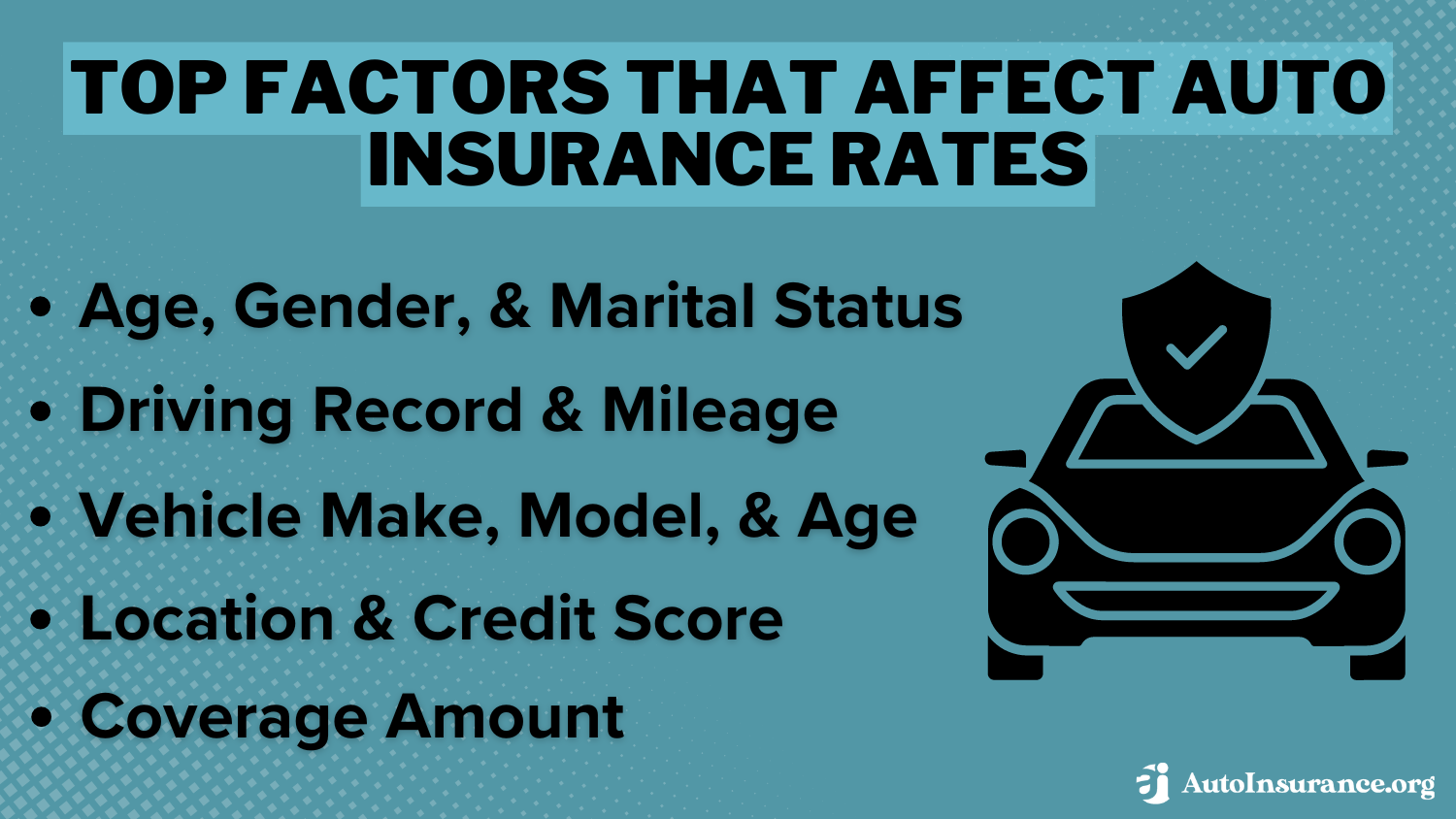
Primary Factors Influencing Commercial Insurance Rates for Uber
Insurance underwriters calculate commercial rates by measuring financial exposure. Factors that heavily influence your annual premium include:
1. Geographic Location and Jurisdiction
Driving in densely populated metropolitan areas with high traffic congestion, elevated accident rates, and frequent vehicle theft leads to significantly higher insurance premiums. For instance, an Uber driver operating in suburban Ohio will pay dramatically less for coverage than a driver operating within Miami, Chicago, or Los Angeles.
Special regulatory environments also alter costs. New York City drivers operating under the Taxi and Limousine Commission (TLC) must carry full commercial livery insurance regardless of whether they drive UberX or Uber Black, raising average monthly insurance expenses to between $400 and $900.
2. Driving Record and Comprehensive Loss History
Insurance carriers run Motor Vehicle Reports (MVR) and review Comprehensive Loss Underwriting Exchange (CLUE) databases. Drivers with clean histories receive the lowest available rates. Conversely, the following infractions trigger substantial premium increases:
- Moving violations (speeding, improper lane changes) within the past 36 to 60 months.
- At-fault traffic accidents.
- Major violations such as DUI/DWI, reckless driving, or driving with a suspended license.
3. Vehicle Classification and Repair Expenses
The cost to repair or replace your vehicle directly impacts comprehensive and collision premium calculations.
- Standard Sedans (e.g., Toyota Camry, Honda Civic): Lower market value and readily available parts keep insurance costs lower.
- Electric Vehicles (EVs): High battery replacement costs and specialized repair requirements increase physical damage premiums.
- Luxury SUV / Commercial Livery Vehicles (e.g., Cadillac Escalade, Lincoln Navigator): Required for Uber Black, these vehicles incur premium rates due to higher purchase values and commercial passenger transport risks.
4. Annual Mileage and Driving Hours
Commercial policy pricing reflects total time exposure on the road. A full-time Uber driver operating 40 to 60 hours per week covers vastly more miles than a part-time weekend driver, translating to higher risk statistical modeling and elevated policy costs.
5. Deductibles and Coverage Limits
Selecting higher liability limits (e.g., raising commercial liability from $1,000,000 to $2,000,000) increases overall policy costs. Conversely, choosing a higher policy deductible (e.g., choosing a $1,000 or $2,500 out-of-pocket requirement instead of a $500 deductible) lowers your monthly premium payments.
Comparing Insurance Requirements across Uber Tiers
Not all Uber services carry identical insurance obligations. The requirements shift based on vehicle classification and service category.
UBERX / UBERXL / UBER COMFORT
- Requires: Personal Auto Policy + Rideshare Endorsement
- Period 1: Protected by Endorsement + Uber Contingent Liability
- Period 2 & 3: Protected by Uber Corporate Policy ($2,500 Collision Deductible)
UBER BLACK / UBER BLACK SUV
- Requires: Standalone Commercial Livery Insurance Policy ($1M+ Liability)
- All Periods: Protected by Driver's Independent Commercial Policy
- Additional: Commercial Registration, Municipal Livery Permits / Licenses
UberX, UberXL, and Uber Comfort Requirements
For standard rideshare categories, Uber does not require drivers to purchase an independent, standalone commercial policy. Uber's master corporate policy covers Period 2 and Period 3.
However, drivers must maintain personal insurance that meets minimum state financial responsibility laws. Adding a rideshare endorsement is strongly recommended to protect against Period 1 liability gaps and to prevent personal policy cancellation for non-disclosure of commercial activities.
Uber Black and Commercial Livery Requirements
Uber Black and Uber Black SUV operate under strict commercial transit regulations. To qualify for these luxury categories, drivers must submit proof of:
- A dedicated commercial auto insurance policy providing minimum commercial liability coverage (typically $1,000,000 combined single limit).
- Commercial vehicle registration.
- Municipal or state airport permits and livery licensing (such as TLC licensing in NYC or CPUC authorization in California).
Because Uber Black drivers carry their own primary commercial insurance, their policy active coverage covers Period 0 through Period 3 directly, bypassing Uber's standard contingent insurance setup.
Practical Strategies to Reduce Uber Commercial Insurance Costs
Rideshare drivers can take proactive measures to manage insurance expenses without compromising legal compliance or financial safety:
1. Shop and Compare Rideshare-Friendly Carriers
Not every personal auto insurance carrier offers rideshare endorsements. Major insurers that routinely provide rideshare policy add-ons include State Farm, Progressive, Allstate, GEICO, and Liberty Mutual (availability varies by state). Compare quotes annually to secure competitive rates for your region.
2. Maintain a Clean Driving Record
Drive defensively to avoid moving violations and claims. Taking an approved defensive driving course can trigger policy discounts with select insurance carriers while fulfilling municipal driver requirements.
3. Consider Deductible Gap Insurance
Because Uber maintains a $2,500 deductible for physical damage occurring during Periods 2 and 3, an accident while en route to or carrying a passenger can create significant out-of-pocket costs. Some insurer endorsements include "deductible reimbursement" coverage, reducing the out-of-pocket collision deductible from $2,500 down to your personal policy deductible level (e.g., $500).
4. Bundle Insurance Policies
If you require a full commercial policy for an Uber Black or independent fleet operation, bundle your auto coverage with commercial general liability or business owner policies (BOP) through the same provider to capture multi-policy discounts.
5. Install Telematics and Fleet Safety Equipment
Carriers offering commercial coverage frequently offer rate reductions for vehicles fitted with dual-facing dash cameras, GPS tracking equipment, and telematics monitoring software that tracks speed, braking efficiency, and driving hours.
Frequently Asked Questions
Does Uber provide complete auto insurance coverage automatically?
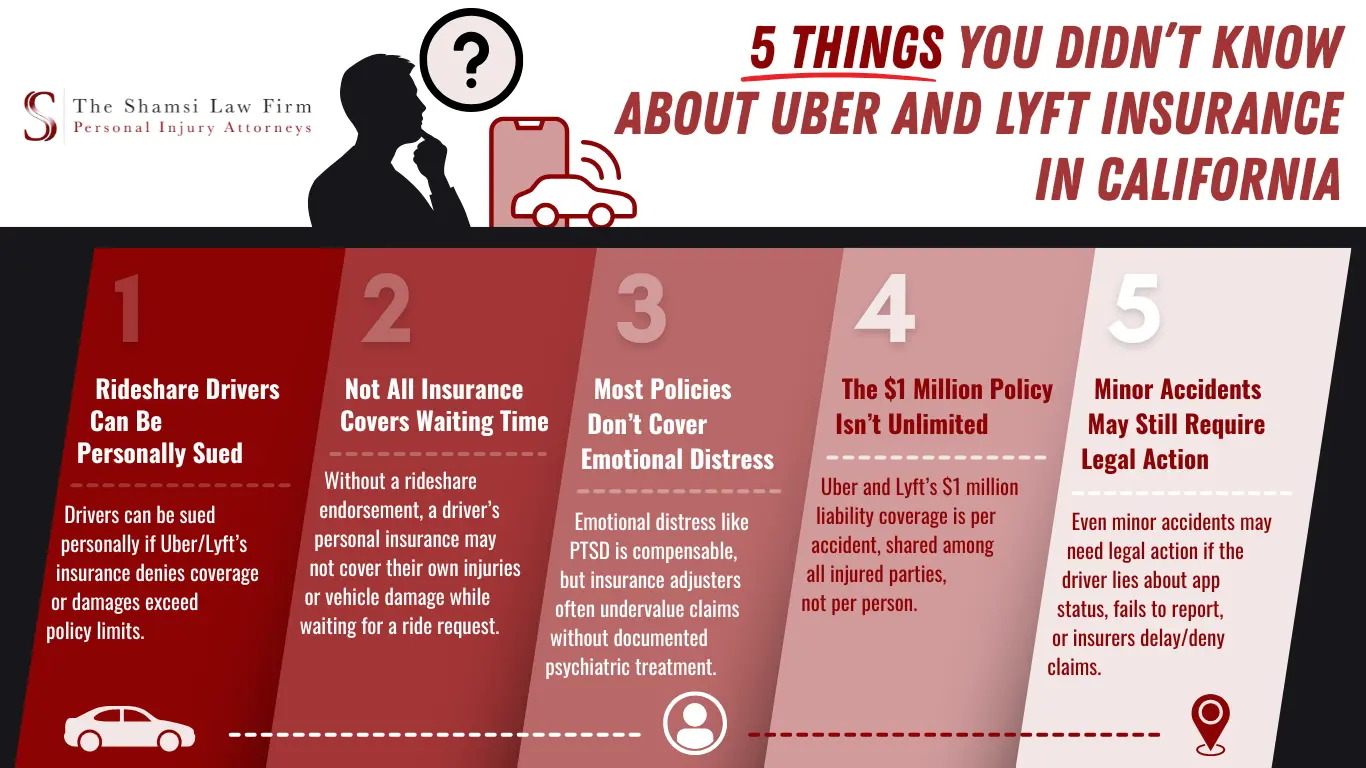
No. Uber provides third-party liability and contingent physical damage coverage only when the driver is actively logged into the app (Periods 1, 2, and 3). Uber provides zero coverage when the app is turned off (Period 0). Furthermore, during Period 1, Uber provides liability coverage only—not comprehensive or collision damage for your vehicle.
What happens if I get into an accident while driving for Uber without a rideshare endorsement?
If you rely solely on a standard personal auto policy without a rideshare endorsement, your insurance carrier will likely deny your claim upon discovering commercial use. Additionally, the carrier may non-renew or immediately cancel your policy for misrepresentation, leaving you personally liable for vehicle damage and medical expenses.
Why is the contingent collision deductible on Uber’s policy so high?
Uber sets its contingent comprehensive and collision deductible at $2,500 for standard UberX/XL drivers to limit corporate insurance loss claims. If your vehicle suffers $4,000 in damage during Period 2 or Period 3, Uber’s policy pays $1,500, requiring you to pay the initial $2,500 out-of-pocket unless you carry a specialized endorsement that bridges this deductible gap.
Do I need commercial auto insurance if I only drive for Uber Eats?
Uber Eats delivery drivers generally do not need a full commercial livery policy. However, you still need to notify your personal insurer and acquire a commercial use or delivery endorsement. Standard personal policies exclude food delivery activities just as they exclude passenger transport.
How much more expensive is Uber Black commercial insurance compared to an UberX endorsement?
Uber Black drivers pay significantly more. While an UberX driver pays roughly $15 to $50 per month for a rideshare endorsement on top of their personal insurance, an Uber Black driver must purchase a dedicated commercial auto policy costing $250 to $800+ per month ($3,000 to $10,000+ per year) due to higher vehicle values, higher policy limits ($1M+), and full livery compliance mandates.
Actionable Next Steps for Drivers
To ensure complete coverage and minimize out-of-pocket costs:
- Review Your Existing Policy: Contact your personal insurance agent before accepting your first ride request. Ask explicitly whether your carrier permits rideshare operations and what endorsement options are available in your state.
- Evaluate Your Uber Service Tier: If operating under UberX or UberXL, request quotes for rideshare endorsements that include deductible gap coverage. If launching an Uber Black or professional fleet service, request formal quotes from specialized commercial fleet and livery brokers.
- Compare Multi-Carrier Rates: Request quotes from at least three licensed commercial or rideshare-friendly insurance providers to ensure competitive pricing for your driving profile.
Disclaimer: Auto insurance requirements, state laws, and corporate policy terms are subject to change. Always review specific policy terms directly with a licensed insurance professional or state insurance regulatory authority.
Image Gallery