Implementing Go Insur Life Insurance Software and AI for Modern Policy Administration
Go Insur life insurance software, combined with integrated artificial intelligence, provides an automated framework for insurers to manage policy lifecycles, risk assessment, and claims processing. By leveraging these digital tools, li...
Go Insur life insurance software, combined with integrated artificial intelligence, provides an automated framework for insurers to manage policy lifecycles, risk assessment, and claims processing. By leveraging these digital tools, life insurance providers can streamline complex underwriting workflows, enhance data-driven decision-making, and reduce the time required to deliver coverage to policyholders in the current competitive 2026 financial landscape.
Contents
Understanding the Role of Software in Life Insurance
Life insurance operations have historically relied on fragmented systems and manual data entry, leading to inefficiencies in policy issuance and high administrative overhead. Modern software solutions like Go Insur act as a central nervous system for insurance carriers, consolidating policy administration, customer management, and regulatory compliance into a unified interface.
In the current market, the primary challenge for insurers is speed-to-market. Software platforms facilitate this by automating repetitive tasks, such as generating policy documents and calculating premiums based on actuarial tables. When integrated with artificial intelligence, these platforms evolve from passive databases into active analytical engines capable of predicting risk patterns and identifying potential fraud before a policy is even issued.
Integrating Artificial Intelligence into Life Insurance Workflows
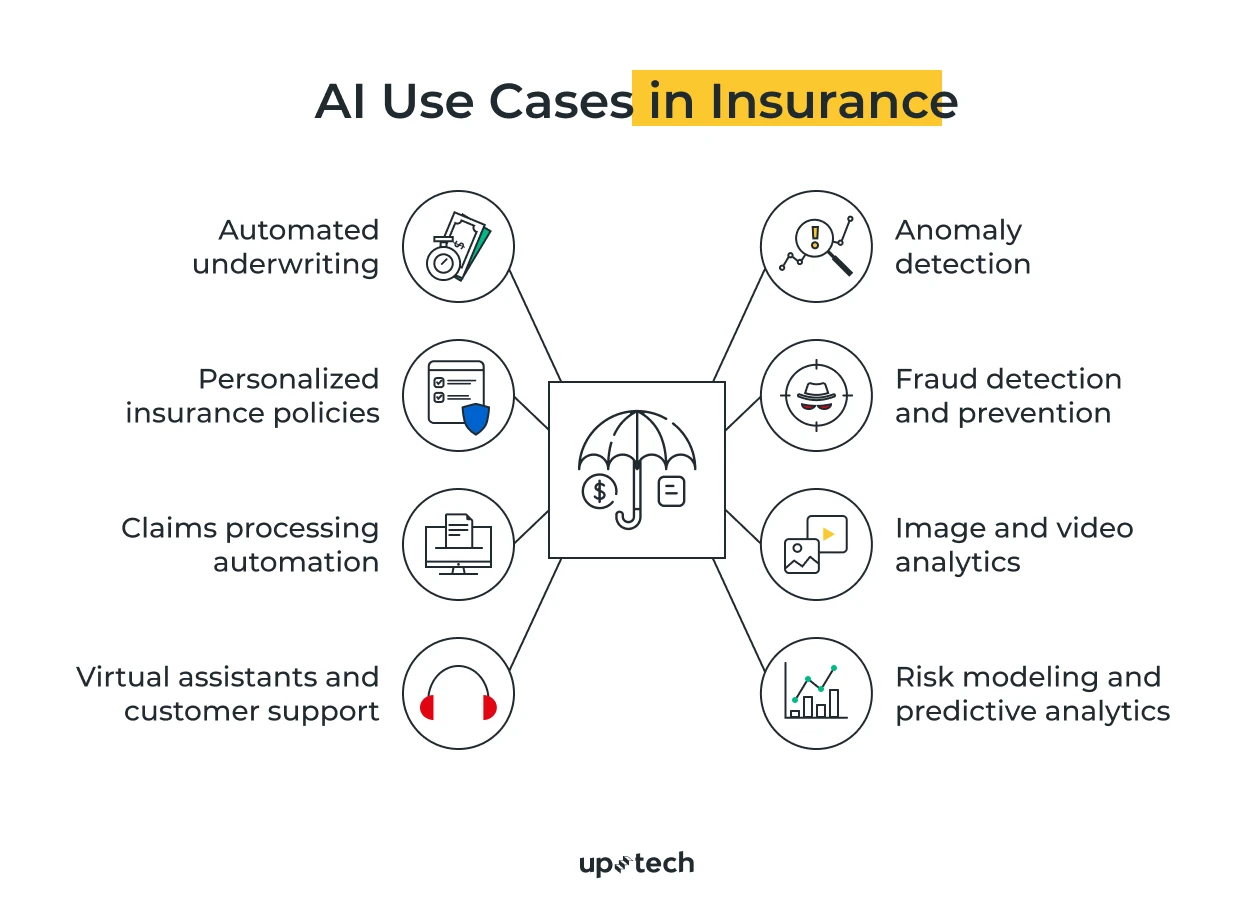
Artificial intelligence in the insurance sector is not a single technology but a collection of capabilities that enhance specific stages of the insurance value chain. For life insurance specifically, the focus is largely on automated underwriting and predictive modeling.
- Automated Underwriting: AI algorithms analyze medical records, financial history, and lifestyle data to provide instant coverage decisions. This significantly reduces the wait time for "fully underwritten" policies, which previously took weeks to finalize.
- Predictive Analytics: By processing historical mortality and morbidity data, AI models help actuaries refine premium structures and adjust product offerings to better suit demographic shifts.
- Claims Prediction and Processing: AI tools identify patterns in claim submissions that may indicate errors or fraudulent activity, allowing human adjusters to focus their efforts on complex cases requiring subjective evaluation.
Core Capabilities and Features
To effectively deploy Go Insur and similar AI-driven software, organizations must understand the functional pillars of these systems. The following table highlights the essential components that drive operational efficiency in 2026.
| Feature | Primary Function | Business Impact |
|---|---|---|
| API Integration | Connects external health databases and credit bureaus. | Real-time data gathering for instant quotes. |
| OCR Engines | Digitizes paper medical reports and physical forms. | Reduces manual entry errors by up to 90%. |
| Rule-Based Engines | Applies regulatory and company-specific logic. | Ensures consistent compliance across jurisdictions. |
| Predictive Modeling | Analyzes vast datasets for mortality trends. | Increases accuracy of long-term risk assessment. |
| Customer Portals | Enables self-service policy management. | Reduces call center volume and improves satisfaction. |
Prerequisites for Software Deployment
Before implementing an AI-integrated insurance platform, carriers must ensure they have the necessary infrastructure and data hygiene. The transition is not merely technical but operational.
- Data Readiness: AI models are only as effective as the data provided. Carriers must scrub legacy databases to ensure uniformity and completeness. Inconsistent data across departments will lead to flawed AI predictions.
- Regulatory Compliance: Any software implementation must align with local, state, and international insurance regulations. This includes data privacy laws, such as those governing how health data can be used in underwriting decisions.
- Security Protocols: Life insurance data includes sensitive personally identifiable information (PII) and protected health information (PHI). End-to-end encryption and robust cybersecurity frameworks are non-negotiable requirements for any software provider.
Overcoming Implementation Challenges
While the transition to automated software offers clear advantages, organizations often face hurdles during the integration phase. A common pitfall is the attempt to "digitize" outdated manual processes without re-engineering the workflow. Simply moving a paper-based approval process into an AI-powered system often results in bottlenecks.
Instead, carriers should adopt an iterative approach:
- Define Success Metrics: Before installation, establish clear KPIs, such as the reduction in "time-to-decision" or the decrease in per-policy administrative costs.
- Hybrid Modeling: Use AI to handle the "straight-through processing" of low-risk applications, while reserving human intervention for high-net-worth or complex medical cases. This maintains a human touch where it is most valued.
- Continuous Monitoring: AI models can drift or develop biases over time. Regular audits of the algorithm's performance are essential to ensure that the logic remains aligned with current mortality data and fair-lending practices.
The Future of AI-Driven Underwriting
As we move through 2026, the reliance on static mortality tables is decreasing, replaced by dynamic, data-rich underwriting. Software solutions are now capable of consuming real-time data from wearable health devices and wellness apps—with explicit user consent—to provide personalized coverage options.
This shifts the insurer's role from a reactive risk-bearer to a proactive partner in the policyholder's health. The software platforms that succeed are those that facilitate this partnership while maintaining the highest levels of data security and transparency.
Frequently Asked Questions
How does AI affect the accuracy of life insurance underwriting? AI improves accuracy by identifying subtle correlations in massive datasets that human underwriters might overlook. By analyzing thousands of data points, including medical history and socioeconomic factors, AI can assign a risk score that is more precise than traditional, generalized actuarial tables, leading to fairer and more consistent pricing.
Is human oversight still necessary when using AI insurance software? Yes. While AI handles routine decisions and data processing, human underwriters are essential for interpreting complex cases, managing ethical considerations, and handling legal appeals. The software acts as an assistant to human experts, not a complete replacement.
What is the impact on data privacy when using AI in insurance? The integration of AI increases the sensitivity of data handling. Organizations must adhere to strict regulatory standards (such as GDPR or local financial privacy laws) to ensure that the data used for training AI models remains anonymized and protected from unauthorized access.
Can small to mid-sized carriers compete using these technologies? Absolutely. Many modern software providers offer scalable, modular solutions (SaaS models) that allow smaller carriers to access high-end AI capabilities without the prohibitive cost of developing proprietary software from scratch.
How do insurers ensure the software remains compliant with 2026 regulations? Compliance is achieved through "RegTech" integration within the software. These features automatically update rule engines whenever legislative changes occur, ensuring that every policy issued remains compliant with current regional and federal insurance laws.
Strategic Next Steps
For insurance organizations looking to implement or upgrade their life insurance software, the first action is to conduct a technology audit. Assess which portions of your current workflow rely on manual data entry and identify where those processes could be automated through API-driven data collection. Following this, consult with vendors to confirm their AI models are transparent, auditable, and compliant with current 2026 regulatory standards. Prioritize systems that offer modular upgrades, allowing your organization to integrate AI tools gradually rather than through a disruptive, all-at-once migration.
Image Gallery