Understanding the Bloom Taxonomy of Education: A Framework for Cognitive Development
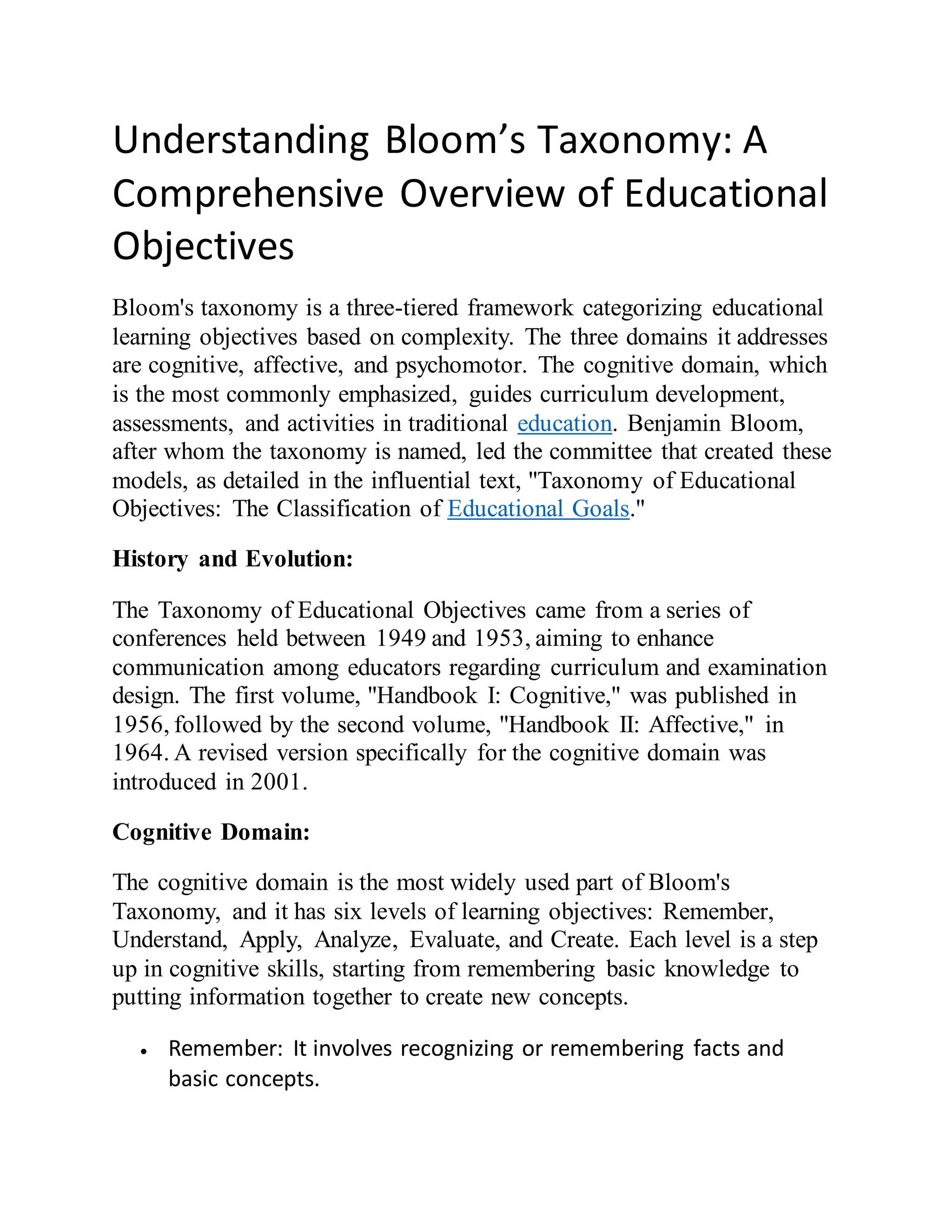
Bloom’s Taxonomy of Education is a hierarchical model used by educators and instructional designers to categorize educational goals into levels of complexity and specificity. It organizes learning objectives into a structure ranging fr...
Bloom’s Taxonomy of Education is a hierarchical model used by educators and instructional designers to categorize educational goals into levels of complexity and specificity. It organizes learning objectives into a structure ranging from basic recall of facts to the creation of new ideas, serving as a roadmap for curriculum development, assessment design, and personalized learning strategies.
Contents
The Origins and Evolution of the Framework
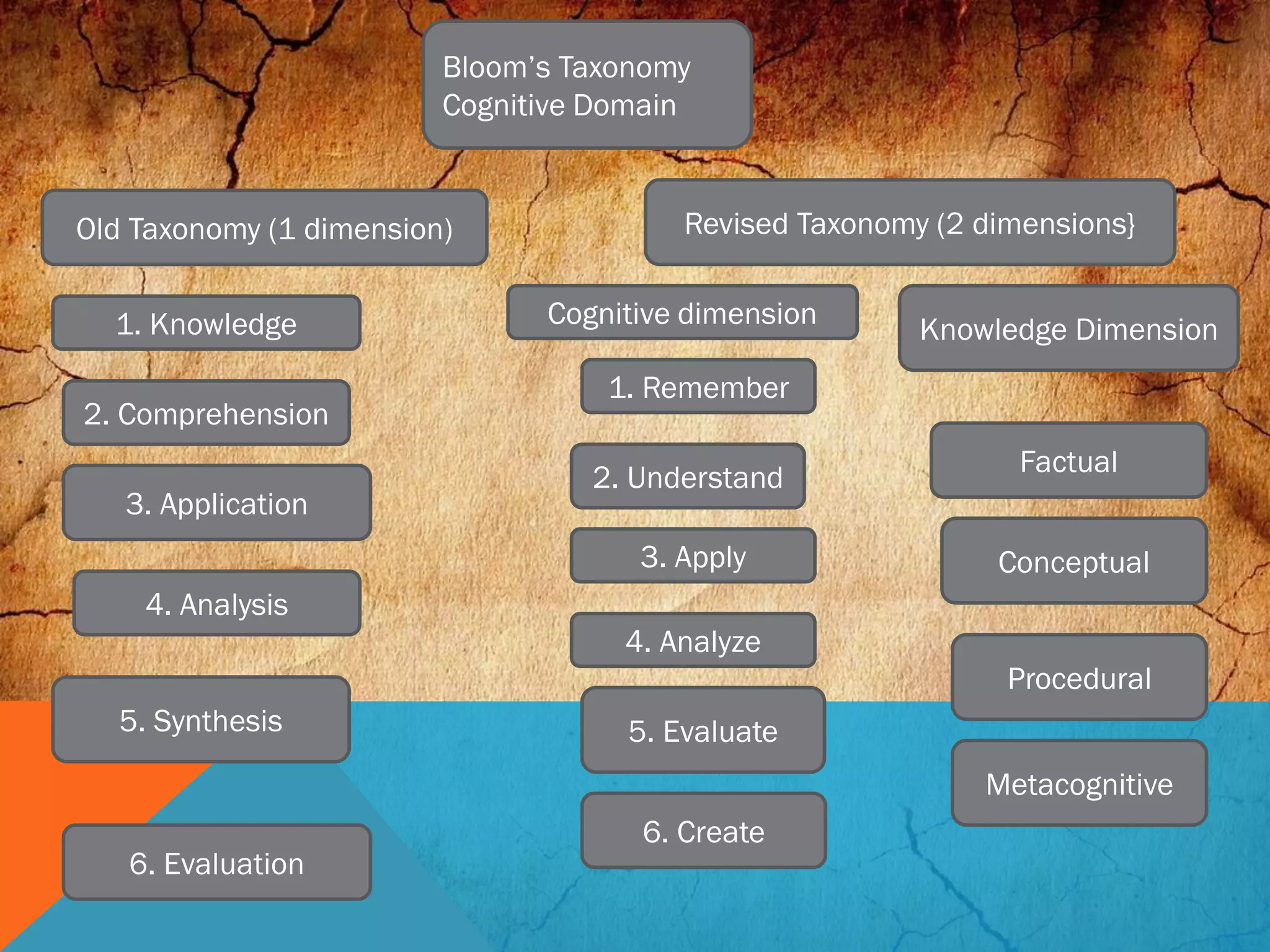
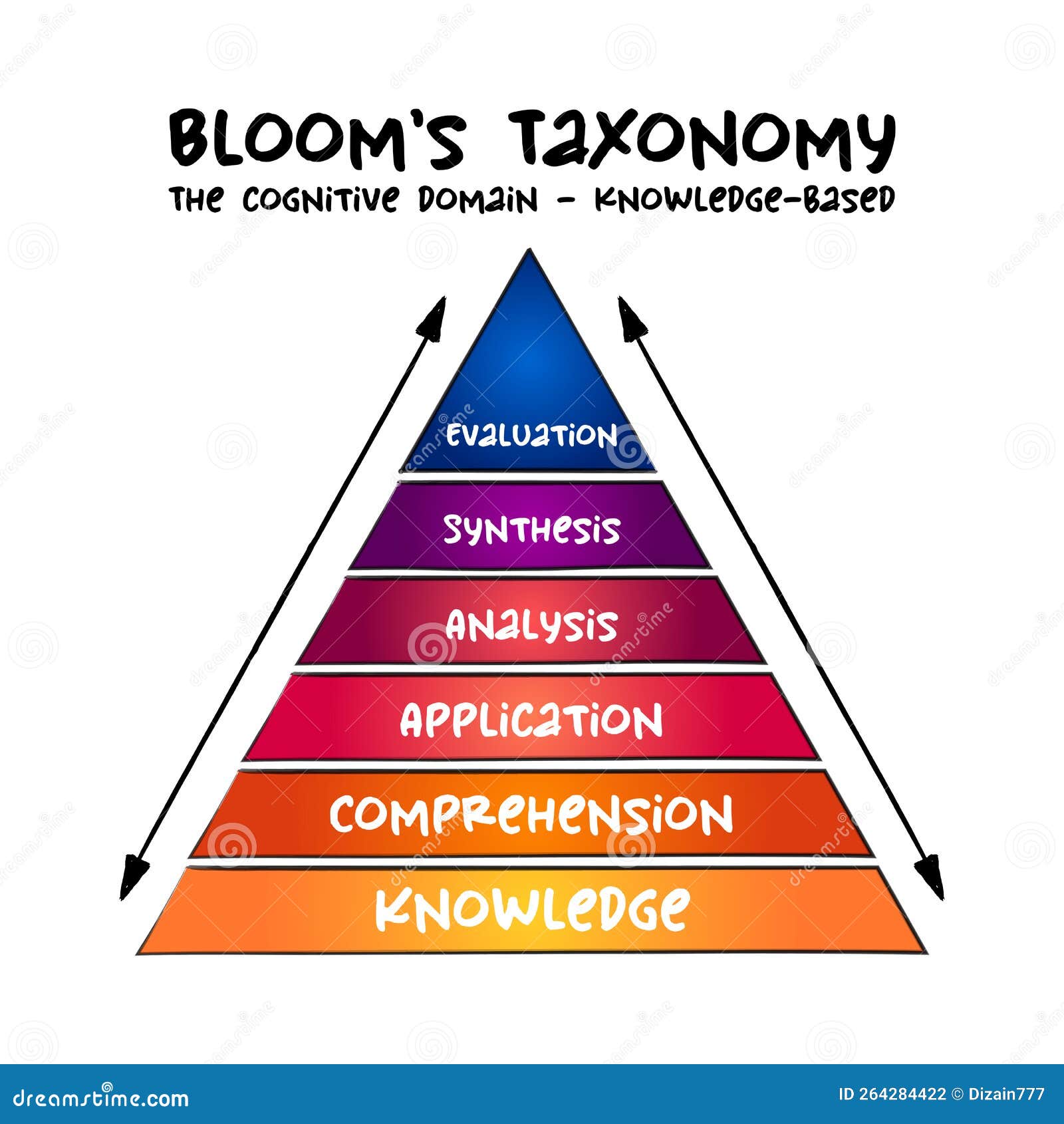
The history of Bloom’s Taxonomy began in 1956 when a committee of educators, led by Benjamin Bloom, published Taxonomy of Educational Objectives: The Classification of Educational Goals. The original work sought to provide a common language for educators to discuss and exchange learning and assessment methods. The committee focused on the "cognitive domain," identifying six levels of intellectual behavior.
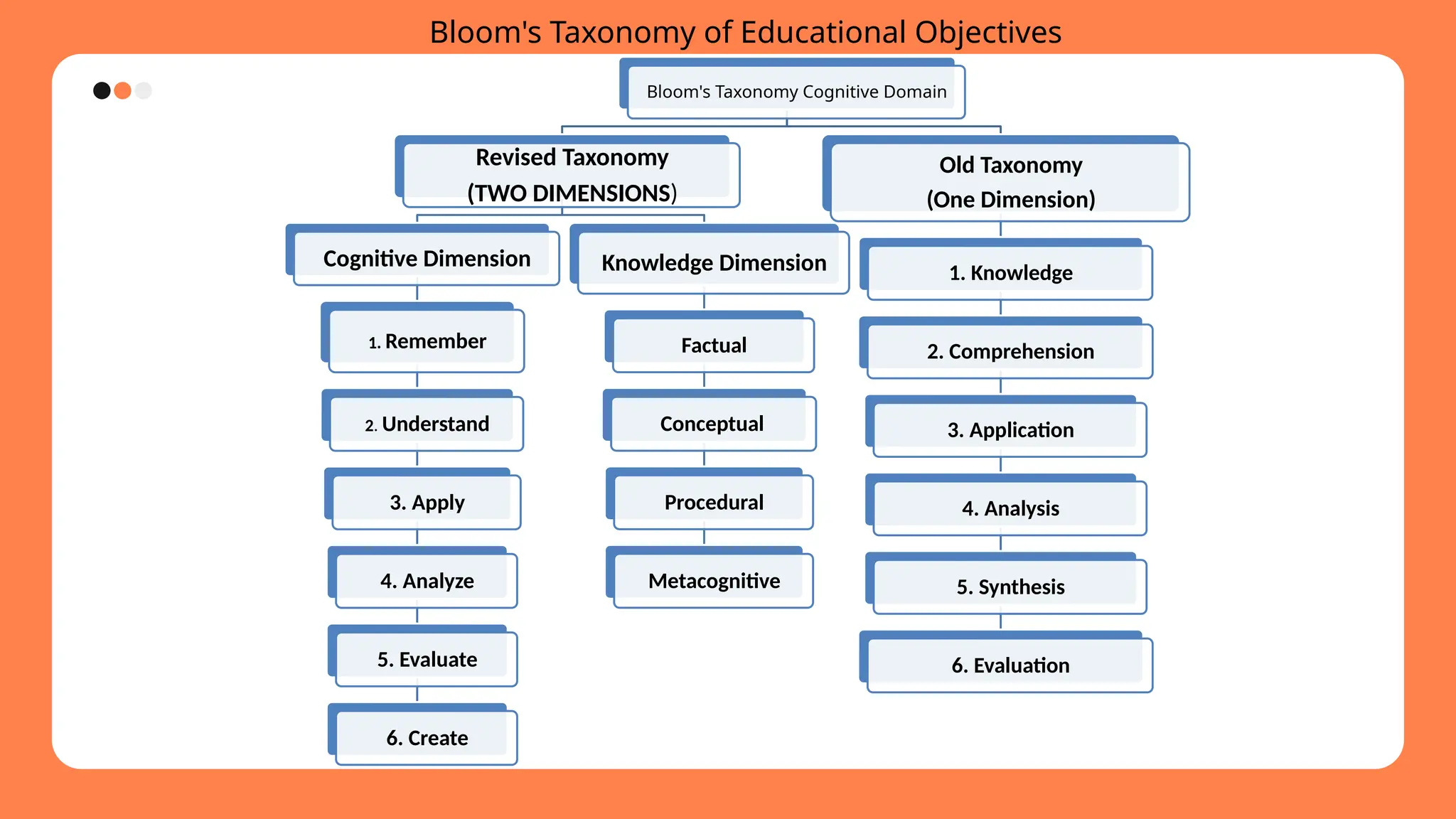
In 2001, a group of cognitive psychologists, curriculum theorists, and researchers—most notably Lorin Anderson and David Krathwohl—revised the original taxonomy. This updated version, often referred to as the Revised Bloom’s Taxonomy, transitioned the hierarchy from nouns to verbs, reflecting the active process of thinking. While the original framework was static, the 2001 revision emphasized the dynamic nature of learning and the interconnectedness of cognitive processes.
Breaking Down the Cognitive Levels
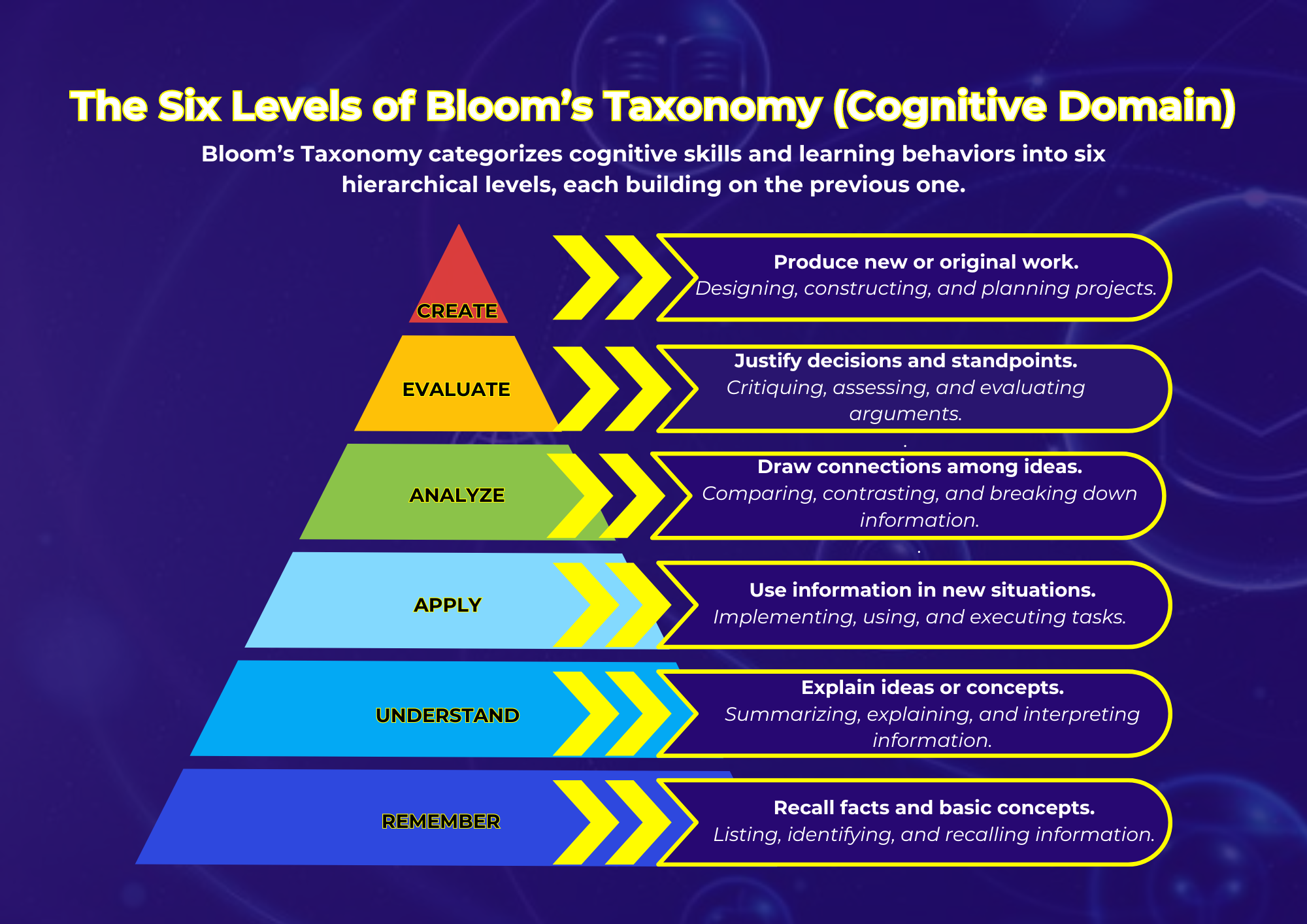
The taxonomy is structured as a cumulative hierarchy. To move up to a more complex level, a learner generally must have achieved competence in the levels below it. The revised levels, in ascending order of complexity, are as follows:
1. Remember
This is the foundational level. It involves retrieving, recognizing, and recalling relevant knowledge from long-term memory. At this stage, the learner is not expected to necessarily understand the concepts, but to be able to identify or state facts, terms, or basic principles. Examples include reciting multiplication tables or identifying the capital city of a country.
2. Understand
Understanding involves determining the meaning of instructional messages. It moves beyond simple recall to interpretation, classification, and summarization. A learner who "understands" can explain a concept in their own words, predict consequences, or compare two different objects.
3. Apply
Applying refers to using a procedure in a given situation. This requires the learner to carry out or execute a task. It bridges the gap between theory and practice. If a learner can take a mathematical formula and use it to solve a specific, unique word problem, they are operating at the "Apply" level.
4. Analyze
Analysis requires breaking material into its constituent parts and detecting how the parts relate to one another and to an overall structure or purpose. This involves differentiating between relevant and irrelevant information, organizing components, and identifying underlying motives or patterns.
5. Evaluate
Evaluation is the act of making judgments based on criteria and standards. It requires checking for consistency, internal logic, or effectiveness. Learners at this stage can critique a report, defend a position, or assess the reliability of a source.
6. Create
The pinnacle of the hierarchy is "Create." This level involves putting elements together to form a novel, coherent whole or an original product. It requires the learner to hypothesize, design, or construct something that did not exist before in the context of their learning experience.
Comparative Overview of Taxonomy Levels
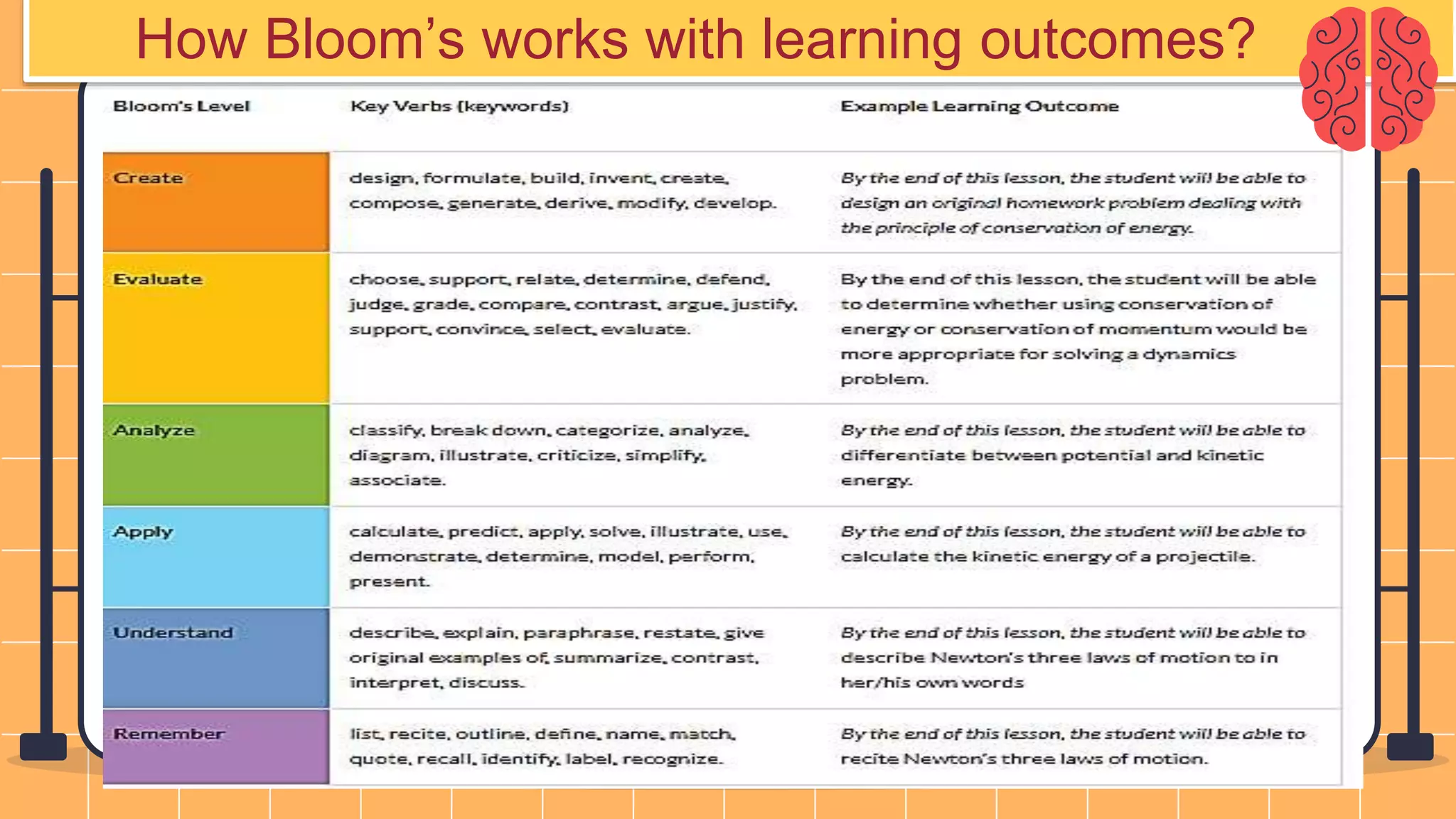
The following table provides a quick reference for the active verbs and expected outcomes associated with each level of the framework.
| Level | Focus | Key Active Verbs | Goal/Outcome |
|---|---|---|---|
| Remember | Recall | List, define, identify | Memorization |
| Understand | Meaning | Explain, discuss, clarify | Comprehension |
| Apply | Execution | Use, implement, solve | Practical application |
| Analyze | Structure | Differentiate, organize | Critical thinking |
| Evaluate | Judgment | Critique, judge, justify | Critical assessment |
| Create | Synthesis | Build, design, construct | Original creation |
Practical Application in Curriculum Design
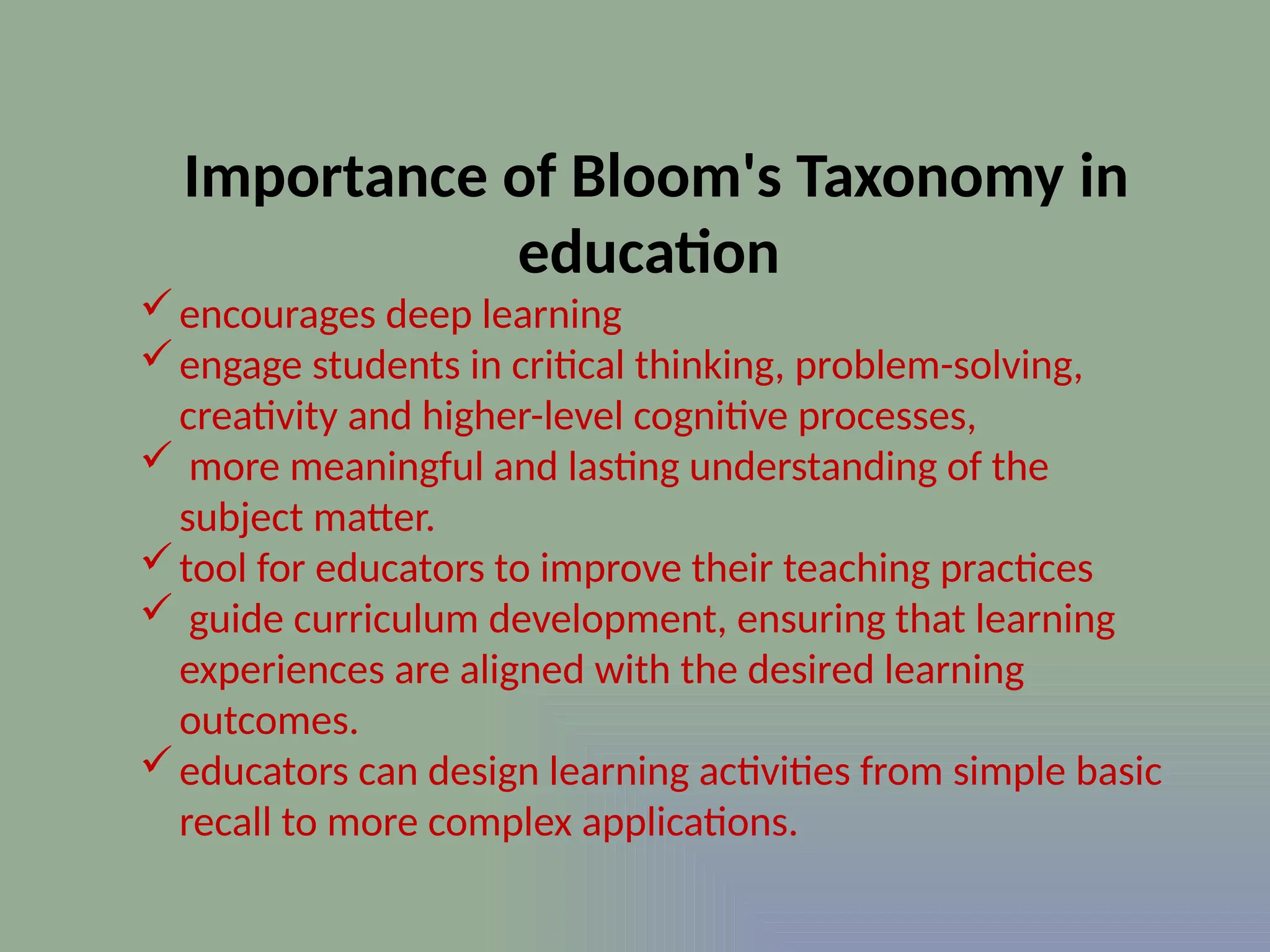
For educators and professional trainers, the taxonomy serves as a diagnostic tool. When designing a course, one must first identify the desired outcome for the learner. If the goal is to teach a technician how to operate a new machine, the learning objectives should cluster around the "Remember," "Understand," and "Apply" levels. If the goal is to develop a senior strategist, the curriculum must heavily emphasize "Analyze," "Evaluate," and "Create."
Common mistakes occur when educators target the wrong level of the taxonomy. For example, if a professor aims for a student to design a new urban planning system (a "Create" task) but only provides lectures focused on definitions and historical facts ("Remember" tasks), the gap between the instruction and the assessment is too wide. Effective instructional design requires a gradual progression through the taxonomy to support the student's cognitive climb.
Integrating Taxonomy into Assessment
Assessments should be aligned with the cognitive level of the learning objective. A multiple-choice quiz is excellent for measuring "Remember" and "Understand" levels, but it is inherently limited when attempting to measure "Evaluate" or "Create."
For higher-level objectives, educators often employ:
- Performance tasks: Requiring students to execute a procedure in a controlled environment.
- Case studies: Challenging students to identify problems and propose solutions based on evidence.
- Peer review: Requiring students to evaluate the work of others against established rubrics.
- Portfolio assessment: Allowing students to curate and justify a collection of original work.
Common Questions About Bloom’s Taxonomy
Does a student have to master "Remember" before they can "Create"?
While the framework is a hierarchy, it is not always strictly linear in practice. A student might be prompted to "Create" a hypothesis as a way to spark interest in learning the facts ("Remember") needed to test it. However, for most formal instructional purposes, foundational knowledge provides the mental scaffolding necessary to engage in high-level synthesis.
How is the taxonomy used in corporate training?
In corporate environments, the taxonomy helps clarify whether a training program is intended to inform (Remember/Understand) or to change behavior/performance (Apply/Analyze). It prevents "information overload" by ensuring training content is limited to the level of cognitive load required for the specific job function.
Is the taxonomy relevant in the era of AI and advanced search?
Yes. With information easily accessible via digital tools, the "Remember" level is less about storage and more about recognition. Modern pedagogy now focuses more heavily on the top four levels—Apply, Analyze, Evaluate, and Create—where human cognition is required to synthesize, verify, and apply the vast amount of information provided by AI systems.
Can the taxonomy be applied to subjects other than academics?
Absolutely. The taxonomy is effective in creative arts, athletics, and technical trades. For instance, in music, "Remember" is scales and theory; "Understand" is interpretation; and "Create" is composition and improvisation.
Next Steps for Practitioners
To effectively utilize Bloom’s Taxonomy, start by reviewing your current learning objectives. Categorize them using the list of verbs provided above. Identify whether your assessments match these verbs. If you find your instruction is stuck at the "Remember" level, begin adding "Analyze" or "Evaluate" components by asking students to compare sources or justify their choices. This shift from passive ingestion to active cognitive engagement is the key to meaningful learning outcomes.
Image Gallery