Iceland Gender Equality Advances and Remaining Challenges
In 2026, Iceland continues to lead the world in gender parity, having secured the top spot in the World Economic Forum’s Global Gender Gap Report for 17 consecutive years. While significant advances in legislative frameworks and parent...
In 2026, Iceland continues to lead the world in gender parity, having secured the top spot in the World Economic Forum’s Global Gender Gap Report for 17 consecutive years. While significant advances in legislative frameworks and parental leave have normalized female leadership, persistent challenges remain in closing the unadjusted pay gap and addressing gender-based violence.
Contents
The Legislative Foundation of Icelandic Equality
The trajectory of gender equality in Iceland is not a product of chance but the result of decades of systematic legislative intervention and grassroots activism. The cornerstone of this progress is the Act on Equal Status and Equal Rights of Women and Men, first passed in 1976 and revised multiple times to meet evolving social needs. By 2026, these laws have matured into a comprehensive framework that mandates proactive compliance rather than reactive litigation.
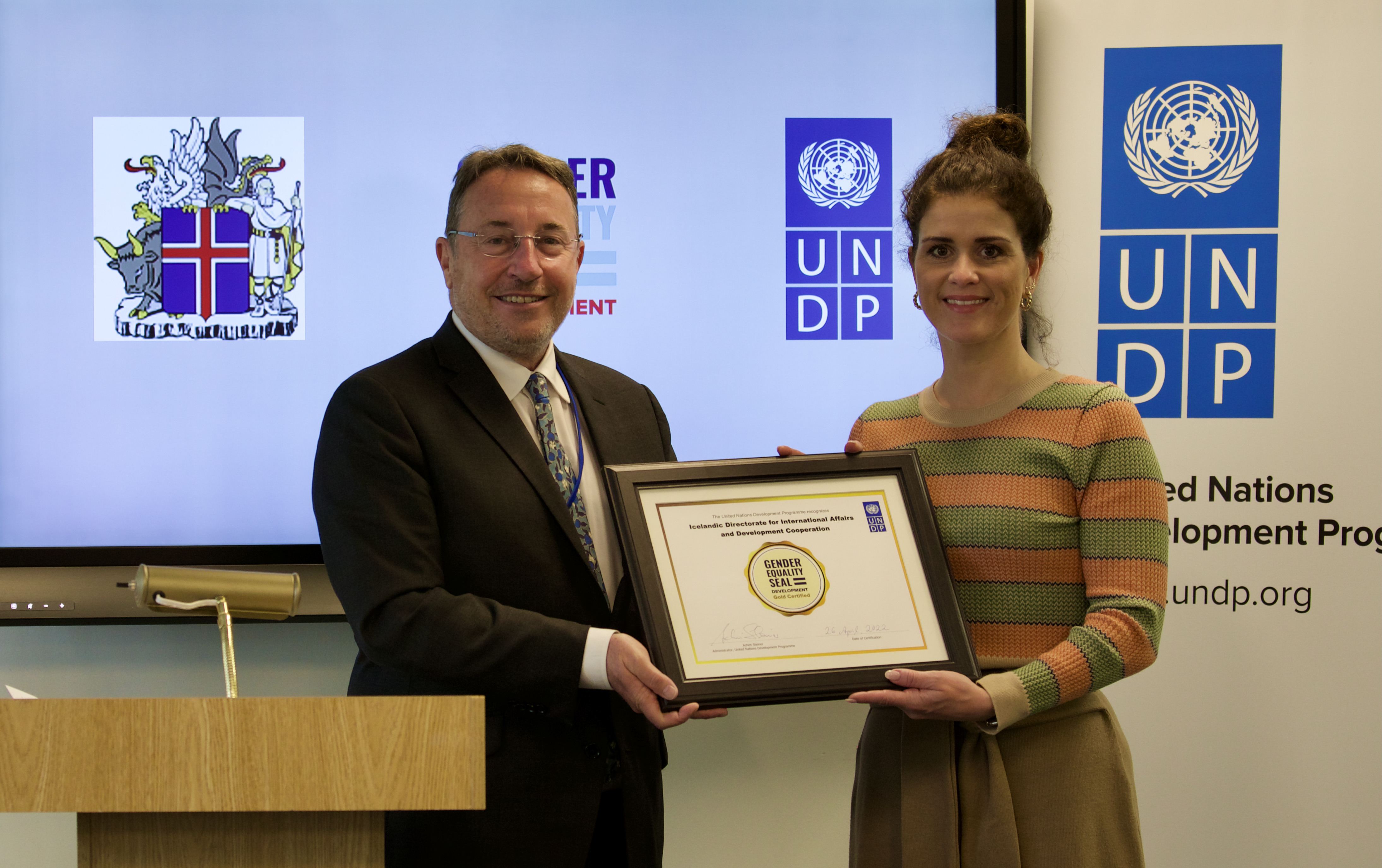
One of the most significant advances is the Equal Pay Certification, which became law in 2018. Unlike most nations where the burden of proof lies with the employee to show they are being underpaid, Iceland shifted this responsibility to the employer. Companies and government agencies with 25 or more employees must undergo an external audit every three years to prove they pay men and women equally for work of equal value. If they fail to obtain certification, they face daily fines. This technical approach treats pay equity as a quality management standard, similar to ISO certifications, integrating equality directly into corporate governance.
The impact of this legislation extends beyond simple salary figures. It has forced organizations to define "value" in objective terms, breaking down the biases that traditionally devalued roles dominated by women, such as those in human resources, healthcare support, and administration. By 2026, the adjusted pay gap—the difference in pay between men and women in the same roles—has narrowed to less than 3%, one of the lowest figures globally.
The Parental Leave Revolution and the 6-6-0 Model
Iceland’s approach to parental leave is often cited as the "gold standard" for dismantling the "motherhood penalty." In 2026, the parental leave system operates on a 6-6-0 model: six months for each parent and six months that are non-transferable. If one parent chooses not to use their six-month allocation, that leave is lost; it cannot be transferred to the other partner.
This structure is designed to change the social fabric of caregiving. By incentivizing fathers to take a full six months off, the state ensures that caregiving is seen as a shared responsibility rather than a "women’s issue." The benefits of this system are three-fold:
- Labor Market Neutrality: Employers no longer view women of childbearing age as "riskier" hires than men, as both are equally likely to take significant leave.
- Parent-Child Bonding: Research in 2026 indicates that children whose fathers took the full six-month leave show higher levels of social-emotional development and that these fathers remain more involved in domestic labor years later.
- Career Continuity: Women are able to return to the workforce sooner and with more support, reducing the long-term impact on their lifetime earnings and pension contributions.
However, the "remaining challenge" in this sector involves the "bridge gap"—the period between the end of parental leave (typically at 12 months) and the beginning of subsidized playschool (often at 18–24 months). In 2026, many families still struggle to find affordable childcare during this six-to-twelve-month window, which often forces one parent—disproportionately the mother—to take unpaid leave or reduce their working hours.
The Iceland Paradox: Remaining Challenges in 2026
Despite being the global leader in parity, Iceland faces what sociologists call the Nordic Paradox. This refers to the high rates of gender equality in the public sphere (politics and labor) coinciding with unexpectedly high rates of gender-based violence and persistent occupational segregation.
Occupational Segregation (The Horizontal Gap)
The Icelandic labor market remains one of the most gender-segregated in the OECD. Women are heavily concentrated in the public sector, education, and healthcare, while men dominate the private sector, technology, and engineering. This horizontal segregation is a primary driver of the unadjusted pay gap. Even with Equal Pay Certification, the "market value" of private-sector roles typically held by men remains higher than the public-sector roles held by women.
In 2026, the government has launched initiatives to encourage men to enter the "HEAL" professions (Health, Education, Administration, and Literacy) and women to enter "STEM" (Science, Technology, Engineering, and Math). However, social norms regarding "appropriate" career paths for different genders have proven more resistant to change than legislation.
Gender-Based Violence (GBV)
Perhaps the most pressing challenge in 2026 is the prevalence of gender-based violence. National surveys indicate that nearly 40% of Icelandic women have experienced some form of violence in their lifetime. This high figure is partly attributed to a "reporting culture" where women feel empowered to speak out, but it also reflects deep-seated issues that legislative parity has not yet solved.
The Icelandic government has responded with the "Together Against Violence" initiative, which integrates police, social services, and healthcare providers. Nevertheless, the legal system faces criticism for low conviction rates in sexual assault cases, highlighting a disconnect between progressive social policy and the realities of the judicial process.
Political Representation and the Power of Quotas
Iceland's parliament, the Althingi, consistently hovers near 50% female representation. This was achieved without a national law mandating gender quotas for parliament, though most political parties have adopted internal voluntary quotas.
In the corporate world, however, quotas are mandatory. Since 2013, the law has required that boards of companies with more than 50 employees have at least 40% representation of each gender. By 2026, this has successfully broken the "old boys' club" in Icelandic boardrooms. The focus has now shifted toward the "Broken Rung," ensuring that women are not just present on boards but are also being promoted into C-suite positions (CEO, CFO, CTO) at the same rate as men.
| Metric | 2026 Status (Estimated) | Primary Driver |
|---|---|---|
| Global Gender Gap Rank | #1 | Long-term consistency in policy and social activism. |
| Adjusted Pay Gap | < 3% | Equal Pay Certification (Standard ÍST 85). |
| Female Labor Participation | ~82% | Subsidized childcare and shared parental leave. |
| Board Representation | 45% | Mandatory 40% quota for companies with 50+ staff. |
| Parliamentary Parity | 47.6% | Voluntary party quotas and social norms. |
| Unadjusted Pay Gap | ~9-11% | Occupational segregation and "women's work" devaluation. |
The Impact of the 1975 Women's Strike on Modern Policy
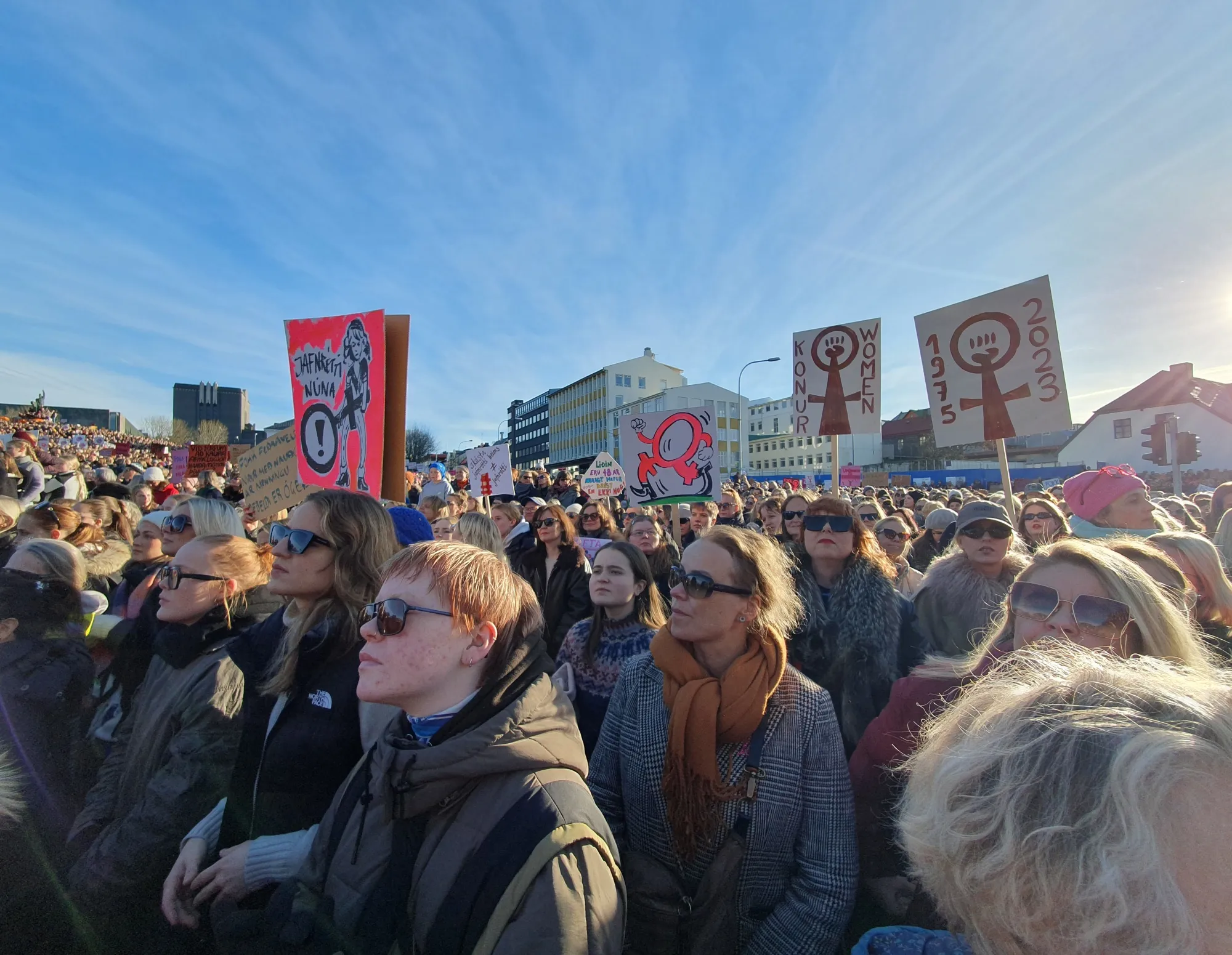
To understand Iceland’s 2026 status, one must look back at the "Kvennafrídagurinn" or Women’s Day Off on October 24, 1975. On that day, 90% of Icelandic women refused to work, cook, or look after children to demonstrate their essential contribution to the economy. The country came to a standstill.
This event is not merely a historical footnote; it serves as the psychological foundation for modern Icelandic policy. It established the idea that gender equality is an economic necessity, not just a moral goal. In 2026, this "strike spirit" remains alive, as seen in recent mass protests (most notably in 2023) where women and non-binary individuals walked out to protest the gender pay gap and violence. This continuous grassroots pressure ensures that the government cannot become complacent despite its #1 ranking.
Practical Guidance for Organizations and Policy Makers
For international observers or local businesses looking to replicate Iceland's successes, several actionable steps are evident:
- Shift the Burden of Proof: Move away from individual complaints. Require organizations to prove they are equitable through standardized audits.
- Incentivize Non-Transferable Leave: Encourage fathers to take leave by making it "use it or lose it." This is the only proven way to significantly increase male participation in caregiving.
- Address the Unadjusted Gap: Focus on the "valuation" of work. It is not enough to pay a female nurse the same as a male nurse; society must address why nursing is compensated less than comparable roles in male-dominated fields.
- Transparency is Key: Publicly reporting gender statistics creates a "reputational incentive" for companies to improve.
Frequently Asked Questions
Why is Iceland ranked #1 if there is still a pay gap?
The World Economic Forum rank is a relative measure of parity across four dimensions: Economic Participation, Educational Attainment, Health and Survival, and Political Empowerment. While Iceland has not reached 100% parity (no country has), it has closed over 90% of its gender gap. The remaining 10% is primarily composed of the unadjusted pay gap and the "Nordic Paradox" regarding violence.
How does the Equal Pay Certification work for small businesses?
In 2026, companies with 25–49 employees follow a simplified version of the audit process compared to larger corporations. They must still document their pay scales and job descriptions, ensuring that the criteria for salary decisions are transparent and gender-neutral. The Directorate of Equality provides tools and templates to minimize the administrative burden on these smaller entities.
What is the "Nordic Paradox" in the context of Iceland?
The Nordic Paradox describes the high prevalence of intimate partner violence in countries with high levels of gender equality. Theories suggest this may be due to a "backlash" against women's empowerment or a higher social awareness that leads to increased reporting. In 2026, Iceland is actively researching these causes to better tailor its prevention strategies.
Does the 40% board quota apply to all companies?
The mandatory 40% quota applies to public limited companies and private limited companies that have more than 50 employees on an annual basis. Smaller companies are encouraged to follow suit, but they are not legally penalized for failing to meet the threshold, provided they can show they are working toward diversity.
How has the role of men changed in Iceland’s equality movement?
In 2026, Icelandic men are increasingly viewed as stakeholders in gender equality rather than just "allies." The focus has shifted to how patriarchy limits men—specifically regarding mental health, custody rights, and the freedom to pursue non-traditional careers. Organizations like "Men for Equality" work alongside feminist groups to redefine masculinity in the 21st century.
Strategic Recommendation
For those looking to advance gender equality within their own jurisdictions or organizations, the "Icelandic Model" suggests that legislation must precede social change. Do not wait for cultural shifts to occur naturally; implement structural requirements like shared parental leave and pay audits to force a change in behavior. Behavior change is the most effective catalyst for long-term cultural evolution.
Image Gallery