Robert Gallery Stats Overview: A Comprehensive Career Analysis
Robert Gallery’s NFL career is defined by his transition from a highly touted second-overall pick at offensive tackle to a resilient and dependable starting left guard. Over eight seasons, Gallery appeared in 104 games, starting 103 of...
Robert Gallery’s NFL career is defined by his transition from a highly touted second-overall pick at offensive tackle to a resilient and dependable starting left guard. Over eight seasons, Gallery appeared in 104 games, starting 103 of them, primarily for the Oakland Raiders before concluding his professional career with the Seattle Seahawks in 2011.
Contents
The Collegiate Foundation: Robert Gallery at Iowa
Before examining his professional robert gallery stats overview, it is essential to understand the "can't-miss" prospect status he earned at the University of Iowa. Playing under head coach Kirk Ferentz, a renowned developer of offensive line talent, Gallery became one of the most decorated linemen in Big Ten history.
During his tenure at Iowa (2000–2003), Gallery moved from tight end to tackle, a transition that showcased his unique athleticism for a player of his size. By his senior year in 2003, he was a consensus First-Team All-American and the recipient of the Outland Trophy, awarded to the best interior lineman in college football. His technical proficiency and physical dominance led scouts to project him as a foundational left tackle who could anchor an NFL franchise for a decade.
The expectations set during his time in Iowa City were monumental. Gallery was viewed as a technician with a "mean streak," a combination that rarely fails at the professional level. This background is critical when analyzing his professional stats, as the disparity between his collegiate accolades and his early NFL struggles defined much of the media narrative surrounding his career.
The 2004 NFL Draft: High Expectations and Context
The 2004 NFL Draft is widely regarded as one of the most talent-rich classes in history, featuring quarterbacks like Eli Manning, Philip Rivers, and Ben Roethlisberger, as well as future Hall of Fame wide receiver Larry Fitzgerald. The Oakland Raiders selected Robert Gallery with the No. 2 overall pick, passing on several of these future stars because of the perceived "safety" of Gallery’s profile.
At the time, the Raiders were looking to rebuild an aging roster following their Super Bowl XXXVII appearance. Gallery was the centerpiece of that effort. However, being drafted so high at the tackle position meant that anything less than multiple Pro Bowl selections would be viewed through the lens of a "draft bust." This context is vital for interpreting his early games-started and performance metrics.
Professional Statistical Breakdown: The Oakland Raiders Years (2004–2010)
Gallery’s time in Oakland was split into two distinct phases: his initial struggles at tackle and his eventual redemption as a guard.
The Tackle Phase (2004–2006)
Gallery began his career at right tackle as a rookie, starting 15 games. While he showed promise, the transition to the professional speed of edge rushers proved difficult. In 2005 and 2006, he moved to the blindside (left tackle), the position he was drafted to play.
The 2006 season was statistically the lowest point of his career. The Raiders finished with a 2-14 record, and the offensive line was historically porous. Gallery struggled significantly with elite speed rushers, leading to a high number of pressures and sacks allowed. While the NFL did not officially track "sacks allowed" as a primary individual stat in the same way they do passing yards, analytical reviews from that era frequently cited Gallery as a primary contributor to the Raiders' league-high sack totals.
The Guard Phase (2007–2010)
In 2007, under new head coach Lane Kiffin and offensive line coach Tom Cable, Gallery was moved from left tackle to left guard. This move is often cited as the turning point that saved his career.
As a guard, Gallery’s lack of elite lateral quickness against speed rushers was mitigated, while his immense functional strength and technical hand usage were maximized. Between 2007 and 2010, he became one of the most consistent players on the Raiders' roster. His statistical profile stabilized, and he became a leader in a locker room that saw significant turnover.
| Year | Team | Games Played | Games Started | Primary Position |
|---|---|---|---|---|
| 2004 | Oakland Raiders | 16 | 15 | Right Tackle |
| 2005 | Oakland Raiders | 16 | 16 | Left Tackle |
| 2006 | Oakland Raiders | 10 | 10 | Left Tackle |
| 2007 | Oakland Raiders | 16 | 16 | Left Guard |
| 2008 | Oakland Raiders | 16 | 16 | Left Guard |
| 2009 | Oakland Raiders | 6 | 6 | Left Guard |
| 2010 | Oakland Raiders | 12 | 12 | Left Guard |
| 2011 | Seattle Seahawks | 12 | 12 | Left Guard |
| Total | -- | 104 | 103 | -- |
Impact Analysis: Beyond the Basic Stats
For an offensive lineman, the most telling "stats" are often team-based metrics, such as rushing yards per carry and adjusted line yards.
During Gallery's peak years at guard (2007–2010), the Raiders' rushing attack saw a significant uptick in efficiency. He was instrumental in the success of running backs like Justin Fargas and Darren McFadden. In 2010, Gallery’s final year in Oakland, the team finished 2nd in the NFL in rushing yards per game (155.9). Gallery's ability to pull on power runs and clear lanes at the second level was a major factor in these figures.
His durability, while generally good, began to decline toward the end of his Raiders tenure. He missed 10 games in 2009 due to a broken leg and four games in 2010 due to a hamstring injury. Despite these setbacks, he remained a high-level starter whenever he was on the field.
Final Chapter: The Seattle Seahawks (2011)
In 2011, Robert Gallery signed a three-year contract with the Seattle Seahawks, reuniting with his former Raiders head coach, Tom Cable. Seattle was in the midst of a transition period under Pete Carroll, and Gallery was brought in to provide veteran leadership and stability to a young offensive line.
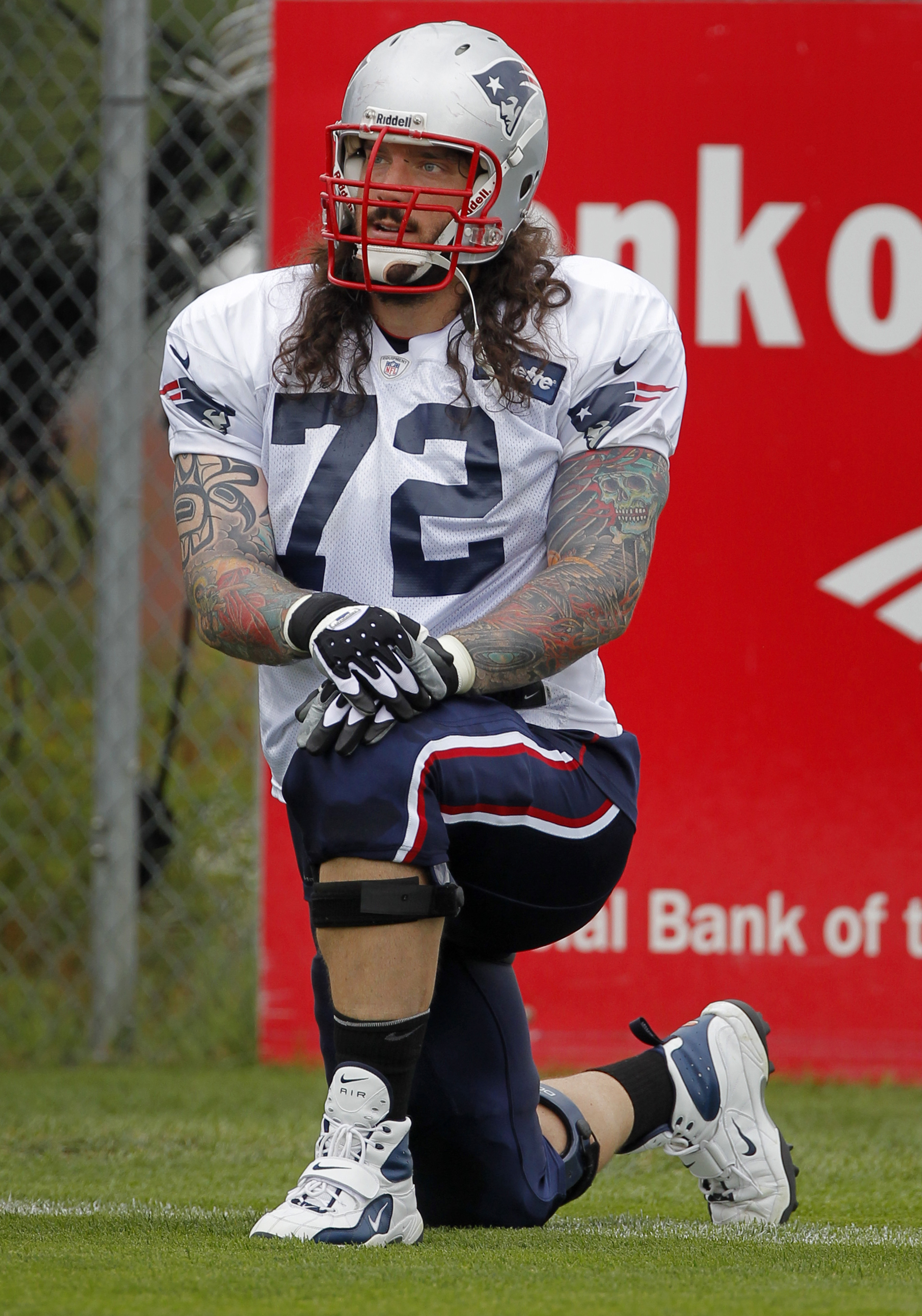
Gallery started 12 games for the Seahawks at left guard. While he was still a functional starter, his athleticism had begun to wane due to cumulative injuries. Following the 2011 season, the Seahawks released Gallery in a cap-clearing move. He briefly signed with the New England Patriots in 2012 but chose to retire before the season began, citing the physical toll the game had taken on his body.
Technical Evaluation: Why the Transition Worked
The shift in Gallery’s performance from tackle to guard is a frequent case study for NFL scouts. At tackle, his "reach" and "recovery speed" were frequently exposed. NFL edge rushers are often undersized, high-speed athletes who can turn the corner in under 2.5 seconds. Gallery’s footwork, which was elite at the college level, was only average by NFL tackle standards.
However, when moved to the interior, he was no longer required to defend the wide edge. Instead, he engaged with defensive tackles and nose guards. In this "phone booth" environment, Gallery’s 6'7", 325-pound frame and his background as a power lifter became massive advantages. He was able to use his superior leverage to move interior defenders off the line of scrimmage, a skill that is captured in his high "run-blocking win rate" in retroactive analytical studies.
Career Legacy and "Bust" Re-evaluation
As of 2026, Robert Gallery’s career is often viewed with more nuance than it was a decade ago. While he did not live up to the "Hall of Fame tackle" billing of a No. 2 overall pick, he was by no means a failure.
A "bust" is typically a player who cannot stay in the league or provide starter-level value. Gallery started over 100 games and played eight seasons at a high level. In the modern era of the NFL, a decade-long starter is a valuable asset. The "bust" label was largely a product of his draft position and the players selected after him, rather than a reflection of his actual utility on the field.
Key Career Achievements:
- 104 NFL Games Played
- 103 NFL Games Started
- 2004 All-Rookie Team (PFWA)
- Outland Trophy Winner (College)
- Consensus All-American (College)
Frequently Asked Questions
Why did Robert Gallery move from Tackle to Guard?
The move was primarily due to his struggles with speed rushers on the outside. His lateral movement was not sufficient to protect the quarterback's blindside at an elite level. Moving to guard allowed him to utilize his physical strength in a more confined space, where he was significantly more effective.
How many teams did Robert Gallery play for?
Robert Gallery played for two teams during his active NFL regular seasons: the Oakland Raiders (2004–2010) and the Seattle Seahawks (2011). He was briefly on the New England Patriots' roster in the 2012 offseason but retired before playing a game.
Was Robert Gallery ever a Pro Bowler?
No, Robert Gallery never earned a Pro Bowl selection during his career. While he was a very solid guard for several years, he played during an era with several perennial Pro Bowl guards, such as Logan Mankins and Alan Faneca.
What were Robert Gallery's combine stats?
At the 2004 NFL Scouting Combine, Gallery impressed scouts with a 4.95-second 40-yard dash, an incredible time for a man of his size. He also recorded 24 reps on the bench press and a 30-inch vertical jump, confirming the raw athleticism that led to his high draft selection.
What is Robert Gallery doing now in 2026?
Robert Gallery has largely remained out of the public eye since his retirement. He has occasionally participated in alumni events for both the University of Iowa and the Raiders, and he is often cited in sports media when discussing draft history and offensive line transitions.
Practical Recommendation for Researchers
When evaluating a player like Robert Gallery, it is important to look past "box score" stats, which are notoriously unhelpful for offensive linemen. Instead, focus on games started and team rushing rankings during his tenure. For a deep dive into his performance, sourcing historical scouting reports from outlets like Pro Football Reference or official team archives at Raiders.com provides the necessary context to his eight-year professional journey.
Image Gallery