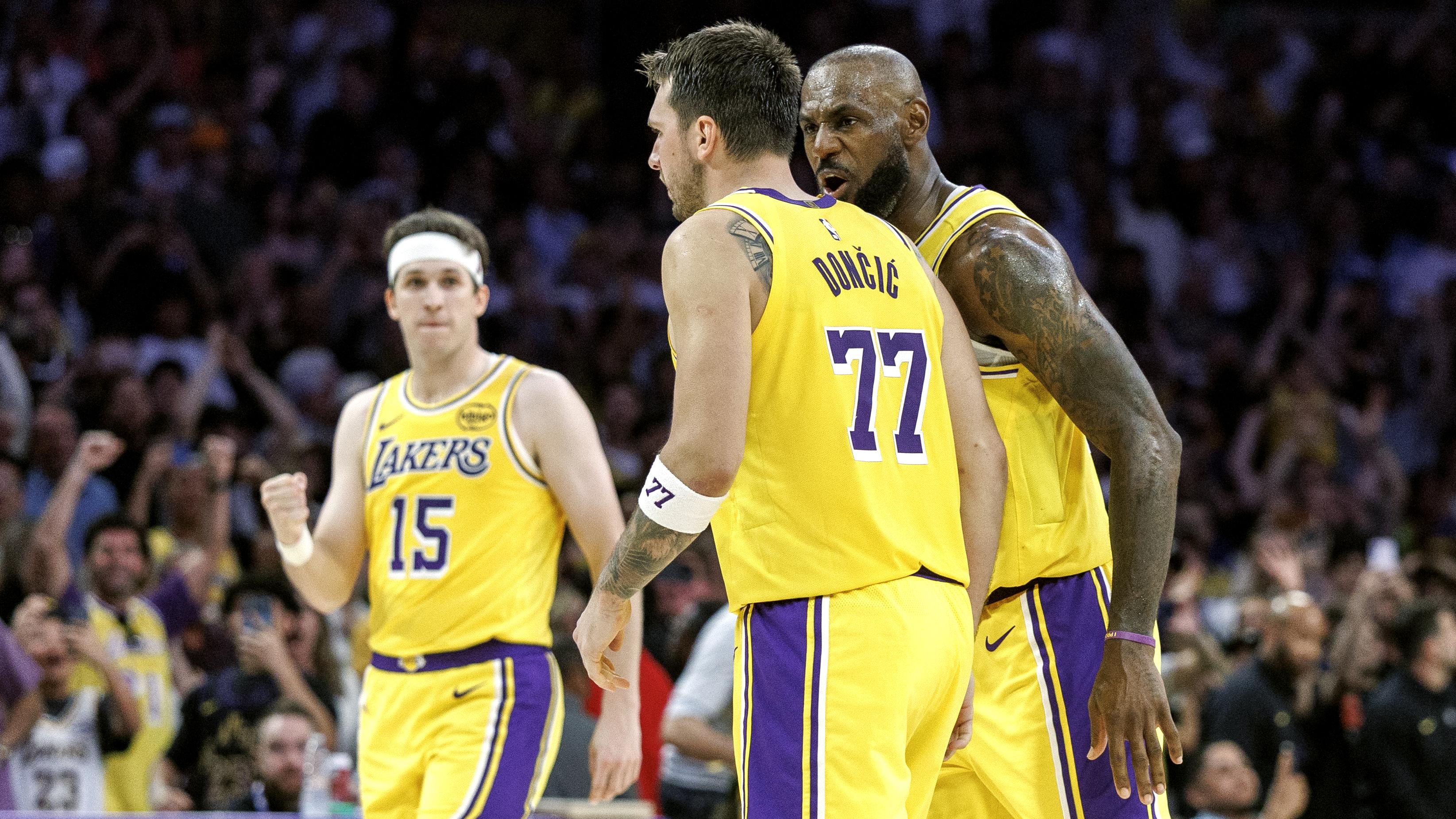
Luka Doncic Meets Jordan: A Cross-Generational Comparison of Basketball Icons
Comparing Luka Dončić to Michael Jordan provides a unique lens through which to analyze the evolution of professional basketball. By examining their respective impact on game flow, tactical dominance, and global reach, we can better un...
Comparing Luka Dončić to Michael Jordan provides a unique lens through which to analyze the evolution of professional basketball. By examining their respective impact on game flow, tactical dominance, and global reach, we can better understand how different eras of the National Basketball Association (NBA) prioritize specific skill sets, player roles, and the mathematical approach to winning games.
Contents
The comparison between Luka Dončić and Michael Jordan centers on the evolution of the "lead initiator" archetype. While Jordan defined the era of individual perimeter dominance and mid-range efficiency, Dončić represents the pinnacle of the high-usage, ball-dominant playmaker who prioritizes offensive orchestration and spatial geometry. Though their physical profiles and stylistic approaches differ, both players function as the gravitational centers of their respective teams, forcing defenses into reactive, sub-optimal configurations.
The Evolution of the Perimeter Star
The primary point of divergence between Michael Jordan and Luka Dončić lies in the basketball philosophies of their respective eras. Jordan’s game, particularly from the mid-1980s through the late 1990s, was built on isolation scoring, footwork, and a mid-range jump shot that was arguably the most refined in the history of the sport. His ability to navigate tight defenses without the benefit of modern floor spacing necessitated a physical and technical toughness that defined his legacy.
Conversely, Dončić operates in the modern era of the "pace and space" NBA. His game is predicated on pick-and-roll manipulation and the manipulation of defensive rotations. Where Jordan utilized his verticality and explosive first step to collapse defenses, Dončić utilizes deceleration, body positioning, and a high basketball IQ to lure defenders out of position. This fundamental difference in style does not necessarily indicate a disparity in talent, but rather a reflection of how the game's rules and tactical evolution have changed since the 1990s.
Tactical Influence and Usage
Michael Jordan’s role, especially during the Chicago Bulls' championship runs, was that of a primary scorer who occasionally functioned as a secondary playmaker. His usage rate was high, but his contribution was tethered to his capacity to finish plays. Dončić, however, functions as a high-volume initiator whose value is split almost equally between scoring and playmaking.
Tactical Comparison Table
| Attribute | Michael Jordan (Peak) | Luka Dončić (Current) |
|---|---|---|
| Primary Skill | Mid-range shooting/Isolation | Pick-and-roll orchestration |
| Defensive Focus | Lock-down perimeter defense | Positional team defense |
| Offensive Tempo | Calculated half-court sets | Fluid transition and set-play blend |
| Physical Asset | Verticality and lateral quickness | Deceptive pace and strength |
| Typical Play Type | Fadeaways and drives | Step-back threes and lob passes |
The table above illustrates the shift in primary responsibility. Jordan’s defensive legacy, characterized by his intense perimeter pressure and anticipation, is often contrasted with Dončić’s defensive approach, which focuses more on defensive rebounding and team-concept positioning. While Jordan was a perennial candidate for Defensive Player of the Year, Dončić is viewed through the lens of offensive load management, as his defensive energy is frequently conserved for his heavy offensive workload.
Measuring Impact: The Statistical Lens
Evaluating these two players across generations requires careful consideration of how statistical benchmarks have shifted. Jordan’s career averages were forged in a league with slower pace and heavier interior congestion, making his scoring efficiency—often hovering around 50% from the field—extraordinarily high for a perimeter player.
Dončić, playing in a league where the three-point shot is the primary offensive weapon, benefits from significantly more spacing. His career assist numbers and triple-double frequency reflect the modern propensity for high-usage stars to control every aspect of a possession. When analyzing their careers, observers must account for the following:
- Defensive Rules: Jordan played much of his career under strict "illegal defense" rules, which inhibited double-teaming unless the defender was directly engaged with his man. Modern rules allow for zone-adjacent defensive schemes that make it more difficult for isolation scorers but potentially easier for playmakers to find open shooters.
- Game Volume: The transition to the three-point revolution has effectively changed the value of a point. A 30-point performance in 1992 carried different weight than it does in 2026, as team scoring totals have increased across the league.
- Usage Rates: Dončić frequently operates with a usage rate that exceeds 35%. While Jordan had high-usage seasons, the modern reliance on a single primary creator is a more centralized model of offense than the one Jordan thrived in.
The Mental Aspect of the Game
The "Jordan Mentality"—a term often used to describe his relentless pursuit of victory and his psychological edge over opponents—has become the gold standard for competitive drive. This aspect of the comparison is subjective but remains relevant to how modern fans perceive leadership.
Dončić brings a different psychological profile. His demeanor on the court is often characterized by a joyful, albeit frustrated, intensity. While Jordan’s leadership style was often described as demanding and confrontational, Dončić tends to lead through performance and his infectious, high-IQ engagement with his teammates. Both methods have proven successful, but they originate from entirely different personality types and different expectations for the "star athlete" role in the 21st century.
Common Misconceptions in Cross-Generational Analysis
One of the most frequent errors in comparing these two players is the "era-blind" approach—assuming that because Dončić scores high totals, he is a more prolific scorer than Jordan. This fails to account for the context of team defensive systems and the evolution of the game.
Another common mistake is ignoring the defensive disparity. Because Jordan’s individual accolades include multiple All-Defensive First Team selections, critics often use this to dismiss Dončić’s entire offensive output. However, this ignores the structural reality of the modern NBA, where defensive responsibilities are heavily skewed toward team-based rim protection and defensive versatility, rather than individual perimeter lockdown capabilities.
Frequently Asked Questions
How does Luka Dončić’s style compare to Jordan’s iconic fadeaway jumper? Dončić utilizes a "step-back" three-pointer that serves the same tactical purpose as Jordan’s fadeaway: creating space against a defender. While the mechanical execution differs, the goal remains to achieve a high-percentage look when the defense has successfully denied the initial drive.
Is it fair to compare players from such different defensive eras? It is useful only if the statistical differences are adjusted for pace and league-wide efficiency. Comparing raw totals without context provides a distorted view, whereas examining the "percentile" performance of these players relative to their peers offers a more accurate measure of their relative dominance.
What is the most significant technical difference in their offensive game? The most significant difference is the reliance on the pick-and-roll. Jordan’s game was centered on clearing a side and operating in isolation. Dončić relies on a continuous screening game that forces the defense to make binary choices on every single possession.
How do their roles as leaders differ? Jordan led through a strict culture of accountability and high internal standards. Dončić acts as a hub for the team’s offensive rhythm; his leadership is characterized by his ability to maintain morale and keep the offensive machine moving through his own elite decision-making and creative passing.
Can Dončić be considered "the next Jordan"? This label is generally avoided by analysts because they play fundamentally different roles. Dončić is more accurately described as a modern iteration of the "point-forward" or "point-center," whereas Jordan remains the definitive archetype of the "shooting guard" who specialized in scoring and perimeter disruption.
Recommendation for Further Study
To fully grasp the magnitude of the differences between these two eras, one should review the footage of the 1996 Chicago Bulls' defensive schemes versus the Dallas Mavericks' current offensive sets. By observing how defenses rotate in response to a primary threat, the evolution of the game becomes evident. Focus on how Dončić manipulates space compared to how Jordan navigated traffic; this will provide the clearest visual evidence of the cross-generational divide in basketball strategy.
Image Gallery