Watchmen Movie Explained: Plot, Ending, and Graphic Novel Differences
The 2009 Watchmen movie, directed by Zack Snyder, is a complex deconstruction of the superhero genre set in an alternate 1985 where the presence of costumed vigilantes has radically altered history. The film follows a group of retired...
The 2009 Watchmen movie, directed by Zack Snyder, is a complex deconstruction of the superhero genre set in an alternate 1985 where the presence of costumed vigilantes has radically altered history. The film follows a group of retired "masks" who are drawn back into action following the murder of one of their own, eventually uncovering a conspiracy that forces them to choose between a lie that saves the world and a truth that might destroy it.
Contents
The Alternate History and World-Building of Watchmen
To understand the events of the movie, one must first grasp the world in which it takes place. In this timeline, costumed heroes first appeared in the late 1930s (The Minutemen). Their presence helped the United States win the Vietnam War and ensured that Richard Nixon remained in office well into the 1980s. However, by 1985, public sentiment has turned against vigilantes, leading to the Keene Act, which outlawed "mask" activities unless sanctioned by the government.
The world of 1985 is on the brink of nuclear war between the United States and the Soviet Union. The only thing preventing "Doomsday" is the existence of Dr. Manhattan, a being with god-like powers who acts as a nuclear deterrent for the U.S. However, his growing detachment from humanity creates a fragile geopolitical climate where any shift in the status quo could trigger total annihilation.
The Catalyst: Who Killed the Comedian?
The story begins with the murder of Edward Blake, also known as The Comedian. Blake was a government-sanctioned operative and a former member of both the Minutemen and the Watchmen. His death is investigated by Rorschach, the only remaining illegal vigilante who refuses to retire or work for the state.
Rorschach discovers that Blake was thrown from his high-rise apartment by an assailant with superhuman strength. Rorschach suspects a "mask killer" is targeting former heroes. This theory drives him to warn his former teammates:
- Dan Dreiberg (Nite Owl II): A retired, tech-heavy hero living a quiet life.
- Adrian Veidt (Ozymandias): The "smartest man in the world" who retired early to build a financial empire.
- Jon Osterman (Dr. Manhattan): A quantum-powered being who lives at a government research facility.
- Laurie Jupiter (Silk Spectre II): Dr. Manhattan's lover, who is struggling with Jon's increasing lack of emotion.
As the investigation unfolds, it becomes clear that Blake's death wasn't a random act of violence but the first step in a much larger, more terrifying plan.
The Main Characters and Their Ideologies
The conflict in Watchmen is as much about philosophy as it is about action. Each character represents a different approach to morality and the concept of justice.
Rorschach (Walter Kovacs)
Rorschach views the world in black and white. He is a moral absolutist who believes that evil must be punished without compromise. His brutal methods and uncompromising nature make him the film's most controversial "hero." For Rorschach, the truth is more important than the consequences of revealing it.
Dr. Manhattan (Jon Osterman)
After a laboratory accident disintegrated his physical body, Jon Osterman reconstituted himself as a being who perceives time non-linearly. He sees the past, present, and future simultaneously. This perspective leads to a profound sense of determinism and detachment. If he knows what will happen and cannot change it, he begins to lose interest in human affairs, viewing life as a "highly overrated phenomenon."
Ozymandias (Adrian Veidt)
Veidt is a utilitarian. He believes that the "greater good" justifies any means, no matter how horrific. Having realized that the world is heading toward nuclear destruction, he decides that a controlled catastrophe is preferable to a total one. He views himself as a modern-day Alexander the Great, capable of "solving" the problem of human conflict through a grand, deceptive gesture.
Nite Owl and Silk Spectre
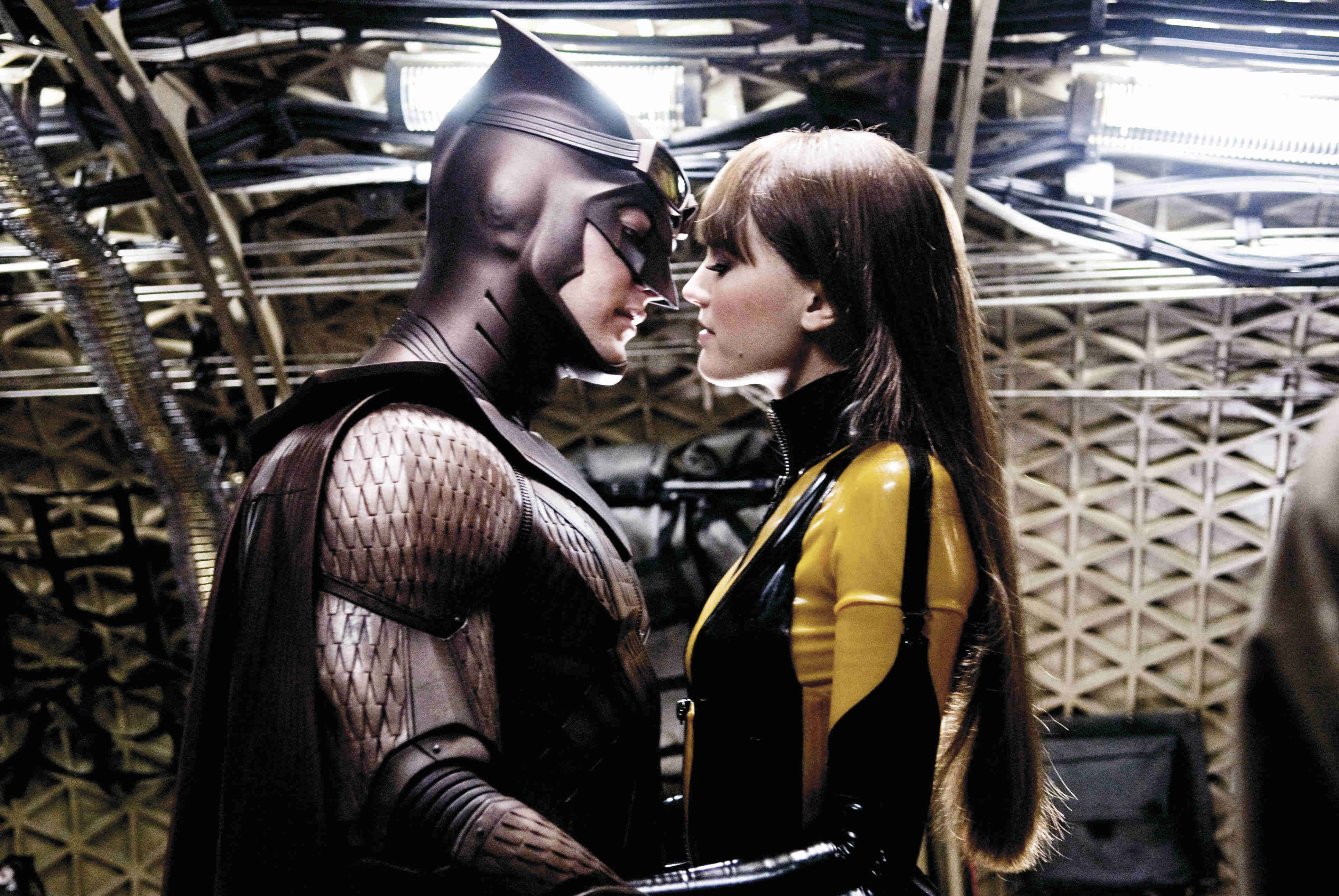
Dan Dreiberg and Laurie Jupiter represent the more human side of the superhero spectrum. They are driven by nostalgia, a sense of duty, and eventually, a desire for personal connection. Their journey in the film involves reclaiming their identities as heroes while grappling with the realization that their efforts might be meaningless in the face of global collapse.
The Master Plan: Ozymandias’ End Game
The "mask killer" Rorschach feared is actually Adrian Veidt. Veidt realized that the only way to stop the U.S. and the USSR from destroying each other was to give them a common enemy.
To achieve this, Veidt orchestrated several key events:
- The Exile of Dr. Manhattan: Veidt staged a televised event where it was revealed that those close to Dr. Manhattan (including his former lover Janey Slater) had developed terminal cancer. This led the public to fear Manhattan and caused Jon to exile himself to Mars, removing the U.S.’s primary nuclear deterrent and emboldening the Soviets.
- The Murder of The Comedian: Blake had accidentally discovered Veidt's plan while on a government mission. Veidt killed him to ensure silence.
- The Framing of Rorschach: Veidt set up Rorschach to be arrested for the murder of Moloch, another former costumed figure, to get him out of the way.
The culmination of Veidt's plan involves the destruction of several major cities across the globe (New York, London, Moscow, etc.). In the movie, Veidt uses reactors designed to mimic Dr. Manhattan’s energy signature to vaporize these cities. The world believes Dr. Manhattan has turned against humanity, prompting the U.S. and the Soviet Union to sign a peace treaty to face this "god-like" threat together.
Explaining the Ending: The Dilemma of Peace
The film's climax takes place at Veidt’s Antarctic retreat, Karnak. When Dan and Rorschach arrive to stop him, Veidt reveals that he has already "triggered" the explosions 35 minutes ago. He didn't monologue his plan to give them a chance to stop him; he waited until it was already finished.
Dr. Manhattan arrives shortly after, intending to kill Veidt. However, he stops when he realizes that Veidt’s plan has actually worked. The news reports show that the world powers have ceased hostilities and are cooperating to rebuild.
This presents the heroes with a devastating choice:
- The Compromise: If they tell the world the truth (that Veidt was responsible), the peace will shatter, and nuclear war will resume.
- The Silence: If they stay silent, millions died for a lie, but billions more will live in a new era of peace.
Dan, Laurie, and Dr. Manhattan all agree to keep the secret, recognizing the utilitarian logic of the situation. Rorschach refuses. He cannot compromise his moral code, even if it means the end of the world. He leaves the base, intending to return to civilization and tell the truth. Dr. Manhattan intercepts him and, at Rorschach's own tearful demand, kills him to protect the fragile peace.
The Final Twist
Dr. Manhattan leaves Earth for another galaxy, but the film ends on a note of ambiguity. Rorschach had mailed his journal—which contains his entire investigation and his suspicions about Veidt—to the New Frontiersman, a right-wing tabloid. In the final scene, a young editor reaches for the journal. This suggests that the "truth" may eventually come out, potentially rendering the entire sacrifice meaningless.
Watchmen: Movie vs. Graphic Novel
While Zack Snyder’s film is remarkably faithful to the visual style of Dave Gibbons’ illustrations, there are significant differences in the ending and the overall tone.
| Feature | 2009 Movie Version | Original Graphic Novel (1986) |
|---|---|---|
| The "Threat" | Energy blasts mimicking Dr. Manhattan's signature. | A giant, genetically engineered "alien" squid. |
| The Scope | Multiple cities worldwide are attacked (New York, Moscow, etc.). | Only New York City is attacked via a psychic shockwave. |
| Dr. Manhattan's Fate | He is framed as the villain of the world. | He remains a hero/deterrent, but leaves because he is bored. |
| The Comedian's Role | Portrayed as a more traditional "action" figure. | His nihilism is deeply tied to the "Black Freighter" comic-within-a-comic. |
| Violence Tone | Highly stylized, "cool" action sequences. | De-glamorized, gritty, and intentionally uncomfortable. |
The change from the "Alien Squid" to the "Dr. Manhattan Frame-up" is the most debated alteration. Snyder argued that introducing a giant squid in the final act would have been too jarring for film audiences and required too much exposition. By using Dr. Manhattan as the scapegoat, the film ties the ending more closely to the established character dynamics.
Themes and Symbolism
The Doomsday Clock
The recurring motif of the Doomsday Clock represents the proximity of humanity to self-destruction. In the film, the clock is constantly ticking toward midnight, reflecting the mounting tension of the Cold War.
The Blood-Stained Smiley Face
The iconic yellow smiley face with a drop of blood belonged to The Comedian. It symbolizes the death of innocence and the dark reality hiding behind the "heroic" facade of the mid-20th century.
"Who Watches the Watchmen?"
This phrase (Quis custodiet ipsos custodes?) is the central question of the story. It posits that when individuals take the law into their own hands and possess power far beyond the average citizen, there is no one to hold them accountable. The film shows that even with the best intentions, those in power (like Veidt) can become monsters.
Frequently Asked Questions
Why did Dr. Manhattan kill Rorschach?
Dr. Manhattan killed Rorschach because Rorschach refused to keep Adrian Veidt’s secret. Rorschach intended to tell the world that the "alien/Manhattan" attack was a hoax perpetrated by Veidt. Dr. Manhattan realized that if the truth were revealed, the newly formed global peace would collapse, leading to a nuclear war that would kill everyone. By killing Rorschach, Manhattan chose the "lesser of two evils."
Was Ozymandias actually the villain?
In a traditional sense, yes, because he murdered millions of innocent people. However, in his own mind, he is the savior of humanity. The film intentionally avoids a clear moral answer, forcing the audience to decide if a peace built on a lie is better than a war built on the truth.
What is the significance of the "Tales of the Black Freighter"?
In the Ultimate Cut of the film (and the graphic novel), there is an animated story about a shipwrecked sailor. This story mirrors Adrian Veidt’s journey: a man who, in his desperation to save his home from a perceived threat, becomes a monster and ends up destroying the very things he loved.
Does the ending mean Veidt failed?
The ending is ambiguous. While Veidt succeeded in stopping the nuclear war, the arrival of Rorschach's journal at the newspaper suggests that his "perfect" lie has a flaw. If the public learns the truth, the peace will end, meaning Veidt only delayed the inevitable rather than solving it.
Practical Recommendations for Fans
If you have finished the 2009 movie and want to explore the Watchmen universe further, consider the following steps:
- Read the Original Graphic Novel: Written by Alan Moore, it contains much deeper philosophical subtext and the original "Squid" ending.
- Watch the 2019 HBO Limited Series: This is a direct sequel to the graphic novel (not the movie). It takes place 30 years later and explores the long-term consequences of Veidt’s actions.
- View the Ultimate Cut: If you only saw the theatrical version, the Ultimate Cut integrates the Tales of the Black Freighter and adds significant character development for the minor cast.
Image Gallery