How the U.S. State Department Travel Advisory System Works
The U.S. Department of State travel advisory system provides standardized safety and security information for every country globally. By assigning a level from 1 to 4 based on specific risk indicators like crime, terrorism, and civil u...
The U.S. Department of State travel advisory system provides standardized safety and security information for every country globally. By assigning a level from 1 to 4 based on specific risk indicators like crime, terrorism, and civil unrest, the system helps U.S. citizens make informed decisions about international travel and emergency preparedness.
Contents
The Bureau of Consular Affairs within the U.S. Department of State is responsible for issuing and updating these advisories. While many travelers assume these ratings are based solely on political climate, the process is a complex, data-driven synthesis of intelligence reports, embassy assessments, and interagency collaboration. As of 2026, this system remains the primary tool for the U.S. government to communicate potential threats to its citizens abroad.
The Hierarchy of Risk: Understanding the Four Advisory Levels
The most visible component of the system is the numeric level assigned to a country or specific regions within a country. These levels are not static; they are reviewed periodically and updated immediately when security conditions shift.
Level 1: Exercise Normal Precautions
This is the lowest advisory level for safety and security risk. It signifies that the country is generally stable, but it does not mean "zero risk." All international travel carries some degree of uncertainty. In a Level 1 destination, travelers are advised to maintain situational awareness, much as they would in a major U.S. city.
Level 2: Exercise Increased Caution
A Level 2 advisory indicates that there are specific, heightened risks to safety and security. These might include high rates of petty crime, frequent demonstrations, or reliable intelligence regarding localized threats. The State Department provides specific advice for travelers in these areas, such as avoiding certain neighborhoods or being particularly vigilant during holiday seasons.
Level 3: Reconsider Travel
Reconsider Travel is a significant escalation. At this level, the State Department advises against travel due to serious risks. This level is often applied to countries experiencing widespread civil unrest, significant terrorist activity, or unstable political environments. Travelers who must go to a Level 3 destination are urged to have clear evacuation plans and to ensure their documentation is in order.
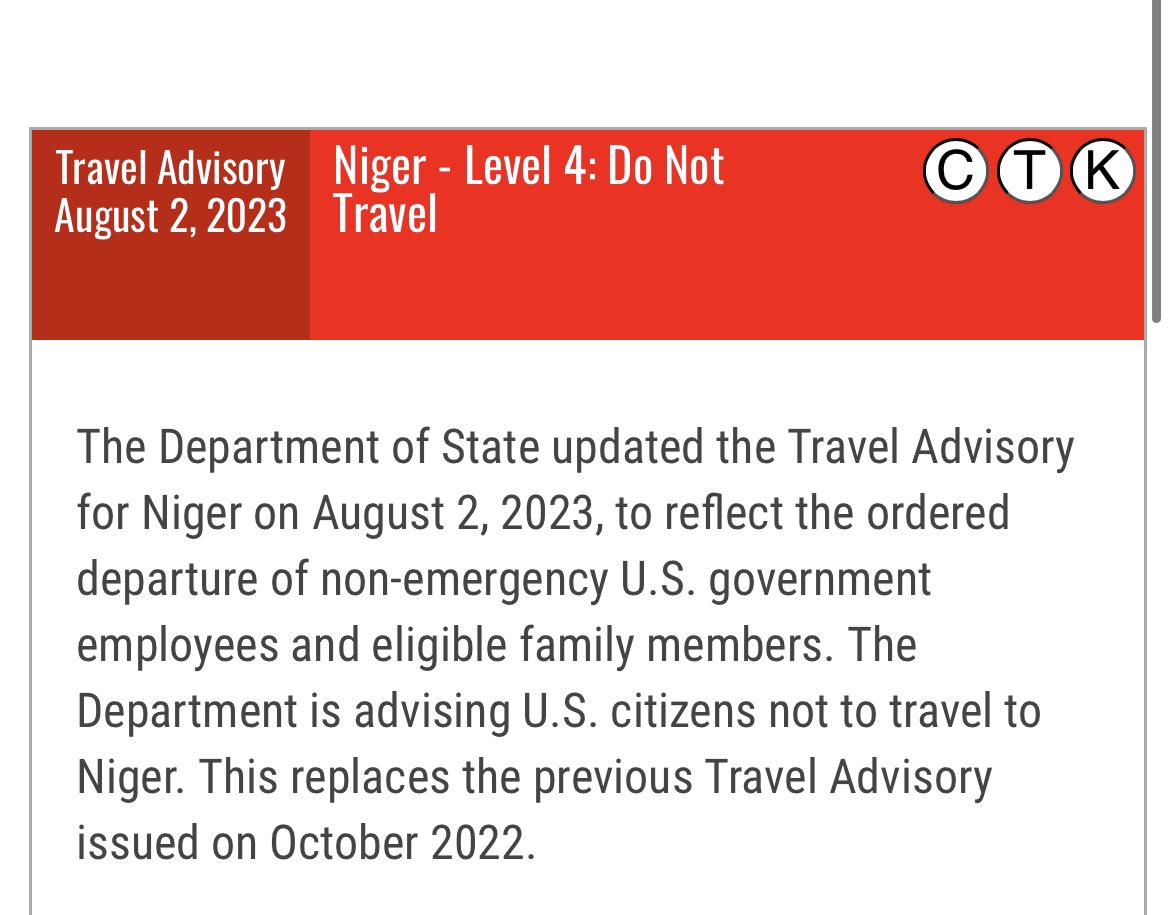
Level 4: Do Not Travel
This is the highest level of warning. It is reserved for countries with life-threatening risks, such as active armed conflict, extreme kidnapping risk, or catastrophic environmental disasters. Importantly, a Level 4 advisory often implies that the U.S. government has very limited or no ability to provide consular assistance if a citizen gets into trouble. In 2026, countries under this designation typically have suspended or "ordered departure" status for embassy staff.
Standardized Risk Indicators: Deciphering the Letters
To provide clarity on why a specific level was assigned, the State Department uses standardized "Risk Indicators." These are one-letter codes that appear in the advisory text to help travelers understand the specific nature of the threat.
- C (Crime): Widespread violent or organized crime is present in parts of the country. Local law enforcement may have limited ability to respond.
- T (Terrorism): Terrorist groups have a history of attacks or have made credible threats against civilian or government targets.
- U (Civil Unrest): Political, economic, or social instability leading to demonstrations, protests, or strikes that can turn violent.
- H (Health): Significant health risks are present, including outbreaks of infectious diseases or the failure of local medical infrastructure.
- N (Natural Disaster): The country is prone to natural disasters like earthquakes, hurricanes, or volcanic activity.
- E (Time-Limited Event): Short-term events such as elections, major sporting events, or high-profile international summits that may pose security risks.
- K (Kidnapping or Hostage Taking): Criminal or terrorist groups frequently target foreigners for kidnapping or hostage situations.
- D (Wrongful Detention): The risk of U.S. nationals being detained by a foreign government without due process.
The Information Pipeline: How Advisories Are Created
The creation of a Travel Advisory is not a solitary act by a single official. It involves a rigorous interagency process to ensure the information is accurate, timely, and free from purely political bias—though diplomatic relations can sometimes influence the phrasing.
1. Field Reporting from Embassies and Consulates
U.S. embassies and consulates are the primary "boots on the ground." Regional Security Officers (RSOs) and political officers monitor local news, police reports, and social trends. They provide regular updates to Washington D.C. regarding the safety of the environment for U.S. citizens.
2. Intelligence Community Input
The State Department works closely with the CIA, FBI, and other intelligence agencies to assess "overt" and "covert" threats. This includes monitoring communications from terrorist organizations and tracking the movement of insurgent groups.
3. Interagency Coordination
The Bureau of Consular Affairs coordinates with regional bureaus (such as the Bureau of African Affairs or Bureau of European and Eurasian Affairs) to ensure that the advisory aligns with broader U.S. foreign policy while prioritizing citizen safety. If a health threat is the primary driver, the Centers for Disease Control and Prevention (CDC) is consulted to align the Travel Advisory with Travel Health Notices.
4. Legal and Technical Review
Before a change in level is published, it undergoes a legal review to ensure the language meets statutory requirements and accurately reflects the government's stance on safety.
Review Cycles and Update Triggers
Advisories are not "set and forget" documents. They operate on a dual-track review system:
- Periodic Reviews: Level 1 and 2 advisories are typically reviewed every 12 months. Level 3 and 4 advisories are reviewed every six months to ensure the high-risk designation is still justified.
- Event-Driven Updates: If a major event occurs—such as a coup, a major terrorist attack, or a viral outbreak—the advisory can be updated in a matter of hours. These are often preceded by "Security Alerts" sent via the Smart Traveler Enrollment Program (STEP).
| Feature | Travel Advisory | Security/Health Alert |
|---|---|---|
| Duration | Long-term/Permanent until updated | Short-term/Situational |
| Scope | Entire country or major regions | Specific city, event, or neighborhood |
| Action | Strategic planning/Risk assessment | Immediate tactical action (e.g., "shelter in place") |
| Review Frequency | 6–12 months or as needed | Expires when the event concludes |
| Purpose | To inform travel decisions | To protect citizens during an active crisis |
The Difference Between Advisories and Alerts
It is critical for travelers to distinguish between a Travel Advisory and a Security Alert. While the Advisory provides the baseline safety level for a country, an Alert is a rapid-response notification.
For example, a country might stay at Level 2 (Exercise Increased Caution) for years. However, if a sudden protest is scheduled for a specific square in the capital city, the local embassy will issue a Security Alert. This alert provides specific instructions, such as avoiding the area or expecting transportation delays. Travelers should monitor both to have a complete picture of their destination.
Practical Impact on Travel and Insurance
The State Department’s advisory level has practical implications that extend beyond personal safety. It often affects legal and financial aspects of travel.
Travel Insurance Coverage
Many standard travel insurance policies have "exclusion" clauses for Level 4 (Do Not Travel) destinations. If you travel to a country against State Department advice, your policy may not cover medical evacuations, trip cancellations, or theft. Some specialized "Cancel for Any Reason" (CFAR) policies may offer protection, but they are significantly more expensive.
Corporate and Academic Policy
Most U.S.-based corporations and universities use the State Department levels as a threshold for sanctioned travel. Often, employees or students are prohibited from using organization funds to travel to Level 3 or 4 countries without a high-level security waiver.
The Smart Traveler Enrollment Program (STEP)
The STEP program is the primary way the advisory system reaches individual citizens. By registering their trip, travelers allow the embassy to contact them in an emergency and ensure they receive automated updates if the Advisory Level or security situation changes while they are in-country.
Frequently Asked Questions
Can the State Department stop me from traveling to a Level 4 country?
No. For the vast majority of destinations, a Travel Advisory is a recommendation, not a legal prohibition. U.S. citizens are generally free to travel where they choose. However, the U.S. government may invalidate passports for travel to specific countries under extraordinary circumstances (as seen historically with North Korea), but this is rare and requires a specific legal decree.
Why do some stable countries have a Level 2 rating?
Level 2 ratings are often applied to developed nations due to specific, persistent risks like the threat of terrorism or high rates of petty crime targeting tourists. For example, many Western European countries have held Level 2 ratings in recent years due to the potential for terrorist activity in major urban centers.
Does a Level 4 advisory mean the embassy is closed?
Not necessarily, but it is a strong indicator. In some Level 4 countries, the embassy remains open with "essential personnel" only. In others, such as during active wars, the embassy may suspend operations entirely, and consular services are handled by a "protecting power" (a third-party country) or a neighboring U.S. embassy.
How do State Department advisories differ from CDC notices?
The State Department focuses on security, crime, and general safety, while the CDC focuses specifically on health risks. While they coordinate, a country could be a Level 1 for security (State Department) but have a high-level health notice (CDC) due to a localized disease outbreak.
Is the advisory system used for political leverage?
While the State Department maintains that advisories are based on safety data, foreign governments often view a downgrade in their rating as a political snub or an economic threat to their tourism industry. However, the U.S. government maintains a statutory obligation to provide citizens with accurate safety information, regardless of diplomatic friction.
Strategic Recommendation for Travelers
Before booking any international travel in 2026, check the official Department of State travel website for the latest advisory. Do not rely solely on the numeric level; read the full text to understand the specific "Risk Indicators" involved. Finally, always enroll in the Smart Traveler Enrollment Program (STEP) to ensure that the advisory system can work for you in real-time, providing the necessary data to navigate global uncertainties safely.
Image Gallery