How Whole Life Insurance Premiums Paid for a Set Period Work
Whole life insurance with premiums paid for a set period, known as limited-pay whole life, works by compressing the total cost of a permanent life insurance policy into a specific number of years. Once these scheduled payments are comp...
Whole life insurance with premiums paid for a set period, known as limited-pay whole life, works by compressing the total cost of a permanent life insurance policy into a specific number of years. Once these scheduled payments are completed, the policy remains "paid-up," meaning the coverage stays in force for the rest of the insured's life without any further out-of-pocket costs.
Contents
Limited-pay whole life insurance is a variation of traditional permanent coverage designed for those who want the lifetime guarantees of whole life but wish to eliminate the ongoing liability of premium payments during their retirement years or a specific career window. As of 2026, these policies remain a cornerstone of sophisticated financial planning, offering a blend of guaranteed death benefits, accelerated cash value accumulation, and tax-advantaged growth.
To understand how these policies function, one must look at the actuarial mechanics, the impact on cash value, and the contractual obligations that distinguish them from "straight" or "ordinary" whole life insurance.
Understanding the Mechanics of Limited-Pay Whole Life
In a standard whole life policy, premiums are typically structured to be paid until the insured reaches age 100 or 121. In contrast, a limited-pay policy allows the policyholder to choose a specific timeframe—such as 10 years, 20 years, or until a certain age—to fulfill their total premium obligation.
The insurance company calculates the "present value" of all the premiums that would have been paid over a lifetime and redistributes them into the shorter, chosen window. Because the insurer is receiving more capital earlier in the life of the contract, each individual premium payment is significantly higher than it would be for a traditional policy. However, this front-loading of capital allows the insurance company to invest the funds sooner, which accelerates the growth of the policy's internal cash value.
Once the final scheduled payment is made, the policy achieves "contractual paid-up status." This is a legal guarantee that the death benefit will remain active until the insured passes away, regardless of how long they live, provided no loans or withdrawals have compromised the policy's integrity.
Common Payment Period Structures
The flexibility of limited-pay policies allows consumers to align their insurance costs with their highest earning years. Several standard structures dominate the market in 2026:
10-Pay and 20-Pay Policies
The 10-pay and 20-pay structures are among the most popular limited-pay options. A 10-pay policy requires only ten annual premium payments. These are ideal for high-income earners or individuals who have received a windfall and want to "park" wealth in a safe, tax-advantaged vehicle. A 20-pay policy spreads the cost over two decades, making the annual premium more manageable while still ensuring the policy is fully funded well before the typical retirement age.
Paid-Up at Age 65 (L65)
The "Life Paid-Up at 65" (L65) policy is specifically designed to coordinate with the standard retirement age. The goal is to ensure that by the time the policyholder transitions to a fixed income, one of their largest recurring expenses—the life insurance premium—is eliminated. This provides significant peace of mind, as the death benefit remains a permanent asset in the estate without requiring any cash flow from retirement savings.
Single-Premium Whole Life
The most extreme version of a limited-pay policy is the single-premium policy, where the entire cost of the life insurance is paid in one lump sum. While this provides immediate "paid-up" status, it almost always triggers a specific tax classification known as a Modified Endowment Contract (MEC), which changes how withdrawals from the cash value are taxed.
Accelerated Cash Value Accumulation
One of the primary technical advantages of paying premiums over a set period is the impact on the policy's cash value. Cash value is the living benefit component of a whole life policy that grows on a tax-deferred basis.
Because limited-pay premiums are higher, a larger portion of those early payments is directed into the cash value account after the initial administrative and mortality costs are covered. This results in:
- Faster Break-Even Points: The point at which the cash value equals or exceeds the total premiums paid often occurs much sooner in a 10-pay or 20-pay policy than in a traditional whole life policy.
- Enhanced Compounding: By depositing more capital into the policy in the early years, the policyholder maximizes the effects of compound interest (and dividends, if applicable). Even after payments stop, the cash value continues to grow based on the guaranteed interest rate provided by the insurer.
- Greater Loan Availability: Policyholders can borrow against the cash value of their policy. Because limited-pay policies build value quickly, the owner has access to a larger pool of liquidity earlier in the policy's life.
The Role of Dividends in Limited-Pay Policies
If the policy is issued by a mutual insurance company, the policyholder is eligible to receive annual dividends. Even after the premium payment period has ended, a limited-pay policy continues to participate in the company's divisible surplus.
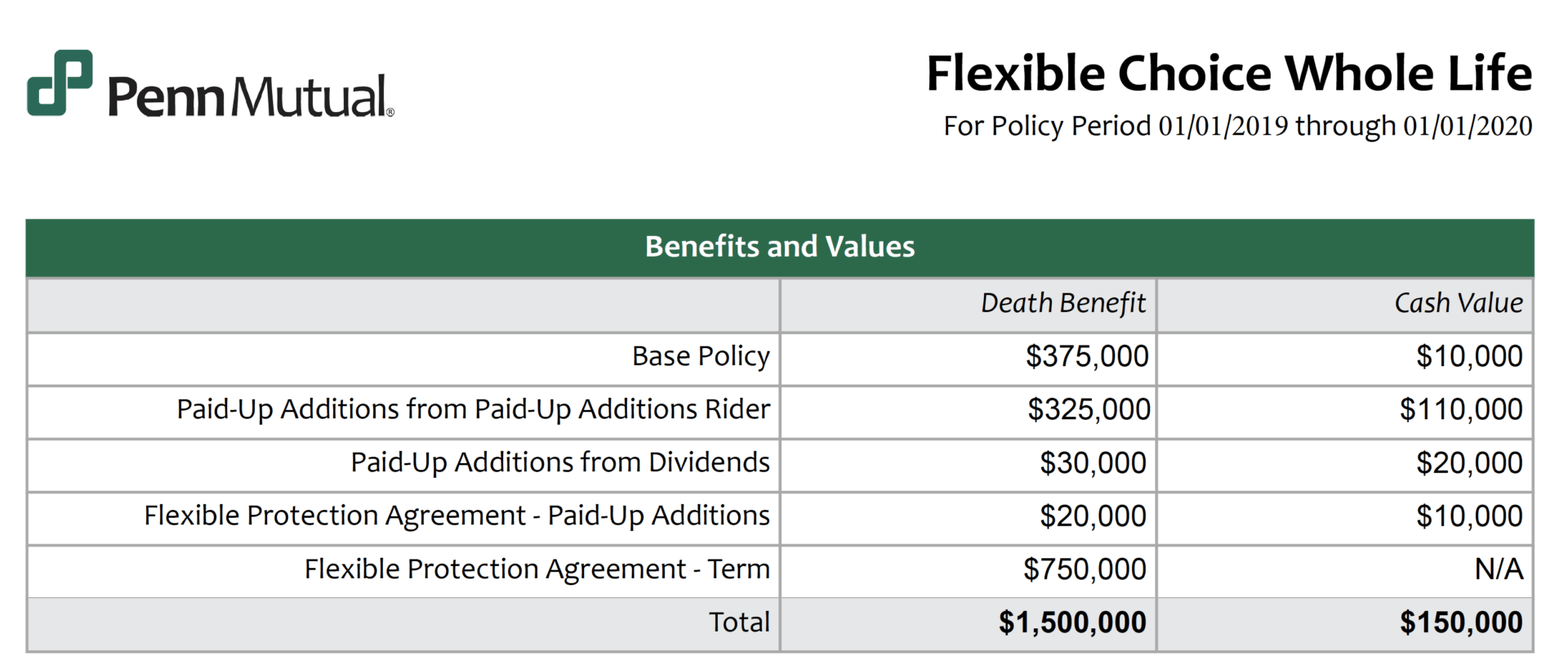
In 2026, most policyholders choose to use these dividends to purchase "Paid-Up Additions" (PUAs). This is a critical mechanism for limited-pay policies because:
- Increased Death Benefit: Each PUA purchased increases the total death benefit of the policy without requiring a medical exam.
- Growth After the Pay Period: Even though the policyholder is no longer writing checks to the insurance company, the policy continues to grow in both death benefit and cash value through these dividend-funded additions.
- Inflation Protection: As the death benefit grows over time through PUAs, it helps protect the purchasing power of the legacy against inflation.
Comparing Premium Structures
The following table illustrates the conceptual differences between premium payment periods for a hypothetical $500,000 whole life policy for a healthy 35-year-old individual.
| Feature | Ordinary Whole Life (Pay to 100) | 20-Pay Whole Life | 10-Pay Whole Life |
|---|---|---|---|
| Annual Premium Amount | Lowest | Moderate | Highest |
| Payment Duration | Lifetime (approx. 65 years) | 20 Years | 10 Years |
| Total Out-of-Pocket Cost | Highest (usually) | Moderate | Lowest (usually) |
| Early Cash Value Growth | Slow | Moderate | Very Fast |
| Contractual Paid-Up Date | Age 100 or 121 | After 20th Payment | After 10th Payment |
| MEC Risk | Very Low | Low | Moderate/High |
Note: Specific figures depend on the insurer's 2026 actuarial tables and the health rating of the applicant.
The Critical Risk: Modified Endowment Contracts (MECs)
When paying premiums over a set, shortened period, one must be aware of IRS Section 7702, which defines what constitutes "life insurance" for tax purposes. If a policy is funded too quickly, it may fail the "7-pay test."
The 7-pay test is a calculation used by the IRS to determine if the total amount of premiums paid into a policy during its first seven years exceeds the amount needed to have the policy fully paid up in seven years. If a policy fails this test, it is classified as a Modified Endowment Contract (MEC).
Consequences of MEC Status:
- LIFO Taxation: Withdrawals and loans from a MEC are taxed on a "last-in, first-out" basis, meaning gains are taxed as ordinary income before the tax-free basis is touched.
- Penalty Tax: If the policyholder is under age 59½, a 10% penalty may apply to any taxable distributions from a MEC, similar to an IRA or 401(k).
- Irreversibility: Once a policy becomes a MEC, it generally cannot be reversed.
Most insurance companies in 2026 have automated systems to prevent policyholders from accidentally overfunding a policy to the point of MEC status, especially with 10-pay or 20-pay structures. However, single-premium or highly "crunched" payment schedules require careful monitoring by a financial professional.
Strategic Uses for Set-Period Premiums
Limited-pay policies are not just about convenience; they are strategic financial tools. They are frequently used in the following scenarios:
- Estate Planning for Grandparents: A grandparent might purchase a 10-pay policy for a grandchild. By the time the child reaches adulthood, the policy is fully paid for, providing the child with a permanent asset that has significant cash value for college or a first home down payment.
- Executive Compensation: Companies may use 10-pay policies as part of a "Key Person" insurance plan or an executive bonus (Section 162) plan, ensuring the company's or the executive's obligation is fulfilled during the individual's tenure.
- Legacy Certainty: For individuals who want to guarantee a specific inheritance for their heirs but do not want to worry about managing premium payments in their 80s or 90s, the limited-pay structure provides absolute certainty.
- Alternative Asset Allocation: Because of the high early cash value, some investors view 10-pay policies as a "bond alternative" within a diversified portfolio, offering a guaranteed floor of growth and a tax-free death benefit.
Common Mistakes and Misconceptions
Despite the benefits, there are several ways a set-period premium strategy can go wrong if not managed correctly.
Confusing "Paid-Up" with "Vanishing Premiums" In the 1980s and 90s, many policyholders were sold "vanishing premium" policies where dividends were projected to eventually cover the costs of the premiums. If dividends dropped, the premiums "reappeared." This is not how a modern limited-pay policy works. A limited-pay policy is contractually guaranteed to be paid up after the set period, regardless of interest rates or dividend performance.
Overlooking the Opportunity Cost While paying for a policy in 10 years results in lower total out-of-pocket costs over a lifetime, the annual premiums are significantly higher. Policyholders must consider if that capital could be better utilized elsewhere, such as in a high-growth investment or debt reduction, before committing to the high premiums of a limited-pay contract.
Policy Loans During the Pay Period Taking significant loans against the cash value while still in the 10-year or 20-year payment window can slow down the growth of the policy and, in extreme cases, may require additional payments or interest to keep the policy in force, potentially complicating the "paid-up" timeline.
FAQs
What happens if I stop paying before the set period is over?
If you stop paying a 20-pay policy after year 12, for example, the policy does not necessarily lapse. Most contracts include "non-forfeiture options." You may be able to convert the existing cash value into a "Reduced Paid-Up" policy, which provides a smaller death benefit that remains in effect for life without further payments. Alternatively, you could use the cash value to pay the remaining premiums until it is exhausted.
Is the death benefit lower in a limited-pay policy?
No, the death benefit is determined at the time of purchase based on the premium you are willing to pay and your age/health. However, because the cash value grows faster in a limited-pay policy, the "net amount at risk" for the insurance company decreases more quickly than in a traditional policy.
Can I change my payment period after the policy is issued?
Generally, no. The premium payment period is a core contractual feature of the policy. While you can often pay more (within MEC limits) to speed up growth, you typically cannot extend a 10-pay policy into a 20-pay policy once the contract is signed.
Are the premiums for limited-pay policies tax-deductible?
For individuals, life insurance premiums—including limited-pay premiums—are not tax-deductible. However, the growth of the cash value is tax-deferred, and the death benefit is generally received by beneficiaries free of federal income tax.
Can I use the cash value while still paying premiums?
Yes. You have access to the cash value through loans or partial surrenders as soon as it begins to accumulate. However, because the goal of a limited-pay policy is often to maximize long-term growth and legacy, many advisors recommend waiting until the policy is fully paid up before taking substantial distributions.
Practical Recommendation
When considering a whole life policy with premiums paid for a set period, start by performing a "cash flow audit" of your projected earnings over the next 10 to 20 years. If you are in your peak earning years and want to secure a permanent legacy without the risk of future premium increases or the burden of payments during retirement, a 10-pay or L65 policy is likely the most efficient choice.
Ensure you work with a mutual insurance company that has a strong history of paying dividends, as this will allow your "paid-up" policy to continue growing in value long after your final check is written. Finally, always request a "MEC Illustration" from your agent to verify that your chosen payment schedule stays within the legal limits for tax-advantaged growth under current 2026 tax codes.
Image Gallery