Government Surveillance of Citizens Balancing Security and Privacy
Balancing government surveillance with citizen privacy requires a robust framework of independent judicial oversight, strict proportionality, and radical transparency. By 2026, the most effective models utilize specialized courts and a...
Balancing government surveillance with citizen privacy requires a robust framework of independent judicial oversight, strict proportionality, and radical transparency. By 2026, the most effective models utilize specialized courts and automated audits to ensure that data collection serves legitimate national security interests without infringing upon fundamental human rights or digital civil liberties.
Contents
The Modern Surveillance Landscape in 2026
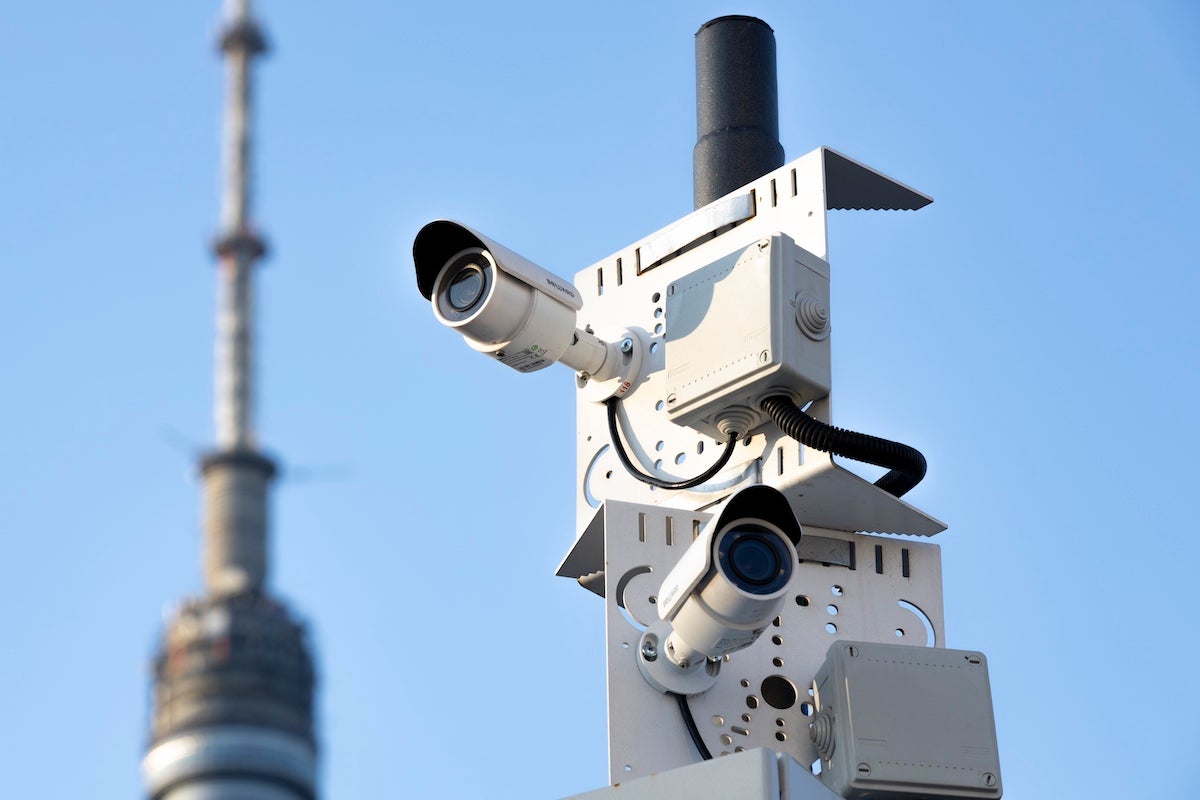
The technological landscape of 2026 has fundamentally altered the relationship between the state and the individual. While traditional wiretapping remains a tool for law enforcement, it has been largely superseded by advanced biometric tracking, predictive policing algorithms, and the mass ingestion of open-source intelligence (OSINT). The proliferation of Internet of Things (IoT) devices means that the volume of data available for state review is unprecedented, creating a persistent "digital exhaust" that can be used to reconstruct a citizen's movements, associations, and even intentions.
Government agencies argue that this depth of insight is necessary to combat decentralized threats. In an era of sophisticated cyber warfare and rapid radicalization, the ability to monitor encrypted communications and analyze large-scale metadata is viewed as a prerequisite for preventing large-scale tragedies. However, the technical capacity to surveil does not inherently grant the moral or legal authority to do so. The primary challenge in 2026 remains the "mission creep" of surveillance tools—technologies originally designed for counter-terrorism are increasingly utilized for routine policing or the suppression of political dissent.
To address these challenges, many jurisdictions have moved toward "Privacy by Design" in government infrastructure. This involves the integration of privacy-enhancing technologies (PETs) directly into state databases, ensuring that data is anonymized unless a specific legal threshold is met. This technical approach acts as a first line of defense against the unauthorized use of personal information.
The Legal Pillars: Necessity and Proportionality
The legal debate surrounding government surveillance centers on two core principles: necessity and proportionality. For a surveillance measure to be considered legitimate under international human rights standards, the government must demonstrate that the intrusion is necessary to achieve a specific, pressing social need—such as national security or public safety—and that the measure is proportionate to the objective.
Necessity implies that there are no less-intrusive means available to achieve the same goal. If law enforcement can gather evidence through traditional search warrants, mass surveillance of a geographic area is typically viewed as a violation of this principle. Proportionality requires a balancing test; the potential benefit to security must outweigh the harm to individual privacy and the "chilling effect" on free speech.
In the United States, the Foreign Intelligence Surveillance Act (FISA) and its various sections, particularly Section 702, continue to be focal points for reform. By 2026, many legal scholars advocate for a stricter definition of "foreign intelligence information" to prevent the incidental collection of domestic communications. Meanwhile, the European Court of Human Rights (ECHR) has increasingly ruled that bulk interception regimes lack the "quality of law" required by the European Convention on Human Rights unless they are accompanied by "end-to-end" safeguards.
The Role of Independent Judicial Oversight
Effective oversight is the most critical component in balancing security and privacy. Without a "check" on executive power, surveillance programs naturally expand. In 2026, the gold standard for oversight involves a three-tiered system:
- Prior Judicial Authorization: Except in immediate life-threatening emergencies, every targeted surveillance action should require a warrant from an independent judge who has been briefed on the technical specifics of the request.
- Technological Auditing: Legislative bodies and independent regulators must have the power to audit the algorithms and databases used by intelligence agencies. This ensures that "secret law"—where agencies interpret their powers in ways the public is unaware of—cannot take root.
- Post-Facto Notification: Where possible, individuals who were subjected to surveillance but not charged with a crime should be notified after the investigation concludes. This allows for legal challenges against overreach and acts as a deterrent against speculative data gathering.
The Electronic Frontier Foundation (EFF) has long advocated for these measures, noting that transparency is the only way to maintain public trust in security institutions. When surveillance is conducted in the shadows, it breeds conspiracy theories and erodes the social contract.
Technological Safeguards and Differential Privacy
As surveillance becomes more data-intensive, governments are turning to advanced mathematical frameworks to protect privacy. One such framework is differential privacy, which adds "noise" to datasets so that individual identities cannot be reverse-engineered, while the aggregate data remains useful for identifying trends and threats.
Another critical battleground is end-to-end encryption (E2EE). Governments often request "backdoors" or "exceptional access" to encrypted messaging services to prevent them from becoming "dark zones" for criminals. However, security experts almost universally agree that a backdoor for a government is a backdoor for a hacker. By 2026, the consensus in many digital-first nations has shifted toward protecting encryption as a matter of national security itself. A secure, encrypted populace is less vulnerable to foreign cyberattacks, even if it makes some domestic law enforcement tasks more difficult.
Comparative Surveillance Frameworks
The following table compares the different approaches to surveillance and the corresponding privacy impacts observed in global policy frameworks as of 2026.
| Surveillance Type | Primary Objective | Privacy Risk Level | Key Safeguard Mechanism |
|---|---|---|---|
| Targeted Interception | Criminal investigation | Moderate | Judicial warrant & specific suspicion |
| Bulk Data Collection | Counter-terrorism | Critical | Strict data retention limits & filtering |
| Biometric Public Tracking | Public safety/ID | High | Explicit legal authorization & no-store policies |
| Metadata Analysis | Network security | Moderate | Anonymization & aggregation protocols |
| Predictive Policing | Crime prevention | High | Algorithmic transparency & human-in-the-loop |
The Chilling Effect on Civil Liberties
Beyond the immediate loss of privacy, pervasive surveillance creates a "chilling effect" on society. When citizens know they are being monitored—or even if they only suspect they might be—they change their behavior. They become less likely to attend protests, less likely to research controversial topics, and more cautious in their communications.
This self-censorship is a direct threat to a functioning democracy. The United Nations Office of the High Commissioner for Human Rights (OHCHR) has repeatedly emphasized that the right to privacy is a gateway to other rights, including the freedom of expression and the freedom of association. If the state can track every person a journalist meets or every website a dissident visits, the ability to hold power to account is diminished. In 2026, protecting privacy is increasingly recognized not as a luxury, but as a structural requirement for political liberty.
Implementation Steps for Balanced Policy
To achieve a sustainable balance, policymakers in 2026 are encouraged to follow a structured implementation plan for any new surveillance authority:
- Sunset Clauses: Every new surveillance power should have a mandatory expiration date, requiring the legislature to re-evaluate and re-authorize it based on its demonstrated effectiveness.
- Public Impact Assessments: Before deploying new technologies like facial recognition, agencies must publish a privacy impact assessment that details the risks and the mitigation strategies in place.
- Whistleblower Protections: Robust legal protections for employees within the intelligence community who report illegal or unethical surveillance practices are essential for internal accountability.
- Data Minimization: Agencies should only collect the data necessary for a specific purpose and should be legally required to delete it once that purpose has been fulfilled.
FAQs
What is the difference between mass surveillance and targeted surveillance?
Mass surveillance involves the indiscriminate collection of data from an entire population or geographic area without prior suspicion. Targeted surveillance is directed at specific individuals or groups based on evidence of criminal activity or a legitimate security threat. International law generally views mass surveillance as a disproportionate interference with the right to privacy.
Why is metadata collection considered a privacy risk?
While metadata (e.g., who you called, for how long, and from where) does not include the content of a conversation, it can be even more revealing. By 2026, AI can use metadata to map a person’s entire life, including their medical conditions, religious beliefs, and political leanings, often with higher accuracy than analyzing the content of their messages.
How does judicial oversight work in surveillance cases?
In most democratic systems, law enforcement must present a "probable cause" or "reasonable suspicion" to a judge to obtain a warrant. This judge acts as a neutral arbiter between the state's interest and the individual's rights. In 2026, many countries have established "Special Advocates" who can argue against the government's request in secret court sessions to ensure a balanced perspective.
Can technology actually help protect privacy while maintaining security?
Yes. Technologies like homomorphic encryption allow data to be analyzed while it remains encrypted, meaning a government could check for "hits" against a terror watchlist without ever seeing the raw data of innocent citizens. These tools are becoming central to policy discussions in 2026.
What are "Sunset Clauses" in surveillance law?
A sunset clause is a provision that causes a law or specific power to expire on a certain date unless the government can prove its continued necessity and the legislature votes to renew it. This prevents temporary emergency powers from becoming permanent fixtures of the legal system.
Practical Recommendation
For citizens and organizations navigating the surveillance landscape of 2026, the most effective path forward is the adoption of comprehensive data hygiene. This includes the use of end-to-end encrypted communication tools, the regular auditing of personal digital footprints, and active engagement with legislative representatives to demand transparency in local and national surveillance programs. Organizations should adopt "Data Minimization" policies, ensuring they do not store unnecessary user data that could later be subject to government subpoenas or bulk collection.
Image Gallery