The Sport of Archery Revealed: Mastering the Path of the Arrow
The sport of archery is a precision-based discipline where athletes use a bow to propel arrows toward a target with the goal of hitting a specific mark. In 2026, it encompasses a wide range of styles from Olympic target shooting to fie...
The sport of archery is a precision-based discipline where athletes use a bow to propel arrows toward a target with the goal of hitting a specific mark. In 2026, it encompasses a wide range of styles from Olympic target shooting to field and 3D archery, requiring immense physical consistency and mental fortitude.
Contents
The Evolution and Modern State of Archery
While archery began as a tool for survival—used for both hunting and warfare—it has evolved into a highly technical and competitive sport. By 2026, technological advancements in materials like high-modulus carbon fiber and graphene have pushed the limits of what equipment can achieve. However, the core of the sport remains unchanged: the interaction between the archer’s body, the bow's tension, and the arrow's flight path.
The modern landscape of the sport is governed primarily by World Archery, the international federation responsible for setting the rules and managing the World Championships and Olympic events. Since the 2024 Olympic Games, interest in the sport has surged, leading to more accessible municipal ranges and technology-integrated training facilities. Archery is now recognized not just for its physical demands but for its "moving meditation" aspect, where focus and breathing are as critical as muscular strength.
The Primary Disciplines of Competitive Archery
Before beginning your journey, it is essential to understand the different formats the sport takes. Each discipline requires specific skill sets and, often, different equipment configurations.
Target Archery
This is the most recognized form of the sport, specifically the Olympic style. Archers shoot at stationary circular targets set at specific distances. In outdoor competitions, the standard distance is 70 meters for recurve bows and 50 meters for compound bows. The target features ten concentric scoring rings, with the center "10-ring" being the smallest and most valuable.
Field Archery
Field archery takes the sport into the woods or onto uneven terrain. Archers navigate a course, similar to a golf course, and shoot at targets at varying distances and angles (uphill or downhill). This discipline tests an archer’s ability to judge distances and adjust their form to compensate for uneven footing.
3D Archery
Rapidly growing in popularity by 2026, 3D archery involves shooting at life-sized foam replicas of animals. It is designed to simulate hunting scenarios without the use of live targets. This discipline is particularly popular among compound bow users and traditionalists who enjoy the challenge of unmarked distances and natural environments.
Para-Archery
Archery is one of the most inclusive sports in the world. Para-archery allows individuals with various physical impairments to compete at high levels, often using specialized equipment like mouth-tabs or mechanical releases. The rules remain largely consistent with standard target archery, emphasizing the sport's accessibility.
Deconstructing the Modern Bow: Equipment Archetypes
The equipment you choose defines your experience in the sport. There are three primary types of bows used in 2026, each offering a different mechanical approach to the shot.
The Recurve Bow
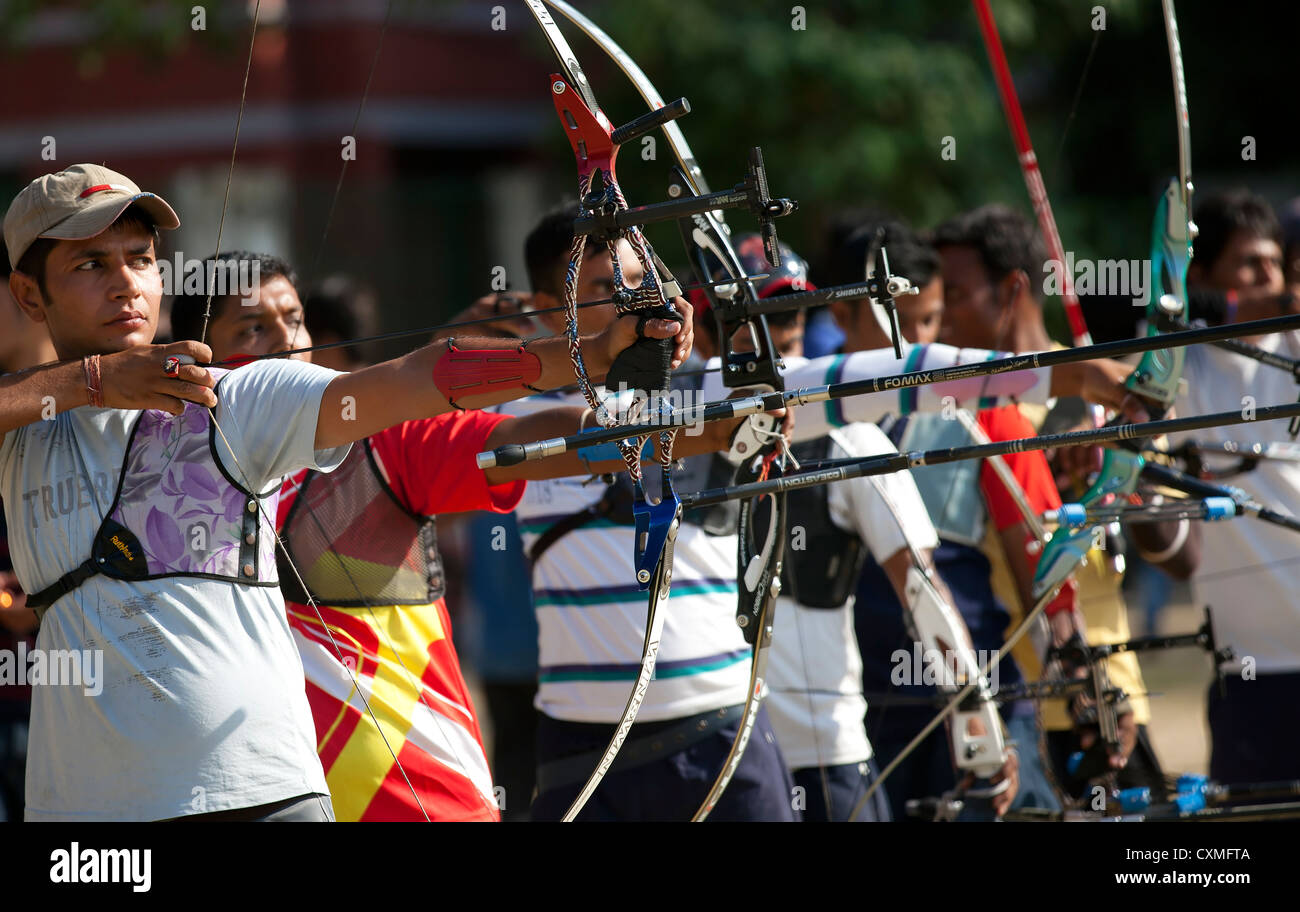
The recurve bow is the only style currently permitted in the Olympic Games. Its name comes from the shape of the limbs, which curve away from the archer at the tips. When drawn, these curves straighten out, storing a significant amount of energy that is transferred to the arrow upon release.
- The Riser: The central handle of the bow, usually made of aluminum or carbon fiber.
- The Limbs: These provide the power. Higher-end limbs use layers of wood, foam, and carbon to ensure a smooth draw and high arrow speed.
- Stabilizers: Long rods protruding from the riser to reduce vibration and increase the bow's inertia, making it steadier in the wind.
The Compound Bow
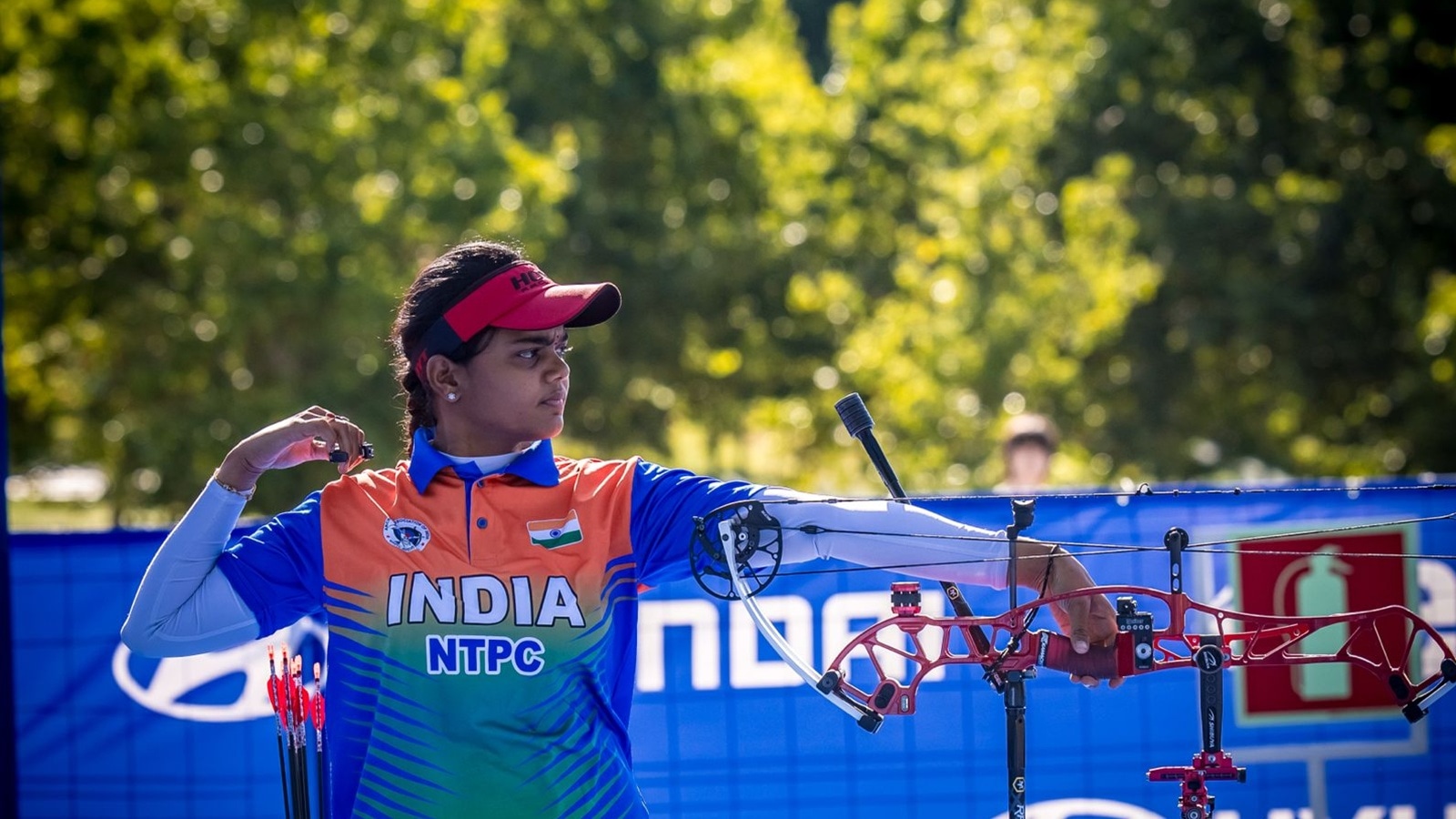
Introduced in the late 20th century, the compound bow uses a system of cables and pulleys (cams) to provide a mechanical advantage. The most significant feature of a compound bow is "let-off." As you pull the string back, the cams rotate, and the weight you have to hold at full draw reduces by 70% to 90%. This allows the archer to aim for longer periods without muscle fatigue, leading to extreme precision. Compound bows typically utilize a magnifying sight and a mechanical release aid rather than fingers.
Traditional and Barebow
Traditional archery focuses on the simplicity of the longbow or the recurve without modern aids like sights, stabilizers, or clickers. "Barebow" is a specific competitive class where archers use a modern recurve riser but are forbidden from using sights or stabilizers. This relies on "instinctive" aiming or "string walking" (moving the fingers up and down the string to adjust for distance).
| Feature | Recurve (Olympic) | Compound | Traditional/Barebow |
|---|---|---|---|
| Mechanical Aid | None (Finger release) | Cams & Release Aids | None (Finger release) |
| Sights | Single-pin aperture | Magnified scope | None (or basic mark) |
| Energy Storage | Limb curvature | Cam system | Simple limb flex |
| Difficulty Curve | High (Form-heavy) | Moderate (Tech-heavy) | High (Experience-heavy) |
| Primary Use | Olympics/Target | 3D/Hunting/Target | Recreation/Heritage |
The Mechanics of the Shot: The NTS Shot Cycle
Success in archery is not about hitting the bullseye once; it is about the ability to repeat the exact same physical motion every single time. Most modern coaches teach a variation of the National Training System (NTS), which breaks the shot down into a repeatable cycle.
- Stance and Nocking: The feet should be shoulder-width apart, typically perpendicular to the target. The arrow is "nocked" onto the string, ensuring the index fletching (the odd-colored feather) is pointing in the correct direction.
- Hook and Grip: For recurve, three fingers are placed on the string (usually one above the arrow and two below). The grip on the bow handle must be relaxed to avoid "torquing" the bow.
- The Set-Up and Draw: The archer raises the bow and draws the string back using the large muscles of the back (rhomboids) rather than just the arm muscles.
- Anchoring: This is the most crucial step for consistency. The archer brings the string to a specific "anchor point" on their face—usually the chin or the corner of the mouth. This ensures the distance the string is pulled is identical for every shot.
- Aiming and Expansion: Once anchored, the archer aligns the sight with the target. "Expansion" refers to the continued micro-movement of the back muscles, which eventually triggers the release.
- Release and Follow-Through: The fingers relax, allowing the string to slip away. The bow should jump forward slightly in the hand, and the archer remains still until the arrow hits the target to avoid interfering with its flight.
The Physics of the Arrow: Spine and Flight
The arrow is just as complex as the bow. In 2026, carbon fiber is the standard material for serious archers due to its weight-to-strength ratio.
The most important technical specification of an arrow is its spine. This refers to the stiffness of the arrow shaft. When a bow is fired, the force of the string causes the arrow to flex or "wobble" as it leaves the bow. If the spine is too weak (too flexible), the arrow will veer off target. If it is too stiff, it won't clear the bow riser properly. Matching the arrow's spine to the bow's draw weight and the archer's draw length is a fundamental requirement for accuracy.
Additionally, fletching (the vanes or feathers at the back) provides drag and rotation, stabilizing the arrow in flight. In outdoor competitions, smaller plastic vanes are preferred to minimize the effect of crosswinds, while indoor archers often use large feathers to stabilize the arrow as quickly as possible over short distances.
Financial Requirements and Entry Costs in 2026
Archery has a reputation for being expensive, but the entry-level costs are manageable if approached correctly. It is highly recommended that beginners visit a local club before purchasing equipment to determine their draw length and preferred style.
- Beginner Kits: A complete entry-level recurve setup (riser, limbs, string, and basic arrows) typically ranges from $200 to $450.
- Intermediate/Competitive Gear: For those looking to compete, costs rise significantly. A mid-tier compound bow or a competitive recurve setup can cost between $800 and $1,800.
- Club Fees and Instruction: Membership at a range in 2026 usually costs between $15 and $30 per session, while private coaching ranges from $50 to $100 per hour.
Investing in a high-quality arm guard and a finger tab (or release aid) is non-negotiable. The arm guard protects the forearm from the string's slap, while the tab prevents nerve damage in the fingers caused by the pressure of the string.
Safety and Range Etiquette
Archery is statistically one of the safest sports when protocols are followed. Every range operates under strict safety guidelines that all participants must respect:
- The Waiting Line: No one may cross the shooting line until the "Clear" or "All Clear" signal is given by the range officer.
- Dry Firing: Never pull back and release a bow string without an arrow attached. This is called "dry firing," and the energy that would normally go into the arrow is instead absorbed by the bow, which can cause the limbs to shatter and lead to serious injury.
- Point of Aim: A bow should only be drawn when pointed toward the target. "Sky drawing" (pointing the bow upward while drawing) is prohibited on most ranges as an accidental release could send an arrow over the safety berms.
Frequently Asked Questions
How much does a beginner setup cost in 2026? A basic but functional beginner setup, including a wooden or aluminum recurve riser, limbs, a string, a finger tab, an arm guard, and six arrows, generally costs between $200 and $400. Many clubs offer rental equipment for $15–$25, which is the best way to start before committing to a purchase.
Can I practice archery in my backyard? This depends entirely on local municipal ordinances and your specific property setup. In many urban areas, discharging a bow is treated the same as discharging a firearm and is prohibited. If legal, you must have a professional-grade backstop (such as a hay bale or a specialized netting) and ensure there is no possibility of an arrow leaving your property.
What is "let-off" in compound archery? Let-off is a mechanical feature of compound bows where the cam system reduces the force required to hold the string at full draw. For example, if a bow has a 60lb draw weight and an 80% let-off, the archer only feels 12lbs of tension once the bow is fully drawn. This allows for steadier aiming and longer hold times.
How do I determine my draw length? Draw length is the distance from the nock point to the throat of the grip at full draw, plus about 1.75 inches. A common way to estimate this is to measure your "wingspan" (arm span from fingertip to fingertip) and divide by 2.5. However, a professional at a pro shop should measure you using a calibrated draw-check arrow for an exact fit.
Is archery more of a physical or mental sport? While you need core and back strength to hold a bow steady, elite archers often describe the sport as 90% mental. At a high level, everyone has the physical ability to hit the center; the winner is usually the person who can maintain focus and manage their heart rate under the pressure of competition.
Practical Next Steps
If the sport of archery has revealed itself as a potential passion, your first action should be to locate a club certified by your national governing body, such as USA Archery. Enroll in an "Intro to Archery" course rather than buying equipment online immediately. This allows you to learn the safety basics and test different bow styles under the supervision of a certified coach, ensuring your first experience with the bow is both safe and successful.
Image Gallery