Sailing European Christmas Market Cruises: Essential Planning Guide for River Voyages
Sailing European Christmas market cruises offers a seamless way to visit historic festive markets along Central Europe's scenic waterways between late November and Christmas Eve. Navigating major rivers like the Rhine and Danube, trave...
Sailing European Christmas market cruises offers a seamless way to visit historic festive markets along Central Europe's scenic waterways between late November and Christmas Eve. Navigating major rivers like the Rhine and Danube, travelers experience region-specific Advent traditions, artisan crafts, and seasonal culinary specialties while staying aboard centrally docked river vessels.
Contents
Understanding the European Christmas Market Cruise Experience
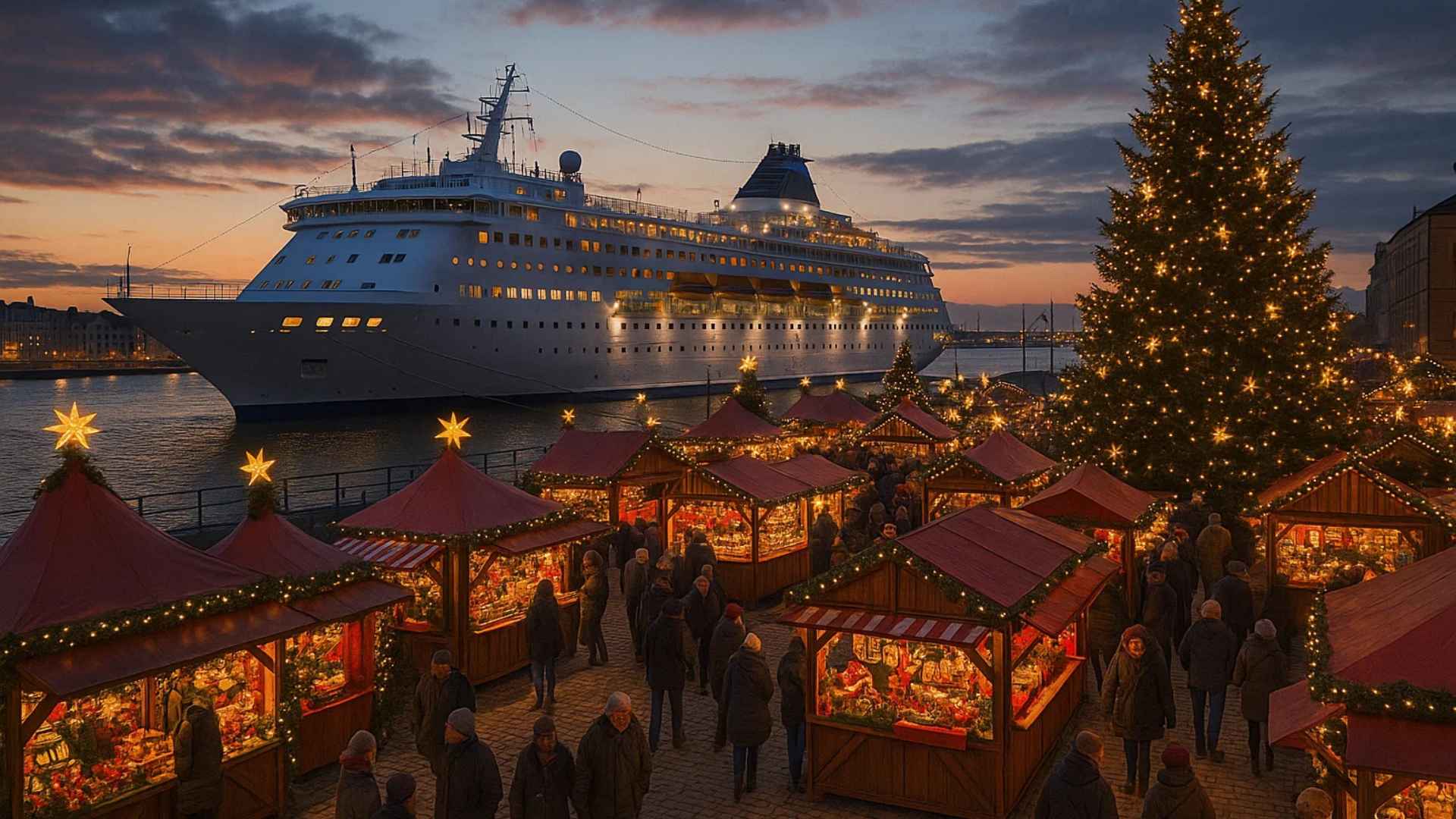
European Christmas market river cruises combine winter river navigation with direct access to centuries-old holiday traditions across Germany, Austria, France, Switzerland, and Hungary. Unlike ocean cruises that call at large commercial ports far from city centers, river ships dock along municipal embankments. This proximity allows passengers to walk directly from the vessel into historic town squares illuminated by holiday lights and filled with wooden market stalls (Buden).
The operating window for Christmas market cruises is strict and brief. Markets traditionally open around the Friday preceding the first Sunday of Advent—typically late November—and most close by midday on December 24. A few major metropolitan markets, such as those in Vienna and Budapest, extend their operations through New Year's Day as winter or New Year markets, but the core festive atmosphere peaks during the four weeks of Advent.
Onboard ship life during this period reflects the seasonal theme. River cruise lines adjust their interior decor, entertainment, and culinary offerings to mirror regional holiday customs. Passengers are greeted with hot spiced wine (Glühwein), seasonal baked goods, local choir performances, and holiday-themed lectures explaining the origins of glassblowing, gingerbread production, and wooden nutcracker carving.
Major River Routes: Rhine vs. Danube
The choice between European river itineraries determines the specific cultural traditions, architectural backdrops, and market styles encountered during the voyage. The Rhine and Danube rivers serve as the primary arterial routes for holiday cruising, each offering distinct geographical and cultural features.
The Rhine River Route (Basel to Amsterdam or Cologne)
Cruising the Rhine River takes travelers through Switzerland, France, Germany, and the Netherlands. The typical itinerary spans seven nights between Basel and Amsterdam, or shorter four-to-five-night segments focused primarily on the Middle Rhine region.
- Strasbourg, France: Located in the Alsace region, Strasbourg markets itself as the "Capital of Christmas" (Capitale de Noël). Its market at the Place Broglie and surrounding the Cathedral of Our Lady dates back to 1570 (Christkindelsmärik). Visitors find handcrafted Alsatian decorations, bredele cookies, and warm spiced white wine.
- Cologne, Germany: Home to several distinct markets, Cologne's primary attraction is the Weihnachtsmarkt am Kölner Dom, situated directly beneath the UNESCO-listed Gothic cathedral. The market features over 150 wooden pavilions centered around a massive illuminated Christmas tree.
- Rüdesheim am Rhein, Germany: Famous for its narrow Drosselgasse lane, Rüdesheim hosts the Christmas Market of the Nations, highlighting holiday traditions, foods, and crafts from over 20 countries alongside local Rheingau wines.
- Heidelberg and Speyer, Germany: These romantic river towns offer intimate market settings beneath historic castle ruins and Imperial cathedrals, specializing in hand-blown glass ornaments and regional Pfalz winter wines.
The culinary profile along the Rhine emphasizes Alsatian flammkuchen (thin-crust savory tarts), roasted chestnuts (Maroni), Spekulatius spiced biscuits, and regional variations of red and white Glühwein.
The Danube River Route (Nuremberg/Passau to Budapest)
The Danube River flows through Central and Eastern Europe, connecting Germany, Austria, Slovakia, and Hungary. Standard Christmas itineraries sail between Nuremberg or Passau and Budapest over seven to ten nights.
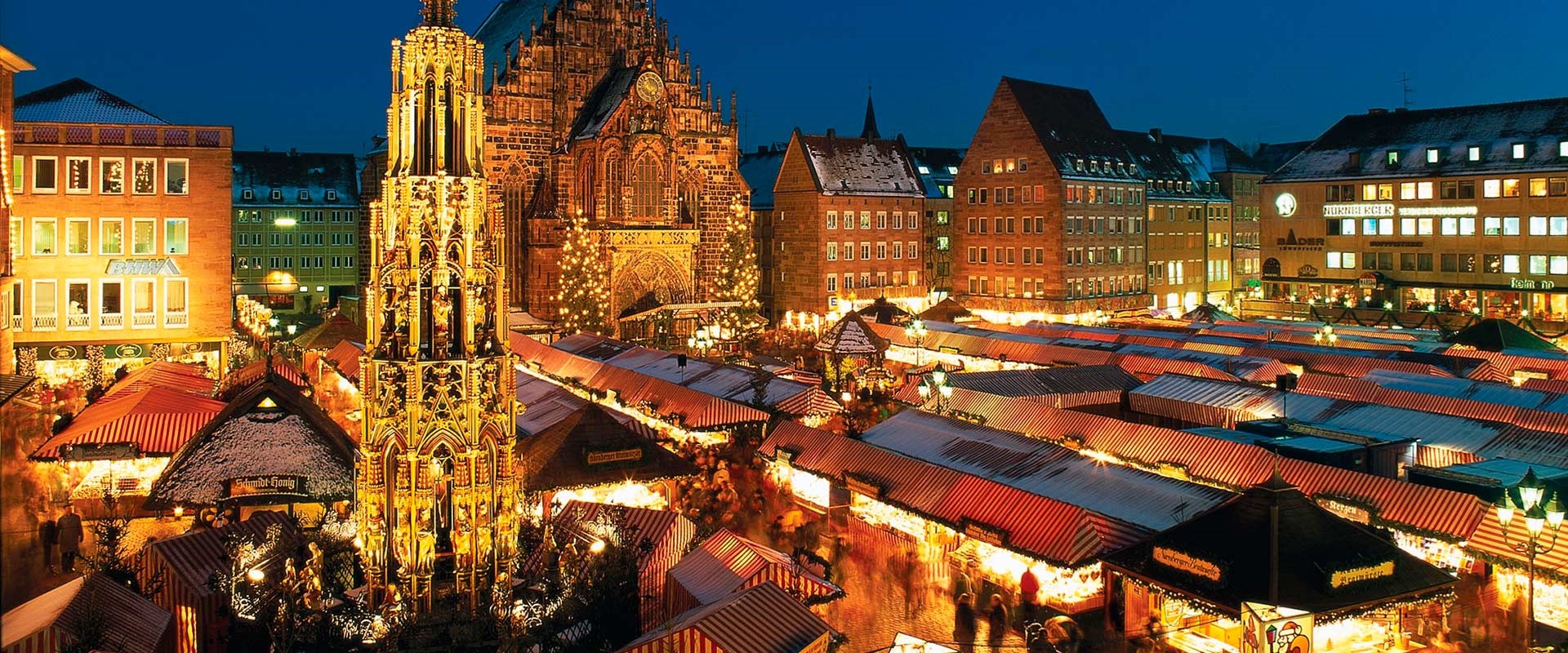
- Nuremberg, Germany: The Nürnberger Christkindlesmarkt on the Hauptmarkt square is among the world's most famous holiday markets. Strict guidelines preserve its traditional aesthetic, prohibiting mass-produced plastic toys and synthetic decorations. Local specialties include Nuremberg gingerbread (Elisenlebkuchen) and miniature spiced pork sausages (Nürnberger Rostbratwürste).
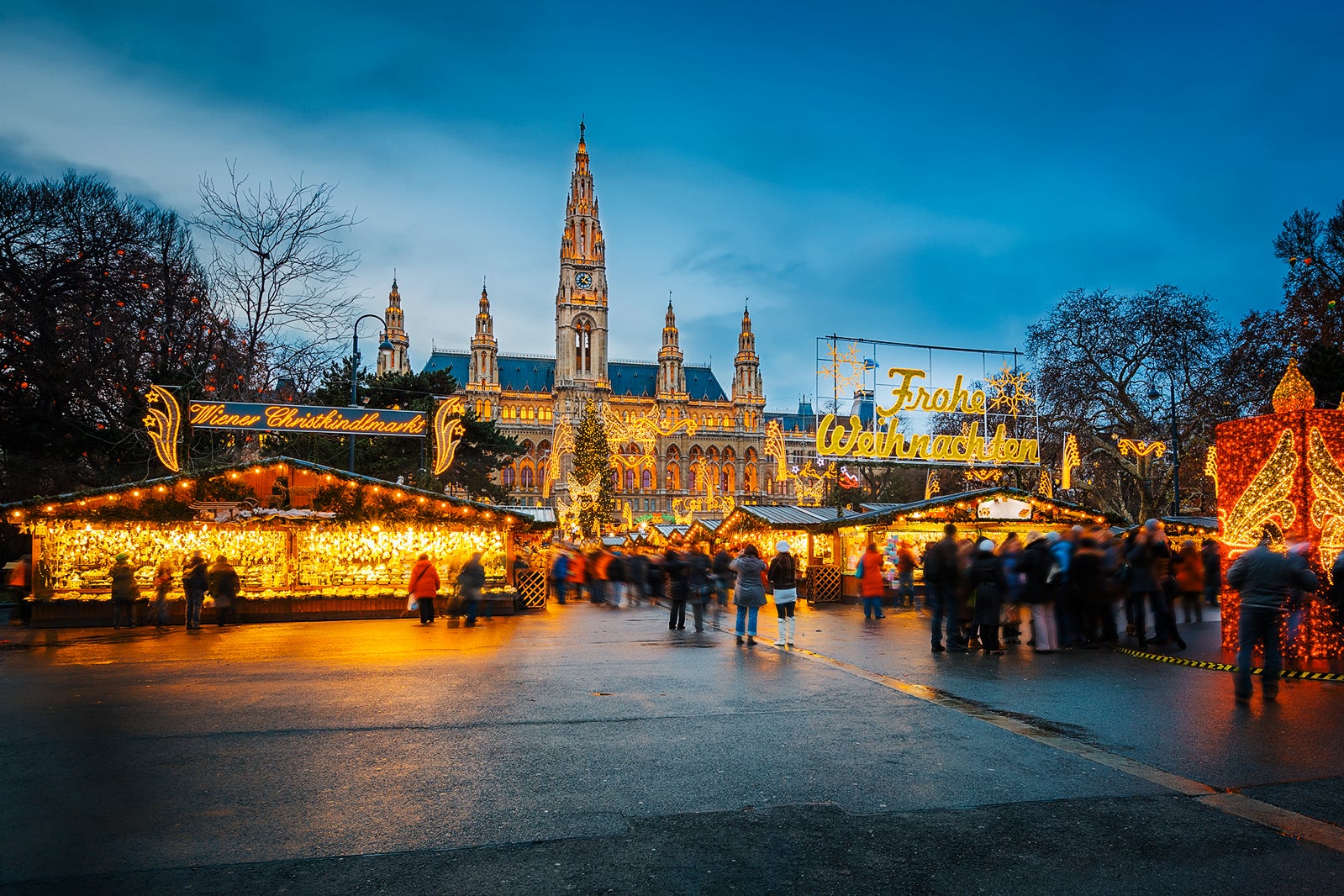
- Vienna, Austria: Vienna hosts multiple grand markets across its imperial plazas. The largest is the Christkindlmarkt at the Rathausplatz (City Hall Square), known for elaborate light displays and an extensive ice-skating trail. Other notable locations include the market in front of Schönbrunn Palace and the artisan market at Spittelberg.
- Regensburg, Germany: Known for the Romantic Christmas Market held in the courtyard of the Palace of St. Emmeram (Thurn und Taxis), where artisan craftspeople demonstrate glassblowing, blacksmithing, and pottery making around open fire pits.
- Budapest, Hungary: The markets at Vörösmarty Square and in front of St. Stephen’s Basilica feature Hungarian folk art, embroidered textiles, handmade leather goods, and regional foods such as kürtőskalács (chimney cake) and hearty gulyás (goulash) served in bread bowls.
The culinary highlights on the Danube lean heavily toward rich pastries like Austrian Vanillekipferl (vanilla crescents), hot fruit punches (Punsch), and hearty meat dishes suited for low winter temperatures.
Secondary Waterways: Main, Moselle, and Main-Danube Canal
For travelers seeking quieter ports or specialized regional crafts, cruises incorporating the Main and Moselle rivers offer distinct advantages. The Moselle River cuts through steep vineyard slopes, stopping at historic towns like Trier—Germany's oldest city—and Cochem, where medieval castles overlook cozy riverfront markets. Sailing through the Main-Danube Canal connects the Rhine and Danube basins, allowing for cross-continental itineraries that pass through the historic Bavarian towns of Bamberg and Würzburg.
Leading River Cruise Lines Comparison
Selecting the right river cruise line involves balancing budget, onboard ambiance, included amenities, and target demographics. Major operators maintain distinct service models during the holiday season.
Viking River Cruises
Viking operates the largest fleet of river ships (Viking Longships) on European waterways. The line favors a Scandinavian-modern aesthetic with clean lines, light woods, and open glass spaces.
- Atmosphere: Quiet, adult-only (18+), and culturally focused.
- Inclusions: One complimentary shore excursion in every port, wine and beer with lunch and dinner, Wi-Fi, and port charges.
- Holiday Specifics: Viking emphasizes local enrichment, inviting regional musicians aboard and providing guided walking tours directly to the central market squares.
AmaWaterways
AmaWaterways is recognized for higher-end dining, active shore excursion options, and twin-balcony stateroom designs (combining a French balcony and an outside step-out balcony).
- Atmosphere: Elegant yet informal, appealing to couples, multi-generational families, and active travelers.
- Inclusions: Multiple shore excursion options per port (including bike tours and hikes), sip-and-sail cocktail hour, specialty dining at The Chef’s Table, and Wi-Fi.
- Holiday Specifics: AmaWaterways places strong focus on festive ship decorations, holiday baking demonstrations, and tree-trimming gatherings on board.
Avalon Waterways
Avalon Waterways features "Panorama Suites" where beds face wall-to-wall, floor-to-ceiling panoramic windows that open to transform the entire room into an open-air balcony.
- Atmosphere: Relaxed luxury with a focus on personal choice and space.
- Inclusions: Choice of "Classic," "Discovery," and "Active" excursions in port, beer and wine with meals, and flexible dining times.
- Holiday Specifics: Offers tailored itineraries highlighting smaller, less-crowded regional markets alongside major capital destinations.
Uniworld Boutique River Cruise Collection
Uniworld provides an all-inclusive luxury product characterized by custom, lavish interior decor specific to each ship in its fleet.
- Atmosphere: High luxury, boutique hotel feel with classic artistic detailing.
- Inclusions: Fully all-inclusive (all premium spirits, wines, gratuities, airport transfers, and unlimited shore excursions).
- Holiday Specifics: Features elaborate Christmas decorations, private evening concert events in historic venues (such as Viennese palaces), and gourmet holiday tasting menus.
Comparative Breakdown: Rhine vs. Danube Holiday Cruises
The following matrix compares key operational and geographical factors between the two primary Christmas market sailing routes.
| Feature / Aspect | Rhine River Route | Danube River Route |
|---|---|---|
| Primary Departure Ports | Basel (Switzerland), Amsterdam (Netherlands), Cologne (Germany) | Nuremberg / Passau (Germany), Vienna (Austria), Budapest (Hungary) |
| Countries Covered | Switzerland, France, Germany, Netherlands | Germany, Austria, Slovakia, Hungary |
| Signature Market Highlights | Strasbourg (Christkindelsmärik), Cologne Cathedral, Rüdesheim Nations Market | Nuremberg (Christkindlesmarkt), Vienna Rathausplatz, Budapest Basilica |
| Landscape & Scenery | Middle Rhine Gorge (castles and vineyards), urban cityscapes | Wachau Valley, imperial city waterfronts, Danube Bend |
| Craft & Shopping Focus | Alsatian ornaments, wood carvings, ceramic pottery | Bavarian gingerbread, Austrian glass art, Hungarian leatherwork |
| Average Winter Temperatures | 1°C to 7°C (34°F to 45°F) | -2°C to 5°C (28°F to 41°F) |
| Best Suited For | First-time river cruisers, cathedral architecture fans | Imperial history enthusiasts, pastry and artisan food lovers |
Practical Logistics, Weather, and Packing Strategies
Planning for a winter river cruise requires clear expectations regarding European cold-weather conditions, market mechanics, and physical activity levels.
Winter Weather Conditions
Winter temperatures across Central Europe during Advent generally hover between -2°C and 7°C (28°F to 45°F). Snowfall is possible, particularly along the Danube in Austria and Bavaria, though cold rain and overcast conditions are more common. Because market visits take place outdoors on stone plazas and cobblestone streets, wind chill can feel significantly colder than ambient thermometric readings.
Essential Packing List
- Footwear: Sturdy, insulated, waterproof boots with non-slip rubber soles. Cobblestone streets become slick when covered in frost or wet rain.
- Outerwear: A waterproof, wind-resistant down coat or technical winter parka extending past the waist.
- Layering items: Thermal base layers (merino wool or synthetic heat-retaining fabrics), fleece or cashmere mid-layers, and breathable trousers.
- Accessories: Insulated gloves, wool beanies, neck gaiters or scarves, and hand-warmer packets for extended outdoor walking tours.
- Crossbody bag or anti-theft pack: Keep wallets and passports secure while navigating dense market crowds.
Payment Methods and Currency Logistics
While credit and debit cards are widely accepted across brick-and-mortar retail shops in Europe, many independent Christmas market stalls operate strictly on cash for low-value transactions like buying a €4 mug of Glühwein or a €5 sausage.
- Euro (€): Used in Germany, France, Austria, and the Netherlands. Carrying small denominations (€1, €2 coins, €5, and €10 notes) is critical for stall vendors who may struggle to break €50 notes early in the day.
- Local Currencies: Switzerland uses the Swiss Franc (CHF), while Hungary uses the Hungarian Forint (HUF). Stalls in Budapest often accept Euros, but exchange rates applied at vendor stalls are frequently unfavorable. Utilizing local cash from bank ATMs (Bankomat) is recommended.
- Mug Deposit System (Pfand): When ordering hot drinks at markets, vendors charge a deposit (typically €2 to €4) for the ceramic mug. Consumers can either return the mug to any stall belonging to that market vendor network to retrieve their cash deposit or keep the mug as a souvenir.
Managing Operational Realities and River Conditions
River cruising depends entirely on waterway conditions, which can fluctuate during early winter. Prospective travelers should understand potential operational deviations and how lines handle water level challenges.
River Water Level Variances
European rivers experience fluctuations based on precipitation and snowmelt. Late autumn and early winter rainstorms can lead to elevated water levels (high water), while extended dry periods earlier in the year can occasionally result in low water conditions.
- High Water Impacts: If river levels rise too high, ships cannot pass safely beneath low-clearance historic bridges, such as those in the Middle Rhine or Passau.
- Low Water Impacts: If water levels drop excessively, fully loaded river vessels risk grounding on shallow riverbeds.
When extreme water conditions occur, river cruise lines execute contingency plans. Ships may hold position at a safe port, converting the itinerary into a ship-as-hotel model while transferring guests to markets via private motorcoaches. Alternatively, lines may conduct a "ship swap," where passengers pack their luggage, transfer via coach past the impassable section of the river, and board an identical sister ship waiting on the opposite side of the barrier to continue the sailing seamlessly.
Market Operational Schedules and Closures
Travelers must pay close attention to itinerary dates. Markets operate at full capacity throughout the Advent season, but almost all German and Alsatian markets close by 1:00 PM or 2:00 PM on December 24 (Heiligabend). Virtually all markets in Germany remain closed on Christmas Day (December 25) and Boxing Day (December 26).
If booking a cruise that sails on or after December 24, ensure the itinerary focuses on locations like Vienna or Budapest, where holiday markets transition into New Year markets and remain open through early January. Citing official destination guidelines provided by organizations like the Germany National Tourist Board or Vienna Tourist Board can help confirm exact annual operating dates for specific municipal markets before final booking.
Frequently Asked Questions
When is the ideal time to book a European Christmas market river cruise?
Cruises should ideally be booked 6 to 12 months in advance. Because the holiday sailing season lasts only four to five weeks, cabin inventory is strictly limited compared to summer river sailing seasons. Suites and popular stateroom categories on high-demand routes often sell out by early spring.
Are European Christmas markets open after Christmas Day?
Most traditional markets in Germany, France, and Switzerland close permanently by midday on December 24. However, select major capital cities—including Vienna, Austria, and Budapest, Hungary—keep key markets open through the end of December or the first week of January, operating as Christmas/New Year markets.
How much physical walking is involved on these cruises?
Christmas market cruises involve a high degree of walking over uneven terrain, cobblestone streets, and slight inclines. Ships typically dock within walking distance of city centers, but passengers regularly log 3 to 5 miles of walking per day during guided tours and independent market exploration.
What should travelers wear on board the ship in the evening?
Onboard dress codes for holiday river cruises are generally casual to "smart casual." Thermal layers and heavy boots can be removed inside heated ship spaces. Standard evening attire includes trousers, collared shirts, sweaters, or casual dresses. Formal black-tie attire is rarely required on river vessels.
What happens if bad weather prevents a ship from reaching a planned market?
If high water, low water, ice, or lock maintenance prevents a ship from navigating, river cruise lines utilize private motorcoaches to transport guests to the scheduled destinations. Passengers rarely miss planned market visits entirely, though travel times between cities may increase via highway transport.
Final Recommendations for Planning Your Voyage
To maximize the holiday river cruise experience, first select the river system that aligns best with personal travel goals: choose the Rhine for iconic cathedral backdrops and Alsatian charm, or the Danube for grand imperial architecture and historic confectionery traditions. Secure bookings well in advance to guarantee desired stateroom categories during the condensed four-week Advent window. Finally, prepare for fluctuating winter weather by investing in proper waterproof footwear and layering gear, ensuring comfort while exploring Central Europe's winter street markets.
Image Gallery