Why Northwestern Mutual Tops Whole Life Insurance with Cash Return
Northwestern Mutual consistently leads the whole life insurance market because of its unique mutual ownership structure, record-breaking dividend payouts, and top-tier financial strength ratings. By returning surplus earnings to policy...
Northwestern Mutual consistently leads the whole life insurance market because of its unique mutual ownership structure, record-breaking dividend payouts, and top-tier financial strength ratings. By returning surplus earnings to policyholders rather than shareholders, the company maximizes the long-term internal rate of return on cash value, creating a stable, tax-advantaged financial asset.
Contents
The Structural Advantage: Mutuality and Policyholder Ownership
The primary reason Northwestern Mutual remains a dominant force in the whole life insurance industry is its status as a mutual company. Unlike publicly traded insurance companies that must prioritize quarterly earnings and shareholder dividends, a mutual company is owned by its policyholders. This alignment of interests is fundamental to how the "cash return" is generated. When the company performs well—through efficient underwriting, disciplined expense management, and successful long-term investing—the surplus is returned to the participating policyholders in the form of dividends.
In 2026, this structure remains particularly relevant as market volatility continues to drive investors toward "safe harbor" assets. Because there are no external shareholders to satisfy, Northwestern Mutual can take a multi-generational view of its investment portfolio. This long-term perspective allows the company to invest in private equities, commercial real estate, and long-term bonds that may be less liquid but offer higher yields over decades. For the policyholder, this translates to a steady growth of cash value that is not directly correlated with the daily fluctuations of the stock market.
Furthermore, the mutual structure influences the company’s product design. Northwestern Mutual's whole life policies are "participating," meaning they are eligible to receive a share of the company's divisible surplus. While dividends are never guaranteed, the company’s track record of paying them every year since 1872 provides a level of historical reliability that few other financial institutions can match. This consistency is a cornerstone of the "cash return" argument, as it builds a compounding effect that significantly enhances the policy’s value in its later years.
Historical Dividend Performance: The Engine of Cash Return
When discussing "cash return" in the context of whole life insurance, the dividend interest rate (DIR) is the most critical metric. Northwestern Mutual has historically maintained one of the highest and most stable dividend scales in the industry. For 2026, the company continues its trend of multi-billion dollar dividend allocations, which directly increases the cash value of its participating policies.
It is important to understand that the dividend is not just a simple interest payment. It is a reflection of three components: mortality gains (fewer deaths than projected), expense savings (lower operational costs), and investment performance. Northwestern Mutual’s scale allows it to achieve significant economies of scale, keeping administrative costs low and passing those savings to the policyholder. This "return of premium" component of the dividend is generally treated as non-taxable by the IRS, which further enhances the effective return compared to taxable fixed-income vehicles.
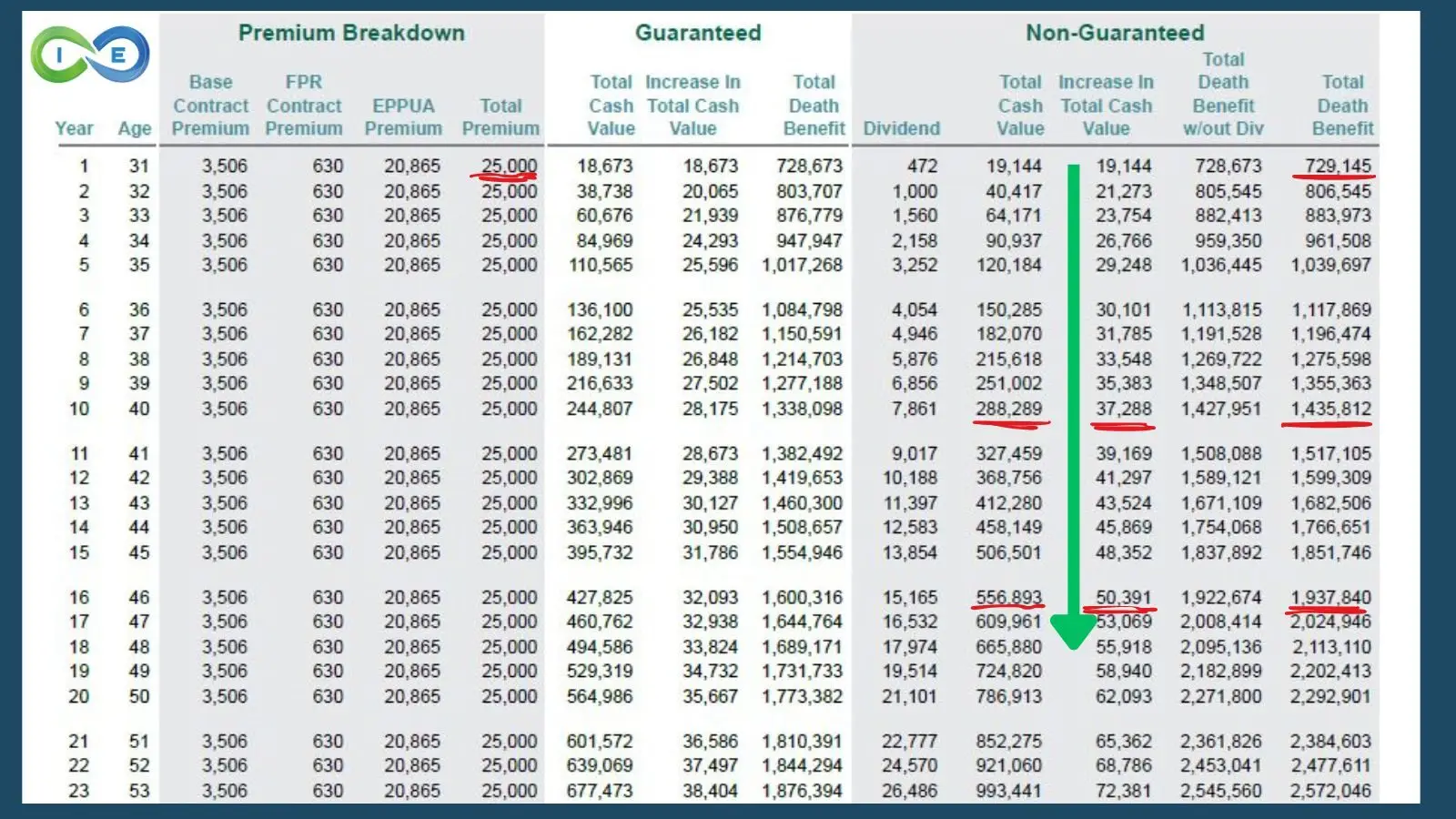
The compounding nature of these dividends is where Northwestern Mutual truly "tops" the competition. When dividends are reinvested into the policy through "Paid-Up Additions" (PUAs), they purchase additional death benefits that, in turn, have their own cash value and earn their own dividends. This creates a snowball effect. In the early years of a policy, the cash return may seem modest as the company recovers its underwriting and commission costs. However, by year 15 or 20, the annual growth in cash value often exceeds the annual premium payment, representing a highly efficient internal rate of return.
Financial Strength and Long-Term Solvency
A whole life insurance policy is a contract that may last 50, 70, or even 100 years. Therefore, the "cash return" is only as good as the company's ability to remain solvent and profitable over a century-long horizon. Northwestern Mutual holds the highest possible financial strength ratings from the major agencies, which serves as a safeguard for policyholder equity.
As of 2026, Northwestern Mutual maintains the following ratings:
- A.M. Best: A++ (Superior)
- Moody’s Investors Service: Aaa (Exceptional)
- Fitch Ratings: AAA (Exceptionally Strong)
- S&P Global Ratings: AA+ (Very Strong)
These ratings are not merely badges of honor; they represent the company's capital adequacy and its ability to withstand severe economic downturns. For a policyholder focused on cash return, these ratings provide the assurance that the company will not be forced to slash dividend scales to shore up its balance sheet during a recession. High ratings also allow Northwestern Mutual to access more favorable investment opportunities, further fueling the "engine" that produces the cash return. In the competitive landscape of the "Big Four" mutuals (including MassMutual, New York Life, and Guardian), Northwestern Mutual often edges out the others by maintaining this "clean sweep" of top-tier ratings more consistently over time.
Optimizing the Policy: Paid-Up Additions and Cash Velocity
To achieve the maximum "cash return" from a Northwestern Mutual policy, sophisticated buyers utilize specific policy riders, most notably the Paid-Up Additions (PUA) rider. A standard whole life policy is designed to provide a level death benefit with a slow build-up of cash value. However, by overfunding the policy through a PUA rider, the policyholder can significantly accelerate the growth of the cash value.
The PUA rider allows you to contribute extra money into the policy beyond the base premium. This "extra" money goes almost entirely toward the cash value, with very little deducted for insurance costs or commissions. By using this strategy, the policyholder can reach the "break-even point"—the moment when the cash value equals the total premiums paid—much earlier than with a traditional policy structure.
In the 2026 financial environment, many individuals use this accelerated cash value as a "volatility buffer" or a "private bank." Because the cash value is liquid, policyholders can take loans against it to finance other investments, such as real estate or business opportunities, while the full cash value continues to earn dividends within the policy. This "dual use" of the same dollar is a advanced strategy that makes Northwestern Mutual's whole life products particularly attractive to high-net-worth individuals seeking to maximize their cash velocity.
Comparative Analysis: Northwestern Mutual vs. Industry Peers
To understand why Northwestern Mutual is frequently cited as the top choice for cash return, it is helpful to compare it against other major carriers. While other mutual companies offer excellent products, Northwestern Mutual’s historical dividend payout volume and its specific "65 Life" or "Adjustable Whole Life" products often provide a more flexible balance between protection and accumulation.
| Feature | Northwestern Mutual | MassMutual | New York Life | Guardian Life |
|---|---|---|---|---|
| Primary Rating (A.M. Best) | A++ | A++ | A++ | A++ |
| Dividend History | Paid since 1872 | Paid since 1869 | Paid since 1854 | Paid since 1868 |
| 2025/2026 Payout | ~$8 Billion+ | ~$2 Billion+ | ~$2 Billion+ | ~$1.4 Billion+ |
| Asset Management | In-house / Diverse | Strong Institutional | Conservative | Focus on Dividends |
| Customization | High (Adjustable WL) | Moderate | Moderate | High |
Note: Payout figures are based on total dollar volume allocated to the divisible surplus for policyholders.
While MassMutual and New York Life also hold A++ ratings, Northwestern Mutual typically pays out a larger total dollar amount in dividends than any other company in the industry. This is partly due to its massive scale and its focus on whole life as its flagship product. For the consumer, this scale often translates into a more robust "cash return" because the pool of assets being managed is so vast, allowing for greater diversification and risk mitigation.
Tax Efficiency and the Role of Whole Life in a Modern Portfolio
The "cash return" of a Northwestern Mutual whole life policy is amplified by its tax treatment under the Internal Revenue Code, specifically Section 7702. In 2026, as tax brackets remain a concern for high earners, the tax-advantaged nature of whole life insurance becomes a primary driver of its total value proposition.
- Tax-Deferred Growth: The cash value within the policy grows without being subject to annual income or capital gains taxes. This allows the compounding effect to work more efficiently than in a taxable brokerage account.
- Tax-Free Dividends: Dividends are generally considered a "return of premium" and are not taxable until they exceed the total amount of premiums paid into the policy (the "basis").
- Tax-Free Loans: Policyholders can access their cash value through policy loans. Since these are loans and not withdrawals, they are not treated as taxable income, even if the loan amount exceeds the policy basis (provided the policy remains in force).
- Tax-Free Death Benefit: The ultimate "return" to the beneficiaries is the death benefit, which is passed on income-tax-free, providing an efficient transfer of wealth.
When these tax advantages are factored in, a Northwestern Mutual whole life policy with a 5% dividend interest rate may have a "tax-equivalent yield" significantly higher, making it competitive with other fixed-income investments like municipal bonds or high-yield certificates of deposit, but with the added benefit of a permanent death benefit.
Potential Drawbacks and Considerations
While Northwestern Mutual tops many lists for cash return, whole life insurance is not a universal solution. It is a long-term commitment that requires disciplined premium payments.
- Early Liquidity: In the first 3 to 7 years, the cash value will likely be less than the total premiums paid. If you cancel the policy early, you will experience a loss.
- Opportunity Cost: For a younger investor with a high risk tolerance, the 4-6% internal rate of return of a whole life policy may seem lower than the potential returns of a 100% equity portfolio. However, whole life is generally viewed as a replacement for the bond or cash portion of a portfolio, not the equity portion.
- Cost of Insurance: As you age, the cost of the underlying death benefit increases, which can drag on the cash value growth if the dividend scale were to drop significantly.
To mitigate these issues, it is essential to work with a Northwestern Mutual representative who can model different "funding" scenarios, ensuring the policy is structured for maximum cash accumulation if that is the primary goal.
Frequently Asked Questions
Is the dividend from Northwestern Mutual guaranteed?
No, dividends are never guaranteed. They are a portion of the company’s surplus earnings that the Board of Trustees decides to distribute to policyholders. However, Northwestern Mutual has paid a dividend every single year since 1872, including during the Great Depression, both World Wars, and the 2008 financial crisis.
How does the cash value growth compare to a 401(k)?
A whole life policy is not a direct replacement for a 401(k). A 401(k) allows for pre-tax contributions and often includes a company match, but it is subject to market risk and future income taxes. Northwestern Mutual’s whole life insurance provides a "floor" or a guaranteed growth component that is not subject to market volatility, making it a complementary asset rather than a competitor to traditional retirement accounts.
Can I withdraw the cash value instead of taking a loan?
Yes, you can "surrender" portions of your cash value (specifically the Paid-Up Additions). However, withdrawals are tax-free only up to the amount of premiums you have paid (your basis). Taking a policy loan is often preferred because it allows the full cash value to continue earning dividends, and the loan proceeds are tax-free regardless of your basis.
What happens to the cash return if interest rates rise?
Generally, a rising interest rate environment is positive for Northwestern Mutual's cash return. The company invests heavily in fixed-income assets. As older, lower-yielding bonds mature, the company can reinvest that capital into new bonds with higher coupons, which eventually leads to an increase in the dividend scale.
Recommendation: How to Move Forward
If you are considering Northwestern Mutual for its cash return potential, your next step should be to request a "full-ledger illustration" that specifically focuses on the "Internal Rate of Return (IRR) on Cash Value." Ask your representative to show you a "max-funded" scenario using the Paid-Up Additions (PUA) rider. This will allow you to see the exact year the policy breaks even and the projected long-term yield. Ensure you are comfortable with the premium commitment for at least 10 to 15 years, as the true power of Northwestern Mutual’s cash return is realized through long-term compounding and tax-advantaged growth.
Image Gallery