The Best Life Insurance for Kids in New York: Policy Guide & State Rules
Finding the best life insurance for kids in New York requires balancing early financial protection with strict state regulatory requirements. Leading carriers like Gerber Life, Mutual of Omaha, and New York Life offer standalone whole...
Finding the best life insurance for kids in New York requires balancing early financial protection with strict state regulatory requirements. Leading carriers like Gerber Life, Mutual of Omaha, and New York Life offer standalone whole life coverage with guaranteed premiums and locked-in insurability. However, New York Insurance Law Section 3207 caps coverage amounts for minors based on parental life insurance levels, making policy structure critical.
Contents
Disclaimer: This guide provides educational information regarding life insurance products and New York statutory requirements. It does not constitute legal, tax, or financial advice. Consult a licensed New York insurance agent or financial advisor before purchasing a policy.
Understanding Child Life Insurance in New York
Child life insurance is a permanent whole life insurance policy purchased by a parent, grandparent, or legal guardian on behalf of a minor. Unlike term life insurance, which expires after a set number of years, permanent child policies remain active for the child's entire life—as long as premiums continue to be paid.
When evaluating policies in New York State, parents typically choose between two primary options:
- Standalone Child Whole Life Policies: Individual permanent contracts written specifically for the child. These policies lock in low premium rates based on the child’s young age and provide a cash value component that grows tax-deferred.
- Child Term Riders: Optional add-ons attached to an existing parent’s term or whole life policy. Riders offer inexpensive temporary coverage for all eligible children in a household and can usually be converted into permanent individual coverage when the child reaches adulthood.
Core Benefits of Insuring a Minor
Purchasing coverage for a child serves three strategic financial purposes rather than simply replacing lost income:
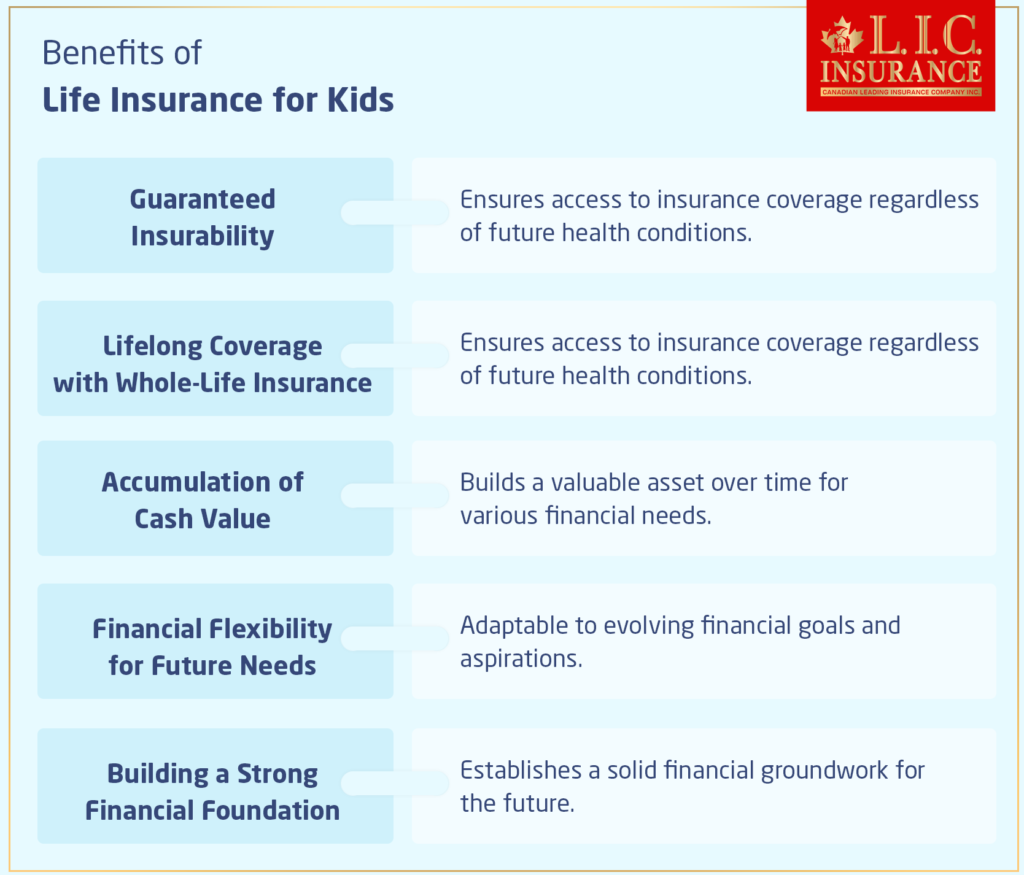
- Guaranteed Future Insurability: If a child develops a chronic illness, physical disability, or hazardous occupation later in life, acquiring adult life insurance can become cost-prohibitive or impossible. A child policy secures coverage while the child is young and healthy. Most contracts include a Guaranteed Insurability Option (GIO) or rider, allowing the child to buy additional coverage at specific adult milestones (such as ages 25, 30, or 35) without undergoing medical underwriting.
- Locked-in Low Premium Rates: Premium rates for whole life insurance are determined by age and health status at policy inception. Insuring an infant or toddler locks in rates that remain level for decades.
- Tax-Deferred Cash Value Growth: A portion of each premium payment goes into a cash accumulation account. This money grows on a tax-deferred basis under Internal Revenue Code Section 7702 and can be accessed via policy loans or withdrawals later in life to assist with college tuition, a home down payment, or starting a business.
New York Legal Rules and Coverage Limits (NY Insurance Law § 3207)
New York maintains some of the nation’s most stringent consumer protection rules regarding life insurance on minors. Under New York Insurance Law § 3207, the state regulates the maximum amount of life insurance that can be issued on a child under the age of 14 and one-half years.
- Child Under 14½ Years in New York
- Parent Insurance < $100k
- Child coverage capped at $50,000 max statutory limit
- Parent Insurance ≥ $100k
- Child coverage capped at 50% of parent's active policy amount
- Parent Insurance < $100k
Statutory Coverage Caps for Minors Under 14½
To prevent over-insuring minors relative to their guardians, New York law restricts policy face amounts based on the insurance coverage held by the purchasing parent or guardian:
- Standard Cap ($50,000 Limit): For children under age 14½, total life insurance coverage cannot exceed $50,000 unless the parent has sufficient individual coverage in place.
- The 50% Rule: If the parent or guardian carries more than $100,000 of life insurance on their own life, the child may be insured for up to 50% of the parent's total active policy amount. For example, if a parent holds a $400,000 whole life policy, they can purchase up to $200,000 in coverage for their minor child.
- Consent Requirements: Once a child reaches age 14½ in New York, state law requires the minor to sign the life insurance application and formally consent to the policy issuance.
Before applying for a standalone policy or high-value child rider in New York, verify that your own adult coverage satisfies the statutory ratios under Section 3207 to avoid application processing delays or rejections.
Top Life Insurance Policies for Children in New York
Several national life insurance carriers offer specialized child insurance policies and riders in New York. Each insurer caters to different financial objectives, ranging from simple direct-to-consumer coverage to dividend-paying mutual insurance accounts.
| Carrier | Product Type | Max NY Coverage | Issue Ages | Standout Feature |
|---|---|---|---|---|
| Gerber Life (Grow-Up Plan) | Whole Life | $50,000 (Higher with ref.) | 14 days to 14 years | Coverage doubles automatically at age 18 with no premium increase. |
| Mutual of Omaha | Whole Life | $50,000 | 14 days to 17 years | Simplified underwriting with basic medical questionnaires. |
| New York Life | Custom Whole Life | NY § 3207 Limits | 15 days to 17 years | Participating policy eligible for annual company dividends. |
| MassMutual | Whole Life | NY § 3207 Limits | 14 days to 17 years | Strong historical dividend performance and cash accumulation potential. |
| Globe Life | Whole Life | $10,000 - $30,000 | 0 to 18 years | Low initial monthly costs with direct-mail enrollment. |
1. Gerber Life Grow-Up Plan (Best Direct-to-Consumer Option)
The Gerber Life Grow-Up Plan is one of the most widely recognized child whole life insurance products in the United States. Available directly to New York residents, this product operates as a permanent policy that builds guaranteed cash value over time.
- Automatic Coverage Doubling: When the insured child turns 18 years old, the policy's face amount automatically doubles (e.g., a $25,000 policy increases to $50,000) while the monthly premium remains locked at the original childhood rate.
- Guaranteed Insurability: The plan guarantees the adult child the right to purchase up to four additional adult whole life policies at standard rates, regardless of medical condition or employment history.
- Ownership Transfer: Ownership automatically control-transfers to the child at age 21 (or age 18 in certain custom configurations), permitting them to manage premiums, withdraw cash value, or keep the policy intact.
2. Mutual of Omaha Children’s Whole Life (Best for Streamlined Approval)
Mutual of Omaha offers an accessible standalone whole life policy for children aged 14 days to 17 years. The policy features a streamlined application process with no physical medical exams.
- Coverage Tiering: Face amounts generally range from $5,000 to $50,000, aligning cleanly with New York's baseline statutory limit under Section 3207.
- Guaranteed Purchase Options: Includes built-in provisions allowing policyholders to buy extra coverage at ages 25, 30, 35, and 40, as well as upon marriage or the birth of a child.
- Financial Strength: Mutual of Omaha consistently holds high financial strength ratings from independent credit rating agencies like A.M. Best, indicating long-term operational stability.
3. New York Life & MassMutual (Best Participating Dividend Policies)
For parents and grandparents seeking maximum long-term cash value growth, mutual insurance companies like New York Life Insurance Company and Massachusetts Mutual Life Insurance Company (MassMutual) offer participating whole life policies.
- Dividend Eligibility: Participating policies are eligible to receive annual policyholder dividends. While dividends are not contractually guaranteed, participating whole life policies from top mutual carriers have paid annual dividends for over a century.
- Dividend Reinvestment: Dividends can be reinvested into the policy as paid-up additions, increasing both the death benefit and cash surrender value faster than traditional non-participating policies.
- Flexible Payment Schedules: These carriers offer limited-pay plans, such as a 10-Pay or 20-Pay Whole Life. Under these schedules, parents pay higher monthly or annual premiums for 10 or 20 years, after which the policy is fully paid up and requires no further out-of-pocket payments while remaining in force for life.
4. Globe Life (Best Low-Cost Basic Option)
Globe Life provides simple, lower-amount whole life policies for children with straightforward premium structures.
- Accessible Entry Points: Globe Life policies offer smaller face amounts (often $5,000 to $30,000), keeping monthly payments lower for families on a strict budget.
- Simplified Underwriting: Applications require answers to basic medical questions, bypassing formal medical exams.
Child Whole Life Policy vs. Child Term Rider: Which Is Right for You?
When protecting minor dependents, parents must decide between a standalone policy for the child or adding a child rider to their own existing policy.
| Feature | Standalone Child Whole Life | Child Term Insurance Rider |
|---|---|---|
| Primary Objective | Long-term savings, locked rates, guaranteed lifetime coverage. | Low-cost temporary death benefit for dependents during childhood. |
| Duration | Lifetime (Permanent). | Expires when child reaches 18–25 or parent's main policy terminates. |
| Cash Value Accumulation | Yes; builds tax-deferred cash surrender value. | No; riders do not build cash value. |
| Cost | Moderate ($5 to $40/month depending on face value). | Extremely low ($5 to $15/month covering ALL children in household). |
| Conversion Rights | Retains original policy terms; optional GIO riders add value. | Convertible to permanent policy upon expiration without medical exam |
| Impact of Parent’s Death | Policy remains active if premium waiver rider is attached. | Rider terminates if parent policy lapses or main death benefit pays out |
When to Choose a Standalone Whole Life Policy
A standalone policy is ideal if your primary goal is building a small financial reserve for the child, locking in permanent coverage from infancy, or gifting an asset that grandparents can control and transfer later. It ensures the coverage stays intact regardless of changes to the parent's insurance status.
When to Choose a Child Term Rider
A child term rider is best if your primary objective is low-cost financial protection against unforeseen final expenses during childhood. A single rider fee typically covers all living children—and future siblings—under one flat rate. When the child reaches adulthood (usually age 18 to 25 depending on the policy), the rider can be converted into an individual whole life policy without evidence of insurability.
Key Policy Provisions to Look For
When shopping for minor life insurance in New York, review the underlying contract terms carefully. Four specific provisions significantly affect long-term policy value:
1. Waiver of Premium Rider (Payor Benefit)
This rider protects the policy if the purchasing parent or guardian dies or becomes totally disabled before the child reaches adulthood (usually age 18 or 21). With a Waiver of Premium for Payor Death or Disability, the insurance company waives all future premium payments, keeping the child’s coverage active and cash value growing until the child reaches legal age to take over payments.
2. Guaranteed Insurability Option (GIO)
The GIO allows the child to purchase additional life insurance coverage at specified future ages or life events (e.g., marriage, purchasing a home, or having a child) without undergoing medical exams or answering health questions. This guarantees that future medical conditions will not prevent them from securing adult protection.
3. Guaranteed Cash Value Tables
Every non-participating whole life contract includes an illustration showing guaranteed cash surrender values by policy year. Review this schedule to understand exactly how much equity the policy builds over 10, 20, and 30 years relative to total premiums paid.
4. Ownership Transfer Provisions
Understand how state law and policy language control ownership transfer:
- In New York, the policy owner (parent or grandparent) maintains total control over the contract during the child's minority.
- The owner can surrender the policy, take loans against cash value, or change beneficiaries.
- Upon reaching legal majority or the age designated in the policy contract (typically 18 or 21), ownership rights can be formally assigned to the young adult child.
How to Purchase Child Life Insurance in New York: Step-by-Step
- Step 1: Audit Parental Coverage (Verify NY § 3207 compliance)
- Step 2: Determine Core Goal (Rider vs Standalone Policy)
- Step 3: Select Carrier & Evaluate Financial Ratings (AM Best)
- Step 4: Submit Application & Complete Medical Underwriting
- Step 5: Add Payor Protection & Set Ownership Terms
Follow this process to secure policy approval in New York:
Step 1: Audit Parental Coverage
Verify that parents or guardians carry sufficient individual life insurance to comply with NY Insurance Law § 3207. If applying for more than $50,000 on a child under 14½ years old, ensure the parent’s active personal coverage equals at least double the intended child coverage amount.
Step 2: Compare Quotes and Financial Strength
Request policy illustrations from carriers licensed by the New York State Department of Financial Services (DFS). Look beyond monthly premium costs to evaluate:
- A.M. Best Ratings: Select companies rated A- (Excellent) or higher for financial stability.
- Dividend History: For participating policies from mutual carriers, review the historic Dividend Scale Interest Rates (DSIR).
Step 3: Submit Application and Disclose Medical History
Complete the carrier’s minor life insurance application. Minor applications generally rely on simplified underwriting:
- Medical exams and blood samples are rarely required for healthy children.
- Answer standard questions regarding birth weight, pediatric checkups, pre-existing congenital conditions, and chronic illnesses accurately.
Step 4: Add Payor Protection Clauses
Ensure the policy includes a Payor Death and Disability Rider. This guarantees premium payments continue seamlessly if the primary adult owner passes away or suffers an disabling illness before the child assumes control of the policy.
Frequently Asked Questions
Can grandparents purchase life insurance for grandchildren in New York?
Yes. Grandparents can apply for life insurance policies on their grandchildren in New York, provided they have consent from the child’s parent or legal guardian. The limits under NY Insurance Law § 3207 still apply based on the insurance coverage in force on the parent or guardian's life.
What happens to a child life insurance policy when the child turns 18?
When a child turns 18 (or 21, depending on policy structure), ownership of the policy can be formally transferred to the young adult. At that point, the child becomes the legal policy owner and can choose to keep the policy active, access accrued cash value through loans or withdrawals, or purchase additional coverage under guaranteed insurability riders.
Are child life insurance cash value withdrawals taxable?
Cash value grows on a tax-deferred basis. Withdrawals are generally treated on a cost-basis-first method under Internal Revenue Code Section 72, meaning you can withdraw money tax-free up to the total amount of premiums paid into the policy. Policy loans are also non-taxable as long as the policy remains active and does not lapse. If the policy lapses or is surrendered, any gains above the total paid premiums become taxable income.
Is child life insurance necessary if my child is healthy?
While children do not generate income that needs replacement, purchasing a policy when a child is healthy guarantees their ability to maintain life insurance protection into adulthood regardless of future health conditions. It also locks in low lifetime rates and establishes a tax-deferred cash savings account.
Why does New York limit child life insurance amounts under Section 3207?
New York State established Insurance Law § 3207 to protect minors and ensure that life insurance is used for legitimate financial planning rather than speculative risk. Limiting minor coverage relative to parental coverage ensures that parents prioritize primary breadwinner protection before insuring dependent children.
Next Steps for New York Families
If you decide to purchase child life insurance in New York, start by evaluating your household's overall coverage. Ensure primary earners carry adequate adult term or whole life coverage before applying for a minor policy to remain compliant with state statutory caps.
Compare direct whole life options (like Gerber Life or Mutual of Omaha) if you prefer budget flexibility and locked-in rates. If long-term cash accumulation and policy growth are your primary objectives, consult a licensed New York insurance agent to review participating whole life options from dividend-paying mutual companies like New York Life or MassMutual.
EDITORIAL CATEGORY METADATA:
Image Gallery