How to Master Plural Nouns in Everyday Writing
Mastering plural nouns requires understanding the standard rules for suffix modification, identifying common irregular exceptions, and recognizing how specialized loanwords from Latin or Greek function in modern English. By applying co...
Mastering plural nouns requires understanding the standard rules for suffix modification, identifying common irregular exceptions, and recognizing how specialized loanwords from Latin or Greek function in modern English. By applying consistent grammatical patterns and verifying the status of words that do not follow traditional "s" or "es" conventions, you can ensure precision and professional clarity in all forms of written communication.
Contents
The Fundamentals of Pluralization
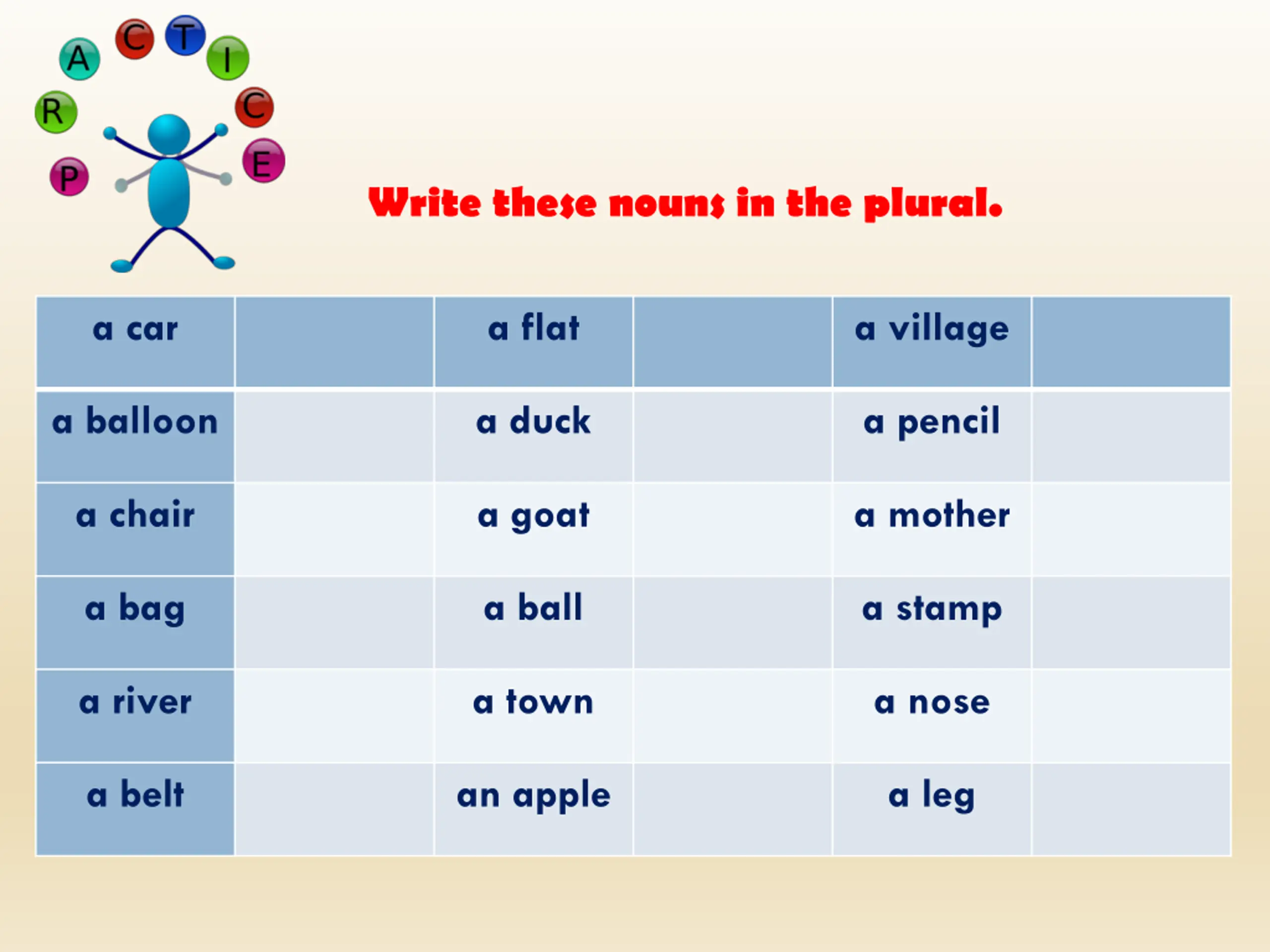
In English, the most common method of transforming a singular noun into a plural form involves adding the suffix "-s" or "-es." This is the foundational rule for the vast majority of nouns. When a word ends in a standard consonant sound, adding "-s" is the default. However, when a word ends in a sibilant sound—specifically those represented by the letters s, x, z, ch, or sh—the addition of "-es" is required to create a phonetic separation, allowing the word to be articulated clearly.
For instance, "dog" becomes "dogs," while "bus" becomes "buses" and "watch" becomes "watches." Mastery begins with the ability to distinguish between these terminal sounds. If a word ends in a vowel followed by a "y," the standard practice is to simply add an "-s" (e.g., "key" to "keys"). Conversely, if the word ends in a consonant followed by a "y," the standard rule is to replace the "y" with "ies" (e.g., "study" to "studies"). These rules are rarely broken, providing a reliable framework for daily writing.
Managing Nouns Ending in O and F
Nouns ending in the letter "o" or the letters "f" or "fe" present slightly more complex challenges. For words ending in "o," the rule remains inconsistent. If the "o" is preceded by a vowel, you typically add an "-s" (e.g., "radio" to "radios"). If it is preceded by a consonant, the word may end in either "-s" or "-es." In modern usage, "photograph" shortened to "photo" becomes "photos," whereas "potato" becomes "potatoes." When in doubt, consult a dictionary, as there is no single phonetic rule that governs every "o" ending.
Similarly, words ending in "f" or "fe" often undergo a consonant shift. Many of these nouns change the ending to "-ves" (e.g., "leaf" to "leaves," "knife" to "knives"). However, this is not an absolute rule. Words like "roof" or "belief" remain simple, becoming "roofs" and "beliefs." Because these nouns are common, memorizing the specific exceptions is an essential part of refining your writing style.
Handling Irregular Nouns and Loanwords
English is a language shaped by extensive borrowing from Latin, Greek, French, and German. Consequently, many words do not follow the standard "-s" or "-es" pattern at all. These are referred to as irregular nouns, and they often retain the pluralization rules of their original languages.
Latin and Greek Derivatives
Scientific and academic writing frequently uses terms that retain their original plural forms. While English speakers often accept "stadiums" and "forums," older conventions—and certain technical contexts—still utilize "stadia" and "fora." To maintain credibility, writers must understand the current consensus for these terms.
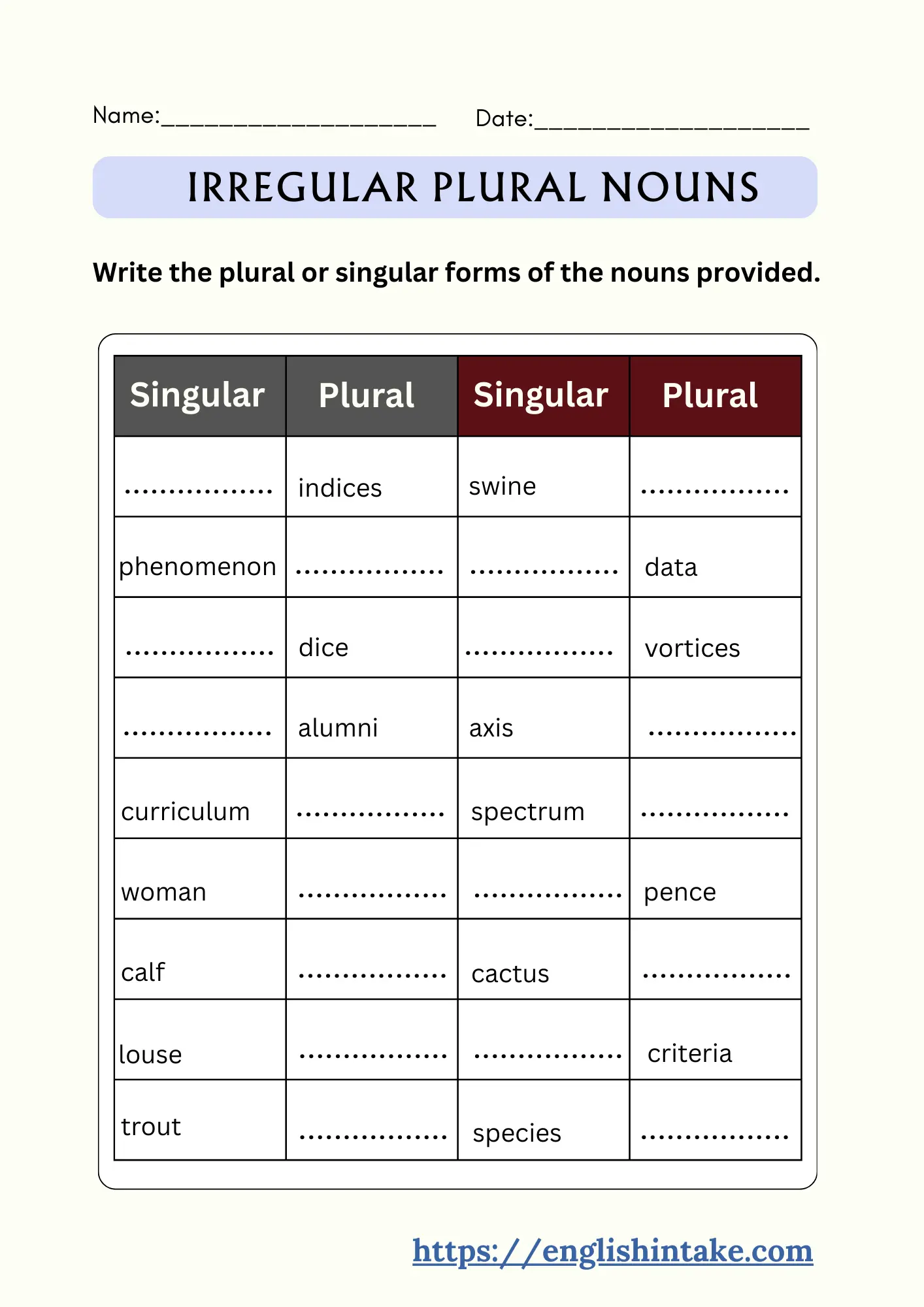
| Singular | Plural | Note |
|---|---|---|
| Alumnus | Alumni | Refers to a male or mixed-gender group. |
| Criterion | Criteria | Often misused as a singular noun. |
| Phenomenon | Phenomena | A common irregular scientific term. |
| Syllabus | Syllabi | "Syllabuses" is also acceptable in modern usage. |
| Datum | Data | Traditionally plural; "datum" is the singular unit. |
When writing, consider the target audience. In casual correspondence, using "data" as a singular noun is widely accepted and understood. However, in formal technical or research documentation, "data" should be treated as plural, paired with plural verbs (e.g., "The data are clear" rather than "The data is clear").
Common Errors to Avoid
One of the most persistent errors in everyday writing is the "greengrocer’s apostrophe." This occurs when a writer incorrectly inserts an apostrophe before the "s" in a plural noun (e.g., writing "apple's" when referring to a bowl of apples). An apostrophe indicates possession or a contraction, never a plural. The word "apples" is the simple plural; "apple's" implies that something belongs to the apple.
Another frequent mistake involves confusion between singular and plural forms of nouns that end in "s" inherently. Words like "news," "physics," or "economics" look like plurals but function as singular nouns. You would say, "The news is encouraging," not "The news are encouraging." Recognizing that the "s" is part of the word's base, rather than an added suffix, is key to grammatical accuracy.
Strategies for Verification
To master pluralization, you must develop a systematic approach for verification. Even professional editors rely on tools to ensure consistency.
- Check for "Uncountable" Nouns: Some words, such as "information," "furniture," and "luggage," are uncountable in English. They do not have a plural form. You cannot have "informations" or "furnitures." If you need to quantify them, use a container noun: "a piece of information" or "a set of furniture."
- Consult Style Guides: In 2026, standards for digital communication continue to favor clarity over rigid adherence to archaic rules. However, for formal reporting, references like The Chicago Manual of Style or the AP Stylebook remain the primary authorities for resolving ambiguity in pluralization.
- The "Read Aloud" Test: Often, your ear will catch errors that your eyes miss. If a plural form sounds unnatural or clunky, it is often a sign that you are forcing a standard rule onto an irregular noun.
Frequently Asked Questions
How do I pluralize compound nouns?
Typically, you pluralize the most important word in the compound. For "brother-in-law," the plural is "brothers-in-law." For "cupful," which denotes a measure, the plural is "cupfuls." If the compound does not have a clear primary noun, you generally add the "s" to the end of the entire word, such as in "forget-me-nots."
Is "data" singular or plural?
In 2026, usage is split. In science and high-level academic writing, it is treated as the plural of "datum." In general business, marketing, and casual writing, "data" is widely accepted as a singular mass noun. For professional consistency, determine if your specific style guide mandates a preference, then apply it throughout your document.
Why do some words never change in the plural?
Some nouns, such as "sheep," "deer," and "fish," are the same in both singular and plural forms. These are known as zero-plural nouns. They are remnants of older forms of English. The only way to distinguish singular from plural in these cases is through the accompanying verb or determiner (e.g., "The fish are swimming" versus "The fish is swimming").
How should I handle abbreviations?
For acronyms and abbreviations, simply add a lowercase "s." You do not need an apostrophe. For example, the plural of "CEO" is "CEOs," and the plural of "1990" is "1990s." The apostrophe is reserved for possession, so avoid writing "CEO's" unless you are describing something owned by a CEO.
Does the rule for "y" endings change for names?
Proper nouns generally follow the same rules as common nouns. If your name is "Harry," the plural is "Harrys." If your surname ends in "y," such as "the Kelly family," the plural is "the Kellys." Never replace the "y" with "ies" for proper names, as this creates a confusing misspelling of the family name.
Next Actions
To improve your writing, start by auditing your recent documents for common pluralization errors. Specifically, look for the misuse of apostrophes in plural words and ensure that irregular nouns are treated consistently. If you frequently write in a technical field, create a "style sheet" for your organization or personal projects that lists the preferred plural forms for specialized terminology you use regularly. By standardizing these choices, you remove the guesswork from your writing process and produce more polished, professional content.
Image Gallery