Why Selling Options for Income Can Surprise You
Selling options for income can surprise you because it fundamentally shifts your risk profile from seeking "unlimited growth" to accepting "limited rewards with significant downside exposure." While time decay provides a consistent tai...
Selling options for income can surprise you because it fundamentally shifts your risk profile from seeking "unlimited growth" to accepting "limited rewards with significant downside exposure." While time decay provides a consistent tailwind, sharp market moves or spikes in volatility can result in losses that dwarf months of collected premiums.
Contents
The allure of "generating rent" from a stock portfolio is a powerful motivator for modern investors in 2026. With interest rates stabilizing and traditional fixed-income yields remaining modest, the strategy of selling (writing) options has transitioned from a niche institutional practice to a mainstream retail endeavor. However, many participants enter the arena focused solely on the "income" aspect, only to be blindsided by the structural mechanics of derivative markets. Understanding the nuances of why this strategy behaves the way it does is essential for long-term survival.
The Mechanics of Option Income: Beyond the Premium
To understand the surprises, one must first understand the primary engine of the strategy: Theta, or time decay. When you sell an option, you are essentially selling "time" to another participant. As the expiration date approaches, the extrinsic value of that option erodes, allowing the seller to buy it back at a lower price or let it expire worthless, keeping the initial premium.
However, selling options is not a "set and forget" strategy. It involves taking on specific obligations that can change rapidly based on the movement of the underlying asset. In 2026, algorithmic trading and high-frequency execution have made price discovery faster than ever, meaning the "surprises" often manifest with incredible speed.
The Trade-Off: Probability vs. Magnitude
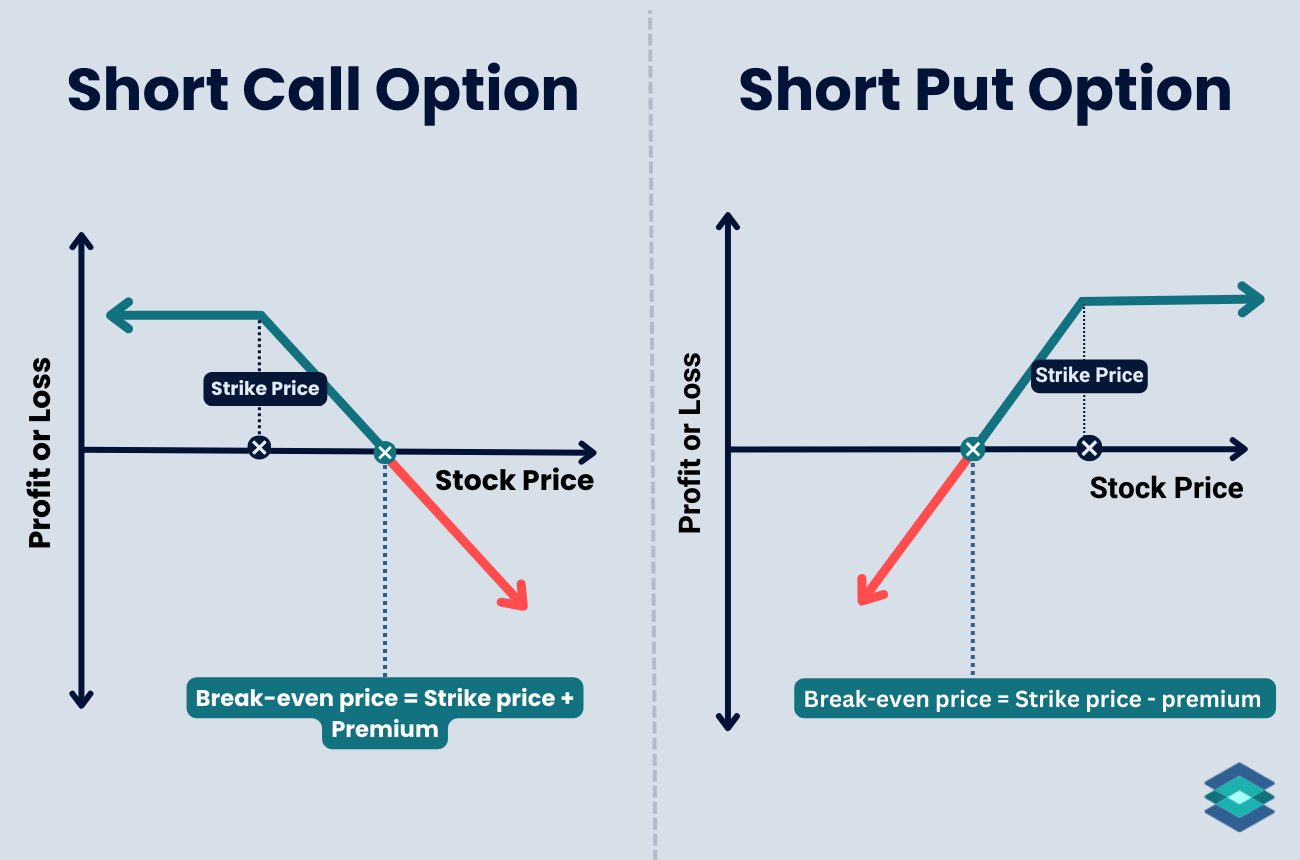
The most common surprise for new option sellers is the realization that a high "Probability of Profit" (PoP) does not guarantee a positive expected return. You might sell an out-of-the-money (OTM) put with a 90% chance of expiring worthless. For nine months, you collect consistent income. In the tenth month, a "black swan" event or a simple earnings miss causes the stock to gap down 20%. The loss incurred in that single month can easily wipe out the previous nine months of gains. This is the "asymmetry" of option selling: you win small and frequent prizes, but you risk large, infrequent losses.
Surprise #1: The "Gamma Trap" Near Expiration
As an option approaches its expiration date, its Gamma—the rate of change of its Delta—increases significantly. This creates a phenomenon often referred to as "expiration risk."
Investors selling options for income often hold their positions until the final hours of the Friday expiration to squeeze out every last cent of premium. The surprise occurs when a small move in the underlying stock causes the option’s value to swing wildly. An option that was safely OTM at 2:00 PM can suddenly move "In-the-Money" (ITM) by 3:55 PM, leading to an unexpected assignment of shares.
In 2026, many brokerage platforms have automated risk-management protocols that may force-close these positions to protect the firm from margin calls, often at prices that are unfavorable to the investor. Managing "Gamma risk" by closing or rolling positions 7 to 14 days before expiration is a professional standard that many retail income-seekers learn only after a costly surprise.
Surprise #2: When Volatility Becomes the Enemy (Vega Risk)
Most investors understand that if a stock price moves against them, they lose money. The surprise in option selling is that you can lose money even if the stock price doesn't move at all. This is due to Vega, which measures an option’s sensitivity to changes in Implied Volatility (IV).
If you sell a covered call or a cash-secured put and the market suddenly becomes anxious—perhaps due to macroeconomic uncertainty or an upcoming Federal Reserve announcement—the IV of those options will rise. Because you are "short" the option, an increase in IV increases the option's price, resulting in an unrealized loss on your dashboard.
Investors are often surprised to see "red" on their screens during a flat market simply because the market is "pricing in" more potential movement for the future. Understanding the Cboe Volatility Index (VIX) and how it relates to individual equity volatility is a prerequisite for anyone attempting to treat options as a reliable income stream.
Surprise #3: The Opportunity Cost of Capped Upside
The "Covered Call" is the gateway drug for option income. By holding 100 shares of a stock and selling a call against it, the investor collects a premium. The surprise here is psychological and financial: the "capped upside."
Imagine holding a high-growth tech stock in 2026 that suddenly announces a breakthrough in quantum computing. The stock price jumps 30% overnight. Because you sold a covered call, your profit is capped at the strike price plus the premium. You are forced to sell your shares at the strike price while the rest of the market enjoys the 30% rally. This "surprising" loss of potential gain can be more painful for some investors than a direct capital loss, as it disrupts long-term compounding.
Strategic Comparison: Income Strategies and Their Risks
The following table compares the three most common option income strategies and the specific "surprises" associated with each.
| Strategy | Primary Goal | Capital Requirement | The "Surprise" Factor |
|---|---|---|---|
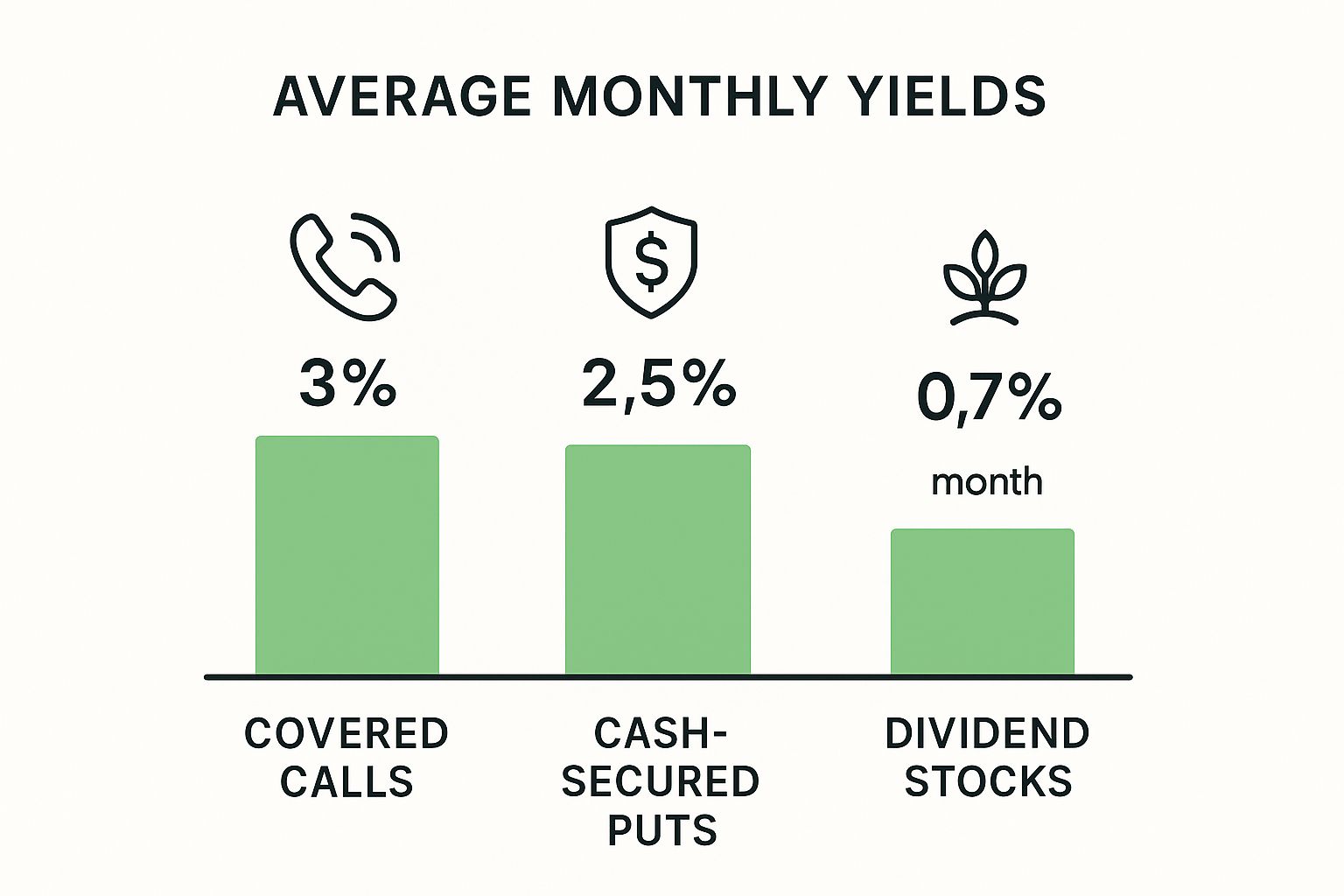
| Covered Call | Enhanced Yield | High (Must own 100 shares) | Missing out on massive rallies (Opportunity Cost). |
| Cash-Secured Put | Acquisition/Income | High (Must hold cash for 100 shares) | Being forced to buy a crashing stock (Assignment Risk). |
| Credit Spreads | Pure Income | Low (Defined by spread width) | Max loss can be 5-10x the income collected (Asymmetric Risk). |
| Iron Condors | Neutral Income | Low to Moderate | Double-sided risk if the market moves too much in either direction. |
The Tax and Structural Realities of 2026
Taxation remains a significant "surprise" for those transitioning from buy-and-hold investing to active option selling. In the United States, most income generated from selling short-term options (held for less than a year) is taxed at ordinary income rates rather than the more favorable long-term capital gains rates.
According to the IRS Publication 550, the rules regarding "qualified" vs. "unqualified" covered calls can significantly impact your holding period for the underlying stock. If you sell a "deep in-the-money" call, you may inadvertently reset the holding period on your long-term shares, turning a potential long-term gain into a short-term one. This tax drag can reduce the effective "income" by 20% to 37%, depending on your tax bracket.
Common Pitfalls: Why "Income" Strategies Fail
- Over-leveraging (Selling Naked): The most dangerous surprise comes from selling options without the underlying shares or cash (margin). This can lead to unlimited risk. In 2026, FINRA regulations on margin requirements have become more stringent, but the risk of a "margin call" remains the ultimate surprise that can liquidate an entire account.
- Chasing High Yield: Options with the highest premiums are expensive for a reason—the market expects a massive move. Selling "meme stock" options for 10% weekly yields is not an income strategy; it is a high-stakes gamble.
- Ignoring Earnings: Many sellers are surprised by "IV Crush" after an earnings report. While IV drops (helping the seller), the actual move in the stock can far exceed the "expected move" priced in by the options, leading to massive losses.
Practical Steps to Mitigate Surprises
To transform option selling from a series of surprises into a disciplined business, investors should focus on systematic management.
- Standardize Entry: Sell options when IV Rank is high (over 50th percentile), ensuring you are getting "overpaid" for the risk.
- Defined Exit Rules: Don't wait for expiration. Many professionals close positions when they have captured 50% of the maximum possible profit. This reduces the time you are exposed to "Gamma risk."
- Position Sizing: Never let a single option trade represent more than 2-5% of your total account equity. This ensures that even the "big surprise" loss doesn't end your trading career.
Frequently Asked Questions
Can I replace my salary by selling options for income? While possible, it is extremely difficult and requires significant capital. Because option selling is capital-intensive and carries asymmetric risk, you would likely need a portfolio in the mid-to-high six figures to generate a "salary" while maintaining a safe risk profile. Most successful traders use it as a supplement to other income, not a replacement.
What happens if I am assigned on a Saturday? If the option expires In-the-Money on Friday, the Options Clearing Corporation (OCC) will automatically exercise it. You will wake up on Saturday or Monday morning with a position in the underlying stock (either long or short). The surprise is often the sudden requirement of capital to hold those shares, which may trigger a margin call if your account is not sufficiently funded.
Is selling options safer than buying them? Statistically, sellers have a higher "win rate" because they benefit from time decay. However, "safer" is a relative term. Buyers have limited risk (the premium paid), while sellers often have much larger, sometimes undefined, risk. Selling is more "consistent," but buying is "safer" in terms of maximum possible loss.
How does the 2026 market environment affect these strategies? In 2026, increased market efficiency and the prevalence of 0DTE (zero days to expiration) options have increased overall market noise. This means that "income" sellers must be more vigilant about intraday volatility spikes that could trigger stop-losses or early assignments.
Final Recommendation
If you are considering selling options for income, treat it as a risk management business rather than a yield-seeking project. The "surprises" of the market are inevitable, but they are only catastrophic when they meet an unprepared investor. Start by selling "covered" positions—where your risk is clearly defined and capped by assets you already own—and never sell an option on a stock you wouldn't be comfortable owning for the next ten years. Use the income generated not as a "spendable" paycheck, but as a buffer to reinvest and compound your wealth over time.
Image Gallery