The Best Place to Book a Royal Caribbean Cruise: A Strategic Guide
Determining the best place to book a Royal Caribbean cruise involves balancing your need for personalized service, price transparency, and access to exclusive loyalty benefits. While booking directly through the Royal Caribbean website...
Determining the best place to book a Royal Caribbean cruise involves balancing your need for personalized service, price transparency, and access to exclusive loyalty benefits. While booking directly through the Royal Caribbean website offers the most control and immediate updates, utilizing an experienced travel advisor or a high-volume cruise agency can often provide additional onboard credit, perks, or specialized support that direct channels lack.
Contents
Understanding Your Booking Channels
When planning a voyage with Royal Caribbean International, you are essentially choosing between three primary booking ecosystems. Each has distinct operational advantages depending on your level of travel experience and the complexity of your vacation.
Direct Booking (RoyalCaribbean.com) Booking directly through the official Royal Caribbean portal is the most transparent method for travelers who prefer to manage their own reservations. This channel is optimal for those who enjoy using the Cruise Planner interface to reserve excursions, dining packages, and beverage bundles immediately after booking. When you book direct, you interact exclusively with the cruise line’s reservation staff. If a change occurs in the ship's itinerary or if there is a scheduling disruption, you receive notifications directly from the source. Furthermore, for those who earn points through the Crown & Anchor Society, direct booking ensures that your reservation history is integrated seamlessly into your account profile.
Travel Advisors (Cruise Specialists) A dedicated travel advisor—specifically one who specializes in cruise travel—acts as your advocate. Beyond the convenience of offloading administrative tasks, these professionals often have access to “group rates.” Cruise lines frequently allow agencies to hold blocks of cabins at a fixed rate, which may be lower than the current market price available to the public. Additionally, a specialized agent may offer value-adds such as prepaid gratuities, complimentary specialty dining, or extra onboard credit (OBC). Their primary value lies in troubleshooting; if a reservation error occurs or a flight connection is missed, the agent handles the heavy lifting with the cruise line’s support desk while you focus on your travel logistics.
High-Volume Online Agencies (OTAs) Online Travel Agencies (OTAs) that specialize in cruise vacations are a middle ground between individual agents and direct booking. They frequently leverage high booking volumes to provide competitive pricing and significant cash-back incentives. However, because these are large, automated platforms, the level of personalized service can vary. You gain the advantage of a sophisticated search engine that can compare itineraries across multiple ships, but you may sacrifice the high-touch, human-centric support provided by a boutique travel agency.
Comparison of Booking Methods
| Feature | Direct (Royal Caribbean) | Travel Advisor | Online Agency (OTA) |
|---|---|---|---|
| Price Transparency | High | Variable | Moderate |
| Perks/Onboard Credit | Standard (Offers only) | High (Often Negotiated) | High (Volume-based) |
| Self-Service Capability | Excellent | Limited | Moderate |
| Personalized Advocacy | N/A | High | Low |
| Problem Resolution | Direct/Self | Advisor-led | Call-center dependent |
Prerequisites for Booking
Before selecting your booking channel, ensure you have gathered the necessary information to avoid errors that are difficult to correct later. Royal Caribbean requires accurate legal names as they appear on your passport or government-issued identification. Discrepancies here can lead to boarding denials at the cruise terminal.
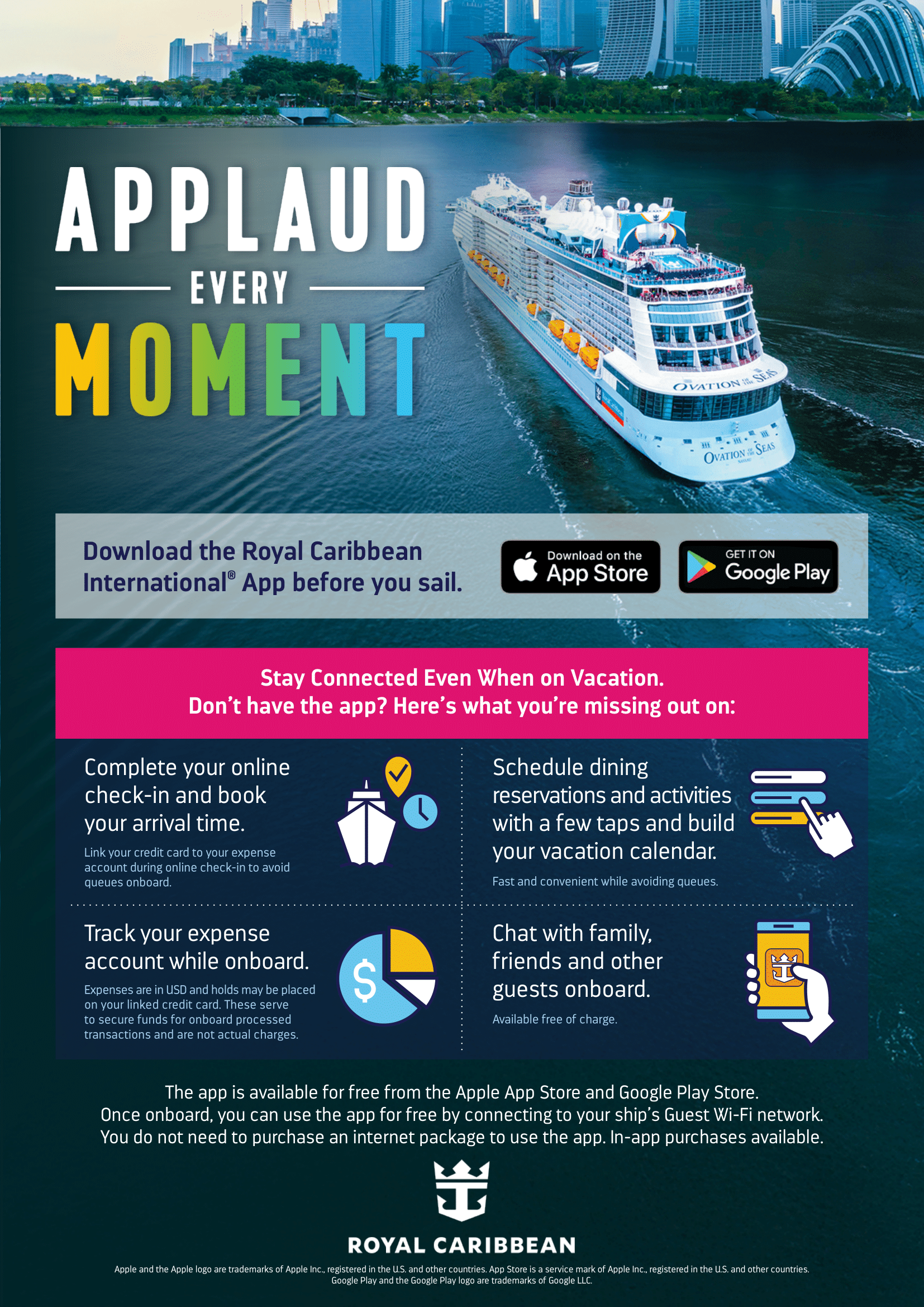
Additionally, familiarize yourself with the Cruise Planner. Regardless of how you book, you will eventually need to create an account on the Royal Caribbean website or mobile app to manage your stateroom preferences, complete the mandatory online check-in, and provide emergency contact information.
Financial Considerations and Incentives
The price of a cruise is dynamic, fluctuating based on supply, demand, and how far in advance you book. Royal Caribbean employs a yield management system similar to airlines. If you are looking for the absolute lowest base fare, booking 12 to 18 months in advance is generally the standard practice.
However, consider the "Total Cost of Ownership." A slightly higher fare that includes an extra $200 in onboard credit—which you can apply toward gratuities or internet packages—is mathematically superior to a lower base fare that offers no inclusions. When comparing quotes, always ask: "Is the price including taxes, port fees, and gratuities?" Some agencies advertise the "base fare" to make the price appear more attractive, only to add substantial surcharges during the final checkout phase.
Common Mistakes to Avoid
- Ignoring Cancellation Policies: Always verify whether your booking is refundable or non-refundable. Non-refundable deposits usually offer a lower price, but they restrict your ability to pivot if your plans change.
- Missing Payment Deadlines: Royal Caribbean has strict final payment deadlines (typically 90 days before departure for standard sailings). If you book through a third party, ensure you know their internal deadline, which may be earlier than the cruise line's to allow for processing.
- Overlooking Documentation Requirements: Whether you are traveling with a passport or a birth certificate (for closed-loop cruises from U.S. ports), ensure your booking agent confirms your document eligibility.
Frequently Asked Questions
Is it cheaper to book directly with Royal Caribbean? Not necessarily. While the base cruise fare is often the same across all reputable channels due to cruise line pricing parity policies, travel agencies can provide added value in the form of onboard credits or gifts that you cannot obtain by booking directly.
Can I move a booking made through an agency to the cruise line? Generally, if you book through an agency, the reservation is "owned" by that agency. While you can sometimes transfer a direct booking to an agency to gain their perks, you typically cannot transfer a booking from an agency to the cruise line once the deposit has been processed.
What happens if my cruise is cancelled? If you book through an agency, they are responsible for processing your refund or handling your future cruise credit (FCC) application. This can be a benefit if the agency has a dedicated support team, but it does add a middleman to the financial transaction.
Do I get my loyalty points if I don’t book directly? Yes. Crown & Anchor Society points are earned based on the number of nights sailed, regardless of where you booked the trip. Ensure your loyalty number is attached to the reservation at the time of booking to ensure points are credited correctly.
Are there hidden fees when using a travel advisor? Most reputable travel advisors do not charge fees to book a cruise because they receive a commission from the cruise line. However, always ask your advisor if they charge a service or "planning" fee before committing to a booking.
Recommendation for Your Next Booking
If you are a first-time cruiser or have specific requirements—such as booking multiple cabins for a family reunion or coordinating complex air travel—the best approach is to interview a reputable, cruise-specialized travel advisor. The human element of support, combined with potential agency-exclusive onboard credit, provides a higher degree of security and value. Conversely, if you are a seasoned traveler who prefers total autonomy and instant control over your reservations, booking directly through the Royal Caribbean website ensures you have a direct, unimpeded line of communication with the cruise line for all aspects of your voyage.
Image Gallery