Types of Life Insurance for Retirement: A Strategic Guide
Permanent life insurance policies—including whole life, universal life, indexed universal life, and variable universal life—serve as versatile retirement planning tools. They provide tax-deferred cash value accumulation, options for ta...
Permanent life insurance policies—including whole life, universal life, indexed universal life, and variable universal life—serve as versatile retirement planning tools. They provide tax-deferred cash value accumulation, options for tax-free supplemental retirement income through policy loans, and legacy protection, while term life with living benefits offers temporary coverage during pre-retirement transition years.
Contents
The Dual Role of Life Insurance in Retirement Planning
For decades, standard financial advice categorized life insurance purely as an income replacement tool designed to protect dependents during a wage earner's working years. However, contemporary wealth management frequently integrates permanent life insurance into retirement strategies. Beyond providing a tax-free death benefit to heirs, cash-value life insurance policies act as non-correlated financial assets that offer unique tax advantages, liquidity, and downside protection during retirement.
To understand how life insurance fits into a broader retirement strategy, it is essential to distinguish between the risk protection component and the accumulation component. Under Internal Revenue Code (IRC) Section 7702, qualified life insurance contracts enjoy tax-deferred cash value growth. When structured correctly, policyholders can access this cash value during retirement through tax-free withdrawals up to the cost basis (the total premiums paid) and via policy loans thereafter.
Using life insurance in retirement is not intended to replace traditional tax-advantaged accounts like 401(k)s or IRAs. Instead, it serves as a complementary wealth tier. It creates a cash reserve that is unaffected by market crashes, offers capital preservation, and yields income that does not increase provisional income calculations for Social Security taxability or Medicare Part B premium surcharges (IRMAA).
Primary Types of Permanent Life Insurance for Retirement
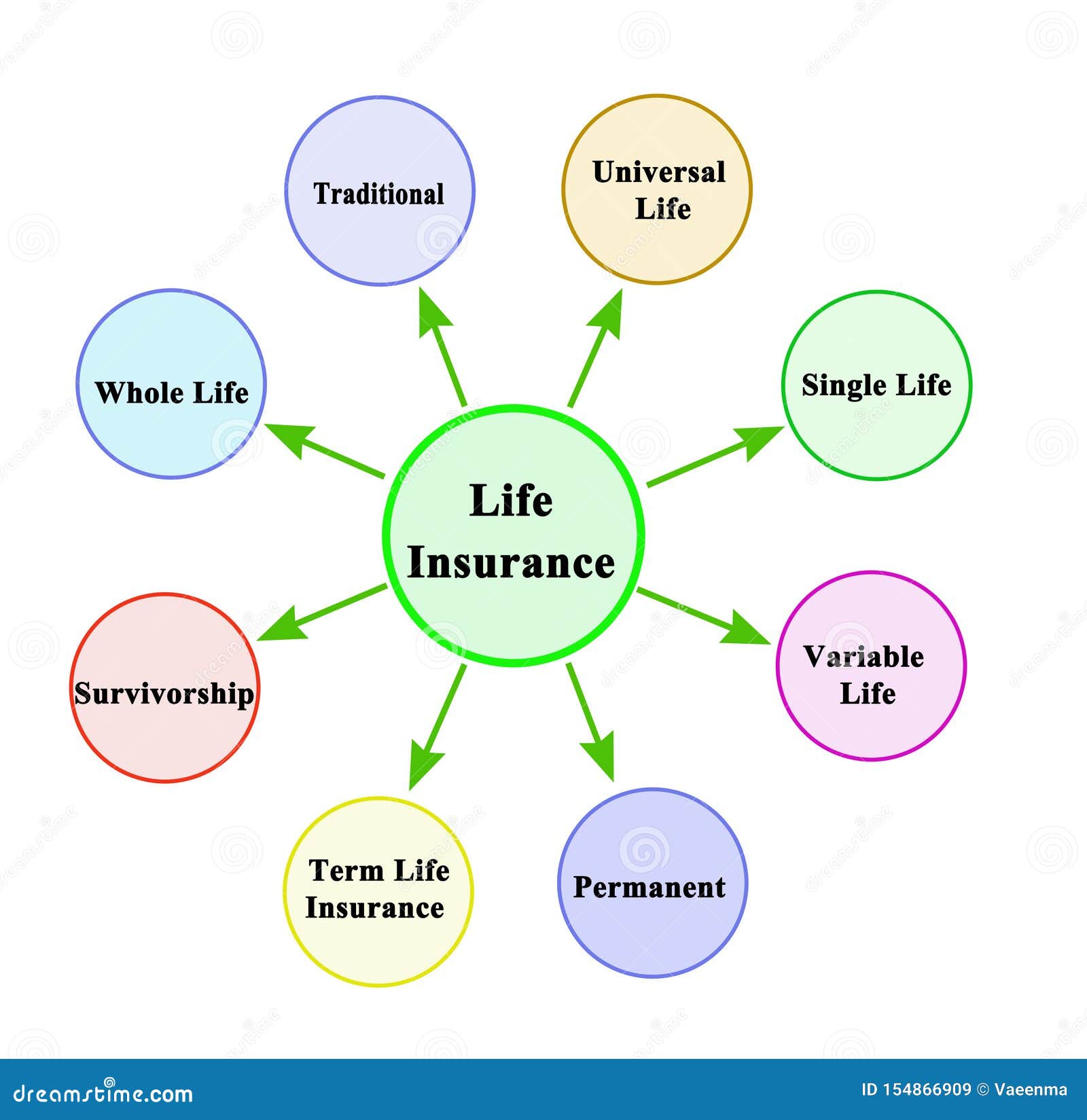
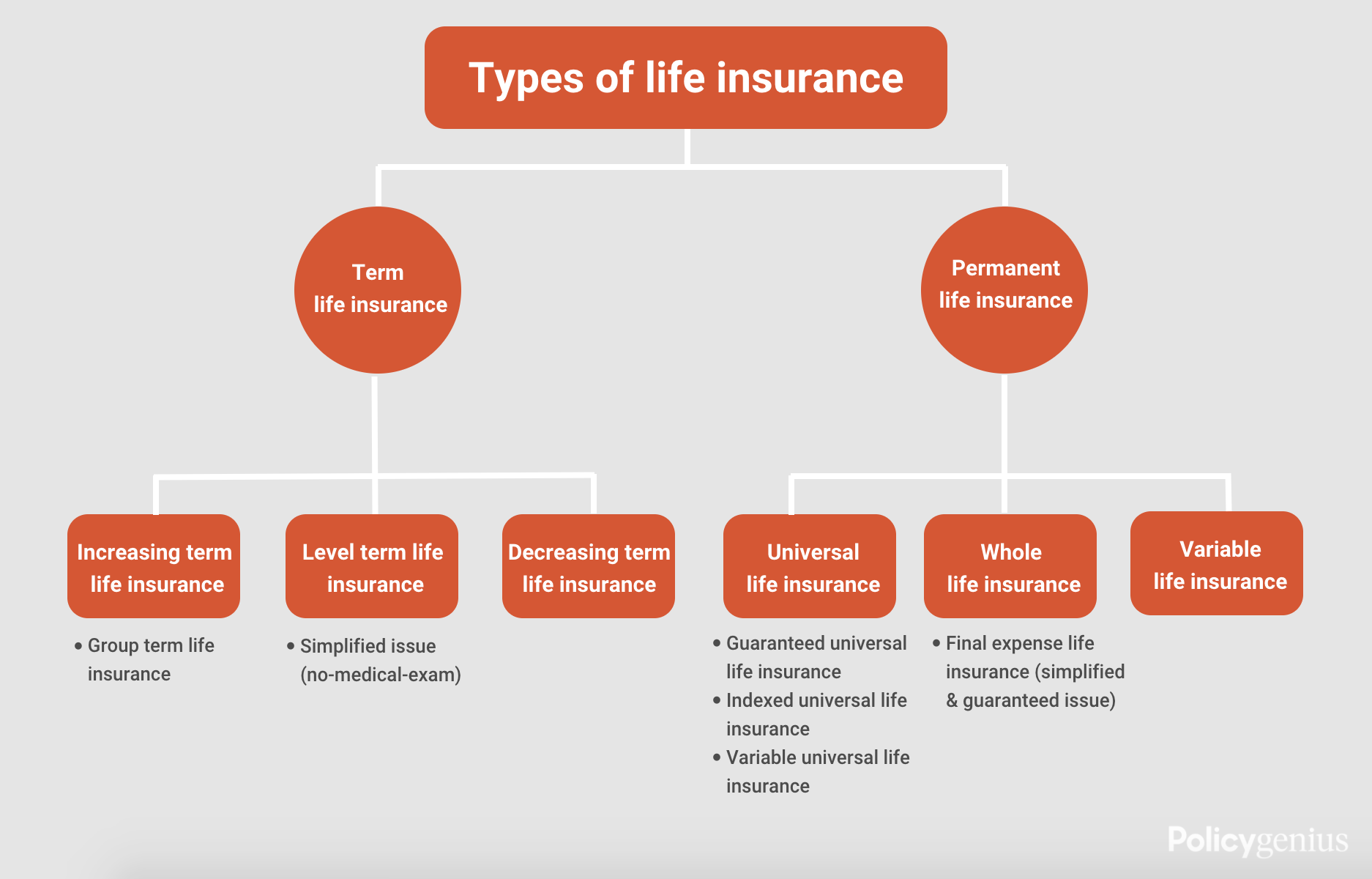
Permanent life insurance remains in force for the policyholder's entire lifetime, provided premiums are paid as agreed. Unlike term policies, permanent policies build internal cash value that can be accessed during retirement.
1. Whole Life Insurance
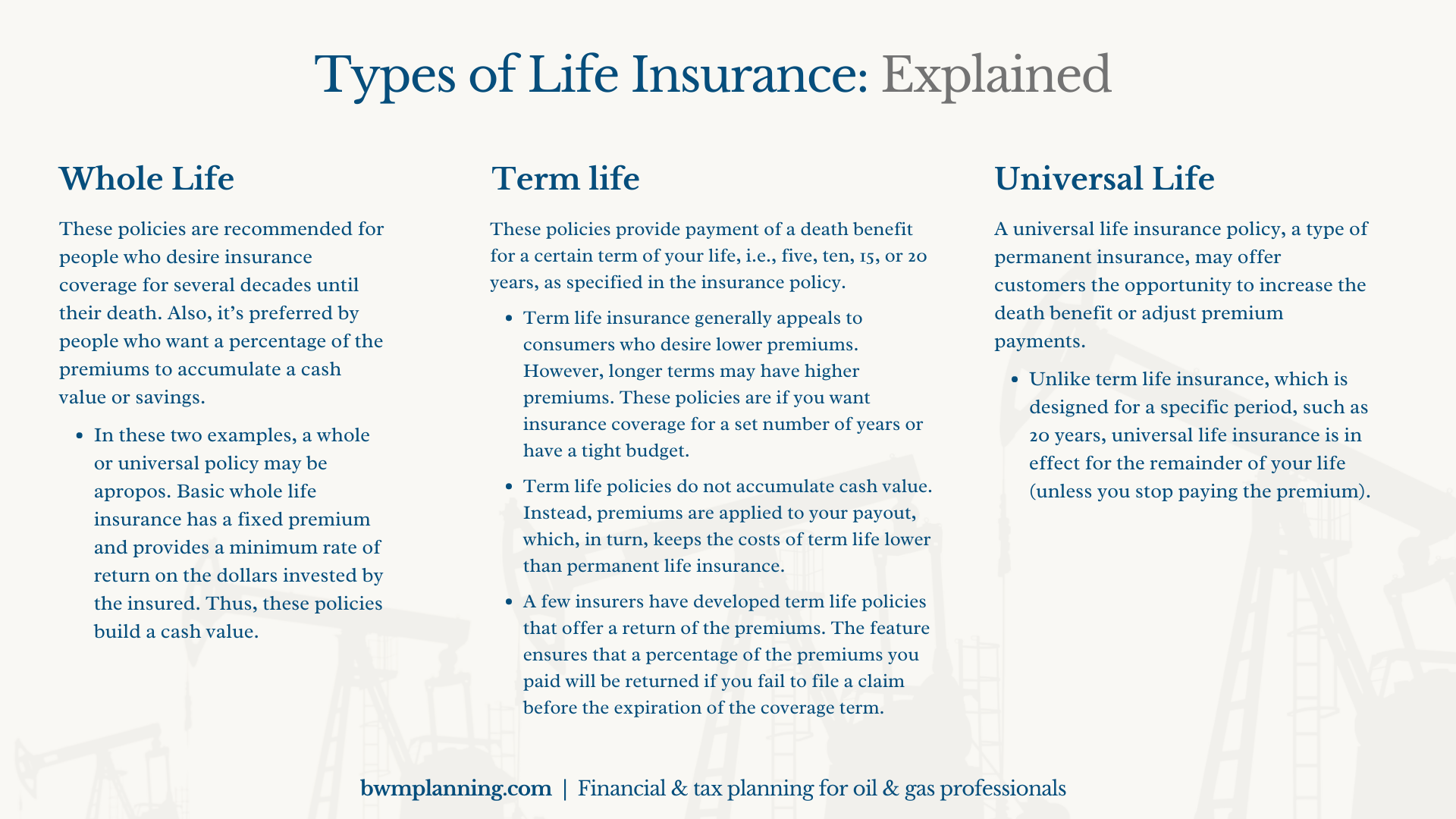
Whole life insurance is the most straightforward form of permanent coverage. It guarantees three core elements: a fixed premium that never increases, a guaranteed minimum interest rate on cash value accumulation, and a guaranteed death benefit.
For retirees prioritizing stability over high growth, participating whole life insurance policies issued by mutual insurance companies are particularly compelling. Participating policies are eligible to receive annual policyholder dividends. Although dividends are not legally guaranteed, major mutual insurers have paid them consistently for over a century. Dividends can be reinvested into the policy to buy Paid-Up Additions (PUAs), compounding the cash value and expanding the death benefit exponentially over time.
- Pros: Absolute growth guarantees, predictable costs, protection from market volatility, potential for policyholder dividends.
- Cons: Higher initial premium costs, lower long-term growth potential compared to equity-linked products, limited premium payment flexibility.
2. Universal Life (UL) Insurance
Universal life insurance introduces flexibility that traditional whole life policies lack. Unbundled policy structures allow policyholders to adjust their premium payments and coverage levels as financial needs change over time.
In a standard Universal Life policy, cash value grows based on current prevailing interest rates set by the insurer, subject to a contractually guaranteed minimum floor (often between 1% and 3%). When cash flows fluctuate—such as during early retirement or semi-retirement—policyholders can adjust their premium payments lower or use accrued cash value to pay policy administrative fees and mortality costs.
- Pros: Premium payment flexibility, adjustable death benefits, guaranteed minimum interest rate floors.
- Cons: Cash value accumulation depends heavily on prevailing interest rate environments; underfunding can lead to policy surrender or required unexpected cash injections.
3. Indexed Universal Life (IUL) Insurance
Indexed Universal Life insurance combines premium flexibility with cash value growth tied to external equity market indices, such as the S&P 500 or Nasdaq-100, without direct market exposure.
Instead of directly investing cash value in equities, the insurer allocates funds to fixed-income assets and uses options contracts to mirror a portion of an index's performance. IUL contracts feature a floor (typically 0%) and a cap (often between 8% and 10%) or a participation rate. If the benchmark index declines by 20% in a given year, the policyholder’s credited interest rate is 0%, protecting principal from market losses. If the index rises 15%, credited growth is capped at the contract maximum.
- Pros: Downside protection with a 0% return floor, upside potential tied to market indexes, tax-deferred accumulation, flexible premiums.
- Cons: Returns are subject to cap rates, participation rates, and spread costs set by the insurer; internal Cost of Insurance (COI) charges increase with age and can erode cash value if growth underperforms.
4. Variable Universal Life (VUL) Insurance
Variable Universal Life insurance offers the highest growth potential among permanent policies, accompanied by the highest level of market risk. VUL policies allow contract holders to allocate cash value directly into professional investment sub-accounts, which function similarly to mutual funds (investing in equities, bonds, and money market instruments).
Because the cash value is directly invested in the market, VUL policies carry no downside floor. During strong bull markets, VUL cash value can compound rapidly, creating a substantial source of retirement income. Conversely, severe market drops reduce cash value directly, requiring active management to ensure the policy remains solvent as internal mortality costs rise.
- Pros: Uncapped investment potential, direct market exposure, wide selection of underlying equity and fixed-income portfolios.
- Cons: Full exposure to market risk, no downside protections, complex fee structures, requires active management to prevent policy lapse.
Role of Term Life Insurance in Retirement Strategies
Term life insurance provides temporary coverage for a specified timeframe (typically 10 to 30 years) and does not accumulate cash value. While it is rarely viewed as an asset accumulation vehicle, term life fulfills crucial niche roles in late-stage retirement planning.
- Pre-Retirement Transition Phase
- Term Life Insurance
- Income Bridge
- Debt Payoff
- Term-to-Perm Conversion
- Living Benefit Riders
- Chronic / Terminal Illness
- Long-Term Care Needs
- Term Life Insurance
Living Benefits and Accelerated Death Benefit Riders
Modern term life policies frequently offer Accelerated Death Benefit (ADB) riders for terminal, critical, or chronic illness. If a policyholder is diagnosed with a qualifying condition or loses the ability to perform basic Activities of Daily Living (ADLs), these riders allow them to access a significant portion of the death benefit tax-free while still living. This provides vital funds to cover medical or long-term care costs without liquidating retirement portfolios.
Term-to-Permanent Conversions
Most high-quality term policies include a contractual conversion privilege. This provision allows policyholders to convert their term policy into a permanent cash-value policy (such as Whole Life or IUL) before reaching a specified age (often age 65 or 70) without undergoing new medical underwriting or evidence of insurability. This is invaluable for individuals who develop health conditions late in their career but require permanent coverage for estate planning.
Comprehensive Policy Comparison
Selecting the appropriate life insurance structure requires balancing growth targets against risk tolerance and cost obligations.
| Policy Type | Cash Value Growth Engine | Downside Market Risk | Premium Flexibility | Primary Retirement Function |
|---|---|---|---|---|
| Whole Life | Fixed rate + Potential company dividends | None (Guaranteed growth floor) | Low (Fixed fixed premiums) | Volatility buffer, guaranteed legacy, stable cash reserve |
| Universal Life (UL) | Insurer-declared interest rate | None (Guaranteed contract floor) | High (Flexible range) | Conservative cash buffer with payment flexibility |
| Indexed Universal Life (IUL) | Index performance (e.g., S&P 500) subject to caps | None (Contractual 0% floor) | High (Flexible range) | Tax-advantaged accumulation with market downside protection |
| Variable Universal Life (VUL) | Direct investment in equity/bond sub-accounts | High (Direct market exposure) | High (Flexible range) | Maximum tax-deferred growth potential for risk-tolerant investors |
| Term Life (with Riders) | None (Pure protection) | N/A | None (Fixed term duration) | Income bridge, medical expense protection via living benefits |
Strategic Applications of Life Insurance in Retirement
Integrating permanent life insurance into a modern retirement strategy involves several distinct tactical uses.
1. Mitigating Sequence-of-Returns Risk
Sequence-of-returns risk refers to the danger of experiencing severe market downturns during the initial years of retirement. Liquidating equity assets at depressed prices to pay living expenses permanently impairs portfolio longevity.
Cash value in a permanent life insurance policy acts as a volatility buffer. During market drawdowns, retirees can pause retirement account withdrawals and instead draw tax-free cash from their life insurance policy. This allows equity portfolios time to recover without taking realized losses.
- Market Downturn Occurs
- Option A: Withdraw from Stocks
- Lock in losses
- Portfolio Depletion
- Option B: Draw Policy Cash Value
- Preserve Equities
- Portfolio Recovers
- Option A: Withdraw from Stocks
2. Tax-Free Income Tiering
Under tax laws governed by IRC Section 7702, cash value withdrawals are treated on a First-In, First-Out (FIFO) basis. This means withdrawals are considered a tax-free return of premium paid until the basis is exhausted. Once basis is fully withdrawn, remaining cash value can be accessed via policy loans.
Because policy loans are framed as indebtedness rather than income, they are generally not recognized as taxable income by the IRS. This income does not trigger bracket creep, nor does it affect income-based thresholds for Social Security benefit taxation or Medicare Part B premium surcharges.
3. Long-Term Care (LTC) and Living Asset Protection
Traditional standalone long-term care insurance policies have faced rising premiums and strict underwriting. Hybrid life insurance policies that feature LTC riders or Chronic Illness riders solve this challenge by offering a multi-use structure:
- If long-term care is needed, the policy pays out tax-free monthly benefits to cover care expenses.
- If care is never needed, the full death benefit passes tax-free to beneficiaries upon death.
Technical Pitfalls, Limitations, and Tax Rules
While permanent life insurance offers substantial retirement benefits, structural mistakes can trigger significant tax liabilities or policy failures.
The Modified Endowment Contract (MEC) Trap
If a permanent life insurance policy is funded too aggressively in its early years, it fails the IRS 7-Pay Test under IRC Section 7702A and is reclassified as a Modified Endowment Contract (MEC).
Once a policy becomes a MEC:
- Cash value growth remains tax-deferred.
- Withdrawals and loans revert to a Last-In, First-Out (LIFO) tax structure, meaning gains are withdrawn first as taxable ordinary income.
- Withdrawals taken prior to age 59½ incur a 10% IRS early withdrawal penalty.
Policy Surrender and Loan Overcollateralization
If a retiree takes extensive loans against their policy cash value and internal fees (such as rising Cost of Insurance charges) consume the remaining equity, the policy risks lapsing. If a policy lapses with outstanding loans that exceed the paid basis, the IRS treats the forgiven debt as ordinary taxable income immediately, potentially creating a significant tax liability without the cash on hand to pay it.
Frequently Asked Questions
How does cash value life insurance affect Social Security taxes?
Tax-free policy loans and cost-basis withdrawals from a life insurance contract are not included in Provisional Income calculations. As a result, accessing cash value for retirement income does not push taxable earnings over the threshold that triggers taxation on Social Security benefits.
What is the difference between a tax-free withdrawal and a policy loan?
A withdrawal reduces the overall cash value and death benefit permanently on a dollar-for-dollar basis up to the total amount of premiums paid into the policy (cost basis). A policy loan uses the accumulated cash value as collateral for a loan from the insurance carrier; the money remains in the policy growing, while loan interest is charged by the carrier. Unpaid loans are subtracted from the death benefit upon the insured's passing.
Can I convert my existing term life policy into a cash-value policy for retirement?
Yes, provided your term policy includes a contractual term conversion rider. Most insurers permit conversion to a permanent policy (such as Whole Life or Indexed Universal Life) up to a specified age limit without requiring a new medical exam, health screening, or proof of insurability.
Is an Indexed Universal Life (IUL) policy safer than a Variable Universal Life (VUL) policy?
Yes, in terms of market loss. IUL policies include an absolute floor (typically 0%), ensuring that negative market performance in linked indexes will not reduce the cash value base. VUL policies invest directly in sub-accounts with market exposure, meaning market downturns directly reduce policy cash value.
What happens if I borrow against my life insurance policy and die before paying it back?
If the insured passes away with an outstanding policy loan, the insurance company deducts the loan principal and any accrued, unpaid interest from the total death benefit. The remaining net death benefit is distributed tax-free to the designated beneficiaries.
Strategic Next Steps
To successfully integrate life insurance into a retirement income strategy:
- Evaluate Coverage Needs vs. Cash Accumulation Goals: Determine whether your primary target is legacy asset transfer, sequence-of-returns protection, or tax-advantaged income generation.
- Audit Existing Policies: Review any active term or permanent coverage to inspect conversion deadlines, performance history, and internal fee structures.
- Conduct a 7-Pay Test Review: Ensure that proposed premium funding schedules do not accidentally classify your policy as a Modified Endowment Contract (MEC).
- Consult an Independent Financial Advisor: Work with a licensed fiduciary who can analyze illustrations from multiple mutual and stock life insurance carriers to balance performance, solvency, and fee transparency.
Image Gallery