Effective Short Term SMART Goals Examples for Students in 2026
Short-term SMART goals for students are highly specific, time-bound objectives designed to be achieved within a few days, weeks, or months. By applying the SMART framework—Specific, Measurable, Achievable, Relevant, and Time-bound—stud...
Short-term SMART goals for students are highly specific, time-bound objectives designed to be achieved within a few days, weeks, or months. By applying the SMART framework—Specific, Measurable, Achievable, Relevant, and Time-bound—students transform vague intentions into actionable roadmaps, such as increasing weekly study time by three hours or mastering a specific chemistry formula before Friday’s quiz.
Contents
Understanding the SMART Framework in a Student Context
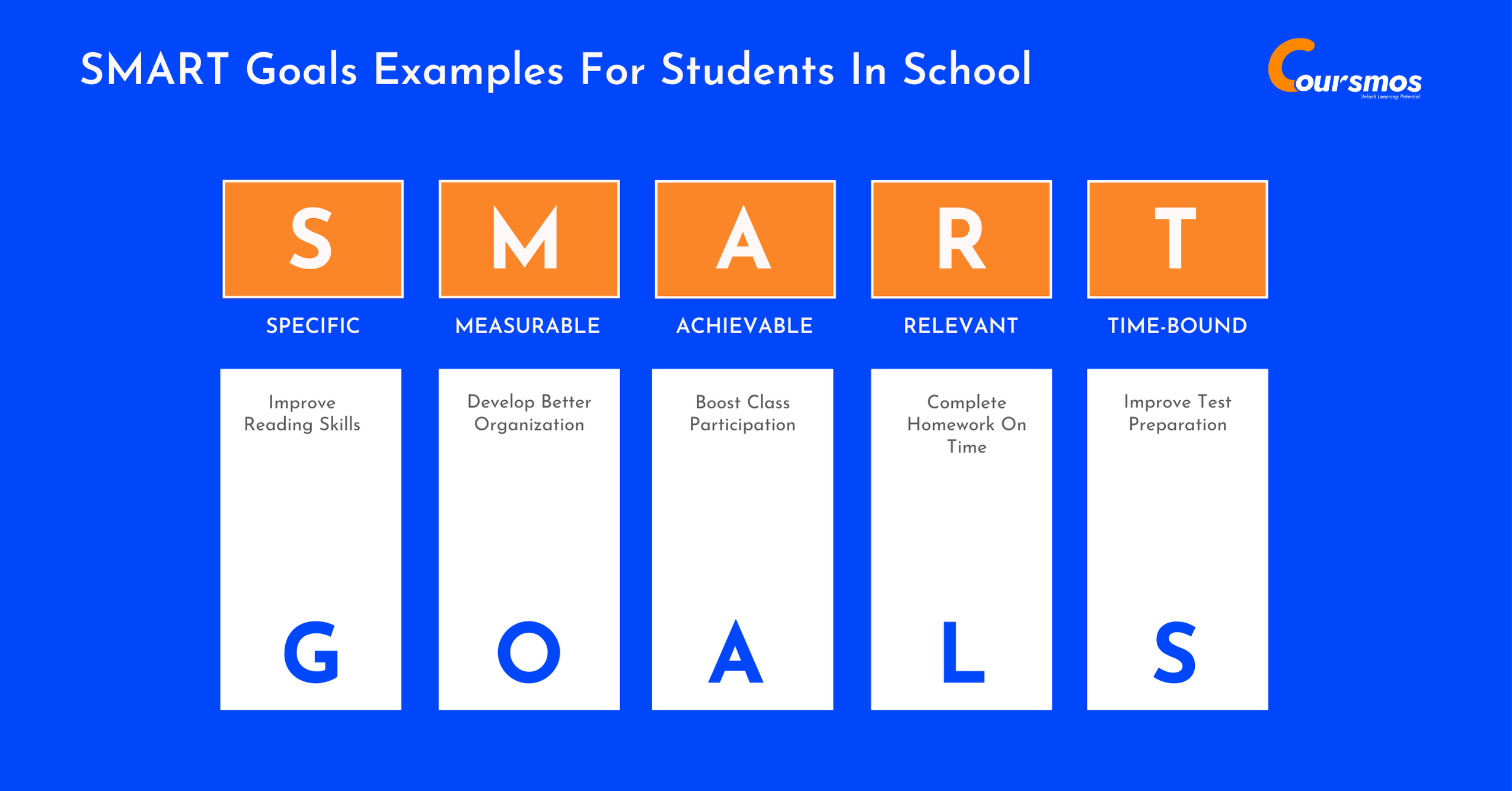
To master the art of goal setting, students must first understand that a "goal" without a structure is merely a wish. The SMART acronym serves as a filtering system that removes ambiguity and focuses energy on high-impact activities. In the current 2026 academic landscape, where digital distractions are at an all-time high, this structure is more critical than ever for maintaining focus.
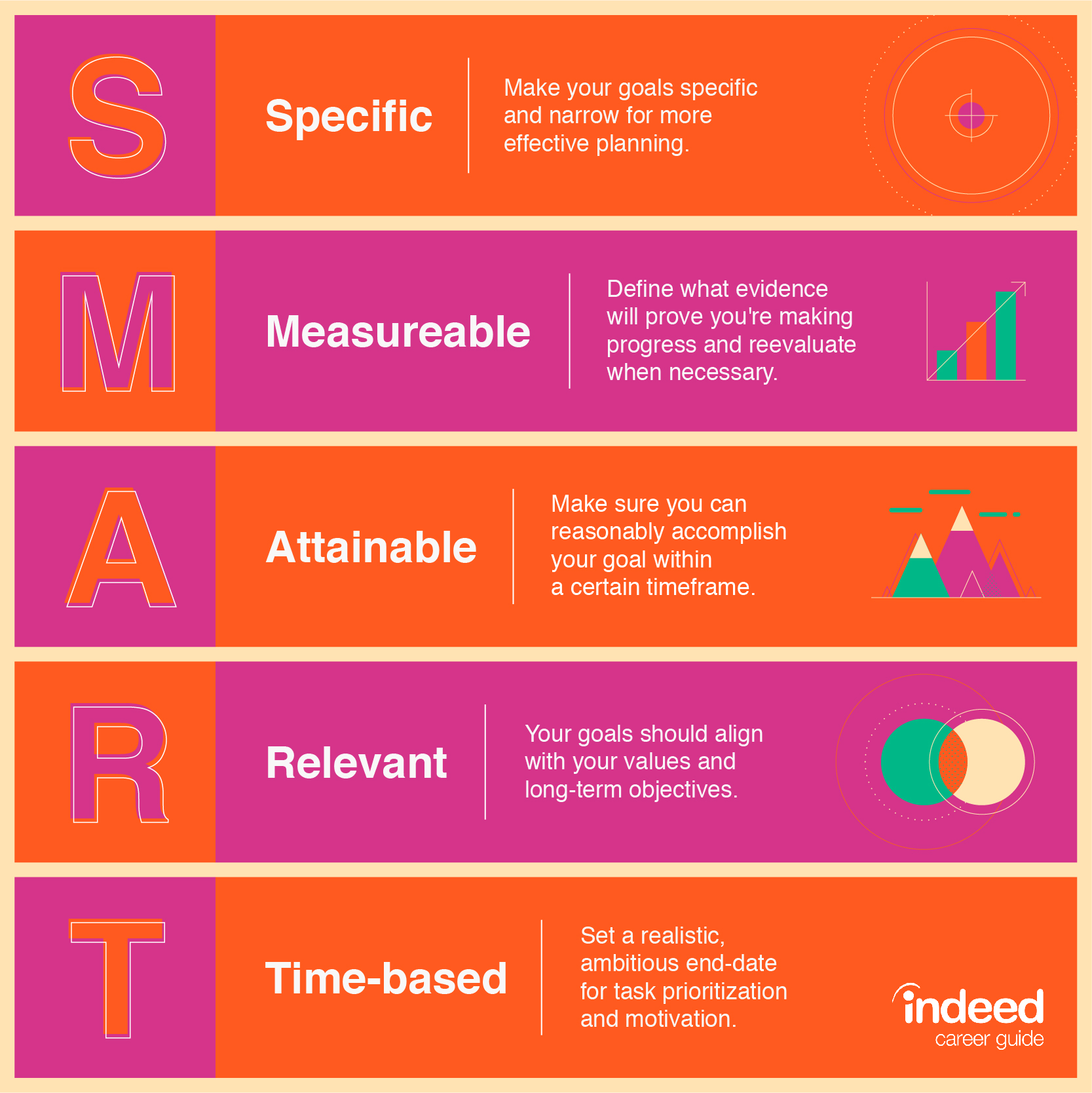
Specific means the goal is narrow and defined. Instead of saying "I want to do better in math," a specific goal is "I want to understand how to solve quadratic equations." This clarity prevents the brain from feeling overwhelmed by the enormity of a subject.
Measurable ensures there is a metric for success. You cannot manage what you cannot measure. For a student, this might be a letter grade, a percentage on a practice test, or the number of pages written for a thesis draft.
Achievable requires a reality check. While ambition is good, setting a goal to learn an entire semester of Italian in one weekend is counterproductive. An achievable goal pushes your limits but remains within the realm of possibility given your current resources and time.
Relevant aligns the short-term task with long-term aspirations. If a student's long-term goal is to become a software engineer, a relevant short-term goal might involve completing a specific Python module rather than spending excessive time on an unrelated elective.
Time-bound provides the "when." Deadlines create a healthy sense of urgency. Without a target date, goals tend to be pushed aside by the immediate pressures of daily life.
Why Short-Term Goals Outperform Long-Term Planning
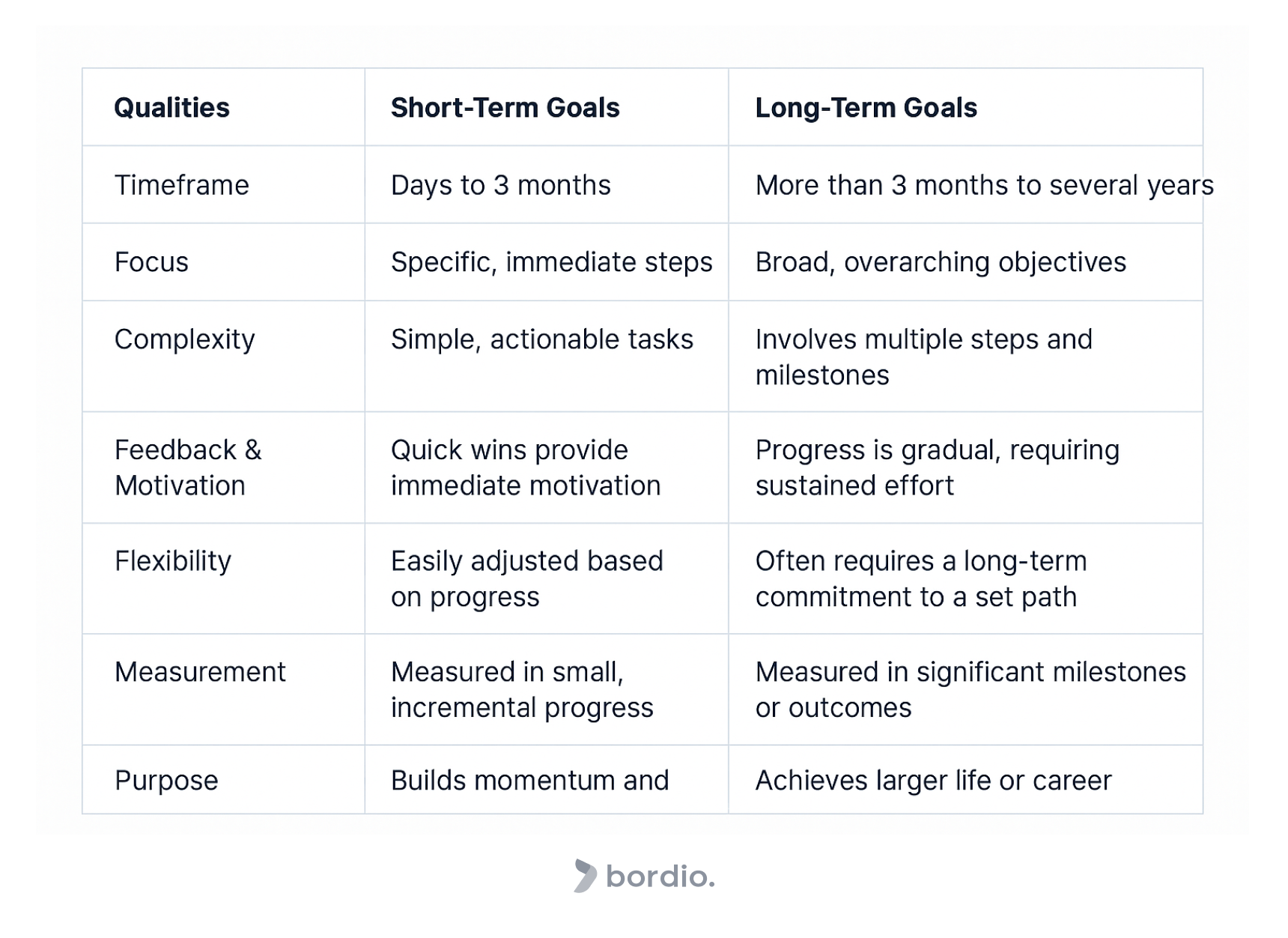
While long-term goals (like graduating with honors) provide a sense of direction, they are often too distant to motivate daily action. Short-term goals, typically spanning one week to one semester, provide immediate feedback loops. This is rooted in the psychological principle of "small wins," where achieving minor milestones releases dopamine, increasing the motivation to tackle the next task.
Short-term goals also allow for agility. In 2026, educational requirements and personal interests can shift rapidly. If a student sets monthly goals, they can pivot their focus based on their mid-term results or changing career interests without feeling like they have failed a multi-year plan. This adaptability is a key component of academic resilience.
Academic SMART Goal Examples for Students
Academic performance is the most common area for goal setting. The following examples demonstrate how to turn general desires into structured SMART objectives.
Improving Specific Subject Performance
- Vague Goal: I want to get better at Biology.
- SMART Goal: I will attend two extra help sessions with my Biology teacher over the next three weeks and complete four practice quizzes on cellular respiration, aiming for a score of at least 85% on each.
- Why it works: This goal identifies the specific topic (cellular respiration), the exact actions (extra help and quizzes), and the measurement of success (85%).
Enhancing Writing Efficiency
- Vague Goal: I need to finish my history paper.
- SMART Goal: I will write the first draft of my 2,000-word history research paper by next Tuesday. I will accomplish this by writing 400 words every evening starting tonight at 6:00 PM.
- Why it works: It breaks a daunting task into manageable daily increments, making it nearly impossible to procrastinate until the final deadline.
Test Preparation and Mastery
- Vague Goal: I’m going to study for the SAT/ACT.
- SMART Goal: For the next 30 days, I will spend 30 minutes every morning before school practicing "Heart of Algebra" problems using an online prep platform, with the intent of reducing my error rate to below 10%.
- Why it works: It utilizes the concept of "habit stacking" (before school) and focuses on a narrow sub-section of the test rather than the whole exam at once.
Personal Development and Soft Skill Goals
Education is not limited to the classroom. Developing soft skills like time management, public speaking, and digital literacy is essential for success in 2026 and beyond.
Mastering Public Speaking
- Vague Goal: I want to be less nervous during presentations.
- SMART Goal: For my upcoming speech communications project due in three weeks, I will practice my presentation in front of a mirror three times a week and record one video of myself to identify and eliminate at least two "filler words" (like "um" or "uh").
- Why it works: It provides a tangible way to measure "nervousness" by tracking filler words and mandates a frequency of practice.
Time Management and Focus
- Vague Goal: I need to stop using my phone so much while studying.
- SMART Goal: Starting Monday, I will use a focus-tracking app to log four 25-minute "Pomodoro" study sessions per day. During these sessions, my phone will be in another room. I will maintain this streak for five consecutive days.
- Why it works: It uses a proven productivity technique (Pomodoro) and sets a clear binary for success (phone in another room).
SMART Goals for Physical and Mental Well-being
A student's cognitive performance is directly linked to their physical and mental state. Neglecting health often leads to burnout, making even the best academic goals unattainable.
Sleep Hygiene for Cognitive Function
- Vague Goal: I need to get more sleep.
- SMART Goal: To improve my focus for morning lectures, I will set a "digital sunset" at 10:00 PM every weeknight for the next two weeks, ensuring I am in bed by 10:30 PM to achieve 8 hours of sleep.
- Why it works: It recognizes the barrier to sleep (digital devices) and sets a specific timeframe to test the impact on academic focus.
Stress Reduction and Mindfulness
- Vague Goal: I want to feel less stressed about finals.
- SMART Goal: During the two-week finals period, I will practice 10 minutes of guided meditation using a mindfulness app every morning at 7:00 AM to lower my baseline anxiety levels.
- Why it works: It targets a specific high-stress period and provides a low-barrier-to-entry solution.
Comparing Standard Goals vs. SMART Goals
| Category | Standard (Weak) Goal | SMART (Strong) Goal | Primary Improvement |
|---|---|---|---|
| Reading | I want to read more books this year. | I will read one 300-page non-fiction book related to my major by the end of this month. | Adds specific subject and deadline. |
| Networking | I should talk to more people in my field. | I will reach out to three alumni on LinkedIn this week and request a 15-minute informational interview. | Quantifies the "outreach" and defines the "ask." |
| Grades | I want to get an A in English. | I will submit every English essay 24 hours early to the writing center for feedback before final submission this semester. | Focuses on the process that leads to the grade. |
| Skills | I want to learn how to code. | I will complete the "Introduction to JavaScript" certification on a recognized MOOC by the end of my spring break. | Defines the specific language and the proof of completion. |
Common Pitfalls in Student Goal Setting
Even with the SMART framework, students often encounter hurdles that can derail their progress. Recognizing these early is key to maintaining momentum.
Setting Too Many Goals: A common mistake is attempting to overhaul every aspect of life simultaneously. This leads to "decision fatigue." It is more effective to focus on two or three high-priority SMART goals than ten vague ones.
Underestimating Time Requirements: Students often fall victim to the "planning fallacy," where they underestimate how long a task will take. When setting a SMART goal, it is wise to add a 20% buffer to your time estimates to account for unexpected interruptions.
Focusing on Outcomes Instead of Processes: While "Getting an A" is a SMART goal, it is an outcome goal. Process goals—like "studying for 40 minutes every day"—are often more effective because they are entirely within the student's control, whereas an outcome can be influenced by the difficulty of a specific exam.
Tools for Tracking and Verification in 2026
In 2026, students have access to an array of digital and analog tools to ensure their goals remain visible and measurable.
- Digital Kanban Boards: Platforms like Trello or Notion allow students to visualize their short-term goals as cards moving from "To Do" to "In Progress" to "Done."
- Habit Tracking Apps: These are excellent for goals related to consistency, such as daily reading or exercise. They provide visual "streaks" that leverage the psychological desire to maintain a pattern.
- Physical Goal Journals: For many, the act of physically writing down a goal increases commitment. A daily planner where SMART goals are reviewed every morning keeps the objectives top-of-mind.
- Accountability Partners: Sharing a SMART goal with a peer or mentor creates a social contract. In many university settings, "study pods" are used to verify that each member is meeting their weekly SMART objectives.
Frequently Asked Questions
How many short-term goals should a student have at once?
Generally, three to five active short-term goals are the limit for most students. Attempting more can lead to fragmented focus and burnout. It is better to have two academic goals and one personal health goal than five academic goals that are all neglected.
What should I do if I fail to meet a SMART goal deadline?
Failure is a data point, not a permanent state. If a deadline is missed, analyze the "Achievable" and "Time-bound" aspects. Was the goal too ambitious? Did unexpected variables arise? Adjust the parameters and reset the goal immediately rather than abandoning it.
Can a SMART goal be changed once it is set?
Yes. If the "Relevant" component changes—for example, if you drop a class or change majors—the goal should be updated to reflect your new reality. The framework is meant to be a tool for success, not a rigid cage.
Is a week too short for a SMART goal?
No, weekly goals are often the most effective. They provide quick gratification and allow for frequent adjustments. "Completing three chapters of reading by Sunday" is an excellent example of a weekly SMART goal.
How do I know if my goal is "Relevant"?
Ask yourself: "Does this goal help me reach my long-term academic or career objective?" If the answer is no, or if you are only doing it because of external pressure, it may lack the intrinsic motivation needed for completion.
Next Steps for Students
To begin, select one area of your academic life that feels disorganized or stagnant. Use the SMART framework to write down a single goal that can be achieved within the next seven days. Once written, place it somewhere visible—your phone lock screen, your desk, or your planner. Reviewing the goal daily and checking off the "Measurable" components will build the discipline necessary for larger, long-term success.
Image Gallery