Wandering Albatross Height: Physical Dimensions, Body Length, and Wingspan Explained
The standing height of a wandering albatross (Diomedea exulans) typically ranges between 65 and 75 centimeters (26 to 30 inches) when upright on land. However, its total body length measured from the tip of the bill to the end of the t...
The standing height of a wandering albatross (Diomedea exulans) typically ranges between 65 and 75 centimeters (26 to 30 inches) when upright on land. However, its total body length measured from the tip of the bill to the end of the tail spans 107 to 135 centimeters (42 to 53 inches), complemented by an industry-record wingspan of up to 3.5 meters.
Contents
Understanding Avian Measurements: Standing Height vs. Total Body Length
When evaluating the physical stature of the wandering albatross (Diomedea exulans), confusion frequently arises between standing height and total body length. In ornithology, standard bird measurements prioritize body length—the line from the tip of the bill to the tip of the longest tail feather when the bird is laid flat—rather than standing height. This distinction is critical because a bird's posture on land changes dramatically based on activity, fatigue, and behavioral displays.
Standing height measures the vertical distance from the ground to the crown of the head while the bird sits or stands in a normal posture. Because the wandering albatross has short tarsometatarsal bones (lower leg bones) adapted for swimming and perching on nest mounds rather than walking, its standing height appears relatively modest compared to its immense wingspan and overall mass.
| Measurement Type | Anatomical Standard |
|---|---|
| Standing Height | Ground to crown of head (upright posture) |
| Total Body Length | Tip of maxilla (bill) to tip of rectrices |
| Wingspan | Wingtip to wingtip (fully extended) |
| Tarsus Length | Intertarsal joint to base of toes |
Understanding both dimensions provides a complete picture of the bird's scale. While a standing height of 65 to 75 cm makes the bird roughly hip-high to an adult human, its horizontal body profile during flight or resting covers a significantly greater distance.
Key Physical Dimensions of the Wandering Albatross
The wandering albatross belongs to the family Diomedeidae and represents one of the largest flying birds on Earth. Its physical proportions are engineered for long-distance pelagic travel over the Southern Ocean, where it spends years at sea without touching land.
Standard Morphological Breakdown
Standing Height: 65 to 75 cm (25.6 to 29.5 in)
Total Body Length: 107 to 135 cm (42 to 53 in)
Wingspan Range: 2.51 to 3.5 m (8 ft 3 in to 11 ft 6 in)
Body Weight: 5.9 to 12.7 kg (13 to 28 lb)
Bill Length: 12.5 to 16.5 cm (4.9 to 6.5 in)
Tarsus Length: 11 to 13 cm (4.3 to 5.1 in)
Wingspan: 2.5 - 3.5 meters
Body Length: 107-135 cm
Standing Height: 65-75 cm
Sexual Dimorphism and Regional Variations
Wandering albatrosses exhibit moderate sexual dimorphism. Males are on average larger than females across almost all biometric measurements:
- Male Proportions: Adult males generally occupy the upper tier of the size distribution, often weighing between 8.0 and 12.7 kg with body lengths exceeding 120 cm. Their standing posture is visibly more robust during courtship displays.
- Female Proportions: Adult females typically weigh between 5.9 and 8.7 kg, with total body lengths ranging from 107 to 120 cm and slightly shorter bill profiles.
- Geographic Subspecies Differences: Island breeding populations (such as those on South Georgia, Prince Edward Islands, Crozet Islands, and Kerguelen Islands) display minor average variation in bill length and mass due to localized foraging energetics and water temperature gradients across the Antarctic Convergence.
Detailed Physical Comparison: Wandering Albatross vs. Other Large Avian Species
Comparing the wandering albatross to other giant bird species contextualizes its unusual proportions—specifically its moderate height combined with extreme wingspan and body length.
| Species | Primary Habitat | Standing Height | Total Body Length | Average Wingspan | Body Weight |
|---|---|---|---|---|---|
| Wandering Albatross (Diomedea exulans) | Pelagic (Southern Ocean) | 65–75 cm | 107–135 cm | 2.5–3.5 m | 5.9–12.7 kg |
| Southern Royal Albatross (Diomedea epomophora) | Pelagic (Southern Ocean) | 60–70 cm | 110–123 cm | 2.9–3.3 m | 8.5–10.3 kg |
| Andean Condor (Vultur gryphus) | Montane (Andes Mountains) | 100–130 cm | 100–130 cm | 2.7–3.2 m | 11.0–15.0 kg |
| Dalmatian Pelican (Pelecanus crispus) | Freshwater / Coastal Wetlands | 160–183 cm | 160–183 cm | 2.9–3.45 m | 7.3–15.0 kg |
| Common Ostrich (Struthio camelus) | Terrestrial (Savanna/Desert) | 190–280 cm | N/A (Flightless) | N/A (Flightless) | 90.0–156.0 kg |
While terrestrial birds like the ostrich or large raptors like the Andean condor stand significantly taller off the ground due to longer legs or upright perched postures, the wandering albatross holds the record for the greatest average wingspan relative to its standing height among all extant birds.
Biomechanics: How Body Height and Size Enable Dynamic Soaring
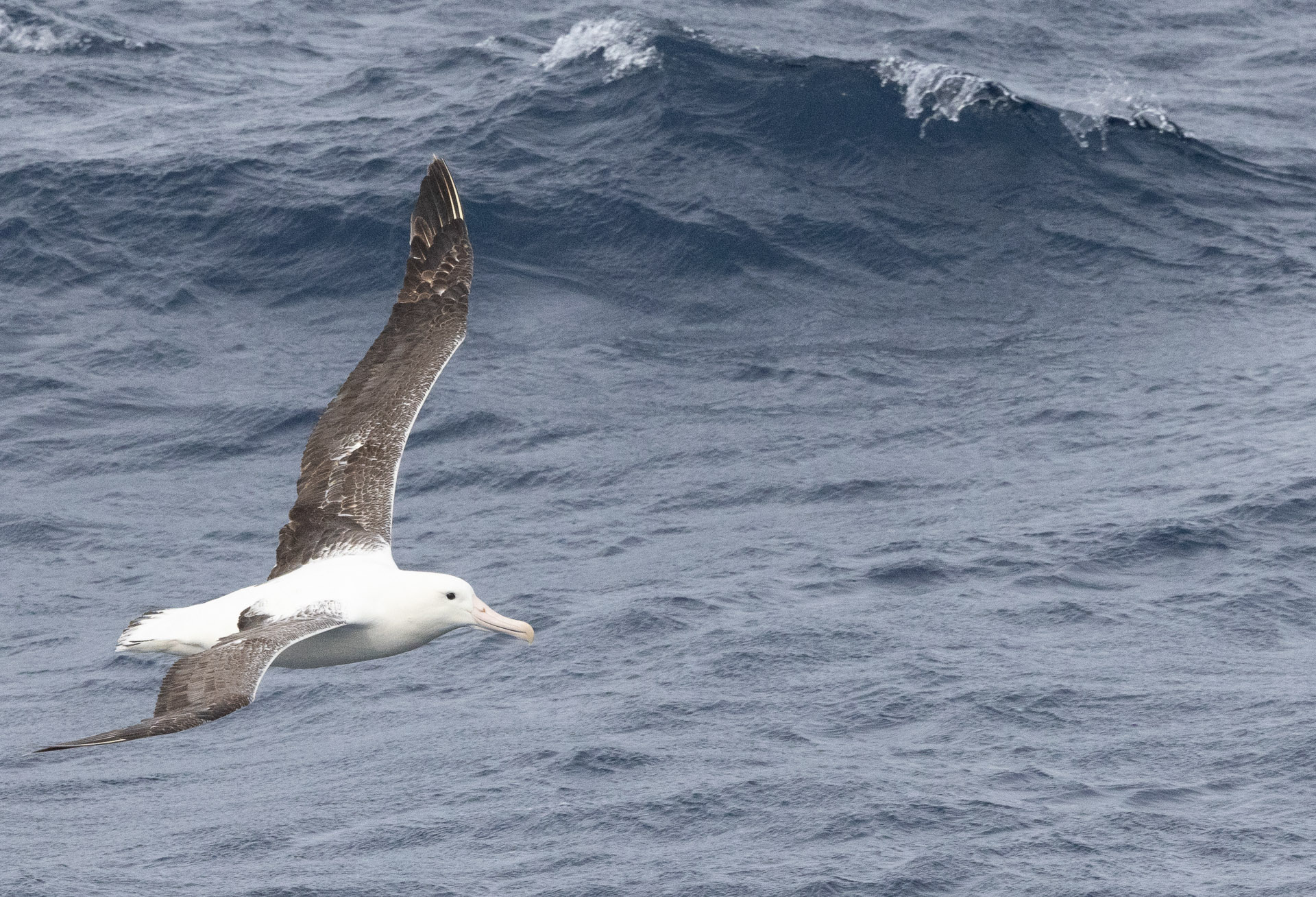
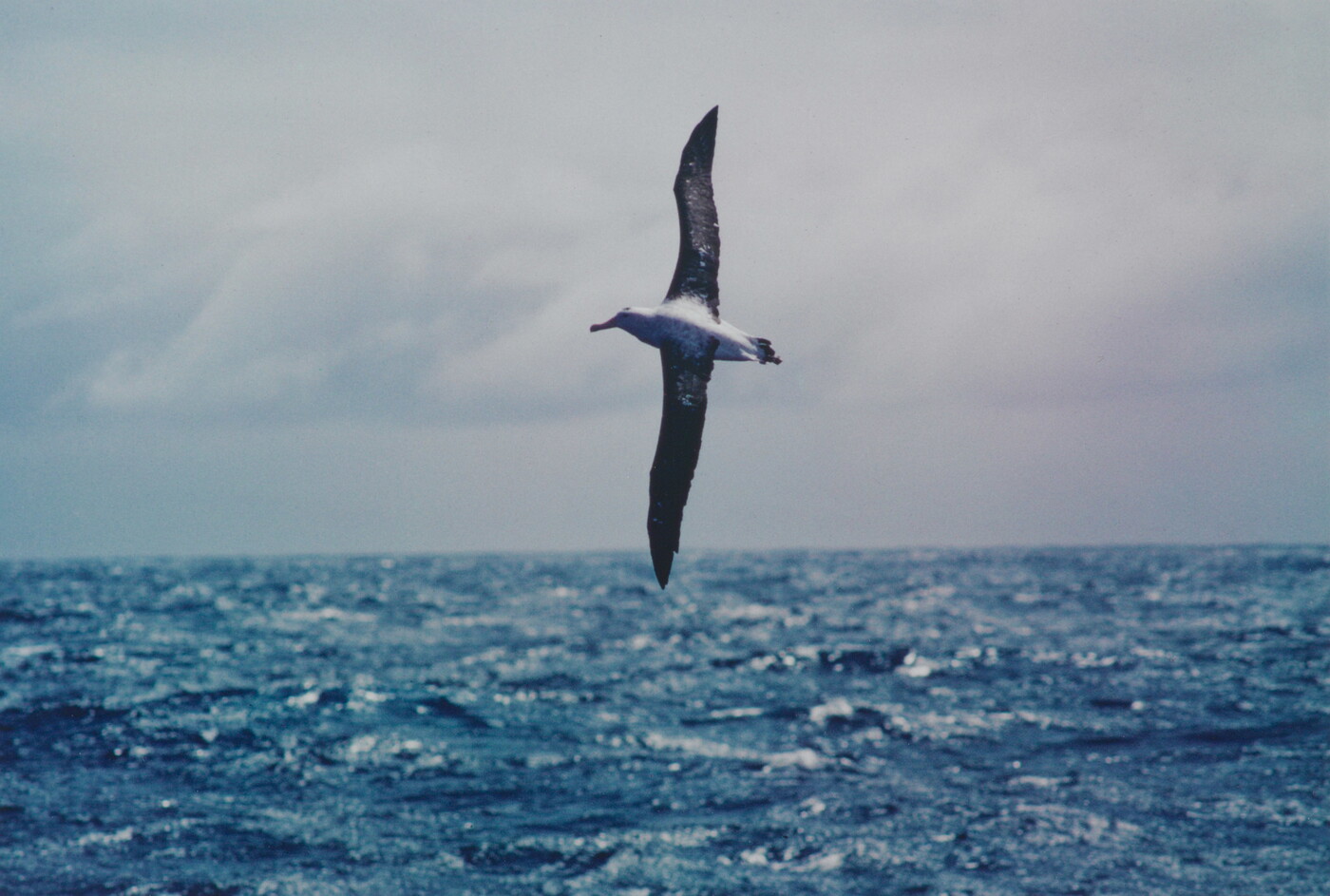
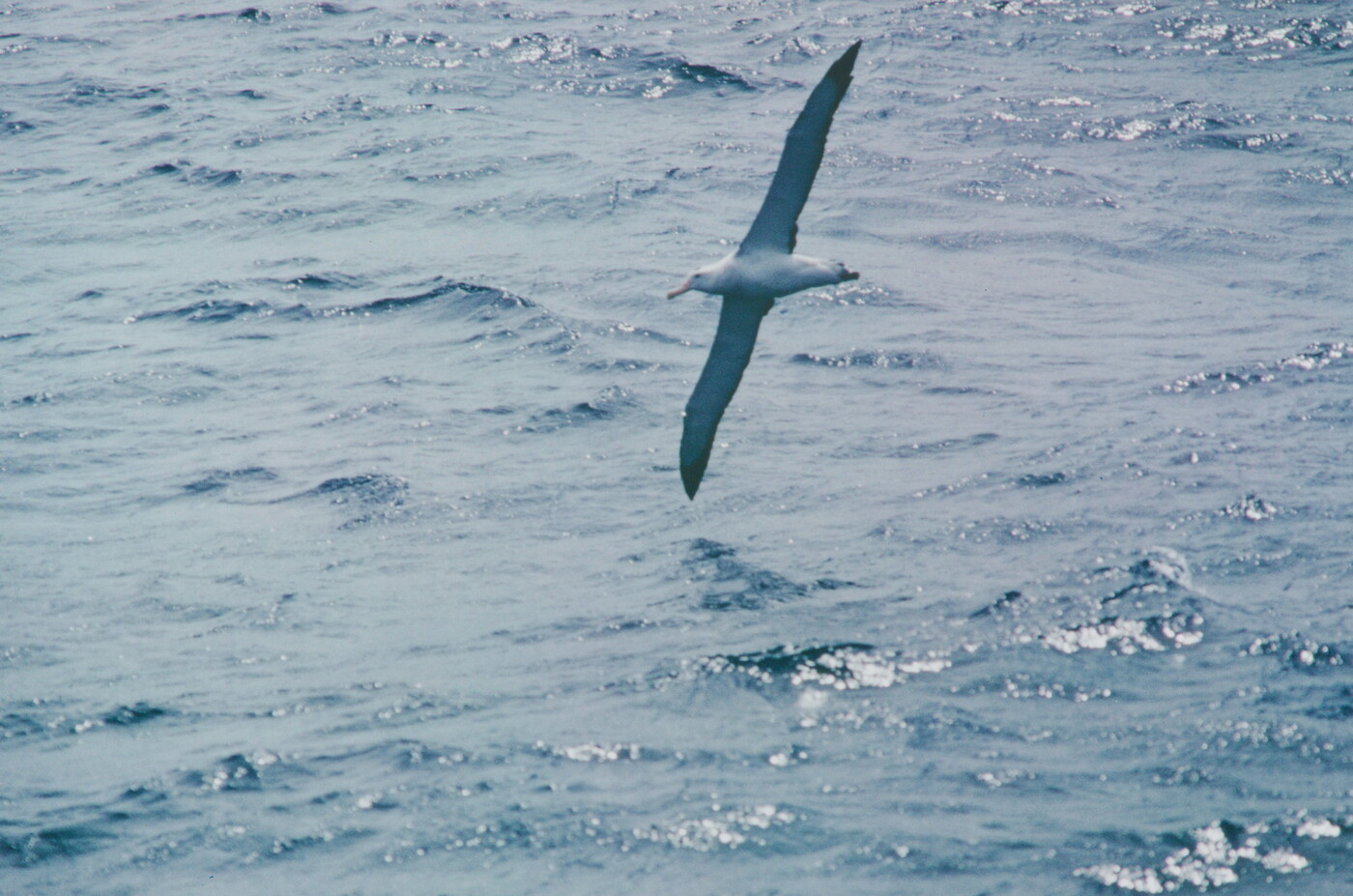
The anatomical ratio between a wandering albatross's height, mass, and wing structure directly dictates its flight efficiency. The bird relies on a flight technique known as dynamic soaring, which utilizes wind shear forces across ocean surface gradients to travel thousands of kilometers without flapping its wings.
- Wind Velocity Vector (Higher Altitude) - Fast Air
- Albatross climbs into wind using momentum
- Wind Velocity Vector (Sea Surface) - Slow Air
- Descends to gain speed
- Ocean Wave Crests
1. The Tendon-Lock Mechanism (Shoulder Lock)
An albatross does not use continuous muscle effort to keep its long wings extended. A specialized tendon lock mechanism (a modified shoulder joint capsule) locks the humerus in a horizontal position once extended. This allows the bird to maintain a wide aspect ratio without muscular fatigue during transoceanic flights.
2. High Aspect Ratio Wings
The body length (107–135 cm) acts as a aerodynamic fuselage, balancing the extremely long, narrow wings. High aspect ratio wings minimize induced drag at high airspeeds, permitting long glides close to the water surface.
3. Low Vertical Profile on Land
The relatively low standing height (65–75 cm) keeps the bird's center of gravity low when resting on sub-Antarctic islands, protecting it from high gale-force winds that sweep across open oceanic breeding colonies.
Terrestrial Mobility, Takeoff Mechanics, and Nesting Behavior
While the wandering albatross is an apex aerodynamic flyer, its height and limb structure present severe challenges on land.
Ground Movement Limitations
The tarsus is short relative to overall body mass. As a result, the bird moves on land with a pronounced waddling gait. Walking requires noticeable mechanical exertion, making long land trips impossible. Consequently, colonies are built within close reach of coastal bluffs or open slopes facing prevailing winds.
Takeoff Requirements
Because of its high wing loading and moderate standing height, a wandering albatross cannot simply leap into the air from flat ground in calm conditions. To take off, the bird requires:
- A headwind of at least 15 to 20 knots.
- A downhill running stretch on grass, mud, or gravel.
- Elevated cliff edges that allow downward drops to generate airspeed.
- Elevated Bluff
- Downhill Sprint into Wind
- Drop over Edge
- Dynamic Soaring Lift
Nesting Elevation and Structure
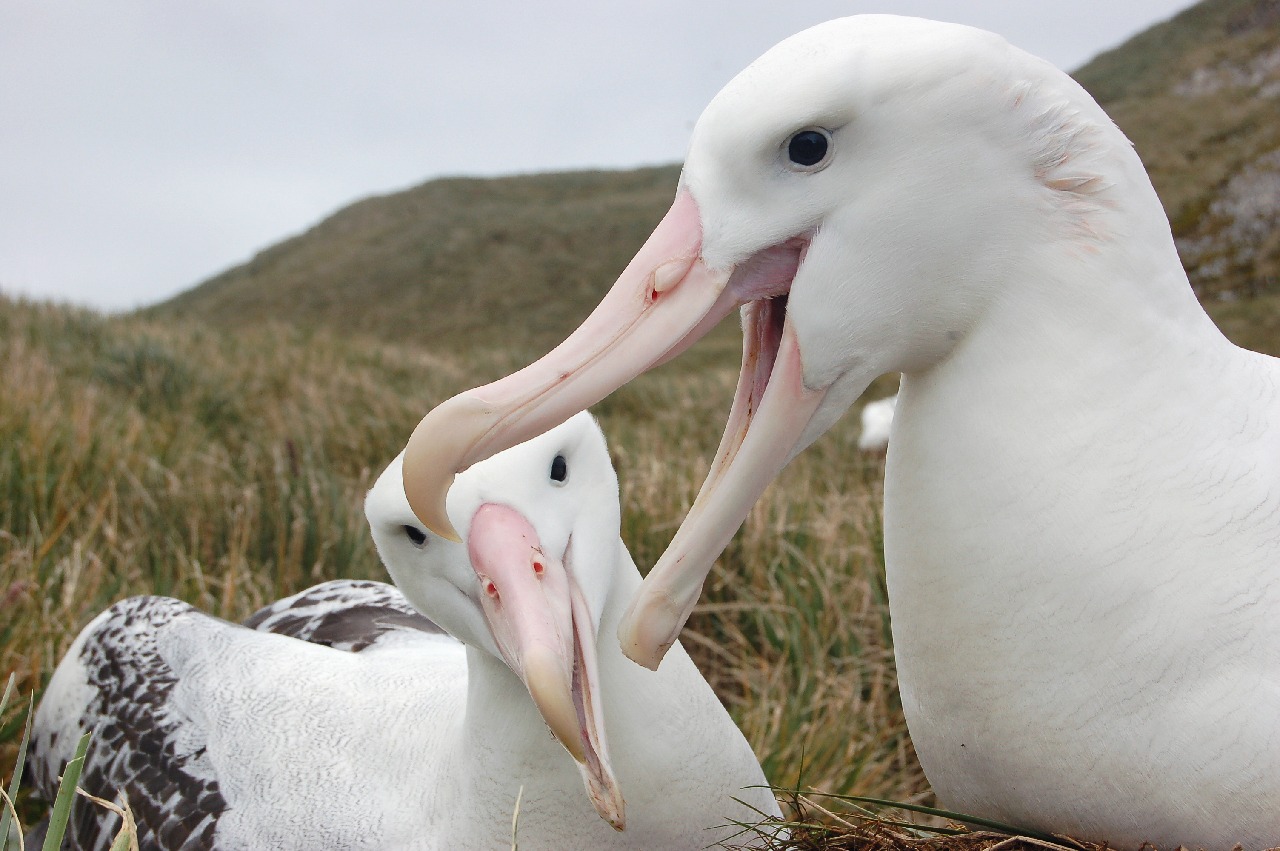
During the breeding cycle, pairs build a mound nest composed of vegetation, soil, and roots. The nest mound itself adds 30 to 50 cm of vertical elevation off the wet ground. This additional height serves two critical functions:
- Prevents cold water accumulation around the single egg during sub-Antarctic rains and snowmelts.
- Allows the sitting bird a elevated vantage point to detect skuas and sheathbills attempting egg predation.
Conservation Status and Threat Factors
The survival of the wandering albatross is closely monitored by international research bodies. According to the IUCN Red List of Threatened Species, Diomedea exulans is currently classified as Vulnerable.
| Category | Description |
|---|---|
| IUCN Red List Category | Vulnerable (VU) |
| Global Treaty Protection | ACAP (Agreement on Conservation of Albatrosses and Petrels) |
| Primary Oceanic Threat | Longline Commercial Fishing Bycatch |
| Primary Terrestrial Threat | Invasive Predators (Mice, Rats at Nest Sites) |
Key Factors Impacting Populations
- Longline Fishing Bycatch: Albatrosses are attracted to baited hooks deployed by commercial fishing vessels. Birds dive for bait, get hooked, and drown. International initiatives coordinated through the Agreement on the Conservation of Albatrosses and Petrels (ACAP) aim to reduce bycatch through weighted lines, night setting, and bird-scaring lines (tori lines).
- Invasive Species at Nesting Sites: Introduced rodents on remote sub-Antarctic islands attack flightless chicks on nest mounds, causing significant mortality in certain breeding colonies.
- Marine Plastic Ingestion: Adults mistake floating plastic waste for squid or fish eggs, feeding debris to chicks, which lowers survival rates and juvenile growth metrics.
Frequently Asked Questions
How tall is a wandering albatross when standing upright?
When standing upright on land or at a nest mound, a wandering albatross measures between 65 and 75 centimeters (26 to 30 inches) from the ground to the crown of its head.
What is the difference between body length and wingspan for an albatross?
Body length is measured horizontally from the tip of the beak to the tip of the tail feathers, averaging 107 to 135 cm. Wingspan measures the tip-to-tip distance across fully extended wings, which spans between 2.5 and 3.5 meters.
Which bird is taller than the wandering albatross?
Many bird species stand taller than the wandering albatross. Terrestrial birds like ostriches (up to 280 cm) and emus, as well as wading birds like storks, flamingos, and pelicans (such as the Dalmatian pelican at over 160 cm), are far taller due to their longer legs and upright neck postures.
How does the standing height of the wandering albatross compare to the royal albatross?
The standing height of the wandering albatross (65–75 cm) is virtually identical to that of the southern royal albatross (Diomedea epomophora), which stands approximately 60–70 cm high. Both species share similar physical proportions and ecological niches in the Southern Ocean.
Why do wandering albatrosses look short on land despite their massive wingspan?
Their low standing height is an evolutionary adaptation. Short, heavy leg bones lower their center of gravity, which helps them stay stable against intense Antarctic winds while resting on land. Their massive size lies in their wingspan and body length, not their leg height.
Recommended Next Steps for Field Researchers and Enthusiasts
To further explore ornithological data or observe Southern Ocean seabirds responsibly, consider the following action steps:
- Consult Official Biometric Databases: Access open-access specimen archives published by institutional natural history museums or peer-reviewed marine ornithology journals for precise anatomical dataset breakdowns.
- Support Pelagic Conservation Efforts: Review guidelines published by the Agreement on the Conservation of Albatrosses and Petrels (ACAP) to understand global conservation policies and mitigation technologies for fisheries.
- Participate in Seabird Expeditions: Plan pelagic observation voyages following IAATO (International Association of Antarctica Tour Operators) wildlife distance guidelines to observe albatrosses in their natural ocean habitats without disturbing nesting grounds.
Image Gallery