Comprehensive Guide to No Smoking Signs for Schools
No smoking signs for schools are regulatory visual markers placed strategically across educational facilities to enforce tobacco-free, vape-free, and smoke-free campus policies. These signs protect students, faculty, and visitors from...
No smoking signs for schools are regulatory visual markers placed strategically across educational facilities to enforce tobacco-free, vape-free, and smoke-free campus policies. These signs protect students, faculty, and visitors from secondhand smoke, comply with state and federal health mandates, and clearly communicate institutional boundaries regarding prohibited substances.
Contents
Educational facilities face unique regulatory scrutiny regarding public health and safety. Installing proper no smoking signs for schools requires a clear understanding of legal mandates, material durability, strategic placement, and ADA (Americans with Disabilities Act) compliance. Whether managing an elementary school, middle school, high school, or a higher education campus, facility administrators must select, position, and maintain signage that meets specific municipal and federal guidelines to ensure a healthy learning environment.
The Regulatory Framework and Legal Mandates
Educational institutions operate under a complex matrix of federal, state, and local laws that govern public health and indoor air quality. Most jurisdictions enforce total bans on smoking, tobacco use, and electronic cigarette vaporization on all school grounds, covering both indoor facilities and outdoor school-owned property, including athletic fields and parking lots.
Federal and State Legislation
While federal statutes like the Pro-Children Act of 1994 prohibit smoking within indoor facilities routinely used for children's services, individual states often impose much stricter regulations. Many state laws mandate that smoking and vaping be banned within a specific perimeter—such as 25 to 50 feet—of any school entrance, operable window, or ventilation intake.
Facility managers must consult local department of health guidelines and state education codes to determine exact wording, international symbol usage, and statutory citation requirements that must appear on the signage. Failure to display compliant warnings can result in administrative penalties, loss of state funding, or failed health inspections.
Scope of Prohibited Substances
Modern no smoking signs for schools must reflect the evolution of nicotine delivery systems. Traditional tobacco products like cigarettes, cigars, and pipes are universally banned, but signage must also explicitly address modern alternatives.
- Electronic Nicotine Delivery Systems (ENDS): Vapes, e-cigarettes, and personal vaporizers.
- Smokeless Tobacco: Chewing tobacco, snuff, and dip, which are frequently prohibited under comprehensive campus wellness policies.
- Cannabis and Hemp Products: With the legalization of medical or recreational cannabis in numerous jurisdictions, signs must clarify that marijuana smoking and vaping are strictly prohibited on school grounds.
Selecting Sign Materials and Technical Specifications
Choosing the right physical sign involves evaluating environmental exposure, vandalism resistance, and visibility requirements. Schools present harsh environments where signs must endure outdoor weathering, UV radiation, intentional scratching, and accidental impacts from athletic equipment.
Material Durability Comparison
| Material | Best Use Location | Durability | Resistance to Vandalism | Cost Factor |
|---|---|---|---|---|
| Aluminum (.040" to .080") | Exterior fences, walls, gates | Excellent (10+ years) | High (Rigid, hard to bend) | Moderate to High |
| High-Impact Polystyrene (HIPS) | Indoor corridors, gymnasiums | Moderate (3–5 years) | Moderate (Can crack under heavy impact) | Low |
| Engineered Vinyl Decals | Glass doors, smooth windows | Moderate (3–5 years) | Low (Easily peeled or scratched) | Very Low |
| Laminated Polyethylene | Temporary outdoor notices, event perimeters | Short-term (1–2 years) | Low | Low |
Reflectivity and Readability Standards
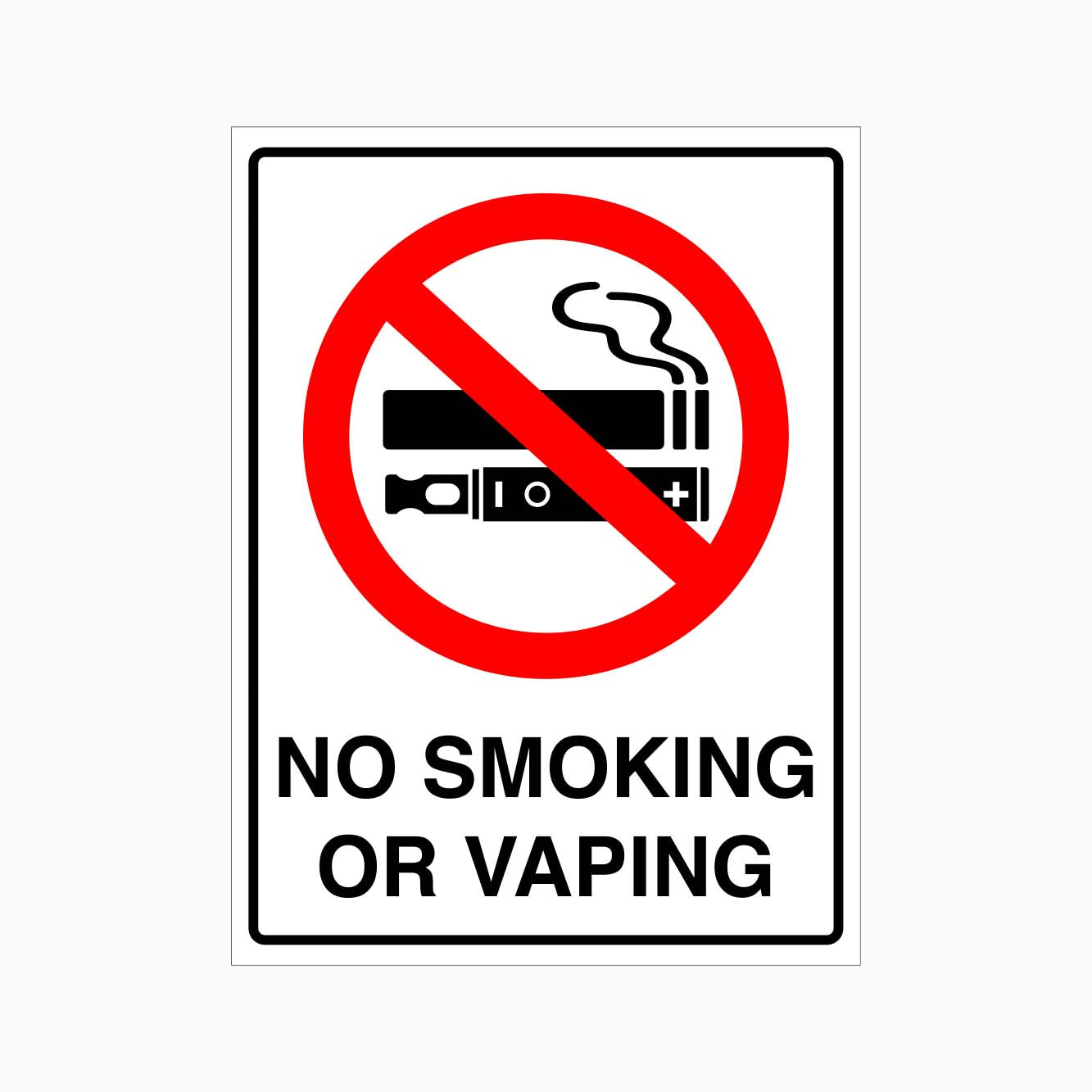
For exterior signs placed near parking lots, driveways, or building perimeters, retroreflective sheeting (such as Engineer Grade or High-Intensity Prismatic) ensures visibility during dusk, dawn, and inclement weather. The layout must utilize high-contrast color schemes—traditionally a black or red graphic symbol on a white background with a red universal "no" symbol (a circle with a diagonal slash).
Lettering must be legible from a distance. A standard rule of thumb for exterior wayfinding dictates that letter heights should increase proportionally with viewing distance; text intended to be read from 30 feet away should be at least two inches tall.
Strategic Placement and Installation Guidelines
Even the most durable and legally compliant sign is ineffective if obscured by foliage, positioned too high to be noticed, or placed away from high-traffic zones. Strategic placement ensures constant deterrence and provides clear evidence of policy enforcement if disciplinary action is required.
Key Locations on School Campuses
Facility managers should conduct a site audit to map out high-risk areas where students or visitors might attempt to smoke or vape unobserved.
- Main Entrances and Administrative Offices: Every primary public entrance must display a notice immediately visible to visitors before they step inside the building.
- Perimeter Gates and Parking Lots: Boundaries where vehicles enter the property or pedestrians transition from public sidewalks to school grounds require clear signage.
- Restrooms and Locker Rooms: While vaping in restrooms has become a persistent challenge, placing discrete or tamper-resistant signs inside stalls and common washing areas reinforces administrative policy.
- Athletic Fields and Bleachers: Outdoor sports complexes frequently attract community events on weekends, making durable fence-mounted signs essential for off-hours enforcement.
Mounting Heights and ADA Considerations
When mounting signs on building walls, doors, or corridors, adherence to accessibility guidelines ensures that visually impaired individuals can detect obstacles and read tactile elements if required.
- Height: The baseline of the sign should typically be mounted between 48 and 60 inches from the finished floor to the center of the sign.
- Wall Protrusion: Signs mounted in corridors must not project more than four inches into the path of travel if their bottom edge is lower than 80 inches from the floor, preventing hazards for sight-impaired pedestrians.
- Fasteners: Use tamper-resistant hardware, such as one-way screws or industrial structural adhesives, to prevent theft or unauthorized removal of exterior metal signs.
Operational Challenges and Vandalism Mitigation
Schools experience unique maintenance challenges, including graffiti, sticker-bombing, and physical damage to property. Protecting your investment in facility signage requires proactive material choices and maintenance protocols.
Anti-Graffiti Coatings
Investing in signs treated with a clear protective overlay (such as a fluoropolymer or specialized polyester film) allows maintenance staff to wipe away permanent marker, spray paint, or adhesive residue using mild solvents without damaging the underlying printed graphics or regulatory text.
Addressing the Vaping Epidemic
The rise of discreet, flavored nicotine and THC vapes has changed how schools monitor illicit use. Because modern vaporizers produce minimal lingering odor and vapor compared to traditional cigarettes, visual deterrence alone is rarely sufficient.
Administrators often pair physical no smoking signs with acoustic vape detectors in restrooms and isolated corridors. These sensors detect chemical changes in the air and alert administration instantly, bridging the gap between passive signage and active enforcement.
Frequently Asked Questions
What specific text should be included on school no smoking signs?
Signs should explicitly state the prohibition of smoking, tobacco use, e-cigarettes, and vaping. Many state laws also require referencing the specific statutory code (e.g., State Health and Safety Code section) and detailing the fine or penalty for violations, along with a phone number to report infractions.
Are schools required to use the international no-smoking symbol?
Yes, most municipal and state codes mandate the inclusion of the universal red circle-and-slash symbol over a burning cigarette and/or a vapor device. This universal symbol ensures immediate comprehension for non-English speakers and younger children.
Where is the best place to mount signs outside?
Exterior signs should be mounted at eye level on perimeter fences, adjacent to all exterior doors, at bus loading zones, and near student congregation areas. They should be free from obstruction by trees, bushes, or architectural overhangs.
How do schools handle visitors who ignore the signage?
When visitors violate posted policies, designated staff members—such as school resource officers, campus security, or administrators—should politely reference the posted signage and request that the individual extinguish the product or leave the premises. Persistent refusal can result in trespassing citations according to local district policy.
Can standard commercial signs be used, or must they be school-specific?
While standard commercial no smoking signs often suffice, schools frequently opt for customized markers that explicitly reference school district policies, include youth-focused prevention messaging, or cite local education codes to strengthen disciplinary enforcement.
Next Actions for Facility Managers
To ensure your campus remains compliant and safe, start by conducting a comprehensive physical audit of all indoor and exterior grounds to identify unposted perimeters, damaged markers, or outdated signs that do not mention electronic vaporizers. Consult your state's department of education or local health department guidelines to verify current wording and perimeter distance requirements. Finally, procure durable, vandal-resistant aluminum or high-impact signs and install them using tamper-proof hardware in high-visibility zones.
Image Gallery