Understanding the Traditional System in Economics: Mechanics, History, and Modern Relevance
A traditional economic system relies on customs, history, and time-honored beliefs to guide production, distribution, and consumption choices. Societies using this framework answer fundamental economic questions—what to produce, how to...
A traditional economic system relies on customs, history, and time-honored beliefs to guide production, distribution, and consumption choices. Societies using this framework answer fundamental economic questions—what to produce, how to produce it, and for whom—based on inherited social roles, cultural continuity, and generational practices rather than market prices or centralized government decrees.
Contents
Introduction to Economic Systems and Tradition
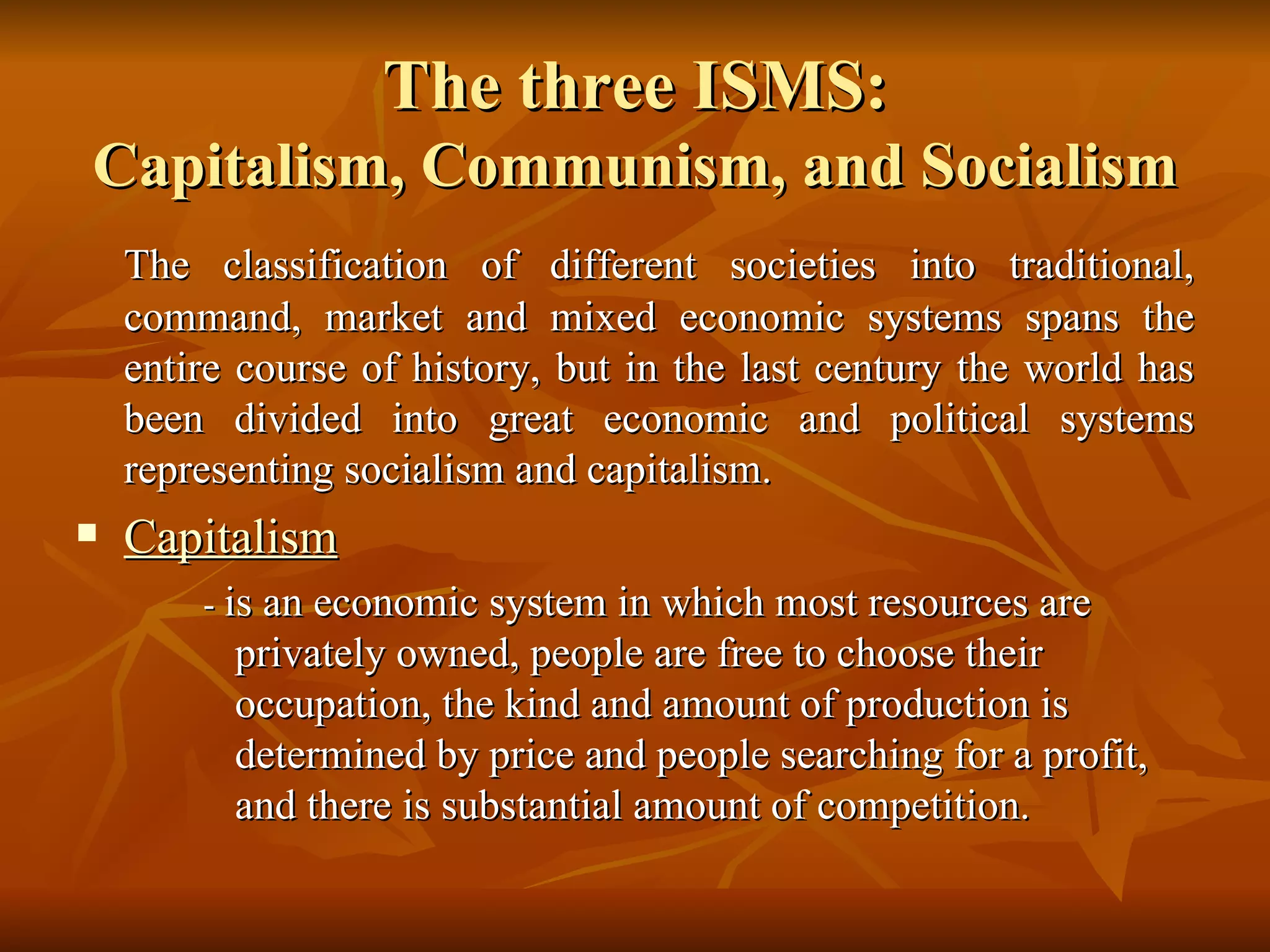
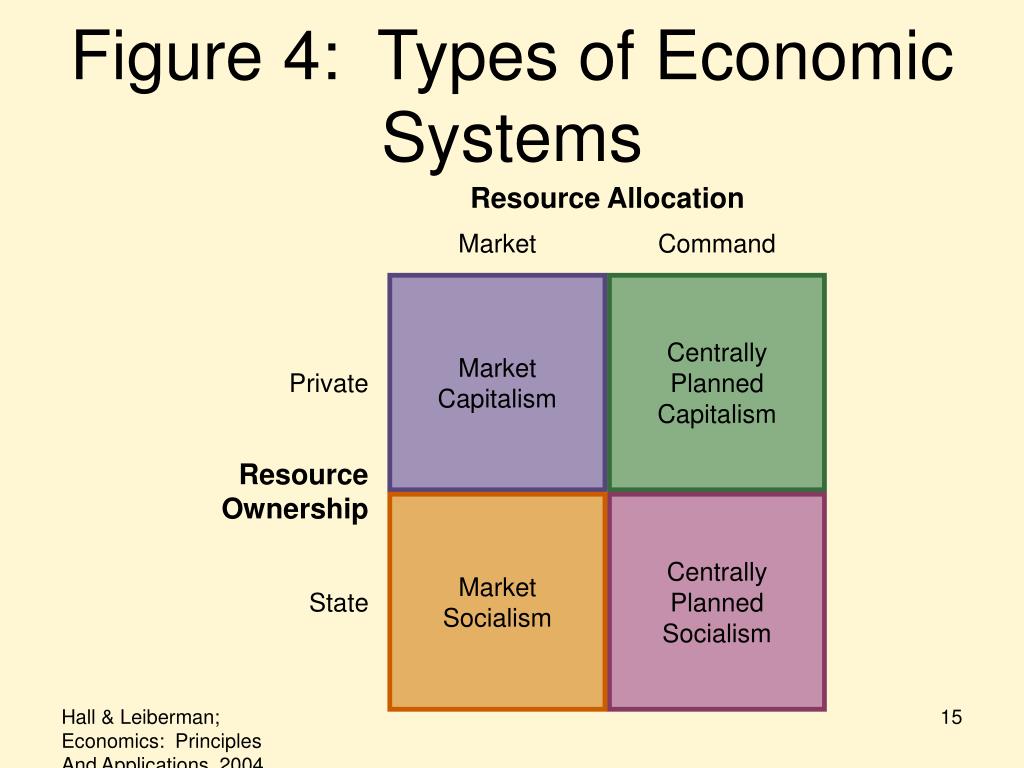
To comprehend any economic framework, one must examine how scarce resources are allocated within a society. Economics traditionally categorizes these frameworks into four primary types: traditional economies, command economies, market economies, and mixed economies. While command systems rely on central planning boards and market systems depend on supply, demand, and the price mechanism, a traditional economic system draws its operational rules from the past.
This model represents humanity's oldest way of organizing commerce and labor. It prioritizes social stability and predictability over rapid economic growth or technological innovation. Although largely supplanted or heavily modified by industrialization and globalization, elements of the traditional system persist in isolated rural communities, indigenous populations, and family-run enterprises around the globe. Understanding this system provides critical context for how modern market structures evolved out of barter, communal sharing, and custom-bound obligations.
Core Characteristics of Traditional Economic Systems
A traditional economic system exhibits distinct structural traits that differentiate it from capitalist and socialist models. These characteristics dictate everything from daily labor routines to long-term resource management.
Reliance on Agriculture, Fishing, and Gathering
The foundation of any traditional system rests directly on primary economic activities. Subsistence agriculture, artisanal fishing, nomadic herding, and foraging dominate the daily labor landscape. Because these societies produce primarily for direct consumption—known as subsistence farming—rather than for export or surplus accumulation, their economic output fluctuates closely with environmental conditions, weather patterns, and seasonal changes.
Custom, Ritual, and Hereditary Occupations
In a traditional economy, social roles are rigidly defined by lineage and custom. If a family has fished the same coastal waters for five generations, the younger generation inherits that occupation. Innovation is often discouraged because altering established methods disrupts cultural norms. Craftsmanship, building techniques, and agricultural calendars are passed down orally or through direct observation, preserving historical techniques over centuries.
Absence of Monetary Currency and Reliance on Barter
Many historical and remote traditional systems operate without a formal fiat currency or banking sector. Instead, they rely on barter networks or gift economies. Goods and services—such as exchanging a surplus of harvested grain for handmade pottery—are traded directly based on negotiated value. Even where local currency exists, transactions frequently carry strong social obligations rather than pure profit motives.
How the Three Fundamental Economic Questions Are Answered
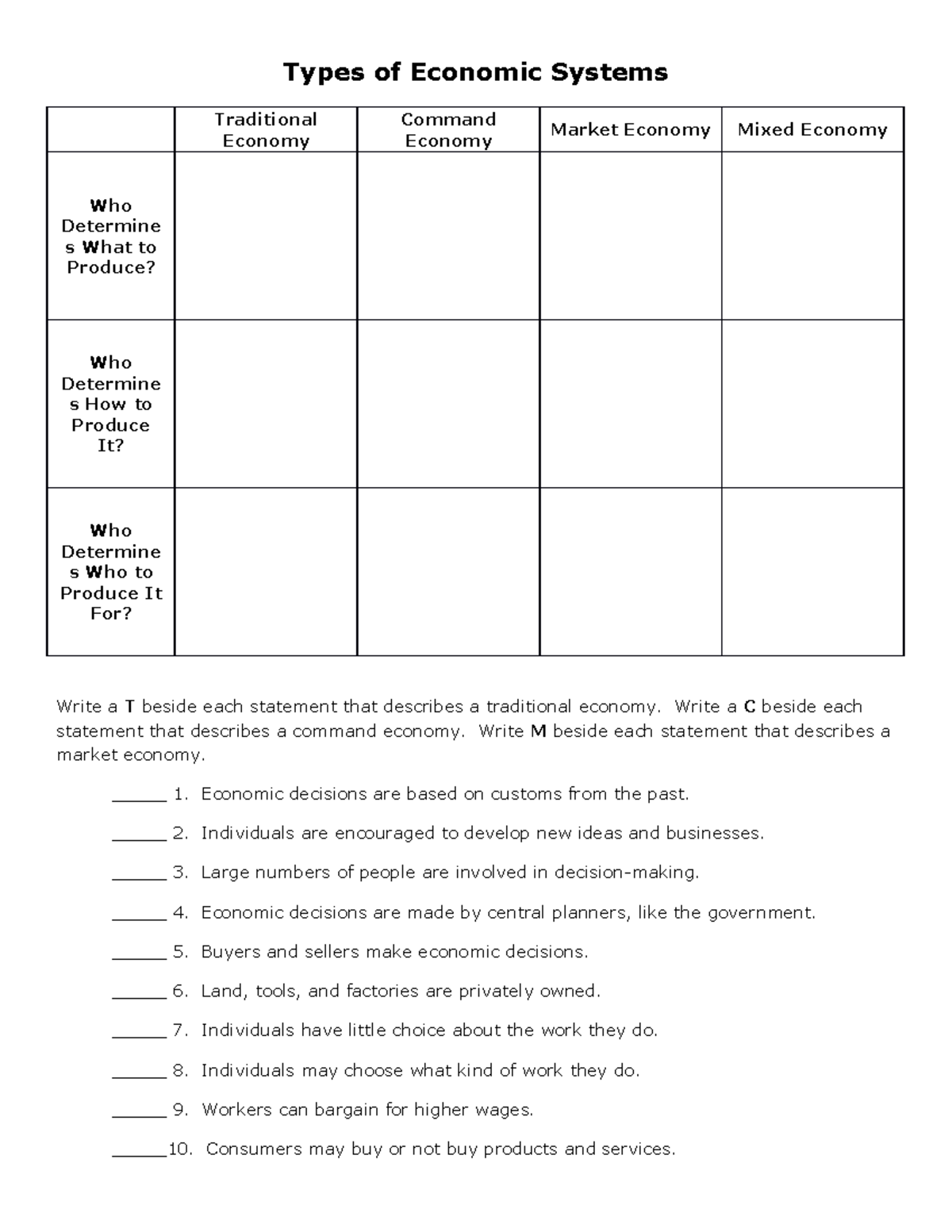
Every economic system must resolve three core questions: What to produce? How to produce it? Who consumes the output? Traditional systems answer these through an inherited lens.
| Fundamental Economic Question | Traditional System Resolution |
|---|---|
| What to produce? | Whatever the community has historically produced to survive (e.g., staple crops, basic tools). |
| How to produce it? | Using ancestral methods, hand tools, and generational techniques without complex machinery. |
| Who consumes the output? | Distributed along lines of social status, kinship, communal sharing, and reciprocal obligations. |
This structural predictability eliminates the anxiety of market volatility, but it also creates profound rigidity. Because production methods change very little over decades or centuries, productivity gains remain constrained.
Advantages and Disadvantages of Traditional Economies
Evaluating the traditional system requires weighing its social cohesion against its economic limitations. Each aspect highlights why most societies eventually transitioned toward mixed or market-based structures.
The Benefits of Predictability and Low Inequality
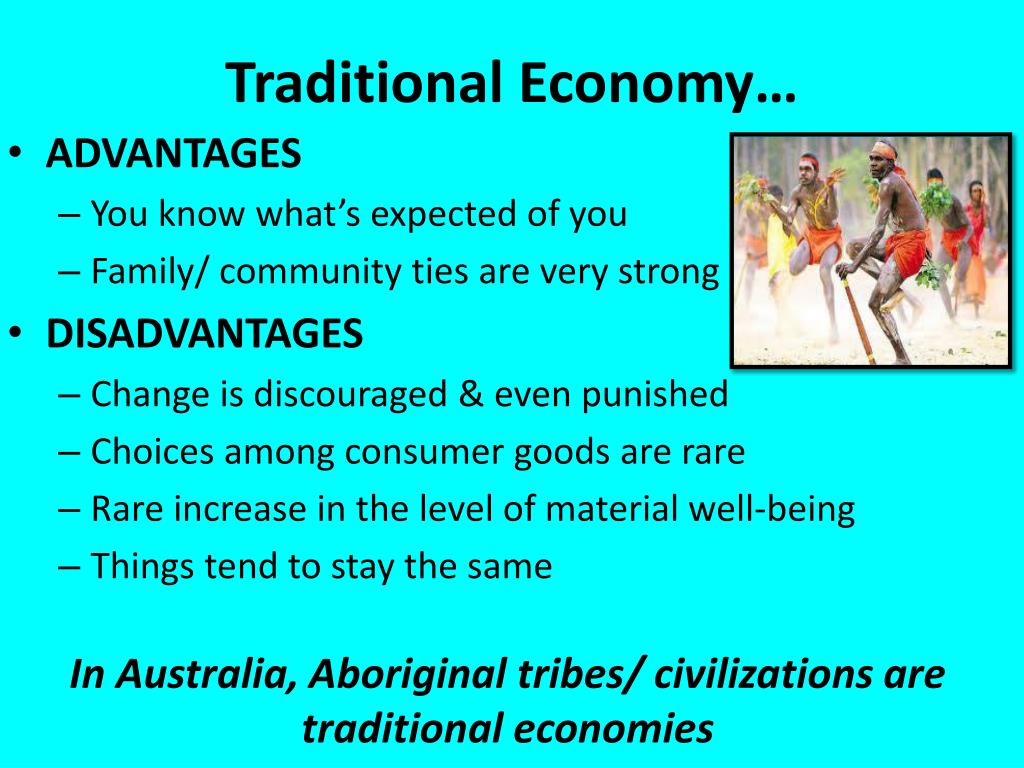
- Clear Social Roles: Every individual understands their responsibilities and place within the community from an early age, virtually eliminating structural unemployment or career-choice anxiety.
- Environmental Sustainability: Many traditional societies practice long-term ecological stewardship, taking only what is necessary for survival because their cultural survival depends on the health of their local ecosystem.
- Strong Community Bonds: Reliance on gift economies, reciprocity, and shared labor fosters tight-knit social networks and high levels of interpersonal trust.
The Drawbacks of Stagnation and Vulnerability
- Vulnerability to External Shocks: Because these economies rely heavily on primary sectors, a single drought, flood, or pest infestation can cause catastrophic famine or economic collapse.
- Lack of Technological Progress: The discouragement of innovation limits the standard of living, preventing advancements in medicine, infrastructure, and labor efficiency.
- Limited Individual Freedom: Occupational mobility is severely restricted. An individual with a talent for engineering or commerce may be forced by social custom to work exclusively in agriculture or livestock rearing.
Real-World Examples and Modern Context
Pure traditional economic systems are rare in the twenty-first century, as globalization, telecommunications, and government oversight have penetrated even remote regions. However, elements of this system remain visible in specific contexts:
- Indigenous and Tribal Communities: Groups such as the Inuit in the Arctic, the Maasai in East Africa, and various Amazonian tribes maintain traditional methods of hunting, herding, and land management alongside modern trade.
- Rural Developing Regions: In parts of sub-Saharan Africa and South Asia, smallholder farmers continue to practice subsistence agriculture using generational methods, interacting with market economies only when selling marginal surpluses.
- Family Enterprises and Guild Traditions: Certain multi-generational craft workshops in Europe and Asia preserve ancient manufacturing techniques, balancing modern commercial sales with traditional apprenticeship models.
Frequently Asked Questions
What is the main difference between a traditional economy and a market economy?
A traditional economy relies on custom, history, and hereditary roles to dictate production and distribution, whereas a market economy relies on supply, demand, and price signals determined by independent buyers and sellers.
Do traditional economic systems use money?
Historically and in many remote settings, traditional systems rely on barter or gift economies rather than standardized currency. However, contemporary traditional communities frequently use national currencies for occasional external trade while maintaining traditional sharing practices internally.
Why do traditional economies struggle with economic growth?
Because these systems discourage innovation and value adherence to ancestral methods, they rarely adopt labor-saving technologies, industrial machinery, or efficiency improvements that drive long-term productivity growth.
Are there any pure traditional economies left today?
Pure, entirely isolated traditional economies no longer exist. Virtually all societies are now part of mixed economic systems where traditional practices interact with government regulation and global market forces.
How do traditional systems handle surplus goods?
Surpluses are rarely accumulated for capital investment. Instead, they are typically redistributed through communal feasts, reciprocal gift-giving, or social rituals that reinforce community ties and mutual obligations.
Conclusion and Next Actions
Understanding the traditional system in economics provides a foundational appreciation for human resource management and societal organization. While these systems lack the dynamic growth, technological innovation, and individual mobility found in market economies, they offer valuable lessons in social resilience, community cohesion, and ecological sustainability. For students, researchers, and policymakers, examining these ancestral frameworks highlights the trade-offs inherent in any economic model. To deepen your knowledge, explore how traditional models transitioned into mercantilism and classical capitalism during the Industrial Revolution.
Image Gallery