France Figure Skating Wardrobe Malfunction: Analysis and Lasting Impacts
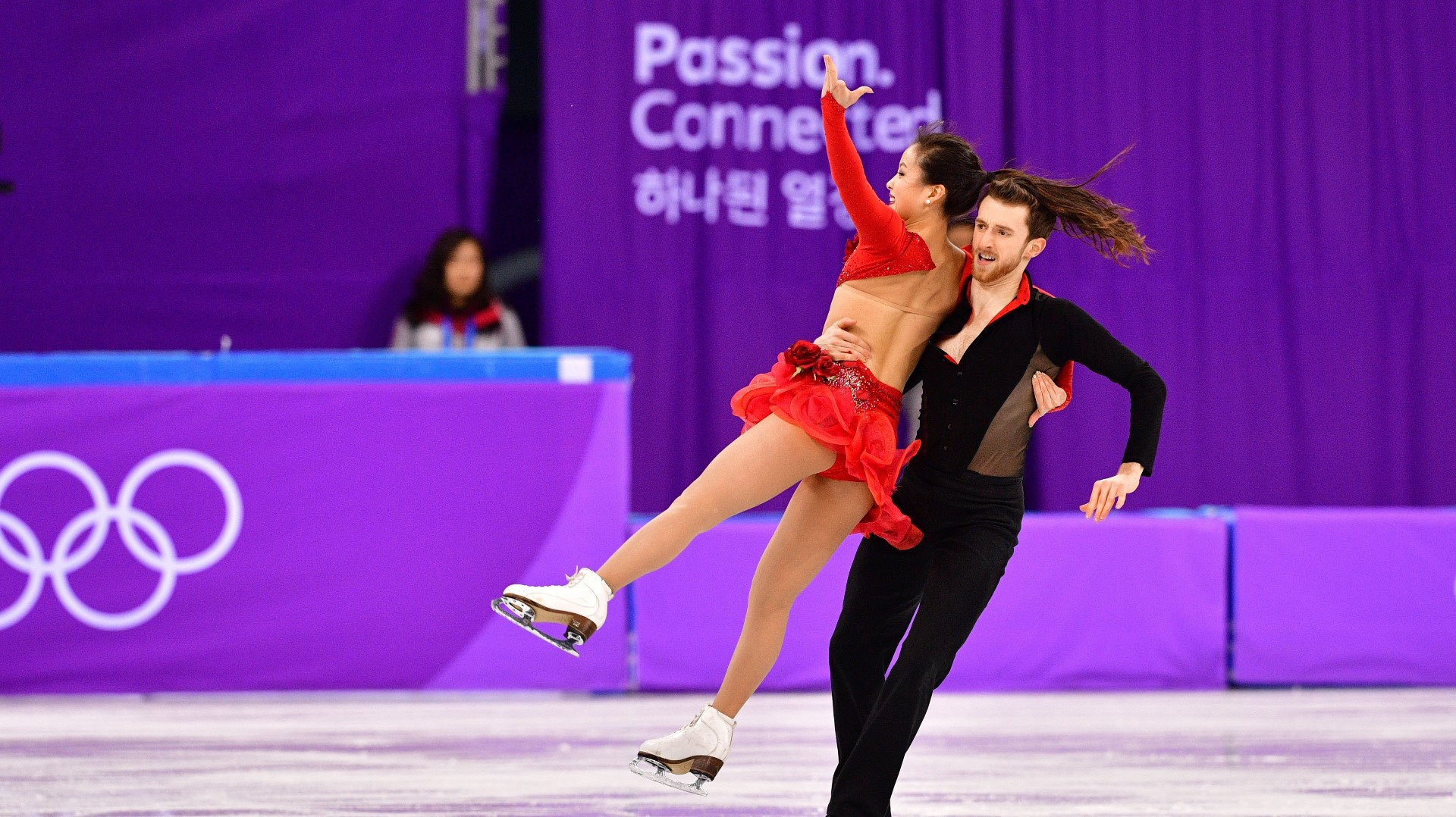
The most significant France figure skating wardrobe malfunction occurred during the 2018 PyeongChang Winter Olympics, involving ice dancers Gabriella Papadakis and Guillaume Cizeron. Seconds into their short dance, the back of Papadaki...
The most significant France figure skating wardrobe malfunction occurred during the 2018 PyeongChang Winter Olympics, involving ice dancers Gabriella Papadakis and Guillaume Cizeron. Seconds into their short dance, the back of Papadakis's costume unfastened, leading to a partial exposure. Despite the distraction and physical limitation, the duo displayed remarkable resilience, securing a silver medal and prompting a global discussion on athlete dignity and costume technicalities.
Contents
The 2018 PyeongChang Incident: A Detailed Chronology
In the world of elite figure skating, the margin between gold and silver is often measured in fractions of a point. For French ice dancers Gabriella Papadakis and Guillaume Cizeron, the 2018 Winter Olympics in PyeongChang were supposed to be the culmination of years of technical perfection. However, within the first few seconds of their short dance to an Ed Sheeran medley, a technical failure transformed their gold-medal pursuit into a test of pure mental fortitude.
As the pair began their routine, the clasp at the back of Papadakis’s halter-neck dress—designed by Sophie Thomas—gave way. The failure occurred during the opening movements, specifically during a series of rapid turns and extensions. For the remaining minutes of the performance, Papadakis had to balance the technical demands of a world-class Olympic routine with the physical necessity of keeping her costume from sliding off entirely.
The malfunction was broadcast live to millions of viewers. Despite the exposure, the pair did not stop. Under International Skating Union (ISU) regulations, stopping a routine for a costume failure can result in a significant point deduction or a forced reset that disrupts the flow and "Grade of Execution" (GOE) scores. Papadakis later described the incident as her "worst nightmare," yet the pair finished the segment in second place, ultimately taking the silver medal behind Canada’s Tessa Virtue and Scott Moir.
ISU Regulations and Costume Technicalities
The International Skating Union maintains strict guidelines regarding competition attire. These rules are not merely for aesthetics; they are designed to ensure safety, fairness, and a level of decorum suitable for an Olympic sport.
Rule 501: Clothing Requirements
According to the ISU Special Regulations and Technical Rules, clothing must be "modest, dignified and appropriate for athletic competition—not garish or theatrical in design." For women in ice dance, the rules traditionally required a skirt, though this has evolved over time. The primary concern regarding malfunctions is Rule 501, which states that costumes must not give the effect of "excessive nudity" or inappropriate exposure.
Scoring and Deductions (Rule 353)
When a wardrobe malfunction occurs, the judges have specific protocols to follow:
- Deduction for Costume Failure: If a part of the costume (e.g., buttons, trim, feathers) falls onto the ice, a 1.0-point deduction is typically applied. This is considered a safety hazard for subsequent skaters.
- Interruptions: If a skater stops their routine to fix a costume, the referee may apply a deduction for an "interruption" (Rule 353, paragraph 1.n). Depending on the length of the pause, this can range from -1.0 to -5.0 points.
- Refusal to Stop: In the case of the French team in 2018, they chose to continue. This prevented a major interruption deduction but likely affected their GOE scores, as the judges could see the physical struggle to maintain the costume's position.
Technical Specifications of High-Performance Skating Costumes
To understand how a malfunction happens at this level, one must look at the engineering behind the garments. Figure skating costumes are high-performance athletic gear, often costing between $2,000 and $10,000 per outfit.
| Component | Standard Specification | Purpose in Competition |
|---|---|---|
| Fabric | Four-way stretch Lycra/Spandex | Allows for 180-degree limb extensions and rotations. |
| Mesh | Industrial-grade "Nude" Power Mesh | Provides the illusion of skin while securing the garment. |
| Fasteners | Heavy-duty snaps, hooks-and-eyes, and zippers | Must withstand G-forces during spins and throws. |
| Crystals | Swarovski or Preciosa flat-back stones | Aesthetic appeal and light refraction under arena LEDs. |
| Security | Internal body suits and "stay-put" adhesives | Prevents shifting during complex lift sequences. |
In the case of Papadakis, the failure was attributed to the high tension placed on a single clasp during the "twizzle" sequence—a series of synchronized, multi-rotational turns. Modern costumes in 2026 now almost universally incorporate triple-redundancy systems, including a zipper, a hook-and-eye closure, and a secondary snap or Velcro strap to prevent a single point of failure from causing a total detachment.
The Evolution of Costume Design Post-PyeongChang
The 2018 incident forced a paradigm shift in how designers approach the construction of elite skating attire. Previously, aesthetics often dictated minimal fastening systems to create a seamless look. Following the French team's experience, the industry moved toward "safety-first" engineering.
Reinforced Necklines and Halters
The halter neck, while elegant, is notoriously the most vulnerable design in figure skating. Designers now frequently use flesh-colored mesh to create "invisible" straps across the back. This provides the appearance of an open back while ensuring the garment is anchored to the athlete’s torso at multiple points.
The Role of Elasticity and Tension
During a routine, an athlete's body expands and contracts significantly. If a costume is too tight, the tension on the fasteners is extreme; if too loose, it can snag. Designers in 2026 utilize computer-aided design (CAD) to model the tension placed on seams during specific maneuvers like the "Biellmann spin" or "stationary lifts."
Media Ethics and Athlete Protection
The France wardrobe malfunction also sparked an intense debate regarding the responsibility of broadcasters and photographers. During the PyeongChang event, the Olympic Broadcasting Services (OBS) was criticized for replaying the malfunction in slow motion and including still frames of the exposure on official highlights.
By 2026, many sports federations have implemented "Dignity Clauses" in their broadcasting agreements. These guidelines advise camera operators and editors to cut to wide-angle shots or alternative angles if a visible wardrobe failure occurs. This shift acknowledges that while the event is public, the athlete's right to privacy and dignity remains paramount, especially during a technical mishap beyond their control.
Historical Context: Notable Wardrobe Failures
The French incident is the most famous due to its Olympic stage, but it is part of a broader history of equipment failures in the sport.
- Ekaterina Bobrova (Russia): Experienced a skirt tear during a 2013 performance that nearly entangled her blades.
- Yura Min (South Korea): At the same 2018 Olympics, Min's back clasp unfastened just seconds into her routine. Like Papadakis, she continued, showing incredible poise.
- Christopher Dean (Great Britain): Even legends are not immune; Dean famously had a trouser split during a professional performance, illustrating that high-intensity movements test the limits of even the best-constructed garments.
Mental Resilience in Elite Sport
Beyond the physics of the dress, the French team’s response to the malfunction is now used as a case study in sports psychology. Papadakis and Cizeron’s ability to maintain their synchronization and technical difficulty while experiencing a traumatic public event is cited as a pinnacle of "attentional focus."
In elite competition, athletes are trained to "stay in the moment." For Papadakis, this meant ignoring the physical sensation of the costume failing and focusing entirely on her partner’s leads and the timing of the music. Their silver medal was not just a testament to their skating skill, but to their ability to manage a crisis under the highest possible pressure.
Frequently Asked Questions
Did Gabriella Papadakis lose points for the wardrobe malfunction?
While the judges did not issue a formal "costume deduction" (which is usually reserved for items falling on the ice), the malfunction likely impacted their Grade of Execution (GOE) scores. The distraction and the physical need to adjust the garment prevented the pair from achieving the absolute fluidity required for a perfect score, which may have been the difference between silver and gold.
Why didn't the French skaters stop to fix the dress?
Under ISU rules, stopping a program is a major risk. A skater may stop if they feel their safety is at risk, but it results in a mandatory deduction. Furthermore, restarting a routine from the point of interruption is physically exhausting and often ruins the artistic "program components" score. Papadakis and Cizeron made a split-second decision to push through to maintain their competitive standing.
What has changed in figure skating costumes since 2018?
Costume designers now prioritize "redundant fastening." This includes using multiple hooks, reinforced zippers, and permanent stitching where possible. Many skaters have also moved away from halter-neck designs in favor of full-mesh tops that offer greater security without sacrificing the "bare skin" aesthetic.
Are wardrobe malfunctions common in figure skating?
Minor malfunctions, such as loose crystals or small tears in mesh, are relatively common. However, major failures that lead to exposure or require the athlete to alter their movement are rare. When they do occur, they usually happen during the "Short Program" or "Rhythm Dance" where the intensity of the opening sequences is highest.
Who was the designer of the 2018 French Olympic costume?
The costume was designed by Sophie Thomas, a renowned figure skating designer who has worked with many elite French athletes. Following the incident, Thomas and other designers in the field revamped their construction techniques to ensure that such a failure would not happen again.
Practical Recommendations for Skaters and Designers
For competitive skaters at any level, the lesson from the 2018 French incident is one of preparation and "fail-safe" design.
- Perform a "Stress Test": Always practice the full routine in the competition costume multiple times before the event. Pay attention to fasteners during the most strenuous movements.
- Use Triple Redundancy: Never rely on a single snap or clasp. Every major closure should have a backup, such as a hidden hook-and-eye under a decorative button.
- Emergency Kits: Coaches should always have an emergency kit at the rink-side, including "flash tape" (double-sided skin tape), heavy-duty safety pins, and a sewing kit for immediate repairs between the short and long programs.
- Mental Rehearsal: Athletes should mentally rehearse how they would handle an equipment failure. Knowing the rules—and deciding in advance whether to stop or continue—can prevent panic during the actual event.
Image Gallery