Professional Wall Tree Service Guide: Trimming, Removal, Safety, and Cost Factors
Professional wall tree service provides specialized arboricultural solutions for managing, pruning, and removing trees near structural walls, retaining barriers, property lines, and residential buildings. Tree care specialists use prec...
Professional wall tree service provides specialized arboricultural solutions for managing, pruning, and removing trees near structural walls, retaining barriers, property lines, and residential buildings. Tree care specialists use precision rigging, directional cutting, and advanced root management techniques to maintain tree health, mitigate structural damage risks, and ensure full compliance with municipal regulations.
Contents
Understanding Wall Tree Services: Scope and Structural Impact
Trees planted in close proximity to property walls, foundation footings, and retaining structures introduce unique arboricultural and engineering challenges. While mature trees offer canopy shade, privacy screening, and erosion control, their expansive root structures and overhanging canopy can compromise nearby hardscapes. A professional wall tree service balances the preservation of urban greenery with the structural integrity of neighboring construction.
Managing trees situated alongside masonry walls requires specialized technical capabilities beyond standard lawn or landscape maintenance. Tree roots exert lateral displacement force as they expand in radius—a process known as root expansion pressure. When large lateral roots encounter retaining walls, boundary fences, or concrete footings, they can displace unreinforced brick, crack stem walls, and cause structural tipping. Conversely, improper tree removal near retaining walls can destabilize surrounding soil, leading to slope failure or water drainage disruption.
Arborists evaluating wall-adjacent trees must account for both above-ground clearance and below-ground root architecture. Branch friction against vertical walls creates wounds that expose timber to wood-decay fungi, while root networks growing beneath retaining structures can alter soil compaction and moisture retention. Professional tree services analyze these mechanical interactions before developing a maintenance or removal strategy.
Essential Services Provided by Professional Tree Care Crews
Comprehensive tree care near structural walls involves a diverse array of physical and diagnostic services. Certified arborists employ customized methods depending on species size, proximity to structures, and overall tree structural stability.
- Tree Care Near Structural Walls
- Pruning & Canopy Management
- ANSI A300 standards
- Crown reduction
- Wall clearance
- Precision Removal & Rigging
- Rigging systems
- Sectional drop
- Crane-assisted
- Root Management & Barriers
- Root pruning
- Bio-barriers
- Foundation protection
- Pruning & Canopy Management
Precision Canopy Pruning and Wall Clearance
Tree branches expanding toward structural walls pose wind-load risks and facilitate pest infestation by bridging tree limbs to rooflines and wall cladding. Tree specialists follow standards established in the ANSI A300 Pruning Standards to execute selective branch removal. Technicians use directional pruning—such as drop-crotching and crown reduction—to direct growth away from vertical masonry without triggering aggressive epicormic sprouting (suckering).
Controlled Tree Removal in Tight Spaces
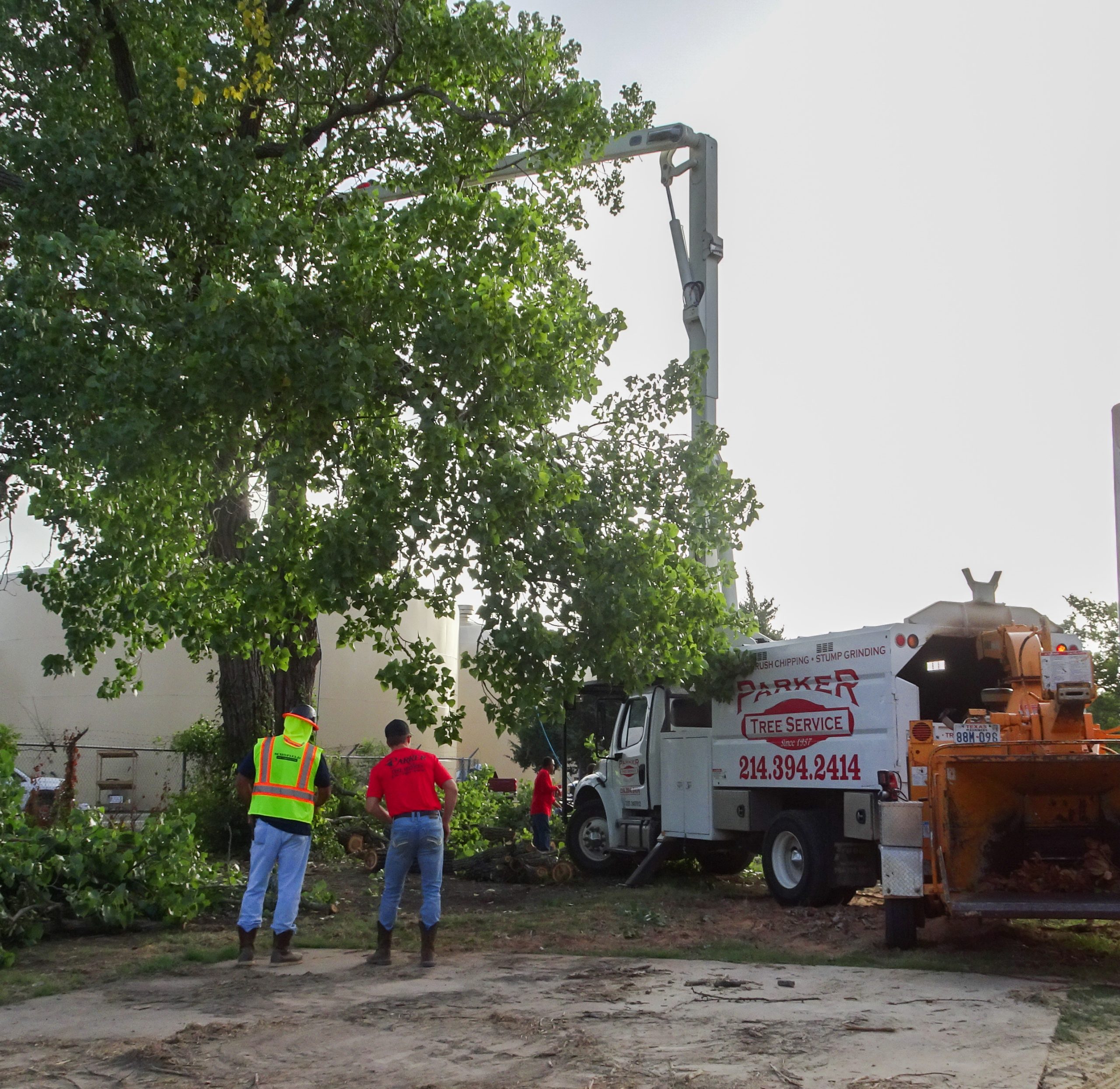
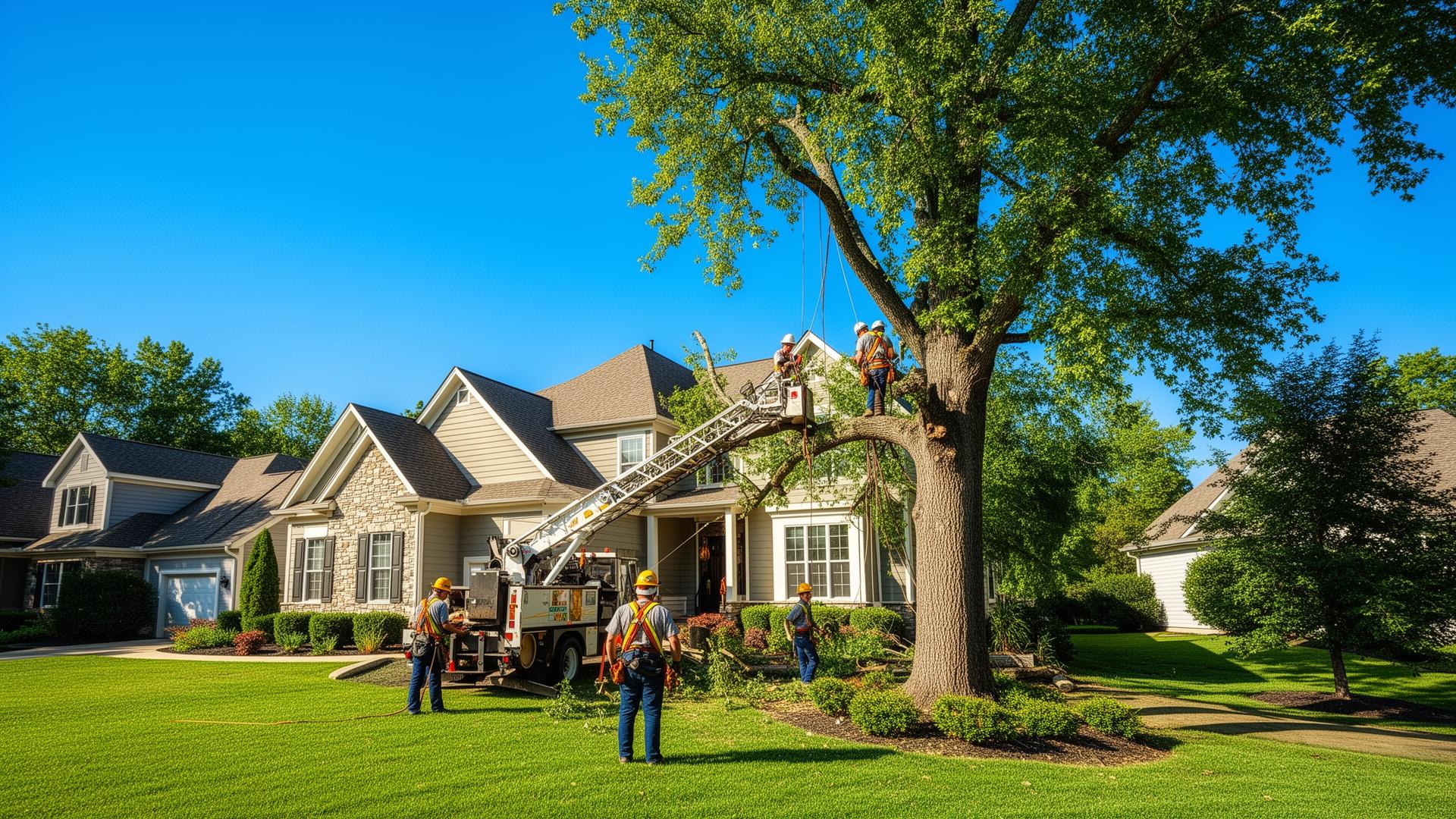
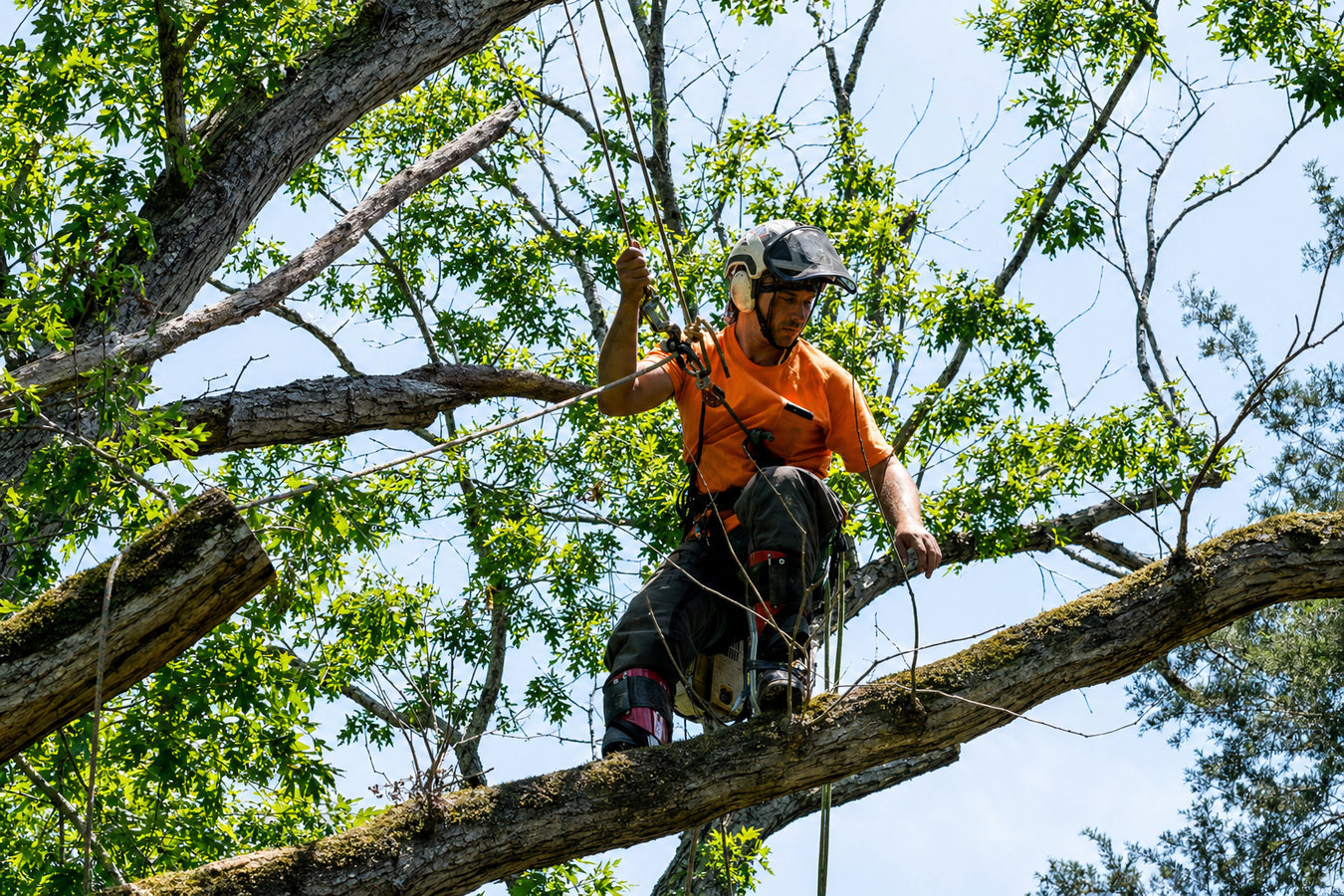
When a tree poses an imminent structural hazard or exhibits severe decay, complete removal becomes necessary. Trees growing directly alongside walls or squeezed into narrow alleyways cannot be felled using traditional directional timber harvesting methods. Arborists utilize sectional dismantling techniques, employing friction brakes, lowering blocks, and high-tensile rigging lines to lower limbs and trunk sections piecemeal. In severely restricted urban spaces, crane-assisted tree removal is deployed to lift heavy sections over wall structures without impacting ground-level surfaces.
Root Management and Root Barrier Installation
To prevent subterranean root systems from undermining foundation footings or lifting retaining walls, arborists apply controlled root pruning and install specialized physical root barriers. Using pneumatic soil excavation tools (such as air spades) to expose root zones without damaging bark tissue, professionals selectively severe problematic roots while preserving anchor root stability. Heavy-duty polyethylene barriers or chemical root growth inhibitors are then installed vertically along the wall perimeter to divert future root growth downward and away from structural walls.
Emergency Response and Hazard Mitigation
Severe weather events, soil saturation, and heavy wind loads can cause trees near structures to lean or split along major unions. Emergency tree care teams respond with stabilization equipment, including temporary cabling systems and heavy machinery, to secure compromised limbs, safely dismantle fallen wood, and relieve structural pressure from damaged retaining walls or boundary barriers.
Navigating Root Management and Retaining Wall Stability
The relationship between tree roots and retaining walls involves complex geotechnical dynamics. Retaining walls rely on backfill soil density and adequate drainage to resist hydrostatic pressure. When trees grow directly behind or within retaining structures, their roots penetrate backfill zones, displacing drainage gravel and clogging weep holes.
- Ground Level
- Tree (Overhanging Branches)
- Roots penetrate drainage zone
- Backfill Soil (Displaced Gravel)
- Retaining Wall / Structural Wall
When evaluating a tree near a retaining wall, arborists evaluate three primary factors:
- Critical Root Zone (CRZ) Radius: Calculated as one foot of radius for every inch of trunk diameter at breast height (DBH). Disrupting more than 20% to 25% of the CRZ during root pruning can severely compromise tree health and stability.
- Soil Hydrology and Drainage: Tree roots absorb large volumes of groundwater, aiding in slope stabilization. Removing a mature tree behind a retaining wall can increase soil moisture levels, unintentionally elevating hydrostatic pressure behind the wall if proper drainage systems are absent.
- Wall Design Specification: Mechanically stabilized earth (MSE) walls, poured concrete stem walls, and gravity stone walls tolerate root encroachment differently. Gravity structures may shift slightly without structural failure, whereas reinforced MSE walls with geogrid fabrics can suffer internal tearing if heavy root systems expand through grid layers.
Before initiating root severing near retaining walls, certified personnel conduct structural evaluations to verify that root removal will not trigger localized slope failure or wall tilting.
2026 Cost Benchmarks for Wall Tree Services
Tree service pricing varies based on tree height, trunk diameter, accessibility, proximity to structures, and local disposal fees. Working near walls increases labor requirements due to the specialized rigging and protection measures involved. The following standard pricing benchmarks reflect current operational cost profiles across North America.
| Service Category | Scope & Specifications | Average Cost Range (USD) | Primary Price Drivers | Standard Timeframe |
|---|---|---|---|---|
| Small Tree Removal (Under 30 ft) | Removal of small wall-adjacent trees, light rigging, basic brush chipping. | $250 – $650 | Accessibility, proximity to wall/fence, branch density. | 2 – 4 Hours |
| Medium Tree Removal (30 to 60 ft) | Sectional dismantle near walls, controlled lowering of limbs, full cleanup. | $650 – $1,550 | Rigging complexity, root proximity to hardscapes, branch spread. | Half Day |
| Large/Hazardous Removal (Over 60 ft) | Heavy rigging, crane assistance, utility line proximity, high-risk drop zones. | $1,550 – $4,200+ | Crane rental costs, permit fees, power line clearances, drop limitations. | 1 – 2 Days |
| Selective Crown Pruning | Removal of overhanging limbs, clearance pruning (6–10 ft wall offset). | $300 – $950 | Height of canopy, access for bucket trucks or climbers. | 2 – 5 Hours |
| Root Pruning & Barrier Installation | Air-spade trenching, selective root cutting, physical HDPE barrier installation. | $800 – $2,400 | Linear trench footage, soil composition, utility line locating. | 1 Day |
| Stump Grinding (Near Wall/Foundation) | Specialized narrow-track stump grinder, root flare reduction to 12" depth. | $200 – $600 | Stump diameter, proximity to masonry, underground utility density. | 1 – 3 Hours |
Technical Execution: How Arborists Perform Work in Tight Wall Spaces
Executing tree removal or heavy trimming adjacent to walls requires precise technical sequences to eliminate structural risk. Tree care professionals adhere to safety procedures outlined by the Occupational Safety and Health Administration (OSHA) for logging and tree care operations.
Project Execution Flowchart:
- Site & Risk Assessment
- Work Zone Clearance & Drop Setup
- Rigging System Installation
- Step-by-Step Sectional Dismantling
- Debris Processing & Site Restoration
Phase 1: Site and Hazard Assessment
Before bringing equipment to the work area, the crew foreman establishes a safety perimeter. Arborists inspect the tree for structural defects, heartwood rot, co-dominant stems, and tension fractures. The team identifies overhead power lines, underground drainage lines, and wall structural conditions to select appropriate lowering points.
Phase 2: Rigging Setup and Drop Zone Clearance
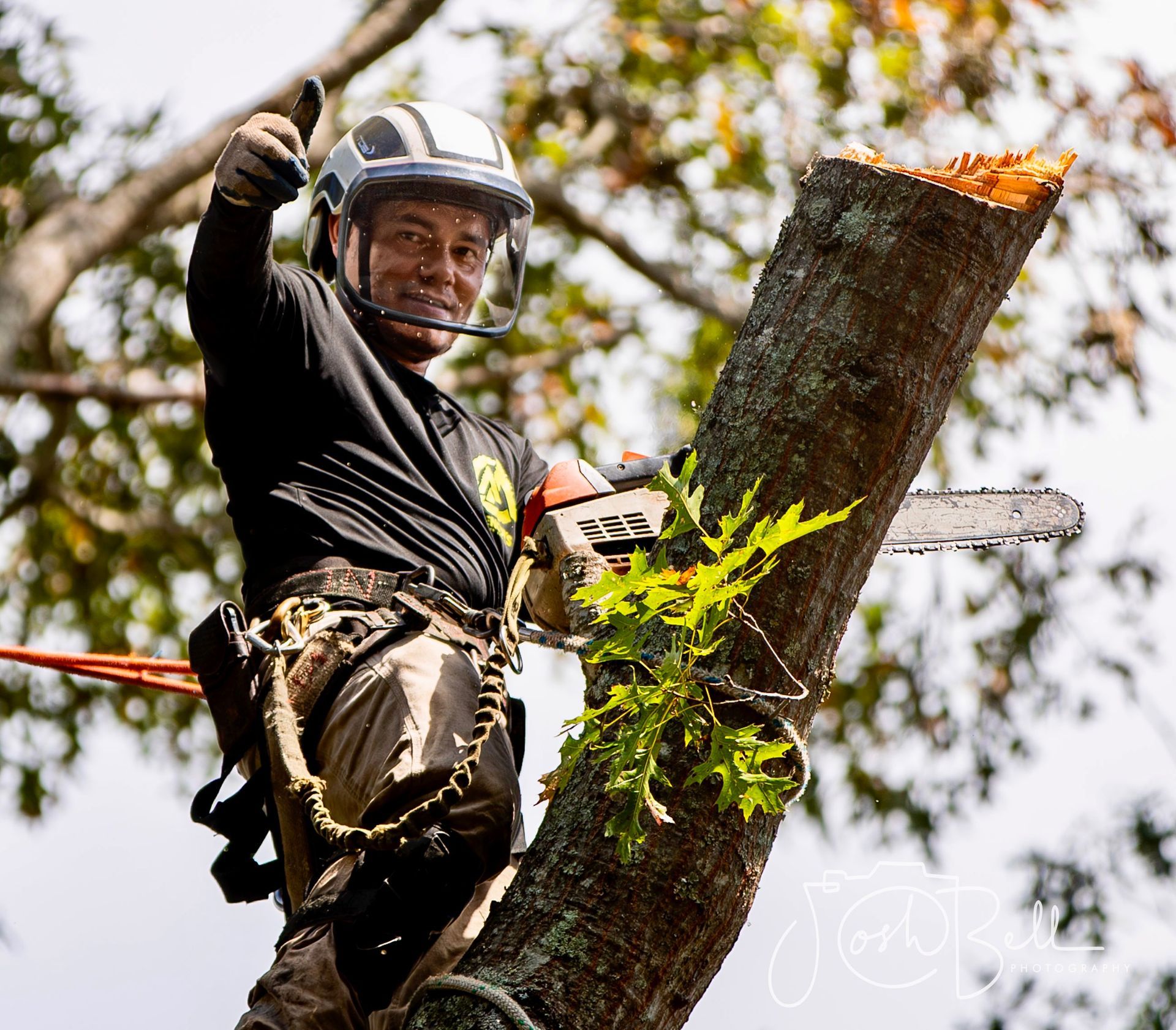
Climbers ascend the tree using non-invasive work-positioning lanyards (spurs are avoided if the tree is to be preserved). High-strength synthetic bull ropes are routed through friction blocks mounted at high anchor points within the tree canopy. At the base, rigging ground workers attach port-a-wraps or lowering devices to control the descent speed of heavy timber sections, ensuring no debris drops directly onto walls, glass windows, or boundary fences.
Phase 3: Step-by-Step Sectional Dismantling
- Limb Removal: Technicians systematic remove lower lateral branches overhanging the wall, securing each branch with rigging lines before executing relief cuts.
- Top Removal (Topping/Heading): The climber removes the upper leader section using specialized undercut techniques to prevent trunk splitting.
- Trunk Blocking: The remaining trunk stem is cut into manageable "blocks." Ground crews lower each log using controlled friction systems to prevent ground impact shock, which could crack nearby retaining walls or pavement.
Phase 4: Below-Ground Remediation and Site Restoration
Once above-ground wood is cleared, workers address the stump and root flare. Standard stump grinders feature large cutter wheels that require clearance; when a stump abuts a wall, technicians use specialized narrow-access grinders or pneumatic hand tools to chip wood away without letting carbide teeth strike brick or stone.
Municipal Permits, Liability, and Selecting a Certified Arborist
Working on trees near boundary walls frequently involves legal rights, property lines, and municipal regulatory oversight. Property owners must navigate these legal frameworks before scheduling major tree work.
Compliance & Hiring Checklist:
- Permit & Ordinance Check
- Protected species bylaws
- Diameter thresholds (DBH)
- Retaining wall zone rules
- Boundary Line & Rights Check
- Neighbor notification
- Boundary line tree agreements
- Shared cost structures
- Arborist Verification
- ISA Certification
- Liability & Workers' Comp
- ANSI Z133 compliance
Understanding Local Tree Ordinances
Many municipalities enforce tree preservation ordinances protecting trees over specific diameter thresholds (often 6 to 12 inches DBH) or specific native species. Removing a protected tree near a wall without a permit can result in significant municipal fines. Always consult local municipal planning departments or engage a consulting arborist to determine if a permit is mandatory.
Navigating Boundary Line Trees
When a tree trunk straddles the property line between two parcels, it is legally considered a boundary tree owned jointly by both property owners. Neither party can remove or alter the tree in a way that compromises its survival without the other owner's explicit consent. While landowners generally maintain the legal right to trim branches overhanging their property up to the vertical boundary line, aggressive pruning that damages the overall health of a neighbor's tree can trigger legal liability under civil property statutes.
Contractor Evaluation Checklist
To ensure safety and protect your property from financial liability, evaluate candidate tree service providers against these professional criteria:
- Professional Certification: Ensure the project lead is certified by the International Society of Arboriculture (ISA) or accredited by the Tree Care Industry Association (TCIA).
- Comprehensive Insurance Coverage: Verify that the business carries at least $1,000,000 to $2,000,000 in Commercial General Liability insurance along with valid Workers’ Compensation coverage. Request a Certificate of Insurance (COI) issued directly from the insurer listing your property address as a certificate holder.
- Safety Standard Compliance: Confirm that operations adhere to ANSI Z133 safety guidelines for arboricultural operations, including personal protective equipment (PPE), chainsaw safety compliance, and drop-zone management.
- Written Contract and Scope: Obtain a detailed written proposal outlining precise service actions, wood disposal policies, stump grinding depth, and cleanup standards.
Frequently Asked Questions
How close can a tree grow to a retaining wall before causing structural damage?
Safe clearance depends on the tree species, ultimate trunk size, and wall construction. As a general guideline, large canopy trees (e.g., oaks, maples) should be maintained at a minimum clearance distance of 15 to 20 feet from structural retaining walls. Smaller ornamental species may grow safely within 6 to 10 feet. If roots grow within 3 to 5 feet of a retaining wall, an arborist evaluation is recommended to inspect for wall cracking, leaning, or displacement.
Will cutting roots near a wall harm or destabilize the tree?
Cutting roots within the Critical Root Zone (CRZ) can severely impact tree health and structural stability. Removing major anchor roots within a distance equal to three to five times the trunk diameter poses a high risk of tree blowdown during severe storms. Root pruning should only be performed under the direct supervision of an ISA Certified Arborist using clean relief cuts to minimize fungal infection risks.
Who is responsible for tree branches overhanging a shared property wall?
Under standard common law principles in most jurisdictions, a property owner has the legal right to trim branches and roots encroaching over their property line up to the boundary border. However, this right is limited: you cannot cross the property line to perform work without permission, and you must not cut branches or roots in a manner that permanently damages or kills the tree.
Can stump grinding destroy subterranean retaining wall footings?
Standard high-horsepower stump grinders cut 6 to 18 inches below grade and can easily damage concrete footings, underground utility lines, or retaining wall ties if operated improperly. When grinding a stump located directly against a masonry wall, arborists use smaller specialized equipment, hand tools, or chemical treatments to gradually degrade root tissue without impacting hardscape footings.
What is the difference between standard tree cutting and certified arborist tree care?
Standard tree cutters often lack formal training in tree biology, risk assessment, and proper structural pruning methods. Certified arborists undergo comprehensive testing, adhere to professional standards (such as ANSI A300 and ANSI Z133), and apply scientific principles to balance structural preservation, disease control, and property safety.
Expert Recommendations for Property Owners
When managing trees growing near structural walls, foundation barriers, or property boundaries, proactive maintenance prevents costly hardscape repairs and unexpected tree failures.
Take the following concrete actions to protect your property:
- Schedule a Structural Risk Inspection: If you notice cracking, leaning, or bulging along retaining walls near mature trees, contract an ISA Certified Arborist holding the Tree Risk Assessment Qualification (TRAQ) to perform a formal risk inspection.
- Implement Root Management Early: For young trees planted near boundary structures, install physical root barriers before root systems expand into surrounding hardscape backfill zones.
- Verify Permits and Insurance: Before signing a service contract for major trimming or wall tree removal, request official proof of general liability insurance and confirm municipal permit requirements.
- Enforce Written Scope Requirements: Ensure contracts explicitly document cleanup expectations, wood hauling fees, stump grinding depth, and wall protection measures to guarantee safe project execution.
Image Gallery